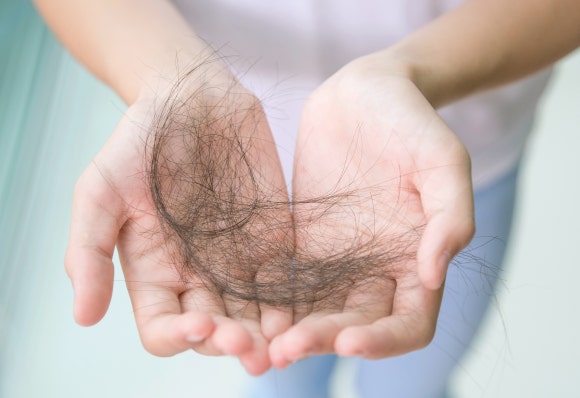
Many people say that the condition of their hair and scalp fluctuates every time the season changes.
In particular, the questions below are repeated:
“Every fall, it feels like my hair is noticeably shedding more,”
“Every winter, my scalp feels especially stingy and I have more flakes.”
This happens because two factors are moving at the same time.
In this post, I have organized the questions patients ask most often based on actual research data and patterns repeatedly observed in clinical practice.
Why Does Winter Hair Loss Seem Worse When the Seasons Change?
Summary
Hair does not fall out at a constant rate throughout the year; instead, it shows waves in which the proportion of telogen hairs changes with the season¹²³⁴.
In summer and early autumn, a natural physiological pattern of increased shedding appears¹³.
Low humidity and heating environments in winter increase scalp barrier stress (TEWL), reduce moisture, and trigger flaking and itching, making hair more likely to break⁵⁶⁷⁸.
Dryness is not the cause of permanent hair loss; it is closer to a supporting factor that disrupts existing vulnerabilities.
Reading scalp signals accurately helps distinguish a temporary fluctuation from a real structural change.
Q1. Why does the amount of shedding seem to suddenly increase in fall?
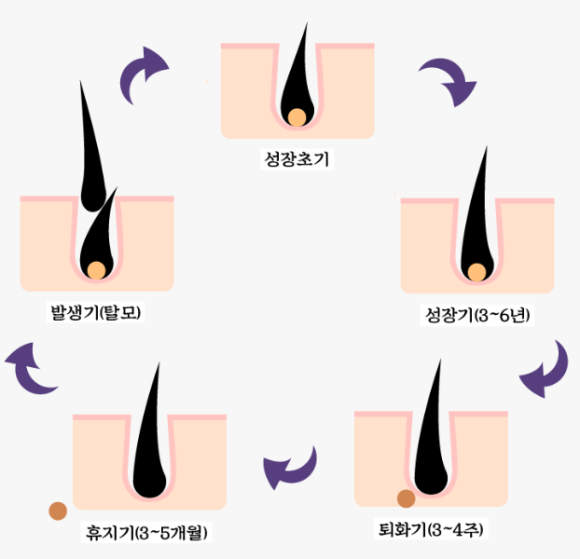
Hair cycles through telogen and shedding according to the season¹²³⁴.
Several long-term follow-up studies have reported that human hair reaches its highest proportion of telogen in summer, and that effect appears as an increase in actual shedding a few months later, in early autumn¹.
It has also been analyzed that this is due to the interaction between climate changes (sunlight and temperature) and hair follicle physiology².
Clinically, many people suddenly feel that “more hair is getting caught in their hands during shampooing” in fall, but in most cases this is part of the natural hair rhythm. If it is not accompanied by structural changes such as reduced thickness or density, it is distinguished from progressing hair loss.
Q2. Why does the scalp itch more in winter, develop flakes, and make hair break more easily?
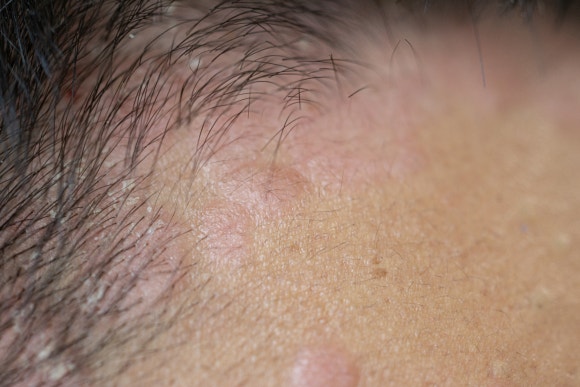
Low humidity weakens the scalp barrier, causing increased transepidermal water loss and reduced moisture content in the scalp barrier⁵⁶⁷⁸.
Winter is when dry outdoor air and indoor heating overlap, making the scalp barrier most vulnerable.
According to research, exposure to low-humidity environments increases transepidermal water loss and decreases moisture in the stratum corneum, creating microcracks on the surface⁶.
Research analyzing indoor environments in Korea also found that heating plus low humidity conditions are common factors that worsen dandruff and flaking⁷.
When the scalp becomes dry,
and similar symptoms can appear, creating the illusion that hair is falling out more than it really is.
Q3. Can a dry environment actually cause hair loss or kill hair follicles?
Dryness is not a direct cause of hair loss.
However, it can further disturb an already sensitive scalp.
There is no evidence that a dry environment causes permanent hair follicle damage.
For people with genetic susceptibility, hormonal influences, inflammatory scalp conditions, or stress-related factors, winter dryness can act as a supporting factor that makes symptoms appear more pronounced.
Rather than causing hair loss, dryness is an environmental factor that increases scalp irritation, inflammation, and hair damage, making the amount of shedding look suddenly greater.
Q4. How can temporary seasonal shedding be distinguished from actual progressive hair loss?
The key is whether structural changes are present, such as reduced thickness or density.
Seasonal fluctuations recover again within a few months and show little to no change in thickness or density.
By contrast, progressive hair loss is accompanied by structural signs such as increasing variation in hair thickness, miniaturization, reduced density, and fewer hairs per follicle.
Q5. How should scalp care be adjusted according to seasonal changes?
The key is to manage cleansing rhythm, humidity, and irritants based on signs of dryness and sensitivity.
-
Maintain indoor humidity at 40–55%
-
Set cleansing intervals appropriate for your scalp type
-
Use lukewarm to cool air instead of hot air
-
Reduce the frequency of styling products and high-heat tools
-
For nerve-related itching, do not scratch with your hands
If you are already undergoing treatment, the plan can be adjusted according to the season.
Even these kinds of daily care measures can greatly reduce unnecessary anxiety caused by seasonal fluctuations.
| Season | Main change | Cause | Possible symptoms | Key care point |
|---|
| Winter | Increased scalp barrier stress and weakened barrier⁵⁶⁷⁸ | Low humidity, heating | Flaking, itching, damage to hair cross-sections | Humidity control, complete drying, minimize irritation |
| Spring | Some studies report increased telogen⁴ | Climate transition | Temporary fluctuation | Maintain consistent basic care |
| Summer | Increased telogen¹² | UV exposure, heat, increased sebum | Increased shedding after summer | Manage scalp heat, minimize UV exposure |
| Early autumn | Noticeable increase in shedding³ | Delayed reflection of summer telogen effect | Feeling that a lot of hair is suddenly falling out | Check whether structural changes are present |
Now it is time for hairhair, Kim Jin-oh.
필생신모(必生新毛).
Written by: Kim Jin-oh of New Hair Plastic Surgery (Public Relations Director, Korean Society of Plastic and Reconstructive Surgeons / Academic Director, Korean Society for Laser Dermatology and Hair)
References
- Kunz, M., Seifert, B. and Trüeb, R.M., 2009. Seasonality of hair shedding in healthy
women complaining of hair loss. Dermatology, 219(2), pp.105–110. cited: "Our study of
823 otherwise healthy women demonstrated annual periodicity in the growth and
shedding of hair, with a maximal proportion of telogen hairs in summer."
- Courtois, M., Loussouarn, G., Hourseau, C. and Grollier, J.F., 1996. Periodicity in the
growth and shedding of hair. British Journal of Dermatology, 134(1), pp.47–54. cited:
"Periodicity of the telogen percentage, and hence of hair fall, is not independent of
climatic factors such as sunshine hours."
- Hsiang, E.Y., Semenov, Y.R., Kwatra, S.G. and Kang, S., 2018. Seasonality of hair loss: a time
series analysis of Google Trends data. British Journal of Dermatology, 178(4), pp.978–980.
cited: "Search interest for hair loss showed a consistent seasonal pattern, peaking in late
summer and autumn in both hemispheres."
- Hamad, F.A.K., 2010. Seasonal hair loss. Babylon Medical Journal, 7(1–2), pp.254–259.
cited: "The telogen rate was lowest towards the beginning of January and reached a
maximum in April, confirming seasonal changes in human hair growth."
- du Plessis, J. et al., 2013. Transepidermal water loss and skin hydration: a practical
approach. Skin Research and Technology, 19(3), pp.265–272. cited: "Transepidermal
water loss and skin hydration have been widely used as indices in evaluating skin
barrier function."
- Egawa, M. et al., 2002. Effect of exposure of human skin to a dry environment. Skin
Research and Technology, 8(4), pp.212–218. cited: "Exposure to a very low humidity
environment increases transepidermal water loss and decreases stratum corneum
hydration, leading to skin roughness."
- Kwon, H. et al., 2023. Effects of winter indoor environment on the skin: Unveiling skin
condition changes in Korea. (online preprint). cited: "Winter conditions with low relative
humidity and indoor heating often exacerbate dandruff due to persistent dryness and
accumulation of dead skin cells."
- Mughni, F.A. et al., 2025. Measurements of scalp transepidermal water loss and
hydration in women wearing hijab: correlation with hair wash frequency. International
Journal of Trichology, (ahead of print). cited: "This study aimed to assess the correlation
between hair wash frequency and scalp transepidermal water loss and hydration in
women wearing hijab."
[This post is written directly by a board-certified plastic surgeon for informational purposes in accordance with Article 56, Paragraph 1 of the Medical Service Act. Hair transplantation surgery and treatment may have side effects, and you should make a careful decision after consulting with a specialist.]