Source - Wikitree
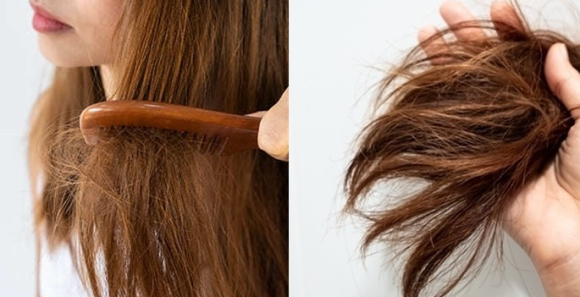
If your hair keeps breaking in the middle before it can grow long, your hair volume can suddenly look reduced,
and your scalp may seem more visible.
In actual clinics, many people ask, “It’s not falling out from the root, so why does the overall volume look so much lower?”
Hair breakage is not just a cosmetic issue; it is a phenomenon in which the hair itself is damaged first before the hair root can hold up,
so it cannot grow long.
It is often caused by a combination of external stressors, nutritional deficiencies, improper styling, and certain scalp conditions¹²³.
If Your Hair Keeps Breaking, Is It Just Damage or a Sign of Hair Loss?
Summary
Broken hair is different from hair loss, but the resulting “visible reduction in hair volume” can look similar
The most common causes are external stressors such as heat, chemicals, friction, and ultraviolet rays¹²³
Hair disorders such as trichorrhexis nodosa (TN) also characteristically show breakage⁴⁵
Nutritional deficiencies (iron, vitamin D, zinc, biotin, etc.) can cause structural weakening of the hair⁷⁸⁹
In many patients, we see a pattern of rapid improvement with lifestyle correction alone
Q1. If hair keeps breaking in the middle, is that also hair loss?
It is distinct from hair loss in the medical sense (a reduction in the number of hair follicles).
However, the reduction in visible hair volume and lowered fullness can appear in the same direction as hair loss.
According to studies, repeated exposure to heat, chemicals, and ultraviolet rays wears down the hair surface and reduces shine, elasticity, and strength¹². If this condition continues, the hair progresses to a state where it breaks easily even with very little force.
In clinical practice, this is explained as increased shedding based on shaft damage.
In fact, patients often say that breakage is more stressful than shedding.
Q2. Why does hair break so easily?
Source - Hidoc
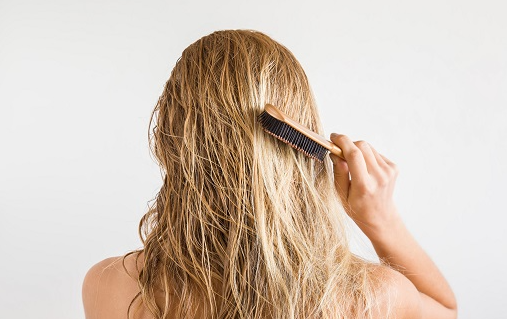
Breakage has two main axes: external factors + internal factors.
- External factors (the most common)
-
Frequent straightening, dyeing, or bleaching
-
Using high-heat styling tools
-
Combing wet hair
-
Rubbing hair hard with a towel
-
Environmental exposure such as ultraviolet rays and fine dust³
These factors wear down the hair, and over time the hair becomes thinner and more fragile¹²³.
- Internal factors (nutrition, metabolism, scalp disease)
A deficiency in iron, vitamin D, zinc, or biotin can weaken follicle function and reduce hair strength, making it easier for hair to break⁷⁸⁹.
It has also been reported that in the early stages of scarring alopecia, breakage may appear before hair falls out from the root⁶.
Q3. I was diagnosed with trichorrhexis nodosa (TN).
What kind of condition is it?
Trichorrhexis nodosa is a condition in which the hair shaft becomes weak and breaks easily in the middle.
It is a pattern often seen in hair repeatedly exposed to external stressors⁴.
Under a microscope, it is characterized by a broom-like, frayed appearance at the ends⁵.
Clinically, people with trichorrhexis nodosa often have patterns involving
In many cases, it improves with lifestyle correction alone, so proper hair-care education is
very important.
Q4. If the breakage becomes severe, will it eventually lead to hair loss?
It does not directly lead to hair loss in which the follicles themselves are destroyed.
However, if the hair keeps breaking before it can grow long, it can look as though hair volume has decreased, and the stress of hair loss can arise in the same way.
The number of hairs does not decrease, but because the length is not maintained, the hair appears thinner.
In particular, when many hairs are becoming finer, breakage can blur the boundary with actual hair loss, making early diagnosis difficult¹⁰.
Q5. What lifestyle changes are most effective for reducing breakage and helping recovery?
Based on studies and clinical experience, the following four changes show the most immediate improvement.
-
Never comb hair roughly when it is wet
-
Keep heat styling tools at 150–160°C or lower and minimize use time
-
Do not rub with a towel; press to dry instead
-
Use conditioner and treatment products to reduce friction and decrease damage during combing¹¹
In particular, conditioner is very effective at reducing friction between hairs, and reports show that the more damaged the hair, the greater the improvement¹¹.
Q6. When is a checkup needed?
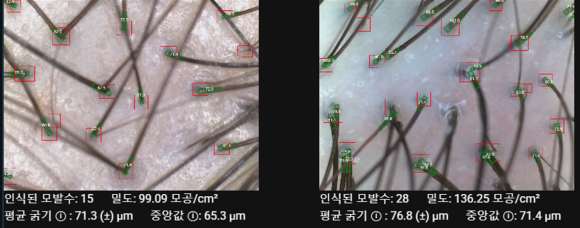
Testing is needed if you notice the following signs.
-
A noticeably wider part line
-
Itching or stinging of the scalp
-
An increase in both breakage and hair falling out from the root at the same time
-
A pattern of concentrated breakage in a specific area
-
Findings suspicious for trichorrhexis nodosa
In particular, because some forms of scarring alopecia can show breakage in the early stage⁶, evaluation can be helpful when the line between simple damage and disease is unclear.
| Category | Breakage | Hair loss |
|---|
| Cause | Heat, dyeing, friction, ultraviolet rays, nutritional deficiency¹²³⁷⁸⁹ | Hormones, genetics, inflammation, autoimmune disease |
| Type of loss | Breaks in the middle | Falls out from the root |
| Change in follicle count | No decrease | Actual decrease may occur |
| Appearance | Looks thinner, reduced volume | Widened part line, receding hairline |
| Key treatment | Block the cause of damage + care¹¹ | Medication, injections, lifestyle correction |
| Prognosis | Recovery is fast with lifestyle correction | Long-term management may be needed depending on the type |
Now it’s time for hairhair, Kim Jino.
Pilsaengsinmo (必生新毛).

Written by: Kim Jino of New Hair Plastic Surgery Clinic (Public Relations Director, Korean Association of Plastic Surgeons / Academic Director, Korean Society for Laser, Dermatology and Hair)
References
-
Fernandes, C., Guimarães, R., & Ribeiro, H.M. (2023). On Hair Care Physicochemistry: From Structure and Degradation to Novel Biobased Ingredients. Cosmetics, 10(1), 12. cited: "Environmental, thermal, and chemical weathering cause damage to the hair surface, resulting in an unpleasant feeling and appearance."
-
Osório, F. & Tosti, A. (2011). Hair Weathering, Part 1: Hair Structure and Pathogenesis. Cosmetic Dermatology, 24, 533–538. cited: "A decrease in hair shine, elasticity, and strength is observed, ultimately leading to hair breakage."
-
Cedirian, S. et al. (2025). The exposome impact on hair health: etiology and management. Journal of the American Academy of Dermatology, in press. cited: "Continuous exposure to such elements can induce hair weathering, leading to hair thinning, breaking, weathering, and overall premature aging of the hair."
-
Haskin, A. & Aguh, C. (2017). Pearls for the management of acquired trichorrhexis nodosa. Journal of Dermatological Treatment, 28(4), 355–359. cited: "Acquired trichorrhexis nodosa (TN) is a common cause of hair loss best defined as a distinctive response of the hair shaft to extrinsic or environmental factors."
-
Burkhart, C.G. & Burkhart, C.N. (2025). A Clinical Review of Trichorrhexis Nodosa. The Open Dermatology Journal, 19, e18743722373771. cited: "Trichorrhexis nodosa is the most common form of hair breakage with a diagnostic splayed paint brush bristle appearance under light microscopy."
-
Callender, V.D. et al. (2012). Hair Breakage as a Presenting Sign of Early or Occult Central Centrifugal Cicatricial Alopecia. JAMA Dermatology, 148(9), 1040–1045. cited: "Hair breakage may be a key sign of early central centrifugal cicatricial alopecia."
-
Almohanna, H.M., Ahmed, A.A., Tsatalis, J.P., & Tosti, A. (2019). The Role of Vitamins and Minerals in Hair Loss: A Review. Dermatology and Therapy, 9(1), 51–70. cited: "Most authors agree on supplementing vitamin D in patients with hair loss and vitamin D deficiency."
-
Singh, R. et al. (2024). Assessment of nutritional deficiencies and their role in hair and scalp disorders. Clinical Dermatology Research Journal, 9(4), 1–8. cited: "Biotin deficiency, though rare, is linked to thinning hair, hair breakage, and scalp dermatitis."
-
Oxford Online Pharmacy (2024). Which vitamin deficiencies cause hair loss? cited: "Even slightly low levels of vitamins like B12, Zinc, D, or Iron daily can starve your hair follicles, leaving strands limp and growth stunted."
-
Draelos, Z.D. (2010). Cosmetic Techniques for Minimizing Hair Loss. In: Draelos, Z.D., Dermatologic Cosmetic Procedures in Women. Wiley-Blackwell. cited: "Loss can be minimized by recommending proper grooming, shampooing, conditioning, styling and cosmetic hair care practices."
-
Singh, S. (2021). Practical Approach to Hair Loss Diagnosis. Springer, Cham. cited: "The use of conditioners helps in reducing the friction between the hair shafts and makes it easier to groom."
[This post is written directly by a board-certified plastic surgeon for informational purposes in accordance with Article 56, Paragraph 1 of the Medical Service Act. Hair transplant surgery and treatment may have side effects, so please make a careful decision after consulting with a specialist.]