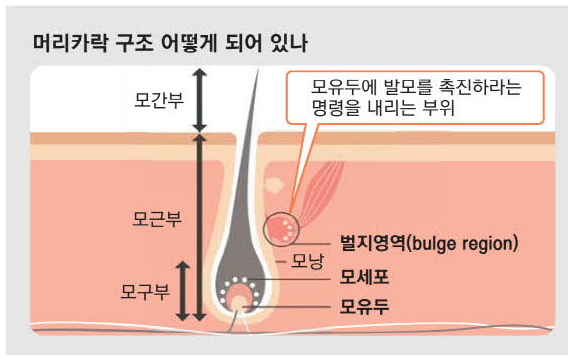
Hair Structure
Source - Maeil Business Newspaper
The concept of regenerating hair follicles in the laboratory and producing as much hair as desired has long been recognized as a technology that could dramatically change hair loss treatment.
However, many steps still remain before it can be realistically applied in clinical practice.
In particular, the fact that dermal papilla cells, the key structure of the hair follicle, quickly lose their function during culture has long been the biggest technical barrier researchers have faced¹.
Recently, various approaches such as 3D culture, control of cellular senescence, and reproduction of the cellular microenvironment have emerged, and the possibilities are gradually opening up²⁴⁵.
In today’s post, I will summarize the current status of hair follicle cloning research and the possibility of its practical clinical application.
| Key Question | Summary of Conclusion |
|---|
| Why is hair follicle cloning difficult? | Because cultured dermal papilla cells lose function and genes related to inflammation and aging increase¹ |
| How far have technical improvements progressed? | Limited recovery potential has been observed in areas such as 3D culture, microenvironment reproduction, and senescent cell removal²⁴⁵ |
| Why is it difficult to apply to humans? | Complex hair follicle structure, cellular aging, safety, and regulatory and manufacturing process issues³ |
| What effect is expected if realized? | A possible unlimited supply of hair follicles could change the paradigm of existing hair transplantation |
| What stage is it at now? | The most realistic view is that it is still in the “research stage exploring possibilities”³ |
Q1. Why is hair follicle cloning so difficult?
The biggest reason is that the key cells, dermal papilla cells, lose their original abilities during culture.
According to research, when human dermal papilla cells are kept in a culture dish for a period of time, the hair-inducing signals turn off and instead the expression of genes related to fibrosis, inflammation, and stress increases¹.
Although they look like the same cells on the outside, functionally they have already lost much of their ability to create hair follicles.
In clinical practice as well, the reason cell-based therapies have not been easily commercialized is this loss of function.
Q2. What improvement attempts have been made in recent research?
Researchers are trying various approaches to restore function.
Results have been reported showing that growing cells in a three-dimensional environment rather than a flat culture partially restores the gene expression needed for hair follicle induction².
In some studies, cases have also been reported in which dermal papilla cells cultured this way were induced to form new hair follicle structures³.
- Removal of senescent cells
It has been observed that hair follicle-forming function is restored when senescent cells are selectively removed from dermal papilla cells⁴.
This shows that cellular stress accumulated during culture is an important cause of functional decline.
- Reproduction of the hair follicle microenvironment
A method has also been proposed in which dermal papilla cells are co-cultured with skin and stromal cells to mimic the actual in vivo environment⁵.
This approach is reported to make it easier to maintain performance than conventional flat culture because it can preserve the signaling system that enhances the inductive ability of dermal papilla cells.
Q3. Why does it work well in animal experiments but remain difficult to apply to humans?
This is one of the most common questions. There are three main reasons.
- Structural complexity of human hair follicles
Human hair follicles are much more complex than those of mice, and their growth cycles are longer, making it difficult to control the signals, direction, and thickness needed for regeneration³.
- Rapid aging of human cells
During culture, human cells lose function quickly⁴, and in clinical application, the stability of such cells must be sufficiently proven.
- Safety and manufacturing process issues
They must be cultured without contamination, quality standards must be secured before transplantation, and patient-specific manufacturing processes must be systematized, all of which require enormous cost and time³.
Q4. Then when will hair follicle cloning become possible?
At this stage, it is more accurate to view it as a research phase that is uncovering the key principles one by one rather than saying it is just around the corner.
Research to restore lost function by regulating gene signals is actively underway, but there are still many technical and regulatory barriers before clinical application can be discussed.
However, if the technology matures and becomes feasible, the paradigm of hair transplantation will change completely.
That is because it will become possible to prepare as many hair follicles as needed from a small number of collected cells.
Q5. Then what is the most realistic treatment patients can choose right now?

Hair loss medication
Source - Dalmoin News
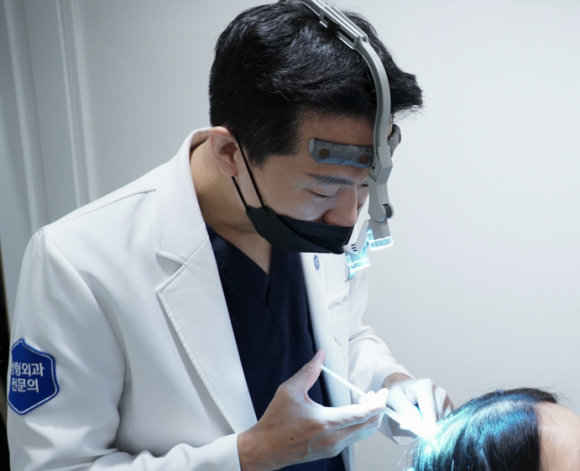
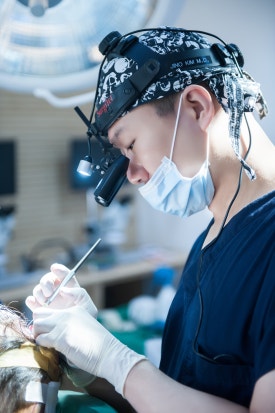
As of now, the most proven treatments are the following three.
Medication: Proven to slow the progression of hair loss in both men and women
Injection therapy and device therapy: Supportive roles for improving density and
improving the scalp environment
Hair transplantation: A method that actually transfers hair follicles and can clearly increase hair density
Hair follicle cloning is more likely to become an extension of hair transplantation in the long term rather than replacing these treatments.
Now it’s time to grow hairhair, Kim Jin-oh.
필생신모(必生新毛).

Written by: Kim Jin-oh, New Hair Plastic Surgery (Public Relations Director, Korean Society of Plastic and Reconstructive Surgeons / Academic Director, Korean Society of Laser Dermatology and Hair)
- Aoi, N., Inoue, K., Chisa, K., Aoki, J., Kishimoto, J. & Sato, T., 2012. Inductive capacity of human dermal papilla cells: therapeutic potential and challenges. Stem Cells Translational Medicine, 1(8), pp.615–625.
cited: "One major reason for this is that human DPCs (hDPCs) lose their hair-inductive capacity after long-term culture."
- Higgins, C.A., Chen, J.C., Cerise, J.E., Jahoda, C.A.B. & Christiano, A.M., 2013. Microenvironmental reprogramming by three-dimensional culture enables dermal papilla cells to induce de novo human hair-follicle growth. Proceedings of the National Academy of Sciences of the United States of America, 110(49), pp.19679–19688.
cited: "The papilla transcriptional signature can be partially restored by growth in 3D spheroids."
- Castro, A.R., Logarinho, E. & Oliveira, M.J., 2020. Tissue-engineering strategies for human hair follicle regeneration: how far from a hairy goal? Stem Cells Translational Medicine, 9(3), pp.342–350.
cited: "No cell-based product is clinically available for hair regeneration therapy to date."
- Pappalardo, A., Weber, E.L., Christiano, A.M. & Plikus, M.V., 2025. Restoration of hair-follicle inductive properties by depletion of senescent cells in human dermal papilla. Aging Cell, 24(1), e14353.
cited: "Senolytic-depleted DP cells exhibited restored hair inductive properties and regenerated new follicles."
- Liu, Z., Sun, Y., Chen, R., Li, X., Huang, S. & Wang, Q., 2023. An optimized 3-D co-culture system restores hair-inductive characteristics of human dermal papilla cells by mimicking the in vivo microenvironment. Biomaterials, (online ahead of print).
cited: "A 3-D co-culture system can restore hair-inductive characteristics by mimicking the in vivo microenvironment."
[In accordance with Article 56, Paragraph 1 of the Medical Service Act, this post is written directly by a board-certified plastic surgeon for informational purposes. Hair loss surgery and treatment may have side effects, and you should make a careful decision after consulting with a specialist.]