When treating hair loss, I often hear the question, “If I sleep well, will I lose less hair?”
At the core of this question is melatonin.
Melatonin is generally known as a hormone that induces sleep,
but recent studies have repeatedly reported that melatonin directly affects the scalp and the hair follicle environment itself¹.
In today’s post, I will organize the most common patient questions about whether melatonin is actually helpful and how it relates to hair loss.
Why Is Melatonin Gaining Attention in Hair Loss Management?
Summary
Melatonin is a substance that is produced and acts within the hair follicle itself
Antioxidant and anti-inflammatory effects help buffer damage to hair follicles
When used topically, increased anagen hair ratio and hair density have been reported
A realistic option for female hair loss, early hair loss, and adjunct treatment
Q1. Does melatonin really work on the scalp and hair follicles?
Yes. There is now enough evidence to go beyond viewing it as only a sleep hormone.
Melatonin is not only secreted by the brain, but is also synthesized in hair follicle cells and responds through receptors¹.
Clinically, hair follicles are tissues that are highly sensitive to external stimuli (stress, ultraviolet light, oxidative stress), and melatonin acts like a local protective substance that reduces this damage.
Q2. Will melatonin stop hair loss?
Thinking of melatonin as a medication that completely blocks hair loss is closer to an unrealistic expectation.
However, when research and clinical experience are considered together, melatonin is better understood as helping slow the rate of hair shedding and supporting the maintenance of the growth phase².
It is reasonable to interpret it as an adjunctive approach that helps ease the feeling of sudden shedding or gives follicles time to recover.
Q3. How effective was it in actual studies?
In several clinical studies, groups that used topical melatonin for a certain period showed the following changes.
-
Increased anagen hair ratio³
-
Increased hair density in scalp photography-based analysis⁴
-
Reduced the number of hairs easily shed on the pull test⁴
In particular, changes were often observed at around 3 to 6 months, which is also consistent with the characteristics of the hair cycle.
Q4. Does it have meaning for female hair loss as well?
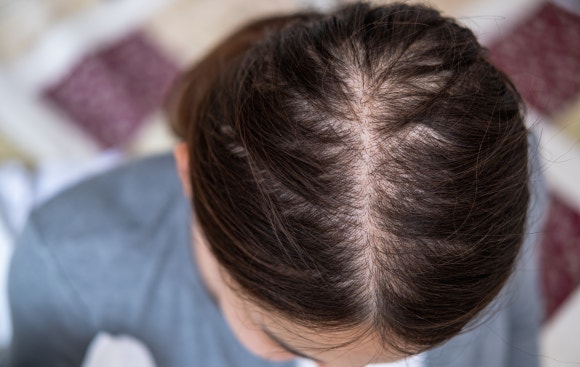
This is one of melatonin’s strengths.
In female hair loss treatment, there are often limitations on the use of hormone-related medications.
By contrast, topical melatonin places less burden on systemic hormone changes and has been reported to have relatively high safety⁴.
In clinical practice, it is increasingly being explained as an adjunct option for female patients, including those who are pregnant, breastfeeding, or have limited medication choices.
Q5. Can it also be used for male pattern hair loss?
Yes. The core mechanism of male pattern hair loss is DHT, but factors that accelerate hair loss progression also include microinflammation, oxidative stress, and a worsening scalp environment.
Melatonin helps buffer these factors that worsen the hair follicle environment
and, when used together with finasteride and minoxidil, it can be described as filling in gaps from an environmental management perspective⁶.
Q6. Are oral melatonin and topical melatonin different?
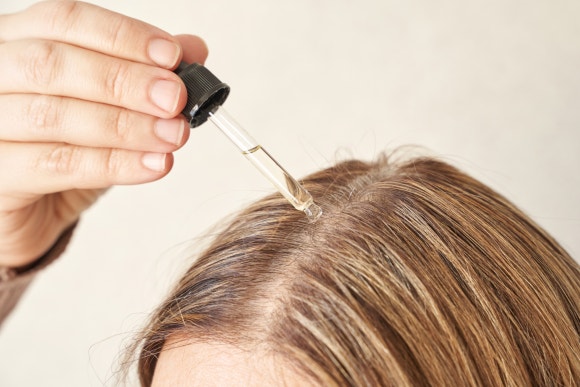
In hair loss research, the form that has been meaningfully evaluated is mostly topical (applied to the scalp) melatonin.
The topical method acts directly around the hair follicle while limiting increases in blood concentration, so it is considered a method with a lower risk of systemic side effects⁴.
It is best to understand that its expected effects and purpose are different from oral melatonin taken for sleep.
Q7. Is it enough as a standalone treatment?
Based on the current level of evidence, it is more reasonable to view it as an adjunct treatment rather than a standalone treatment. Another limitation is that studies differ in concentration, formulation, and combination ingredients, so standardization remains insufficient⁶.
However, for early hair loss, sensitive scalps, or cases where existing treatments feel burdensome, it can be considered a worthwhile option to try.
| Category | Summary |
|---|
| Site of action | Synthesized and receptor-responsive within the hair follicle |
| Main role | Antioxidant, anti-inflammatory, maintenance of the growth phase |
| Expected effects | Increased hair density, reduced shedding |
| Suitable candidates | Female hair loss, early hair loss, adjunct treatment |
| Limitation | Lack of large-scale standardized studies |
Now it is time for hairhair, Kim Jin-o.
필생신모(必生新毛).
Written by: Kim Jin-o, New Hair Plastic Surgery (Public Relations Director, Korean Society of Plastic and Reconstructive Surgeons / Academic Director, Korean Society for Laser, Dermatology and Hair)
References
-
Fischer TW, Slominski A, Tobin DJ, Paus R. 2008. Melatonin and the hair follicle. Journal of Pineal Research, 44(1), 1–15.
-
Greco G, et al. 2024. Clinical studies using topical melatonin. International Journal of Molecular Sciences, 25(10), 5167.
-
Fischer TW, Burmeister G, Schmidt HW, Elsner P. 2004. Melatonin increases anagen hair rate in women with androgenetic alopecia or diffuse alopecia. British Journal of Dermatology, 150(2), 341–345.
-
Fischer TW, Trüeb R, Hänggi G, Innocenti M, Elsner P. 2012. Topical melatonin for treatment of androgenetic alopecia. International Journal of Trichology, 4(4), 236–245.
-
Greco G, Di Lorenzo R, Ricci L, et al. 2023. Melatonin and the human hair follicle. Journal of Drugs in Dermatology, 22(3), 260–268.
-
Nestor MS, et al. 2021. Treatment options for androgenetic alopecia. Journal of Cosmetic Dermatology, 20(12), 3759–3785.
[In accordance with Article 56, Paragraph 1 of the Medical Service Act, this post has been written directly by a board-certified plastic surgeon for the purpose of providing information. Hair loss surgery and treatment may have side effects, and you should make a careful decision after consulting with a specialist.]