Hair loss is less a disease that suddenly begins at a specific age and more a change that is gradually observed in different ways depending on age and individual condition.
Even with the same type of hair loss, the actual appearance often differs by age group.
Late teens to early 20s: subtle early changes
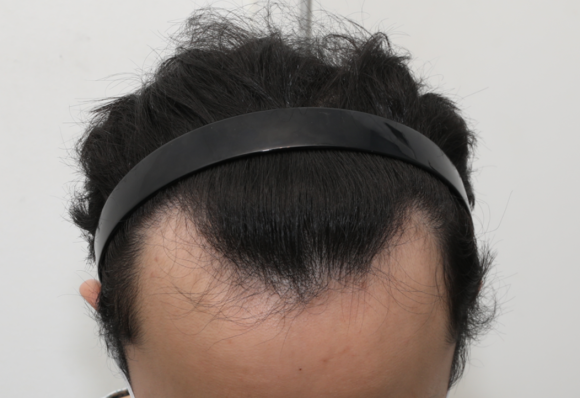
Hair loss with an M-shaped hairline in the 20s
In Korea, it is not very common for noticeable hair loss to appear during high school years.
However, in recent years, due to changes in lifestyle habits, stress factors, and similar influences,
there have been some cases in which people notice changes in hair thickness or changes in the shedding cycle at an earlier stage.
At this stage, rather than losing a large amount of hair, it often begins with very subtle changes such as hair feeling thinner than before or the crown seeming a little more visible.
Late 20s to 30s: the period when changes become noticeable
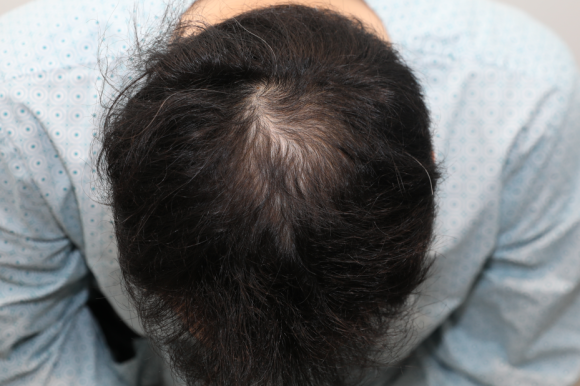
Hair loss at the crown in the 30s
As people move from their late 20s into their 30s, changes that they can notice themselves appear more often in areas such as the hairline, crown, and part line.
However, even within the same age group, there is a wide range of individual differences in progression speed, affected areas, and degree of change.
After the 40s: accumulated changes
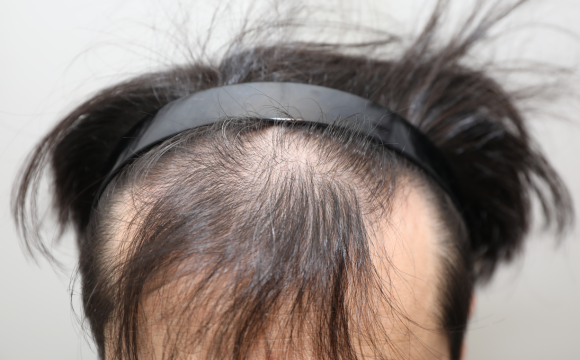
Hair loss with an M-shaped hairline in the 50s
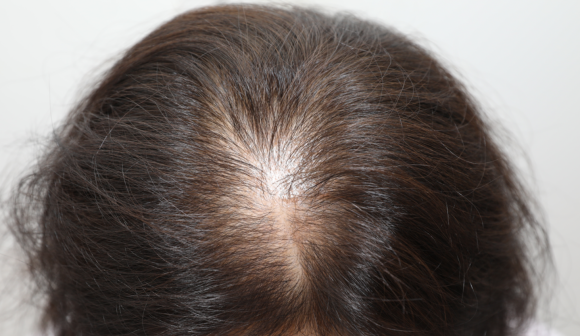
Hair loss at the crown in the 50s
After the 40s, changes in the scalp environment often accompany changes in the hair growth cycle.
Hair loss at this stage is usually observed not as a sudden progression over a short period, but as a pattern in which changes accumulated over a long time are naturally revealed.
The more important criterion than age is the change you are currently feeling
Hair loss is difficult to judge by age alone.
Even in actual clinical practice, the more important criterion is not that you should get tested because you are a certain age, but what kind of changes you are currently noticing.
-
When you feel that your hair has become thinner than before
-
When the amount of hair falling out during shampooing lasts longer than before
-
When you feel that your hair volume is not the same as before
If you have these specific changes, it may be worth considering an examination to check your current condition.
On the other hand, if there are no particular changes and only simple worries, an immediate examination may not be necessary.
Clinical approach through hair loss diagnosis
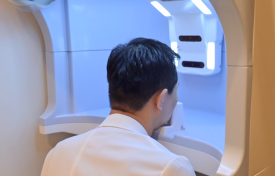
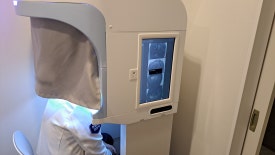
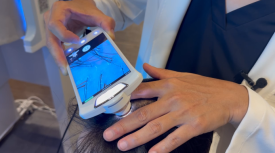

Hair loss diagnosis is not necessarily a step taken to begin treatment, but rather a process of objectively checking and recording the current condition of the scalp and hair.
Through testing, you can determine the current state and, if there are changes, leave a reference point for comparing future changes.
Hair loss treatment at New Hair Hair Transplant Clinic
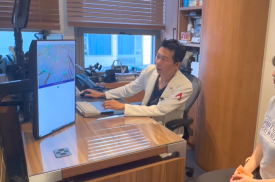
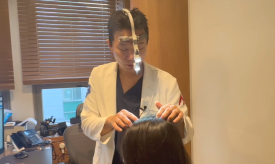
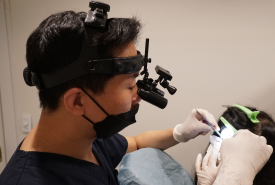
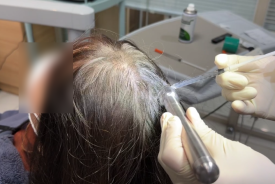
At New Hair Hair Transplant Clinic, hair loss care is approached not as a process in which examination and treatment are separate,
but as a flow in which the treatment direction is set based on the test results.
By comprehensively considering the overall scalp condition, hair thickness and density, microscopic findings, stress factors, and more,
the medical staff determines whether treatment is needed and, if so,
which approach is appropriate.
Even when treatment is deemed necessary, rather than applying the same treatment to all patients,
care is provided by adjusting the treatment method, composition, and application interval
according to individual characteristics such as the main areas where hair loss appears, the pattern of hair changes, and the scalp condition.
The characteristics of hair loss by age group are not a basis for determining when treatment should begin, but information for understanding what kinds of changes may appear depending on age.
Because hair loss varies greatly from person to person, the process of accurately understanding your own condition through testing and care, and then setting a management and treatment direction accordingly, can be the starting point for hair loss management and treatment.