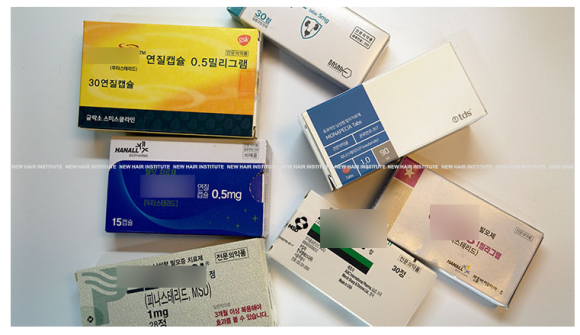
One of the questions patients who have taken hair loss medication for a certain period of time ask most often in the clinic is this:
“it clearly worked at first, but lately it doesn’t seem as effective as before.”
Behind this question, the word tolerance usually comes up.
However, the tolerance discussed in hair loss treatment is different from the drug tolerance we commonly know.
In today’s post, I’ll organize the common misunderstandings about hair loss medication and tolerance one by one, based on actual research findings and clinical experience.
Why Does Hair Loss Medication Feel Less Effective Than Before?
Summary
Taking hair loss medication for a long time does not generally cause tolerance
A feeling that the effect has decreased is mostly explained by disease progression, individual differences in response, and the passage of time
The important thing is not to switch medications, but to reassess the treatment strategy according to the current condition
Q1. If you take hair loss medication for a long time, does the body adapt and the effect wear off?
Many people think of antibiotic resistance, but finasteride and dutasteride do not create tolerance in that way.
In a study analyzing more than 800 Japanese men who took the medication long term for over 5 years, overall hair loss tended to remain stable or improve¹.
In clinical practice as well, it is much more common that the initial degree of improvement passes and the effect simply feels less noticeable, rather than the medication completely stopping work.
Q2. Then why does it feel like the effect is not as good as before?
The key is the progressive nature of hair loss.
Hair loss medication does not stop the process; it slows it down.
As time passes, if the progression of hair loss catches up again to the medication’s suppressive effect,
patients get the impression that the medicine has become weaker.
This phenomenon has also been repeatedly confirmed in studies².
Q3. Why does minoxidil seem to improve things at first, then feel like it plateaus?
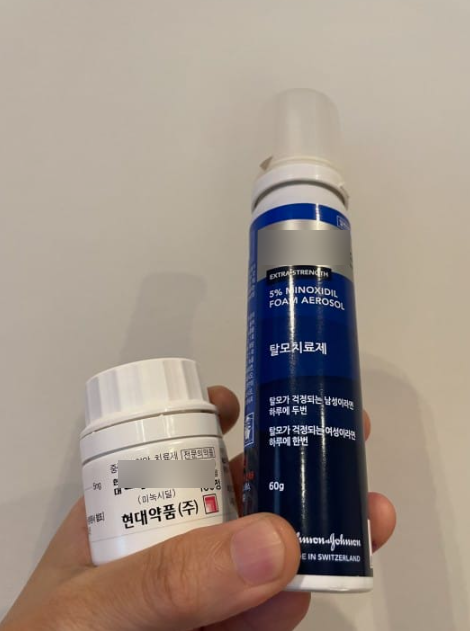
Minoxidil is a medication that shows its clearest changes during the first 6 to 12 months.
In a 30-month follow-up study, the number of hairs that had increased at 12 months decreased somewhat afterward,
but still remained at a level higher than before treatment⁴.
This is less a loss of effect and more a transition into a maintenance phase after the peak.
Q4. Why is the effect so different from person to person even with the same medication?
This difference is explained by individual biological variation rather than tolerance.
Minoxidil must be converted into an active form in the scalp to work, and sulfotransferase activity involved in this process varies from person to person⁶.
In fact, studies have reported that measuring this enzyme activity can help predict treatment response⁷.
Finasteride also shows differences in response depending on the length of androgen receptor gene repeats⁸⁹.
Q5. Should you switch medications right away if it feels like tolerance has developed?
In most cases, switching medications immediately is not the answer.
In clinical practice, the first step is to check the following:
-
Whether the current goal is maintenance or recovery
-
How consistently the medication is being taken or applied
-
Whether there have been recent environmental changes such as stress, weight changes, or sleep issues
Recent research has also shown that there is no major overall superiority between oral minoxidil and topical minoxidil⁵.
This is better understood not as a problem of tolerance, but as a matter of choosing what fits the situation.
Why Does Hair Loss Medication Feel Less Effective Than Before?
Summary Table
| Change the patient feels | Actual cause | Evidence |
|---|
| A feeling that the effect has decreased | Changes in the rate of hair loss progression | Long-term finasteride study¹ |
| Minoxidil seems to plateau | Maintenance phase after the initial peak | 30-month follow-up study⁴ |
| Individual differences in response | Differences in enzymes and genes | Minoxidil and AR gene studies⁶⁷⁸ |
| Anxiety that the medication should be changed | A matter of goal setting | Oral vs topical study⁵ |
What is called tolerance in hair loss medication is actually closer to an illusion created by the time course of the disease and individual differences.
The important thing is not to keep changing medications out of anxiety, but to objectively assess the current condition and adjust the strategy.
Understanding that hair loss treatment is not a sprint but a long-term process managed over time will make the treatment course feel much more stable.
It’s time to grow hairhair, Kim Jin-oh.
I will surely grow new hair (必生新毛).

Written by: Kim Jin-oh of New Hair Plastic Surgery (Public Relations Director, Korean Association of Plastic Surgeons / Academic Director, Korean Laser Dermatology Hair Research Society)
References
- Kawashima, M., Hayashi, N., Igarashi, A., Kitahara, H. and Maeda, T. (2015) Five-year efficacy of finasteride in 801 Japanese men with androgenetic alopecia. Journal of Dermatology, 42(7), pp. 735–738.
cited:"Continuous finasteride treatment for 5 years improved androgenetic alopecia with sustained effect among Japanese men."
- Tsunemi, Y., Irisawa, R., Yoshiie, H., Brotherton, B. and Ito, T. (2016) Long-term safety and efficacy of dutasteride in the treatment of male patients with androgenetic alopecia. Journal of Dermatology, 43(9), pp. 1051–1058.
cited:"Hair growth was improved from baseline throughout the treatment period."
- Gupta, A.K., Mays, R.R. and Dotzert, M.S. (2025) Current and emerging treatments for androgenetic alopecia. Annals of Dermatology, 37(1), pp. 1–15.
cited:"Finasteride and dutasteride reduce scalp and serum dihydrotestosterone levels by inhibiting 5α-reductase."
- Koperski, J.A., Olin, J.T., McDonald, J.R. and Mills, O.H. (1987) Topical minoxidil therapy for androgenetic alopecia: A 30-month study. Journal of the American Academy of Dermatology, 16(3), pp. 677–685.
cited:"At 30 months, mean hair counts had decreased from the 12-month level but remained elevated over baseline counts."
- Penha, M.A., Ramos, P.M., Miot, H.A. and Trüeb, R.M. (2024) Oral minoxidil versus topical minoxidil for male androgenetic alopecia: A randomized clinical trial. Journal of the American Academy of Dermatology, 90(2), pp. 404–411.
cited:"Oral minoxidil did not demonstrate overall superiority over topical minoxidil."
- Goren, A., Shapiro, J., Roberts, J., McCoy, J. and Zarrab, Z. (2014) Novel enzymatic assay predicts minoxidil response in the treatment of androgenetic alopecia. Dermatologic Therapy, 27(3), pp. 171–173.
cited:"Minoxidil is converted in the scalp to its active form, minoxidil sulfate, by the sulfotransferase enzyme."
- Roberts, J., Desai, N., McCoy, J. and Goren, A. (2014) Sulfotransferase activity in plucked hair follicles predicts response to topical minoxidil in female pattern hair loss. Dermatologic Therapy, 27(4), pp. 252–254.
cited:"Sulfotransferase activity predicts treatment response with high sensitivity and specificity."
- Wakisaka, N., Tokura, Y., Yagi, H., Matsumura, Y. and Furukawa, F. (2005) Effectiveness of finasteride on patients with male pattern baldness who have different androgen receptor gene polymorphisms. Journal of Investigative Dermatology Symposium Proceedings, 10(3), pp. 293–294.
cited:"Patients with a smaller number of CAG repeats showed a higher improvement rate with finasteride."
- Ghassemi, M., Abedini, R., Safizadeh, H. and Ghassemi, F. (2019) The effect of GGC and CAG repeat polymorphisms of the androgen receptor gene on response to finasteride therapy in men with androgenetic alopecia. Journal of Research in Medical Sciences, 24, p. 104.
cited:"Shorter GGC and CAG repeat lengths were associated with a better therapeutic response."
[This post is written directly by a board-certified plastic surgeon for informational purposes in accordance with Article 56, Paragraph 1 of the Medical Service Act. Hair transplant surgery and treatment may have side effects, and you should make a careful decision after consulting with a specialist.]