「Reviewed and approved by the Medical Advertising Review Committee of the Korean Medical Association, No. 260401-중-210484」
Hello.
I am Kim Jin-oh, a physician with 24 years of experience.
I focus on hair loss treatment.
It is often said that anything done excessively is not good, but dieting is one area where it is especially easy to push too far.
That is because losing weight is not easy unless you are firmly determined. Perhaps that is why people who diet are sometimes described as being “strict.”
After struggling to lose weight, you would naturally expect to feel happy. But in the clinic, I often hear a very different story.
After dieting, I lost a lot of hair.
It seems like it is not growing back the way it used to.
Hair loss that occurs after dieting like this is called diet-induced hair loss.
Why does a diet started for blood sugar control and health end up affecting your hair in particular?
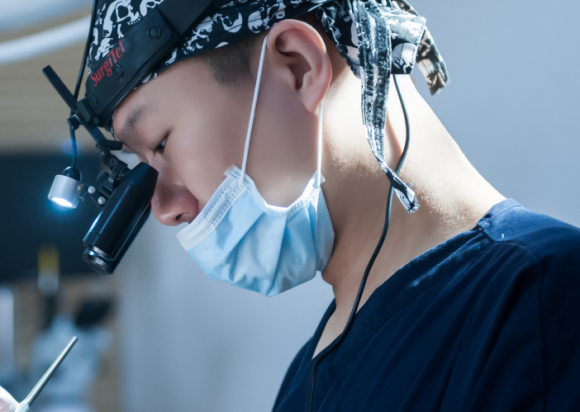
Why diet-induced hair loss happens
To understand the result, we need to look at the cause first.
The basics of dieting are dietary control and exercise. The most desirable approach is to proceed slowly while considering nutritional status, but in reality many people suddenly reduce their meals or choose extreme restrictions on carbohydrates and fat.
This approach may be effective for short-term weight loss, but the body can interpret it as a signal of crisis.
When nutritional intake drops sharply, stress hormones increase, which can trigger hair loss or worsen existing hair loss.
Because the body prioritizes survival, when it judges a situation to be an emergency, it may suppress hair growth first, since that is a process with rapid cell division.
As a result, the hair growth cycle becomes disrupted, and hair may become thinner or fall out all at once.
This is why people say, “After dieting, I lost a lot of hair.”
Can hair that has fallen out come back?
This is the question many people are most curious about.
If the main cause was excessive dietary restriction, hair may gradually recover once nutritional intake returns to normal. However, the important point is that recovery is very slow.
Hair does not regenerate as quickly as skin.
It takes time for the scalp environment to stabilize and for the hair follicles to regain their original growth cycle. In general, you need to observe for at least 3 to 4 months before noticing changes.
However, if the hair loss is severe or if the person already had a genetic predisposition to hair loss, natural recovery alone may not be enough.
In such cases, treatment based on an accurate diagnosis may be necessary.
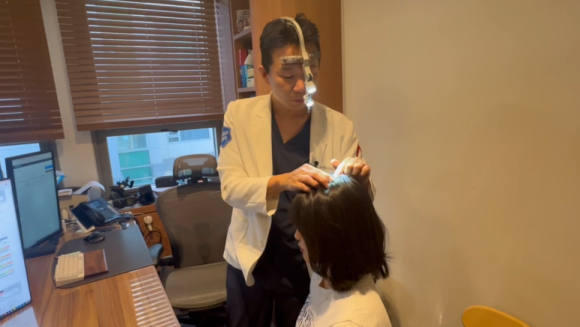
Three-step hair loss diagnosis at New Hair Hair Transplant Clinic
The starting point for hair loss treatment is an accurate diagnosis.
In general, consultation, photography, and microscopic examination are the basics, but our clinic operates a three-step hair loss diagnosis system for a more accurate evaluation.
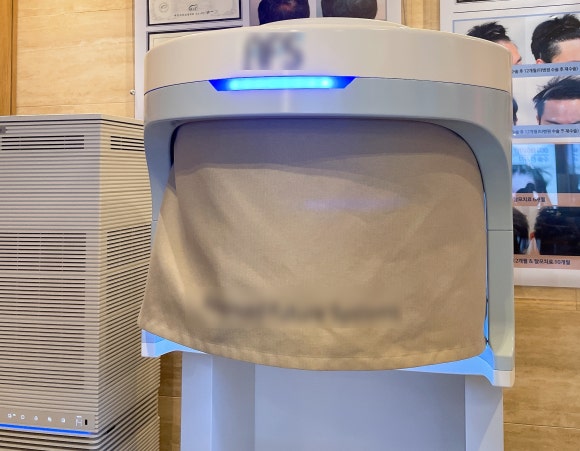
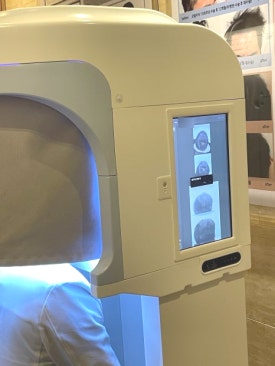
- Overall scalp and hair loss photography
Using photos and microscopy to assess the current condition can be the foundation of treatment.
However, because the photos are not always taken under the same lighting and angle, accurate comparison can be difficult.
At our clinic, we take overall scalp photographs so that they can be compared under the same lighting and angle each time.

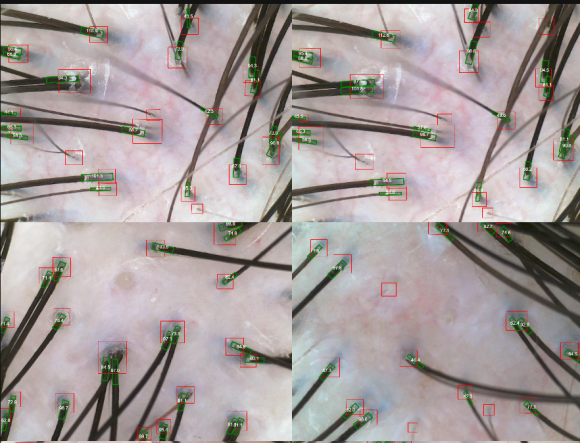
- Microscopic scalp and follicle photography
We directly examine the scalp and follicle condition to analyze hair thickness, density, inflammation, sebum secretion, and more.
- Medical consultation
A consultation is conducted based on data from multiple tests. In hair loss, what you can see is important, but it is also very important to confirm the onset time, lifestyle habits, family history, and prior treatment history through consultation.
Through these three processes, we accurately understand the current hair loss condition and set a treatment direction that fits the individual.
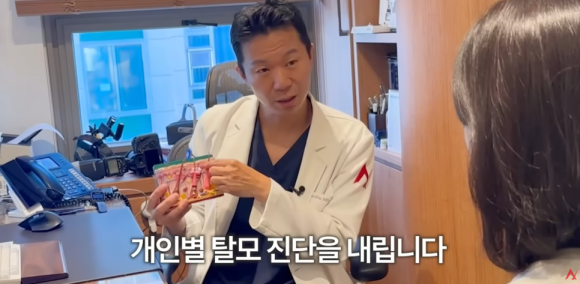
Hair loss treatment methods
Hair loss treatment includes prescription medication, injection therapy, low-level laser therapy, MTS, low-temperature plasma, and cooling therapy.
Because the appropriate treatment direction differs from person to person, every process is carried out in a personalized way.
Even after treatment, progress is monitored regularly and the treatment direction is adjusted as needed.
Many people are worried about hair loss caused by dieting.
That is because concerns often follow, such as whether they should continue dieting and whether the hair loss will get worse.
In situations like this, rather than judging on your own, it can be helpful to have the exact condition checked at a clinic and, if necessary, receive treatment at the same time.
Since the results of hair loss treatment can vary depending on the medical team’s experience and testing system, please check whether the clinic is staffed by experienced medical professionals and whether it has a systematic diagnostic process.
Thank you for reading.
Sincerely,
Director Kim Jin-oh
The validity of this review approval is limited to this page only