When treating female pattern hair loss, one of the questions patients ask most often is:
Can women take hair loss medications made for men?
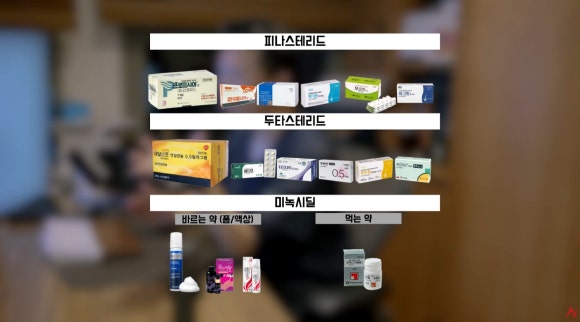
In fact, finasteride and dutasteride were originally developed to treat male pattern hair loss and benign prostatic hyperplasia.
So when women are told to take them, it can seem dangerous, and many worry that they may cause hormone-related problems.
However, as more studies on female pattern hair loss (FPHL) have accumulated, it has become increasingly clear that female hair loss may also be related in part to androgen (DHT)².
And in a large study published in 2025, the use of finasteride and dutasteride in patients with female pattern hair loss was found not to increase the risk of breast cancer or gynecologic cancer, drawing attention once again³.
Today, I’ll organize why the use of male hair loss medications is being discussed in female hair loss, what the actual safety data show, and how this is approached in clinical practice.

Finasteride, Dutasteride: Is It Okay for Women to Take Them? Summary
| Research has shown that DHT (dihydrotestosterone) may also play an important role in female pattern hair loss¹². |
|---|
| Finasteride and dutasteride are not officially approved for female pattern hair loss, but they are used off-label in actual practice. |
| In a data analysis of about 600,000 people, no increase in the risk of breast cancer or gynecologic cancer was found³. |
| They may offer a new treatment option for patients who feel limited by minoxidil alone. |
| However, women of childbearing potential must receive specialist counseling and use contraception because of the possible risk to the fetus. |
Does DHT affect female pattern hair loss too?
In the past, female pattern hair loss was often thought of simply as a phenomenon of hair thinning with age.
However, recent studies explain that DHT and androgen receptors may also play a role in female pattern hair loss¹².
DHT is a potent androgen converted from testosterone by 5-alpha reductase.
When this hormone acts excessively on hair follicles, the hair growth phase shortens and miniaturization gradually progresses¹.
In particular, some female patients show features such as:
This means that female pattern hair loss may be a condition related not only to simple aging, but also to hormonal sensitivity.
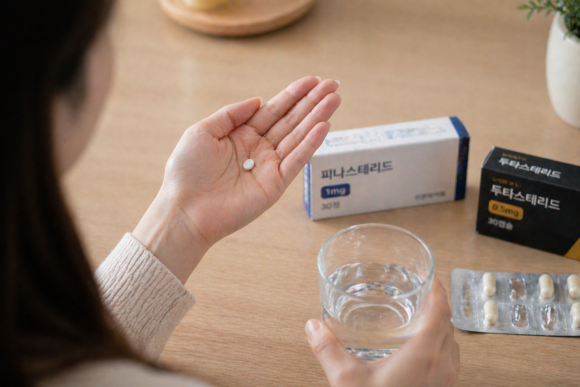
Then why aren’t they officially approved for women?
At present, the representative drug approved by the FDA for female pattern hair loss is minoxidil.
By contrast, finasteride and dutasteride have not been officially approved as treatments for female pattern hair loss.
The biggest reason is fetal risk.
Taking 5-alpha reductase inhibitors during pregnancy is known to potentially affect the development of the external genitalia of a male fetus.
For this reason, use in women of childbearing potential must be approached very cautiously.
In clinical practice, this is why off-label prescriptions are often limited to:
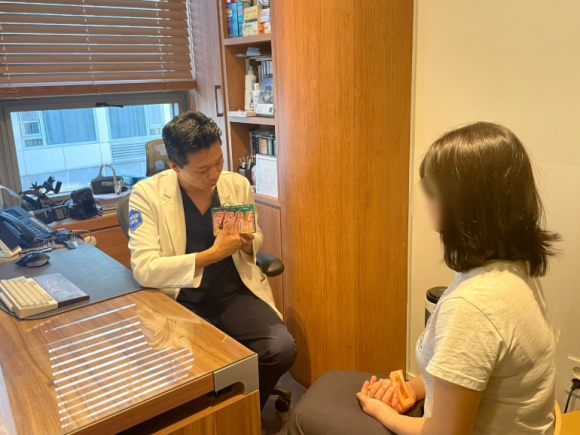
Why this study drew attention
This study was conducted based on the U.S. TriNetX database³.
TriNetX is a platform that analyzes real-world clinical records and insurance claims data, with the advantage of reflecting actual clinical practice.
This analysis included:
-
About 600,000 women with female pattern hair loss
-
Of these, about 11,690 users of 5-alpha reductase inhibitors
The researchers adjusted as much as possible for age, comorbidities, family history, and hormone therapy use, then followed patients for an average of about 3.8 years.
The results were quite meaningful.
Risk of breast cancer:
-
HR 0.93
-
95% CI 0.76–1.13³
In other words, no significant increase in risk was found.
In addition:
-
Uterine cancer
-
Ovarian cancer
-
Cervical cancer
No increased risk was observed for major gynecologic cancers³.
In actual practice, there are patients who do not respond sufficiently to minoxidil alone.
In particular:
In such cases, finasteride or dutasteride may be considered.
However, what is important is that these are not medications to be taken indiscriminately.
For women, the following all need to be considered:
That is why taking them on your own after reading information online is absolutely not recommended.
Q1. Can women take finasteride?
A. Yes, they can.
However, for female pattern hair loss, it is not an officially approved drug and is used off-label.
In actual practice, it is used selectively for some patients, and specialist judgment is required.
Q2. Does dutasteride increase the risk of breast cancer in women?
A. So far, large-scale studies have not confirmed an increase in the risk of breast cancer or gynecologic cancer³.
However, more long-term data are still needed.
Q3. Is it more effective than minoxidil?
A. It varies from patient to patient.
In some cases of female pattern hair loss, DHT has a greater influence, so 5-alpha reductase inhibitors may be helpful¹².
However, they are not equally effective for all women with hair loss.


Q4. Should women of childbearing potential never take them?
A. This is the most important point.
If pregnancy is possible, great caution is necessary because of fetal risk, and strict contraception management is essential.
Q5. Is DHT really important in female hair loss too?
A. Recent studies explain that DHT and androgen receptors may play important roles in female pattern hair loss as well¹².
In particular, the association is stronger in some patient groups.
Female pattern hair loss can no longer be explained simply as "a decrease in hair volume in women."
Recent studies show the possible role of DHT and androgen receptors in female hair loss, and accordingly, interest in 5-alpha reductase inhibitors such as finasteride and dutasteride continues to grow¹².
In particular, this large-scale study is significant in that no increase in the risk of breast cancer or gynecologic cancer was observed in women with female pattern hair loss³.
Of course, that does not mean anyone can take them easily.
The issue of fetal risk in women of childbearing potential remains very important, and each person’s hormonal status and pregnancy plans must be carefully considered.
Ultimately, treatment for female hair loss should be tailored by comprehensively considering:
The time has come for hairhair, Kim Jino.
필생신모(必生新毛).
Written by: Kim Jino, New Hair Plastic Surgery Clinic (Public Relations Director, Korean Society of Plastic and Reconstructive Surgeons / Academic Director, Korean Society of Laser Dermatology and Hair)
References
-
Ho CY, et al. (2023). Female Pattern Hair Loss: An Overview with Focus on the Role of Dihydrotestosterone and Androgen Receptors. PMC. Available at: https://pmc.ncbi.nlm.nih.gov/articles/PMC10379895/
-
Carmina E, et al. (2019). Female Pattern Hair Loss and Androgen Excess: A Report from the Journal of Clinical Endocrinology & Metabolism. J Clin Endocrinol Metab, 104(7):2875–2883.
-
J Am Acad Dermatol. (2025). No Increased Risk of Breast or Gynecologic Cancers in Women with 5α-Reductase Inhibitor Exposure for Female Pattern Hair Loss: A Population-Based Propensity Score-Matched Cohort Study. DOI: 10.1016/j.jaad.2025.05.267.
Related post worth reading