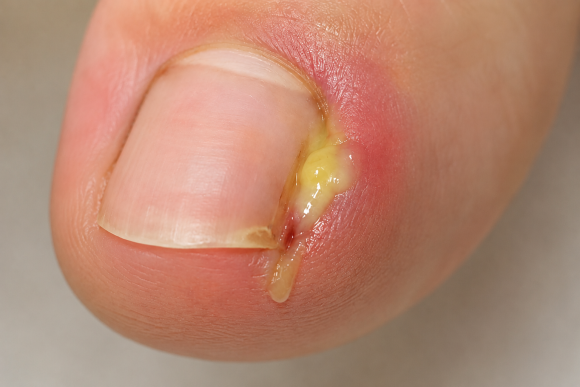
Ingrown Toenail With Pus? What to Do and When to Go to the Hospital
An ingrown toenail is a condition in which the edge of the toenail grows into the skin, causing pain and swelling.
It usually starts with a slight ache on the side of the nail, but over time the area can become red and swollen, and pus may even form.
In particular, if pus is visible, it is likely not just that “the nail is a little ingrown,” but that inflammation has developed.
At this point, it is important to assess the condition carefully and respond appropriately rather than forcefully digging it out or squeezing it at home.
What does it mean when an ingrown toenail develops pus?
An ingrown toenail occurs when the corner of the nail continually presses into or pierces the surrounding skin.
When the nail digs into the skin, a small wound can form, and bacteria can enter through that opening and cause inflammation.
At this point, the skin around the nail may become red and swollen, feel painful to the touch, and yellow pus or discharge may appear.
In other words, pus can be seen as a sign that an inflammatory response is occurring in the body.
At first, it may only feel like a slight throbbing pain next to the nail, but over time the pain can become severe enough to make walking difficult.
The pain may feel stronger especially when socks or shoes press on the toe.
Just because pus has formed does not mean surgery is always necessary.
However, because inflammation may already be present, leaving it alone or irritating it the wrong way can make it worse.

What you can do at home when pus appears
If only a very small amount of pus is visible and the pain is not severe, you can first try managing it in a way that does not irritate the toe.
However, the important principle for home care is not to “dig it out,” but to manage it so the inflammation does not get worse.
The first thing you can do is soak your foot in warm water.
Soaking the foot in lukewarm water that is not too hot for about 10–15 minutes can soften the skin around the nail and may reduce the pain a little. This can be done once or twice a day.
After soaking your foot, make sure to dry it well.
If the spaces between the toes and around the nail remain damp, it can become an environment where bacteria are more likely to grow.
Pat it dry with a towel, and if possible, keep it well ventilated.
Also, while it is painful, it is best to avoid tight shoes.
Shoes with narrow toe boxes or shoes that press on the toes can cause the nail to dig further into the skin.
If possible, wear shoes with enough room in the front for the toes, or shoes with less pressure such as slippers.
If the injured area hurts when it touches the outside, you can lightly cover it with clean gauze.
However, wrapping it too tightly can create pressure, so it is better to cover it lightly.
If you are in pain, taking a pain reliever after consulting a pharmacy is also an option.
But medication does not remove the cause of the inflammation, so if the pain continues or the pus increases, it is safer to see a doctor.

When you should go to the hospital
If you can see pus from an ingrown toenail, it is best to have it checked at a hospital if possible.
In particular, if you have any of the symptoms below, it is safer to receive medical care rather than just endure it at home.
First, if pus keeps coming out or the amount increases.
If it started as just a little bit but over time more pus comes out or the discharge continues, the inflammation may be progressing.
Second, if the toe becomes severely swollen and red.
If not only the skin around the nail but the entire toe becomes swollen or feels warm, the infection may have become more severe.
Third, if the pain is severe enough to make walking difficult.
If it is hard to wear shoes or if every step causes strong pain, simple home care may not be enough.
Fourth, if the inflamed area keeps getting larger.
If the red, swollen area seems to spread from around the nail to the entire toe, it is best to get medical attention quickly.
Fifth, if you have diabetes or poor circulation.
In such cases, even small foot wounds can worsen easily, so you should be extra careful if pus is visible. Even if the pain is not severe, it is safer to have it checked by a doctor.
At the hospital, depending on the condition, they may provide cleaning, dressing changes, medication, or inflammation management.
If the nail has dug deeply into the skin, treatment to trim part of the problematic nail may also be needed.
However, because many cases can be treated relatively simply when caught early, it is better not to wait too long.
If pus has formed from an ingrown toenail, there is a possibility that inflammation has already developed.
At home, you can manage it by soaking the foot in warm water, drying it thoroughly, and avoiding tight shoes.
However, if pus keeps coming out, the pain is severe, or the toe becomes swollen and red, it is best to see a doctor.
In particular, digging out the nail or squeezing the pus at home can worsen the inflammation, so those actions should be avoided.
An ingrown toenail with visible pus may not be something that simply gets better by enduring it. Getting it checked and managed before it becomes worse is the safest approach.