Differences Between Hand, Foot, and Mouth Disease and Roseola (Symptoms, Incubation Period, Pediatric Care)
When a baby suddenly develops a high fever followed by red rashes on the body, parents usually think of two illnesses first.
They are hand, foot, and mouth disease and roseola.
Both illnesses are common in infants and young children and share the characteristic of causing fever and a rash, so they can be difficult to distinguish at first.
However, a closer look reveals clear differences in where the rash appears, the sequence in which the fever and rash develop, and the accompanying symptoms.
In this article, we will organize the differences between hand, foot, and mouth disease and roseola in a way that anyone can easily understand.
Hand, foot, and mouth disease is an infectious disease caused by enteroviruses.
It occurs most often in summer and early autumn and is commonly spread in groups at daycare centers or kindergartens.
Roseola, on the other hand, is caused by human herpesvirus (HHV-6 or HHV-7).
It occurs most often in children between 6 months and 2 years of age, and in most cases, children have it only once.
The biggest difference is where the rash appears.
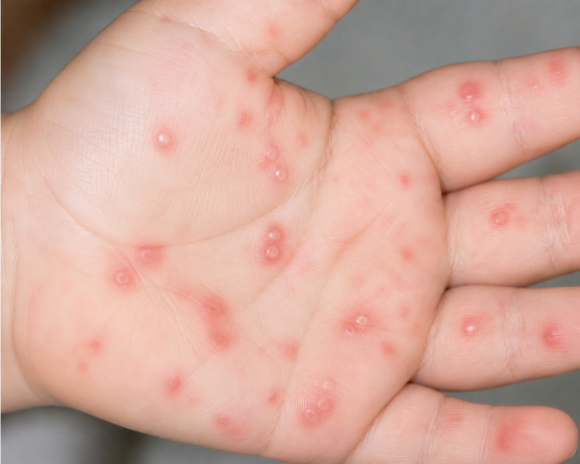
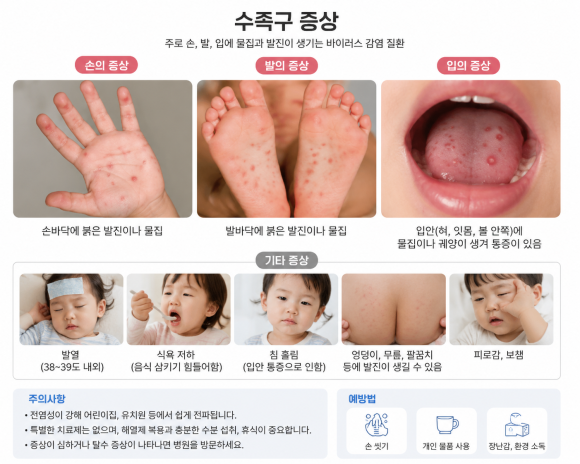
Hand, foot, and mouth disease affects the hands, feet, and mouth, as its name suggests.
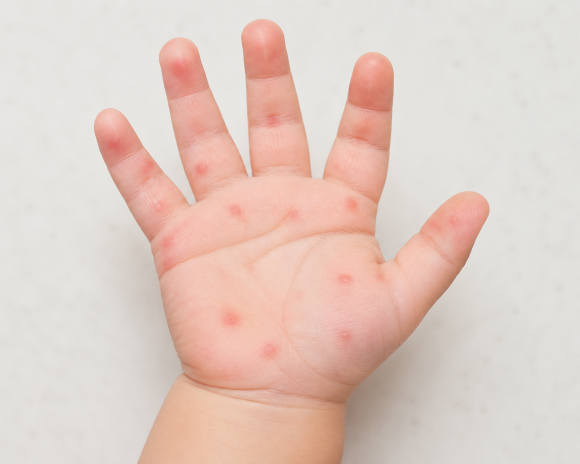
Small red spots or blisters may appear on the palms and soles, while ulcers in the mouth can make it difficult for a child to eat.
In severe cases, the rash may also spread to the buttocks or around the knees.
Roseola, in contrast, is characterized by a rash that begins on the trunk rather than the face.
Small red spots may appear on the neck, chest, abdomen, and back, and may later spread to the face or limbs.
A rash on the palms and soles is very rare.
The sequence in which the fever and rash appear is also different.
Hand, foot, and mouth disease often causes fever and a rash at almost the same time.
Some children do not have a severe fever, but a high fever of 39°C or above may also occur.
Because the mouth is painful, children may eat less than usual or drool excessively.
Roseola is slightly different.
The most typical pattern is for a high fever to continue for about 3–5 days, followed by a rash as the fever goes down.
In fact, many children begin to feel better when the rash appears.
As a result, parents often feel that “the fever went down, but suddenly a rash appeared all over the body.”
The incubation periods also differ.
The incubation period for hand, foot, and mouth disease is usually about 3–7 days.
Symptoms often appear several days after contact with an infected friend.
The incubation period for roseola is slightly longer, at about 5–15 days.
However, in most cases, neither illness causes any particular symptoms during the incubation period.
When should you visit a pediatric clinic?
Neither illness has a specific treatment, and care usually focuses on relieving symptoms through adequate fluid intake, rest, and fever-reducing medication.
However, you should be sure to seek pediatric care in the following cases.
-
A high fever of 39°C or above continues for a long time
-
Mouth pain is so severe that the child cannot drink water or eat
-
The child appears lethargic or remains unusually limp
-
Seizures or severe irritability occur
-
Reduced urine output suggests dehydration
-
The fever continues for more than 5 days
In particular, hand, foot, and mouth disease can rarely cause complications such as meningitis or encephalitis, so if your child’s condition seems different from usual, it is best not to delay seeking medical attention.
Can the two conditions be distinguished by the rash alone?
It is difficult to distinguish the two conditions with 100% certainty based on the rash alone.
This is because viral rashes can look similar in the early stages.
However, considering the location of the rash, the sequence in which the fever and rash appear, and whether mouth symptoms are present can help distinguish them to some extent.
In particular, if blisters appear together on the hands, feet, and in the mouth, hand, foot, and mouth disease is more likely. If a high fever continues for several days, then a rash mainly appears on the trunk as the fever goes down, roseola is the first condition to suspect.
Hand, foot, and mouth disease and roseola are both common viral illnesses in infants and young children, but there are clear differences in how their symptoms appear.
Hand, foot, and mouth disease often causes blisters on the hands, feet, and in the mouth, making it difficult to eat because of mouth pain.
Roseola, on the other hand, is typically characterized by a rash mainly on the trunk that appears as the fever goes down after continuing for several days.
Most importantly, rather than judging the condition based only on the appearance of the rash, you should also consider your child’s overall condition.
If a high fever continues for a long time, or if you notice dehydration, lethargy, seizures, or other unusual symptoms, the safest course is to seek pediatric care without delay.
Most children recover well with sufficient rest and fluid intake, but knowing the characteristics of both conditions in advance can reduce unnecessary worry and help you seek care at the appropriate time.