One of the questions people considering hair loss treatment ask most frequently at the clinic is:
Does PRP hair loss treatment really work?
Online, there are many different accounts, ranging from reviews saying that “hair grew back” to stories about spending money without seeing any results.
As a result, many people become even more confused about what to believe.
In reality, PRP does not produce the same results for everyone.
The expected results can vary greatly depending on how many hair follicles remain, what is causing the hair loss, and whether the person is currently receiving medication treatment.
In this post, we will examine the effects and limitations of PRP hair loss treatment one by one, focusing on the questions most frequently asked in the consultation room.
PRP Hair Loss Treatment: Will Hair Really Grow Back? A Summary of Frequently Asked Questions
| PRP hair loss treatment is a regenerative treatment that separates platelet-rich plasma from the patient’s own blood and injects it into the scalp. |
|---|
| The best response can be expected in cases where the hair follicles are still alive, such as early-to-moderate male pattern hair loss and female pattern hair loss.¹⁻⁵ |
| In areas where the hair follicles have already disappeared, PRP alone has limitations in creating new hair. |
| PRP is not a replacement for hair loss medication; it may be helpful as an adjunctive treatment when used together with medication.¹⁻⁶ |
| Treatment effects are generally evaluated after approximately three sessions, by monitoring the progress over the following 3–6 months.⁶ |
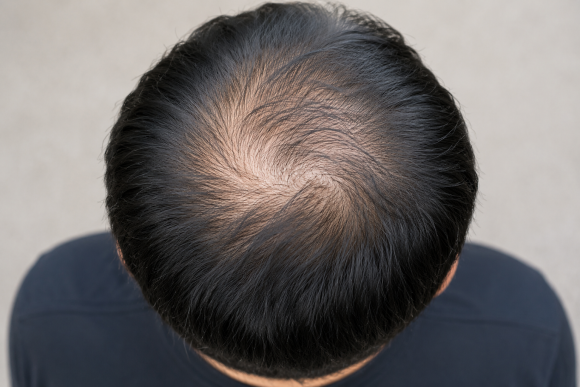
Q1. Is PRP hair loss treatment really effective?
To give the conclusion first, there are clearly people who can expect benefits from it.
Several recently published meta-analyses have repeatedly reported a tendency toward increased hair density in patients with androgenetic alopecia after PRP treatment.¹²³
However, not all studies have produced the same results.
Differences in research findings have also been reported because the PRP preparation methods, platelet concentrations, and treatment intervals used by different clinics vary.⁵
In clinical practice, the best responses are often seen in patients with early-stage hair loss who still have weakened, thinning hair.
Conversely, when most of the hair follicles have disappeared, as in long-standing hair loss, the expected benefits may be limited.
Q2. If I receive only PRP, can I stop taking hair loss medication?
This is one of the questions people are most curious about.
In most cases, however, the answer is no.
Male pattern hair loss is a progressive condition that continues to be affected by a hormone called DHT.
Finasteride and dutasteride are treatments that slow this progression itself.
PRP, on the other hand, is closer to a regenerative treatment that helps restore the environment around weakened hair follicles.
In other words, these treatments do not compete with each other; they have different roles.
In actual clinical practice, the most common approach is to continue taking hair loss medication while also receiving PRP.¹⁻⁶
Q3. Can PRP be received instead of a hair transplant?
It depends on the situation.
If the hair follicles are still alive, PRP may be helpful.
However, when an M-shaped hairline has receded for a long time and the skin has become shiny, or when there is almost no hair in the central crown area, a hair transplant may be a much more realistic treatment than PRP.
PRP is a treatment intended to preserve existing hair follicles.
A hair transplant is a treatment that moves new hair follicles.
Therefore, the purposes of the two treatments are fundamentally different.
Q4. How many PRP sessions are needed before its effectiveness can be evaluated?
It is not appropriate to assess the results after receiving just one session.
Most clinics perform approximately three sessions at monthly intervals and then evaluate the changes.⁶
After that, photographs are compared to decide whether maintenance treatment is needed.
Because hair has a growth cycle, noticeable changes do not appear within just a few days as they might on the skin.
Most people first notice that less hair is falling out or that their hair feels stronger, while changes in density are often confirmed several months later.
Q5. Some people say PRP is ineffective. Is that true?
It is neither completely wrong nor completely correct.
Among those who say they saw no results, many already had very few remaining hair follicles, or had a different underlying cause, such as telogen effluvium.
Research has also continued to point out that the results vary considerably because preparation methods have not been standardized.⁵
Therefore, who receives PRP may be a much more important factor than PRP itself.
Q6. Can PRP also help with female pattern hair loss?
It may be helpful.
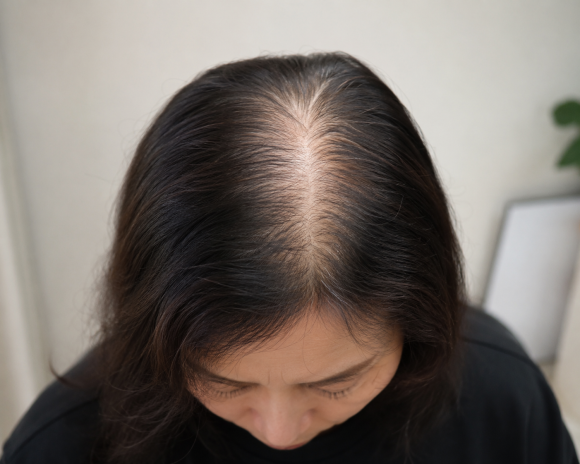
In particular, it may be considered as one of the combination treatment options for female pattern hair loss in which the part gradually widens and the hair becomes thinner.¹²
However, women often have multiple contributing factors, including iron deficiency, thyroid disease, childbirth, dieting, and menopause.
Therefore, it is essential to first identify the cause of the hair loss.
Q7. Is PRP a treatment with almost no side effects?
Because it uses the patient’s own blood, the likelihood of an allergic reaction is relatively low.
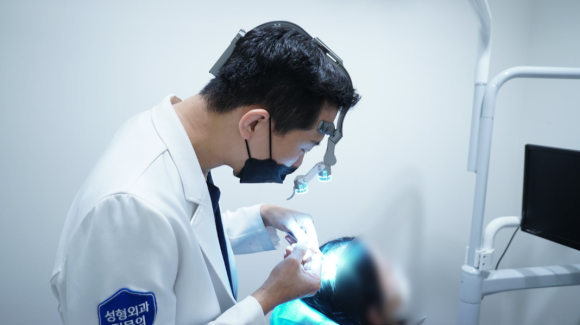
However, since it is an injection-based treatment, pain, bruising, swelling, tenderness, and temporary headaches may occur relatively commonly.
In rare cases, infection or inflammation may occur, so if warmth or pus develops after the procedure, the treatment site should be checked by the clinic.
For people taking anticoagulants or who have platelet disorders, whether to proceed with treatment should be decided carefully.
Q8. Can PRP improve hair loss caused by stress?
Not necessarily.
Telogen effluvium that occurs after childbirth, a high fever, surgery, or rapid dieting has a different underlying cause.
In such cases, correcting the cause takes priority over PRP.
Once the cause is resolved, natural recovery is also possible in quite a few cases.
Q9. Does hair become thicker immediately after receiving PRP?
Expecting immediate changes may lead to disappointment.
Hair must pass through its growth phase before its thickness can change, so changes are generally observed gradually over several months.
At first, many patients experience the feeling that less hair is falling out or that the volume at the crown has improved slightly.
Q10. Ultimately, who is PRP most recommended for?
The following people may be relatively good candidates:
-
Those who still have fine hair remaining at the crown or along the part
-
Early- or moderate-stage male pattern hair loss
-
Those whose hair is gradually thinning due to female pattern hair loss
-
Those who are taking hair loss medication but are dissatisfied with their density
-
Those who are still at a stage where it is too early to undergo a hair transplant
Conversely, if the hair follicles have already disappeared from an area, it is more reasonable to consider other treatments first.
| Question | Key points |
|---|
| What are the effects of PRP? | Possible increase in hair density in early-to-moderate hair loss¹²³ |
| Can it replace hair loss medication? | Combination treatment is recommended in most cases¹⁻⁶ |
| Can it replace a hair transplant? | It has significant limitations when the hair follicles are already absent |
| Number of treatments | Evaluation after three sessions at one-month intervals⁶ |
| When can the results be confirmed? | Assessment after approximately 3–6 months |
| Side effects | Pain, bruising, and tenderness may occur; serious side effects are rare. Cases with low effectiveness Long-standing hair loss, telogen effluvium, severe sc |
| Cases with low effectiveness | Long-standing hair loss, telogen effluvium, severe scalp inflammation |
PRP hair loss treatment is neither a universal treatment nor a treatment that has no effect at all.
What matters is accurately determining the stage of your hair loss.
For early-stage hair loss in which the hair follicles are still alive, PRP can be a good option when combined with medication treatment. However, when the hair follicles have already been lost, the expected benefits are limited.
Ultimately, the most important factors in determining the success of PRP are not the procedure itself, but who receives it and when it is performed.
This has been Kim Jin-oh, from Hairhairnal Time.
Must Grow New Hair (必生新毛).

Written by: Kim Jin-oh of 뉴헤어성형외과 (Public Relations Director of the Korean Association of Plastic Surgeons / Academic Director of the Korean Laser, Dermatology and Hair Society)
-
Visiting Professor, Department of Plastic Surgery, Yonsei University College of Medicine
-
American Board of Hair Restoration Surgery (ABHRS)
-
Standing Director, Korean Association of Plastic Surgeons
-
Standing Director, Korean Association of Laser, Dermatology and Hair (KALDAT)
-
Standing Director, Korean Society for Laser Medicine
References
-
Zhang, X.X. et al. (2023) ‘Platelet-Rich Plasma for Androgenetic Alopecia: A Systematic Review and Meta-Analysis of Randomized Controlled Trials’, Journal of Cutaneous Medicine and Surgery, 27(5), pp. 504–508. cited: “PRP for AGA increased hair density at 3 and 6 months.”
-
Evans, A.G. et al. (2022) ‘Platelet-rich plasma as a therapy for androgenic alopecia: a systematic review and meta-analysis’, Journal of Dermatological Treatment, 33(1), pp. 498–511. cited: “PRP treatment increases hair density and hair thickness.”
-
Li, M. et al. (2024) ‘Effectiveness of Platelet-Rich Plasma in the Treatment of Androgenic Alopecia: A Meta-Analysis’, Aesthetic Plastic Surgery, 48(5), pp. 977–984. cited: “PRP treatment increased hair density in participants with AGA, but not hair diameter.”
-
Shapiro, J. et al. (2020) ‘Evaluation of platelet-rich plasma as a treatment for androgenetic alopecia: A randomized controlled trial’, Journal of the American Academy of Dermatology, 83(5), pp. 1298–1303. cited: “Hair density in the PRP-treated area was significantly increased compared with baseline.”
-
Kieling, L. et al. (2024) ‘Is autologous platelet-rich plasma capable of increasing hair density in patients with androgenic alopecia? A systematic review and meta-analysis of randomized clinical trials’, Anais Brasileiros de Dermatologia, 99(6), pp. 847–862. cited: “heterogeneous studies with publication bias.”
-
American Academy of Dermatology Association (2022) ‘Hair loss: Diagnosis and treatment’. cited: “Most patients return once a month for 3 months and once every 3 to 6 months after that.”

Related articles