When looking in the mirror, you may suddenly notice one or two gray hairs around your temples or along your part.
At first, you may not think much of it. But as the number gradually increases over time, you may start wondering, “Could it ever turn black again?”
The internet is full of information about shampoos, supplements, scalp injections, and even stem cell treatments that supposedly turn gray hair black.
But how much is actually possible in medical practice?
Recent studies on melanocyte stem cells and hair repigmentation have suggested that some possibilities may exist, but there are still many aspects that should not be taken as exaggerated claims.¹²
In this article, I will organize the evidence established so far in an easy-to-understand way, focusing on the questions patients ask most frequently.
Can Gray Hair Turn Black Again? A Fact-Check Summary on Minoxidil, Stress, and Supplements
| There is still no standard treatment that can turn all gray hair black. |
|---|
| Some gray hair may partially regain its color depending on whether the underlying cause is corrected and on the condition of the hair follicles.¹² |
| Although an association between stress and gray hair has been confirmed, managing stress alone does not treat gray hair.³⁴ |
| Minoxidil and supplements have only been described in some cases, and their effectiveness as treatments for gray hair has not been established.⁸ |
| The important thing is to first determine whether there is a correctable cause, rather than starting with products intended to eliminate gray hair.⁵⁻⁹ |
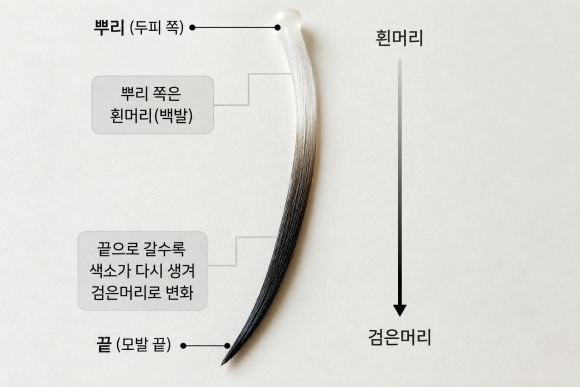
Q1. Can gray hair really turn black again?
To give the conclusion first: “It is possible in some cases, but not all gray hair behaves this way.”
Many people believe that once gray hair appears, it can never turn black again.
However, recent studies have reported cases in which some hair actually regained its color.⁴
Hair color is not determined by the part of the hair that has already emerged. Rather, melanocytes inside the hair follicle produce pigment and transfer it to the growing hair.¹
In other words, if functional melanocytes remain inside the follicle, there is a possibility that some color may return in newly growing hair.²
In fact, a study analyzing human hair observed alternating black and white sections within a single strand.⁴
This is an interesting finding showing that gray hair does not necessarily progress in only one direction.
However, this phenomenon does not occur in everyone.
At present, there is insufficient evidence that any specific treatment can reliably turn gray hair black again.¹²
Q2. If gray hair is caused by stress, will it improve again after getting some rest?
Many patients say, “My gray hair suddenly increased after going through something very difficult.”
This is not simply a matter of perception.
Animal studies have confirmed that acute stress excessively activates the sympathetic nervous system and causes the release of norepinephrine, rapidly depleting melanocyte stem cells.³
Put simply, it is similar to using up all the pigment-producing cells that would otherwise have been available for future use.
Human studies have also reported cases in which portions of the hair turned white during periods of severe stress and regained color after the stress decreased.⁴
But there is an important point here.
These studies do not mean that reducing stress will treat gray hair in everyone.
Such changes may occur only in some follicles where pigment-producing cells remain, and these studies are not clinical trials proving a treatment effect.⁴
Therefore, stress management is very important for overall health, but it is difficult to expect stress management alone to treat gray hair.
Q3. Doesn’t gray hair never turn black again?
That statement is half right and half wrong.
In the past, gray hair was thought to progress permanently once it appeared.
However, reports of partial repigmentation in recent years have gradually changed this view.²⁴
This does not mean that all gray hair can be treated.
That is because gray hair can develop for many different reasons.
It may be part of the natural aging process, or there may be a correctable underlying cause such as thyroid dysfunction or vitamin B12 deficiency.⁵⁻⁷
In particular, if gray hair appears much earlier than in your peers or increases rapidly over the course of a few months, it is better to investigate the cause rather than assume it is simply due to aging.
When the cause is correctable, some color may return in hair that grows afterward.⁶
Conversely, for ordinary age-related graying without an identifiable underlying cause, there is still no treatment that can completely reverse it with current medical science.¹²
| Question | Current medical conclusion |
|---|
| Can gray hair turn black again? | Possible in some cases, but there is no standard treatment |
| Could stress be a cause? | An association has been confirmed, but a treatment effect has not been established |
| Does all gray hair recover? | No; the possibility exists only in some follicles |
| What is most important? | First identify the cause and look for correctable conditions |
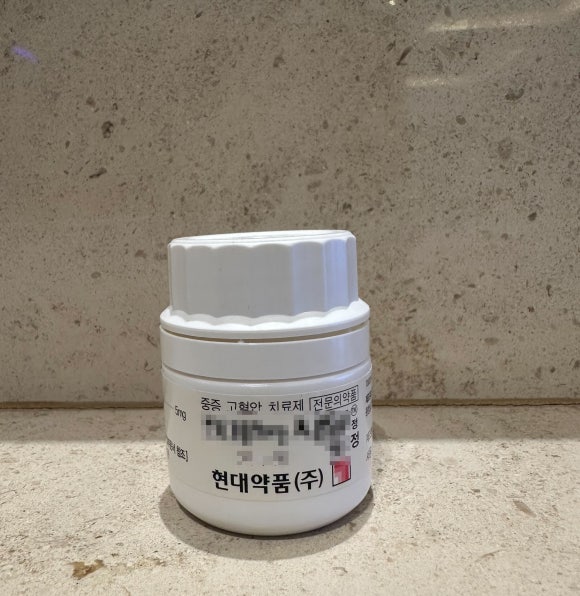
Q4. Can minoxidil turn gray hair black again?
Some patients undergoing hair-loss treatment become hopeful after reading testimonials saying, “I used minoxidil and even my gray hair turned black again.”
Such cases have in fact been reported, although they are not common.
Recently, a case was reported in which some gray hair turned black again in a man with male-pattern hair loss who was taking oral minoxidil.⁸
However, it is essential to distinguish what this means.
The paper was not a clinical trial comparing the effects in a large number of patients. It was a case report describing a change observed in one patient.⁸
In other words, it means that “this type of change has been observed,” not that “minoxidil treats gray hair.”
Minoxidil’s effectiveness in treating male-pattern and female-pattern hair loss is currently well established.
In contrast, there is still insufficient evidence to use it as a treatment for turning gray hair black.
Therefore, when hair loss is also present, minoxidil should be used for the purpose of treating hair loss. If a change in hair color occurs during treatment, current medical interpretation is to regard it as an additional phenomenon.⁸
Q5. If I have developed a lot of gray hair at a young age, should I get examined at a hospital?
Testing is not automatically necessary for everyone.
However, if gray hair began much earlier than in your peers or increased rapidly over a few months, it is best not to assume that it is simply due to aging.
In some patients, correctable causes such as iron deficiency, vitamin B12 deficiency, or thyroid dysfunction are found.⁵⁻⁷
A medical evaluation may be helpful, particularly in the following situations:
-
Persistent severe fatigue
-
Weight changes or pronounced sensitivity to cold
-
Following a vegetarian diet or extreme diet for a long time
-
Gastrointestinal disease or impaired nutrient absorption
-
Rapidly progressing hair loss along with gray hair
In these cases, a complete blood count and selected tests for ferritin, vitamin B12, folate, and thyroid function may be performed based on the patient’s medical history.⁶⁻⁷
However, there is insufficient evidence that taking several supplements at the same time will turn gray hair black again when no specific abnormality is found on testing.
The important thing is to choose the tests that are necessary, not to undergo a large number of tests.

Q6. Won’t gray hair improve if I only take fo-ti or supplements?
To give the conclusion first, there is currently insufficient evidence to support this.
On the internet, it is easy to find advertisements claiming that fo-ti, biotin, collagen, and antioxidant supplements are beneficial for gray hair.
However, high-quality clinical trials in humans do not provide sufficient evidence that these products reliably reverse ordinary gray hair.⁵⁻⁹
Fo-ti, in particular, has long been used for gray hair, but safety must be considered before potential effectiveness.
Fo-ti (Polygonum multiflorum) has repeatedly been associated with cases of drug-induced liver injury, and severe liver damage has also been reported in serious cases.⁹
A natural ingredient is not necessarily safe or proven to be effective simply because it is natural.
There is also no confirmed evidence that biotin turns gray hair black in people who are not deficient in it.
Supplements may be most meaningful as treatment when an actual deficiency has been confirmed through blood tests or an assessment of dietary habits.
Q7. Will an era arrive when gray hair can be treated?
The area currently being studied most actively is melanocyte stem cells.²
Researchers are studying not merely how to produce pigment, but how to help pigment-producing cells survive longer, move normally, and produce melanin again.
Major research directions include the following:
| Research area | Intended goal |
|---|
| Maintaining melanocyte stem cells | Preventing depletion of pigment-producing cells |
| Reducing oxidative stress | Preventing cellular damage |
| Regulating stem-cell migration | Generating new pigment-producing cells |
| Regulating melanin-production signals | Promoting repigmentation |
These studies may provide an important foundation for expanding the possibilities of future treatments for gray hair.²
However, most of this work is still in the basic research or animal-testing stage.
There is currently no standard treatment that can reliably treat gray hair with stem cell injections or a specific scalp procedure.
Therefore, when you encounter advertisements for a new treatment, it is important to first check whether controlled clinical trials in humans have been conducted and whether long-term safety has been confirmed.

Cases of gray hair turning black again have in fact been reported.¹²⁴
However, current medicine has not yet established a treatment that can reliably restore all gray hair to its original color.
More importantly, first determine whether your gray hair is simply age-related or whether it is accompanied by another cause, such as a correctable nutritional deficiency, thyroid disease, or hair loss.⁵⁻⁷
As research into melanocyte stem cells and repigmentation progresses, expectations for future treatments are growing.²
At the current stage, however, the most realistic approach is to prioritize evidence-based medical care and an accurate evaluation of the cause rather than relying on exaggerated advertisements or unverified treatments.
This was Jin Oh Kim—time to break free from hair troubles.
May new hair grow for life (必生新毛).
Written by: Jin Oh Kim, New Hair Plastic Surgery (Public Relations Director of the Korean Association of Plastic Surgeons / Academic Director of the Korean Association of Laser, Dermatology and Hair Research)
-
Visiting Professor, Department of Plastic Surgery, Yonsei University College of Medicine
-
American Board of Hair Restoration Surgery (ABHRS) diplomate
-
Executive Director, Korean Association of Plastic Surgeons
-
Executive Director, Korean Association of Laser, Dermatology and Hair Research (KALDAT)
-
Executive Director, Korean Society for Laser Medicine
[References]
-
Commo, S., Gaillard, O. and Bernard, B.A. (2004) ‘Human hair greying is linked to a specific depletion of hair follicle melanocytes affecting both the bulb and the outer root sheath’, British Journal of Dermatology, 150(3), pp. 435–443.
-
Sun, Q., Lee, W., Hu, H. et al. (2023) ‘Dedifferentiation maintains melanocyte stem cells in a dynamic niche’, Nature, 616(7958), pp. 774–782.
-
Zhang, B., Ma, S., Rachmin, I. et al. (2020) ‘Hyperactivation of sympathetic nerves drives depletion of melanocyte stem cells’, Nature, 577(7792), pp. 676–681.
-
Rosenberg, A.M., Rausser, S., Ren, J. et al. (2021) ‘Quantitative mapping of human hair greying and reversal in relation to life stress’, eLife, 10, e67437.
-
Kumar, A.B., Shamim, H. and Nagaraju, U. (2018) ‘Premature graying of hair: Review with updates’, International Journal of Trichology, 10(5), pp. 198–203.
-
Mahendiratta, S., Sarma, P., Kaur, H. et al. (2020) ‘Premature graying of hair: Risk factors, co-morbid conditions, pharmacotherapy and reversal—A systematic review and meta-analysis’, Dermatologic Therapy, 33(6), e13990.
-
Poonia, K. and Bhalla, M. (2024) ‘Premature graying of hair: A comprehensive review and recent insights’, Indian Dermatology Online Journal, 15(5), pp. 721–731.
-
Fernández-Crehuet, P. (2026) ‘Gray hair repigmentation in androgenetic alopecia under oral minoxidil’, International Journal of Dermatology, published online 26 April.
-
National Institute of Diabetes and Digestive and Kidney Diseases (2020) ‘Polygonum multiflorum’, LiverTox: Clinical and Research Information on Drug-Induced Liver Injury.

Recommended reading