“This time it seemed to calm down a little...
but after a few days, it came back again.”
“After using medication, squeezing it, and getting treatment,
I’m back to square one...”
Hello,
Hongdae Dermatology Clinic
I’m Dr. Oh Young-ju of Hongdae Oblige
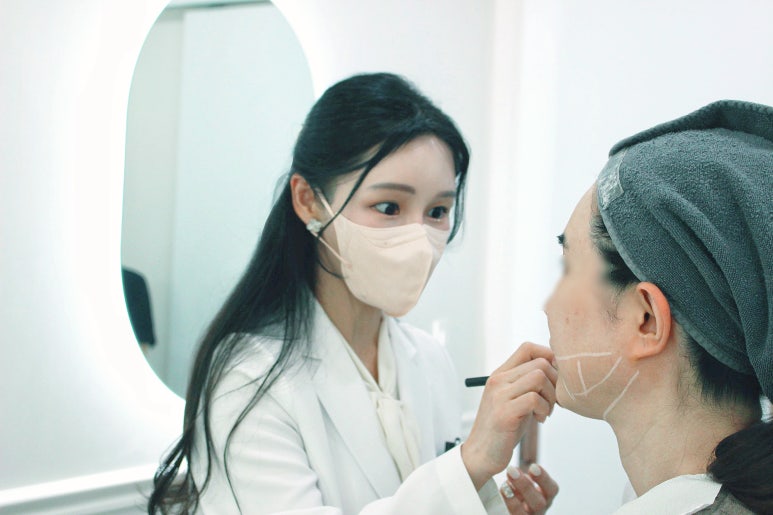
When I consult with patients about acne in the clinic,
many people say they feel something similar.
At first it seems to improve, but at some point it turns red again,
leaves marks behind,
and the skin feels increasingly sensitive...
What went wrong? Why doesn’t this work for me?
In fact, acne is
not simply a problem caused by too much sebum,
and it is not a condition that can be solved
just by taking medication or getting procedures.
Today, I’ll break acne down by stage and explain
which treatments are effective at each point,
and how to combine procedures, medication, and daily care
in the way I most often discuss in the clinic.
If you’re exhausted from acne that keeps recurring,
I hope this post helps you find a more accurate direction.
Stage 1: Early acne –
Whiteheads (comedonal acne)
Acne dermatology in Hongdae? Treatments that change at each stage -1
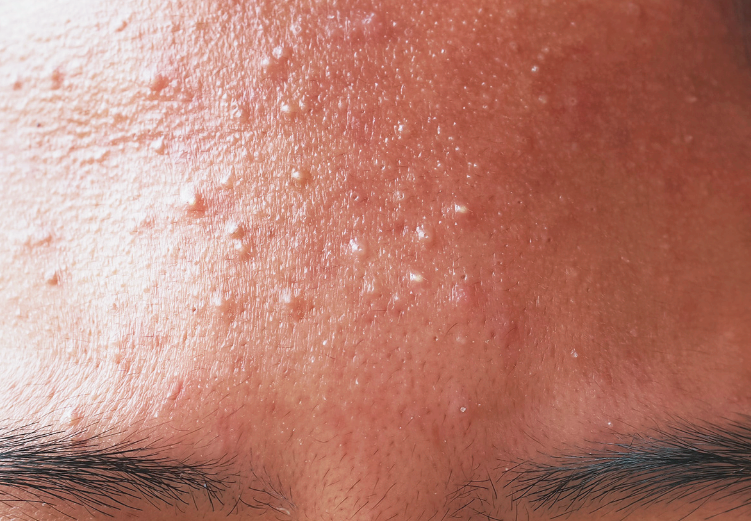
Whiteheads are acne that form when hair follicles become blocked,
and they appear as small white or skin-colored bumps.
Acne at this stage usually does not itch or sting,
but it often starts with makeup sitting unevenly
or a rough skin texture.
At this stage,
the key is to prevent clogged pores and manage dead skin cells well.
★ Main causes of whiteheads ★
- Excess sebum production
When the sebaceous glands become overactive,
pores are more likely to become clogged.
- Abnormal keratinization
Old dead skin cells on the skin’s surface do not shed properly
and accumulate in the pores,
forming comedones, the starting point of acne.
- Hormonal changes
Hormonal changes caused by puberty, before and after menstruation, pregnancy, and stress
increase sebum production.
- Incorrect skincare
• Using cosmetics with a lot of oil
• Insufficient cleansing or over-washing
• Using irritating scrubs, pads, and similar products
- Diet and lifestyle habits
• Excessive intake of sugar, dairy, and greasy foods
• Lack of sleep, stress, smoking, etc.
🩺 Care and treatment tips
• Use non-comedogenic products
• Use a low-irritation, mildly acidic cleanser
• Avoid habits that irritate the skin (squeezing, rubbing, etc.)
• Use exfoliating agents if needed (e.g., BHA, AHA)
If you do self-care like this
but comedonal acne does not improve
and gets worse,
what then?
• It is a good idea to consider medication or professional medical skincare
through a dermatology consultation!
▼
▼
Aqua peel/scaling: gently removes impurities from inside the pores
Mildly acidic peeling (Lhalha Peel): clears clogged pores and promotes skin turnover
Extraction care: removes comedones without excessive force to help prevent inflammation
Sebum-control medication
Stage 2: Acne with redness and pus –
Pustular acne (pus-filled acne)
Acne dermatology in Hongdae? Treatments that change at each stage -2
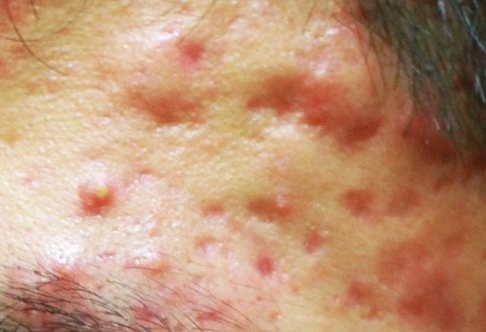
Pustular acne (pus-filled acne)
is a state in which inflammation develops inside the skin and pus accumulates,
and it is a more advanced form of acne than whiteheads.
The inflammation in the pores is already underway. T_T
At this stage, rather than squeezing it no matter what or covering it with cosmetics,
priority goes to treatments that calm the inflammation and prevent it from spreading further.
The main causes are as follows.
🔥 Main causes of pustular acne
- Clogged pores + bacterial growth
Acne bacteria (C. acnes) multiply in clogged pores,
triggering inflammation and causing pus.
- Excess sebum
Excess sebum becomes good food for acne bacteria,
worsening into inflammatory acne.
- Hormonal changes
In particular, during puberty, before and after menstruation, and during periods of stress,
increased male hormones (androgens)
raise sebum production and worsen pustular acne.
- Overactive immune response
The body’s immune system may overreact to acne bacteria
and cause more severe inflammation.
- Lifestyle habits
• Stress, lack of sleep, and a high-sugar/high-fat diet
can stimulate inflammatory responses.
• Touching with your hands, squeezing, and wearing masks are also
aggravating factors.
- Improper use of cosmetics
Products containing pore-clogging ingredients or irritating ingredients
can trigger inflammation.
🩺 Care and treatment tips
• Use products with anti-inflammatory effects (AHA, BHA, niacinamide, etc.)
• Take prescription acne medications (antibiotics, sebum-control agents)
• Dermatology treatments: extraction, scaling, PDT, acne injections (triamcinolone)
• Dietary control + stress management + improved sleep
LED/laser soothing treatment: reduces swelling and redness
At this stage, if you rush,
you become even more stressed,
and that can make acne worse,
so it’s important to keep up steady care and treatment
with a positive mindset that you can improve~!
When clients come to our clinic for treatment,
they often ask, “Is my skin naturally like this?”
“Was my skin always this good?”
I myself had full-face pustular acne twice
after my 30s,
so I understand the feelings of people with acne better than anyone else~~
If you manage it well and receive treatment,
it can improve,
so stay strong, everyone, and keep up with treatment!!!
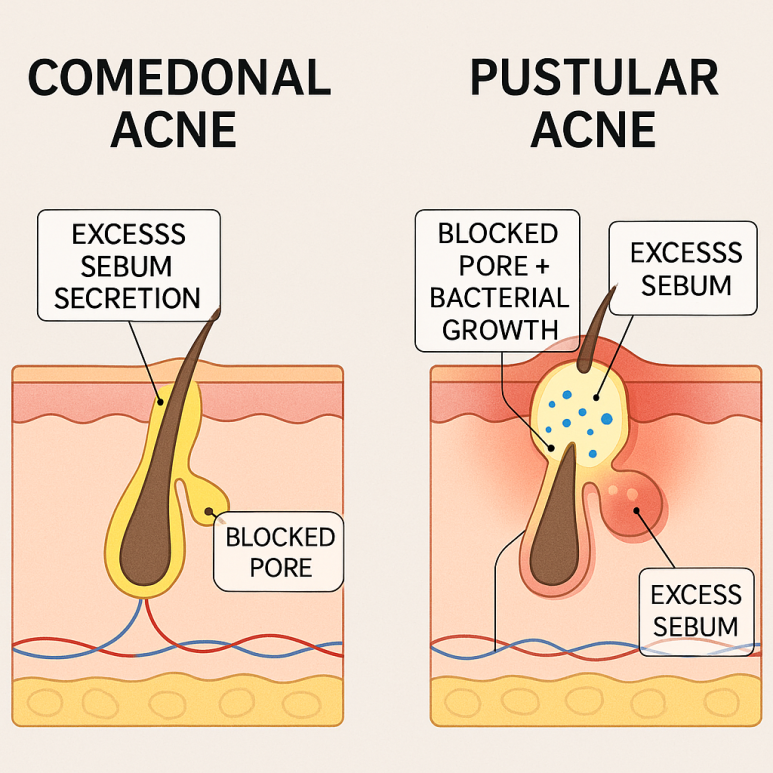
Acne development mechanism
Stage 3: When scarring and recurrence concerns remain:
The time for recovery
Acne dermatology in Hongdae? Treatments that change at each stage -3
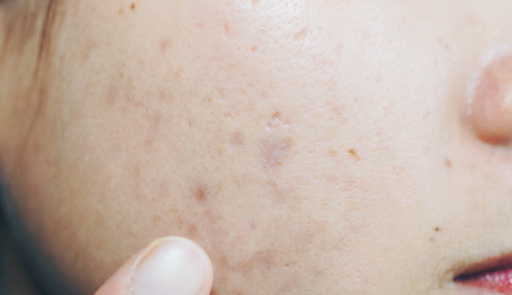
If the acne has gradually decreased,
now the skin needs a process of regeneration and regaining stability.
But during this period, marks may linger for a long time, pores may enlarge,
or the skin texture may become irregular.
So the direction of treatment must also change
from “removing” to “filling in and restoring.”
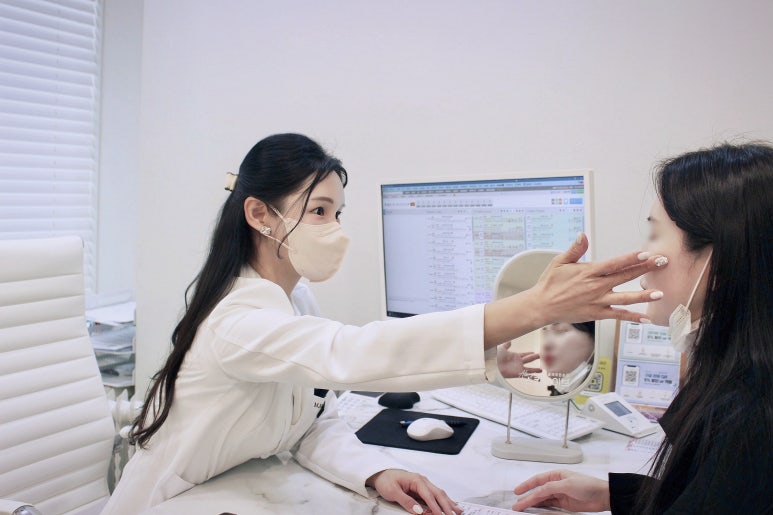
🩺 Care and treatment tips
-
Sebaceous gland control laser: blocks the cause of sebum secretion
-
Fractional laser / Potenza: induces scar and pore regeneration
-
Rejuran Healer / water glow / soothing skin boosters: restore damaged skin + strengthen the skin barrier
Treatments at this stage are a little slower,
but think of it as the stage where you build up your basic resilience
so acne does not flare up again~!
One of the procedures I have been working very hard on for a long time
is skin booster injections.
Starting with Rejuran Healer and continuing with Filorga (Filmed), exosomes,
JuveLook, Collaum, and Rejigen,
I have been doing them diligently and regularly.
Perhaps because of that, my skin has become much firmer,
and acne has not appeared as much~
So far, we have looked at the causes of each acne stage
and the effective treatment methods.
If you are struggling
because of acne,
I hope today’s post was helpful.
I hope you have a happier day today too~







 Previous image
Next image
Previous image
Next image
Acne dermatology in Hongdae? Treatments that change at each stage
Acne dermatology in Hongdae? Treatments that change at each stage
Acne dermatology in Hongdae? Treatments that change at each stage
Acne dermatology in Hongdae? Treatments that change at each stage