Many people wash their faces carefully every morning and evening for clear skin.
Thorough cleansing is the first step in washing away the dust and sebum that build up throughout the day, and it can be said to be the most basic of the basics for keeping skin clean.
However, if you have bad cleansing habits, you may end up causing small pimples to appear all over your skin.
When acne develops, the skin as a whole can look uneven rather than smooth.
Not only that, makeup may not sit well, and your skin texture may feel unrefined.
And while one or two small pimples may be easy to ignore, if acne appears over a wide area, your face can look red overall and feel unclean.
In severe cases, you may even start worrying about how others see you, and the cycle of applying thick makeup to cover acne-prone areas can repeat.
Today, I’ll explain in detail wrong acne cleansing methods and how improper cleansing can affect acne.
I’ll also explain acne treatments in an easy-to-understand way, so please read the following article carefully.
-
Wrong acne cleansing methods
-
How to care for skin after cleansing
-
Acne ointment treatment methods

Wrong acne cleansing methods
Many people think, “Isn’t squeaky-clean skin with no oil at all truly clean skin?” and wash their face 3 to 4 times a day.
However, this is one of the worst habits for your skin.
If you cleanse too often, you remove the sebum that is needed to protect the skin, and the skin can instead become directly exposed to the external environment.
In addition, your skin may produce even more sebum, making your face look oilier and clogging pores, which can increase the likelihood of acne.
That is why it is best to cleanse only twice a day, in the morning and evening.
Also, if you believe you need to open your pores wide and wash away sebum using hot water, the skin barrier can be easily damaged, so it is advisable to use lukewarm water at a temperature slightly higher than your skin.
Lastly, if you use an exfoliating cleanser every day, the skin’s protective barrier may suffer small and large forms of damage, so using a mild, low-pH cleanser can help with acne care.
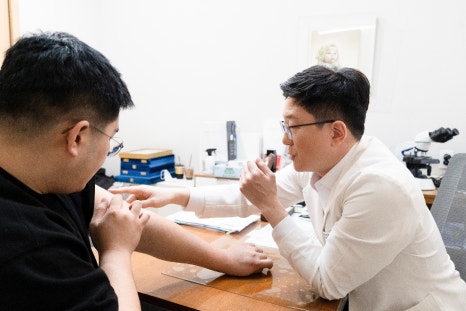
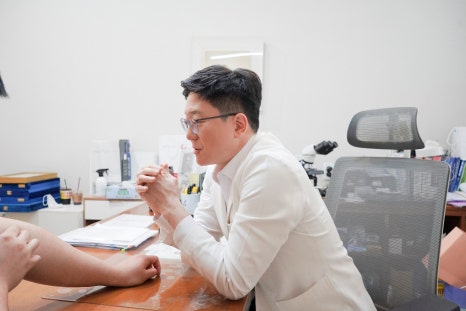
Cleansing after washing is even more important! What is the acne care routine?
Cleansing is only the starting point of skin care; what really matters is how you care for your skin afterward.
Just as stretching after exercise helps relax your muscles, your skin also needs proper care after cleansing.
First, skin that has been cleansed is like a sponge after the water has been shaken out. If you do not supply moisture immediately after washing, the skin can become dry, the skin barrier can weaken, and this can ultimately cause various skin problems.
That is why it is best to use a lightweight toner within 1 minute after cleansing to provide moisture to the skin.
At this time, using a toner that is too strong may instead irritate the skin, so it is advisable to use a mild, low-pH toner.
Also, once you have replenished moisture with toner, applying basic skincare products designed for acne-prone skin can help protect the skin.
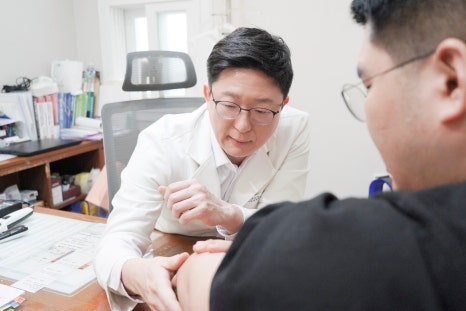

Acne ointment treatment is carried out like this.
Acne ointments can largely be divided into antibiotic ointments and retinoid ointments.
Among them, antibiotic ointments, as many people know, can help suppress the acne bacteria that are the root cause of acne.
Through this, you can expect the effect of gradually improving red, inflamed acne with pus.
However, if antibiotics are used for too long, resistance can develop, so it is best to avoid continuous use for more than 2 months.
The second type, retinoid ointments, can help prevent clogged pores by suppressing sebum production and promoting the shedding of dead skin cells.
In this way, the underlying causes of acne are corrected, and you can expect improvement in acne over a wide area.
However, retinoids require a certain adjustment period, so it is best to use them once every 2 to 3 days at first, and then gradually increase the frequency.
It may also help to reduce skin irritation by using them together with a moisturizing cream.
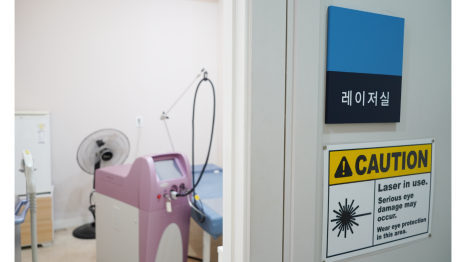

Many people leave acne untreated thinking, “It’ll go away someday,” or try incorrect home remedies.
However, if acne is not treated in time, inflammation can worsen and leave scars and pigmentation.
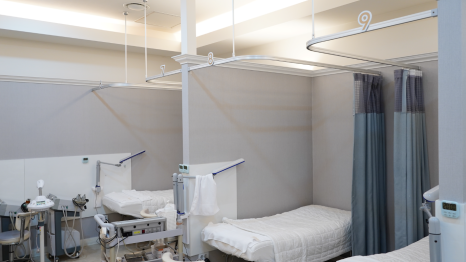
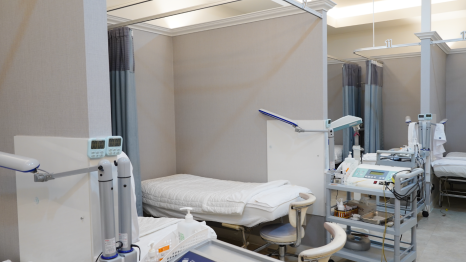
That is why, if possible, it is best to visit a clinic and receive treatment that suits your condition.
However, the most important thing in acne treatment is finding the method that suits your skin and managing it consistently.
Please remember that acne treatment is a process of slowly restoring the skin’s balance.
I hope today’s column has been of some help to those who are stressed by acne symptoms.
Thank you for reading to the end.
| This post was written for informational purposes in compliance with Article 56, Paragraphs 1 to 15 of the Medical Service Act. All treatments carry the risk of side effects and complications depending on the individual. Before treatment, be sure to have a thorough consultation with experienced medical staff before making your decision. |