Today, I’d like to begin with a story about itching, a common and familiar skin symptom.
In fact, most people do not think much of itching.
Of course, itching caused simply by dry skin can be improved with sufficient skin moisturization.
But if that itch lasts for a day, two days, three days... or even for more than several months, or if scratching does not feel relieving but instead makes it feel even more unbearably itchy, there is a high chance that something is wrong with the skin.
And the condition characterized by chronic itching as a main symptom is atopic dermatitis.
When many people think of atopic dermatitis, they imagine it as a disease where “the skin gets a little itchy and turns red.”
But in reality, atopic dermatitis is a condition in which problems beneath the skin are intricately intertwined just as much as the symptoms on the surface.
And for people with atopic dermatitis, itching is not just a simple symptom; it can feel like pain beyond pain.
Today, at a dermatology clinic in Yeongdeungpo-gu, Seoul, we will explain in an easy-to-understand way why atopic dermatitis occurs and in what direction it should be treated. If you are feeling stressed because of atopic dermatitis symptoms, please focus on reading the following article.
- What should you do when your skin itches?
- What should you do if atopic dermatitis is widespread?
- What methods are there to help prevent recurrence of atopic dermatitis?
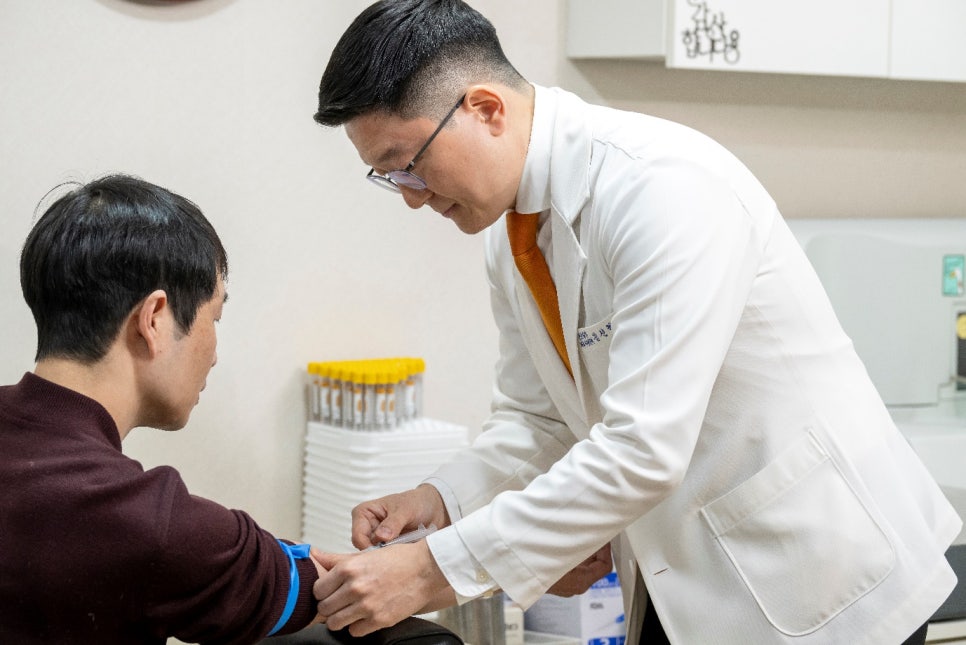
Atopic dermatitis: What should you do when your skin itches?
We often think of pain only as physical pain.
But itching can also be a major source of suffering.
It can disrupt concentration, interfere with sleep at night, and, when severe, even affect emotional control.
In severe cases, it can lead to psychological symptoms such as anxiety and depression.
At this point, you may have this question:
'Isn’t it okay to scratch the itchy area?'
Of course, scratching the itchy area may bring temporary relief.
But the moment you scratch the skin, the situation worsens. More inflammatory substances can enter the skin, and the itching may come back twice as strongly.
In addition, it can lead to oozing, wounds, and scars due to secondary infection.
Therefore, it is best to avoid scratching the affected area as much as possible, and instead wrap a cold ice pack in a towel and place it against the affected area for 5 to 10 minutes.
Ice compresses can help relieve itching by dispersing blood that has gathered in the skin and controlling nerve excitation.
Also, there are countless bacteria on our fingernails.
So, to prevent bacteria under the nails from becoming a source of infection, it is a good idea to keep your nails short and pay attention to hand hygiene.
Lastly, while scratching can stimulate inflammation, lightly tapping the affected area with the palm may not cause significant irritation to the skin. So when you feel itchy, developing the habit of tapping the skin can be helpful.


If atopic dermatitis has spread over a wide area?
Steroid ointments are commonly used in the treatment of atopic dermatitis.
However, if red rashes have spread all over the body, combining treatment with phototherapy may be helpful.
As the name suggests, phototherapy is a treatment method that uses specific wavelengths of “light.” By regulating the overactive skin immune response and calming inflammatory reactions, it can help reduce symptoms caused by atopic dermatitis.
It can also be broadly applied to areas that are difficult to treat with ointment alone, such as the back and waist.
In addition, because no separate injections or medications are used, the burden of treatment may feel somewhat lighter.
However, if too much light is applied, the skin can suffer significant damage, leading to secondary problems such as burns. So it may be best to plan treatment after a careful skin examination.
Also, if the skin is currently oozing or if you have photosensitivity and are sensitive to light, treatment may be difficult. Please visit the clinic and receive detailed guidance.



Atopic dermatitis: How can recurrence be prevented after treatment?
Atopic dermatitis is not a condition that ends once it is brought under control.
Simply put, it is not something that appears briefly and disappears like a cold, but rather a chronic condition that continues to fluctuate due to various factors.
That is why it is necessary to manage it consistently even after treatment so that atopic dermatitis symptoms do not recur.
First, because atopic dermatitis shows a compromised skin barrier, it is advisable to moisturize at least 2 to 3 times a day to protect weakened skin.
And since atopic dermatitis is closely related to food, it is good to keep checking which foods do not agree with your body. If necessary, getting an allergy test at a clinic to identify foods that trigger atopic dermatitis can also be helpful.
In addition, stress is one of the major aggravating factors for atopic dermatitis, so to prevent stress from accumulating in daily life, please get enough sleep and maintain healthy hobbies.
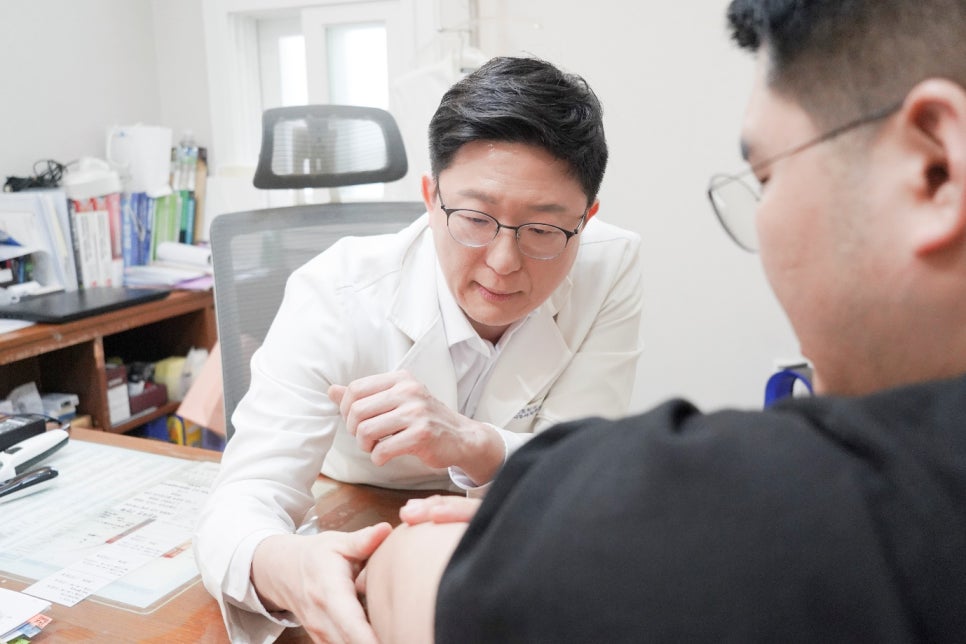

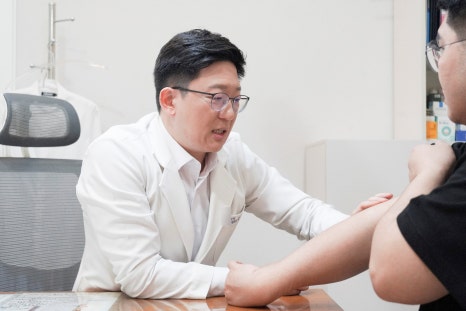
Red rashes and itching on the skin can affect a person’s day, emotions, and even relationships.
The skin is a more honest organ than many people think.
That is why it may be best to make small efforts every day to control the symptoms caused by atopic dermatitis.
Also, even now, it would be good to have the mindset of trying to understand your own skin and to actively establish a treatment plan.
Please remember that atopic dermatitis is not a condition you have to suffer through alone, but a skin disease that requires help from medical professionals.
I hope this column from the dermatology clinic in Yeongdeungpo-gu, Seoul, has been helpful for patients with atopic dermatitis, and I will end here.
If you have any questions beyond what was covered above, please leave them in the comments below.
We will kindly answer you at the dermatology clinic in Yeongdeungpo-gu, Seoul.
Thank you for reading to the end.
| This post was written for informational purposes in compliance with Article 56, Paragraphs 1 to 15 of the Medical Service Act. All treatments carry a risk of side effects and complications depending on the individual. Before treatment, be sure to make a thorough consultation with experienced medical staff and decide carefully. |