When people think of dead skin cells, many assume they are something that appears when the skin is in bad condition or something that should be removed.
However, dead skin cells are more like a reliable guardian that helps protect skin health.
Our skin is constantly fighting against external irritants.
Fine dust, ultraviolet rays, temperature changes, bacteria, fungi, and even allergens... The first line of defense that protects the skin from these threats is the stratum corneum.
These dead skin cells also have a kind of production cycle, so after a certain period they naturally shed, and new skin is reborn underneath.
And when this cycle works smoothly, we are able to maintain moist and healthy skin.
However, problems arise when this cycle becomes disrupted.
If dead skin cells that should shed do not detach properly and keep piling up on the skin, or if new skin is produced too quickly, causing an imbalance in the dead skin cell production cycle, thick layers of dead skin may build up in various areas of the skin.
Today, in the Mullae Station dermatology recommendation, I’d like to explain in detail about "psoriasis," which occurs when there is a problem with the dead skin cell production cycle.
I hope this article from the Mullae Station dermatology recommendation will be helpful for those who want to regain healthy, lively skin.
- Causes of psoriasis
- How to prevent the occurrence and worsening of psoriasis
- Psoriasis phototherapy

Why does psoriasis occur?
When people hear psoriasis, many only know it as a "disease that causes too much dead skin to form."
But if you look beneath the surface, there are complex issues happening on the skin.
First of all, psoriasis is known to be closely related to the immune system inside the body.
In normal skin, cells go through a cycle of being produced and shed about every 28 days.
However, when there is a problem with the immune system, healthy skin cells can be attacked, and the dead skin cell production cycle may speed up abnormally.
As a result, thick dead skin and scales appear in various areas of the skin.
In addition, for those who mainly wear tight clothing, the Koebner phenomenon caused by skin irritation can occur, further increasing the likelihood of psoriasis developing.


How can the occurrence and worsening of psoriasis be prevented?
Once psoriasis starts, it is not a skin condition that easily goes away.
That is why it may be advisable to manage it consistently so that symptoms do not appear or worsen.
First, when managing psoriasis, the key should be controlling the condition well rather than trying to eliminate the symptoms completely.
Also, psoriatic skin is especially dry and sensitive, so it is advisable to provide sufficient moisturization.
When using moisturizer, it may be more helpful to apply it frequently rather than applying a large amount at once.
And as mentioned earlier, psoriasis often occurs due to instability in the immune system.
Therefore, to maintain a healthy immune system, it may be advisable to manage excessive stress through enough rest, meditation, and similar practices.
It is also important to maintain a healthy biological rhythm by getting regular sleep and eating meals at consistent times.
Lastly, if you scratch or irritate the skin carelessly, psoriasis symptoms in that area may become more severe.
Therefore, you should live in a way that does not leave irritation on the skin, and it would be advisable to choose soft cotton clothing instead of tight clothes.
Psoriasis: a look at phototherapy
In the early stages of psoriasis, symptoms may only include rough skin and more severe scaling.
However, as time passes, the affected area may gradually expand, the skin may crack, and bleeding or pain may occur.
Sometimes it can even progress to psoriatic arthritis, which affects the joints.
That is why you should not think lightly of psoriasis and should plan treatment as soon as possible.
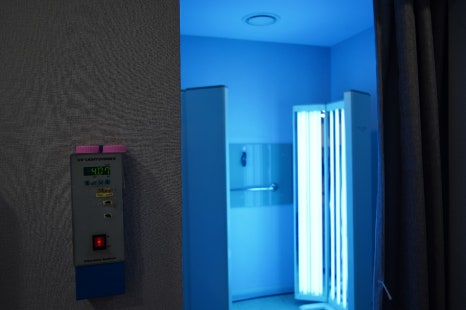
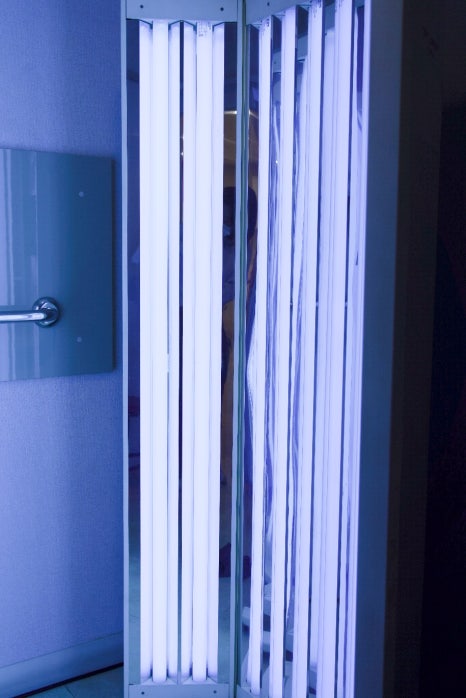
Depending on the severity of symptoms, psoriasis can be treated in various ways, and the phototherapy explained today is characterized by the use of light, as the name suggests.
Phototherapy is a treatment method that uses ultraviolet light of a specific wavelength and may help regulate abnormal immune responses.
In addition, by suppressing the skin’s inflammatory response, it can help improve red rashes and thick scaling.
However, if too much ultraviolet light is accumulated over a long period, it can cause large and small amounts of damage to the skin and increase the risk of various side effects, so a one-on-one treatment plan suited to each person’s skin condition must be established.
Psoriasis can be a very unfamiliar and upsetting condition.
But it is also a condition that can be managed when you understand it.
Moisturizing well so the skin does not become dry, maintaining regular lifestyle habits, and above all, not missing regular visits and consultations—if you practice these three things well, you can expect your skin condition to improve steadily.
And when treating psoriasis, it may be advisable to approach it with the mindset of aiming for long-term improvement rather than short-term results.
I hope this column from the Mullae Station dermatology recommendation was helpful for those who are stressed by psoriasis symptoms that do not easily improve.
Thank you for reading to the end.
| This post was written for informational purposes in compliance with Article 56, Paragraphs 1 through 15 of the Medical Service Act. All treatments carry the risk of side effects and complications depending on the individual. Before treatment, be sure to have a thorough consultation with experienced medical staff before making a decision. |