Today, I’d like to talk about atopic dermatitis, a skin condition that many people have probably heard of at least once.
“Doesn’t atopic dermatitis start in childhood and go away when you grow up?”
“If you use a good moisturizer, it’ll get better~”
Have you ever heard things like this?
Adult atopic dermatitis is a chronic skin condition in which symptoms can continue to appear even in adulthood, even if they first started in childhood.
This type of atopic dermatitis goes beyond simple itching or skin redness and can affect many parts of daily life—for example, losing sleep at night because of itching, having cracked skin behind the elbows and knees that makes it hard to wear clothes, or feeling unfocused and uncomfortable throughout the day.
Today, I’d like to explain post-treatment care that patients with atopic dermatitis should definitely know, as shared by a dermatology clinic near Daerim Station.
-
Causes of atopic dermatitis
-
Lifestyle management to prevent atopic dermatitis from worsening
-
Care after ointment and phototherapy
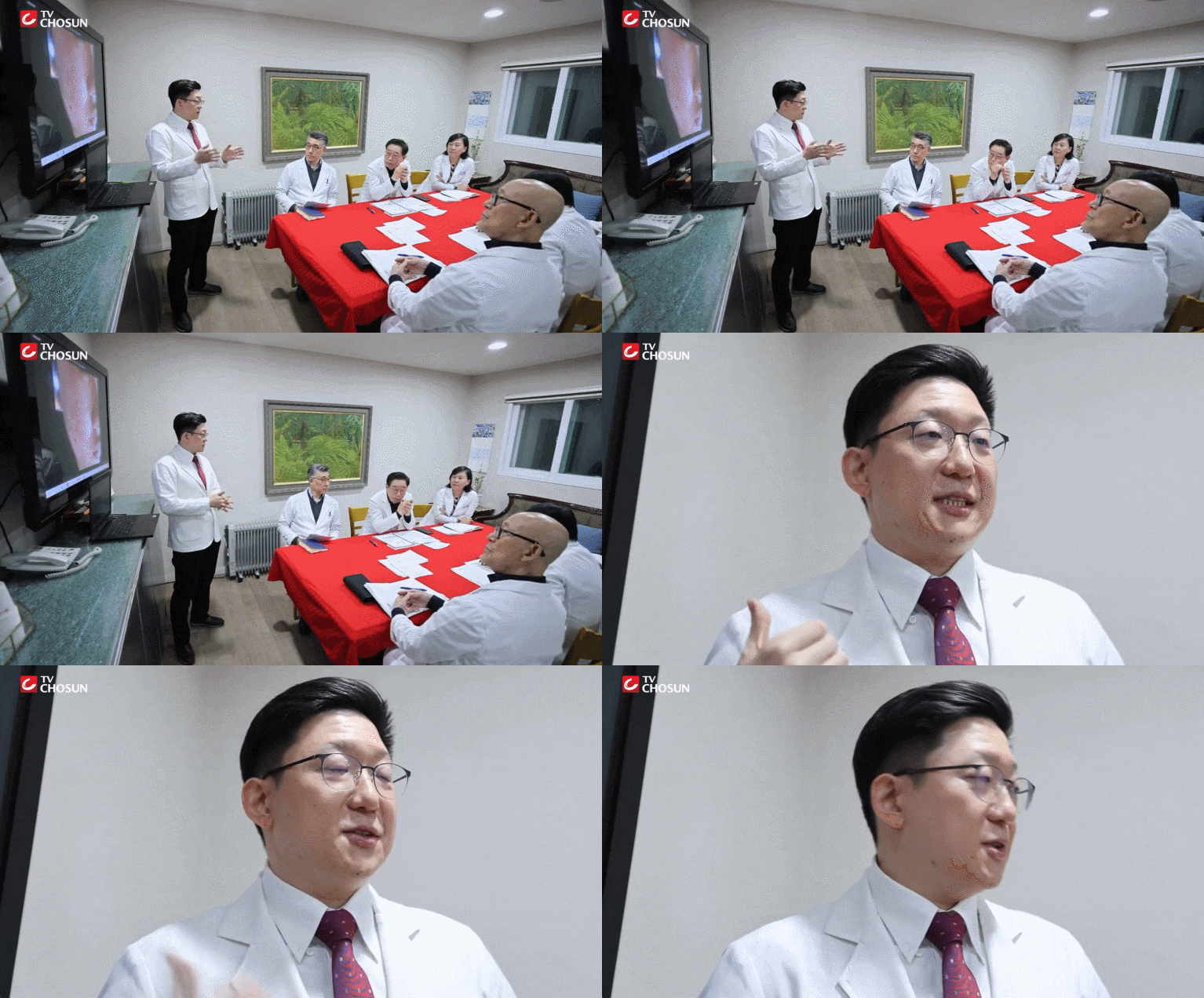
Why does adult atopic dermatitis develop?
As mentioned earlier, adult atopic dermatitis is not simply a matter of itchy or red skin; it is a chronic skin condition caused by a combination of genetic, environmental, and lifestyle factors.
There are three major reasons why atopic dermatitis develops.
The first is genetic factors.
If a parent has atopic disease, the likelihood of it occurring in their child increases.
The second is environmental factors.
External environmental factors such as fine dust, yellow dust, and sudden temperature changes damage the skin barrier and worsen atopic dermatitis symptoms.
The third is lifestyle habits.
Lifestyle habits are a little different from the genetic and environmental factors above.
If you have a lot of stress, irregular sleep patterns, or a diet centered on instant foods, the skin barrier can weaken and the immune balance can be disrupted.

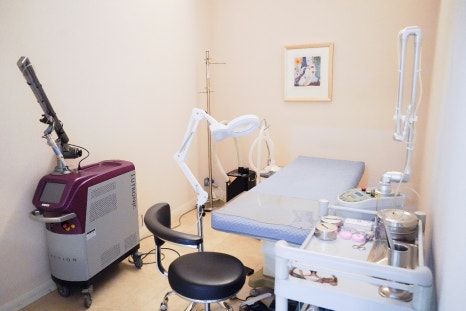

Lifestyle management to prevent atopic dermatitis from worsening
When atopic dermatitis worsens like this, it does not just stop at itchy, red skin. It can also keep you from sleeping because of itching every night, reduce concentration, and even lead to secondary infections when scratched areas develop wounds.
That is why it is important to manage it consistently in daily life so that atopic dermatitis does not worsen.
To do that, strengthening the skin barrier is the most important thing.
It is recommended to apply moisturizer within 3 minutes after showering to prevent moisture loss, and additional moisturizing 2 to 3 times a day is needed.
Environmental care is also essential.
Bedding in the home tends to collect mites and dust, so it is best to wash it at least once a week, and the ideal indoor humidity should be maintained between 40% and 60%.
Also, using low-irritation products rather than synthetic detergents or shampoos and body washes with strong fragrances can help minimize skin irritation.
Small differences in daily habits like these can have a big impact on relieving atopic dermatitis symptoms.



Care after ointment and phototherapy
In the treatment of adult atopic dermatitis, steroid ointments and phototherapy are commonly used.
Steroid ointments are treatments that quickly calm skin inflammation and can also help relieve itching.
These ointments are divided into 7 strength levels, and they are prescribed according to the treatment area, age, and skin condition, so the likelihood of side effects can be considered extremely low.
However, if steroid ointments are used excessively, side effects such as thinning of the skin or dilation of capillaries may occur.
Therefore, when using steroid ointment, it is best to follow the amount instructed by the medical staff.
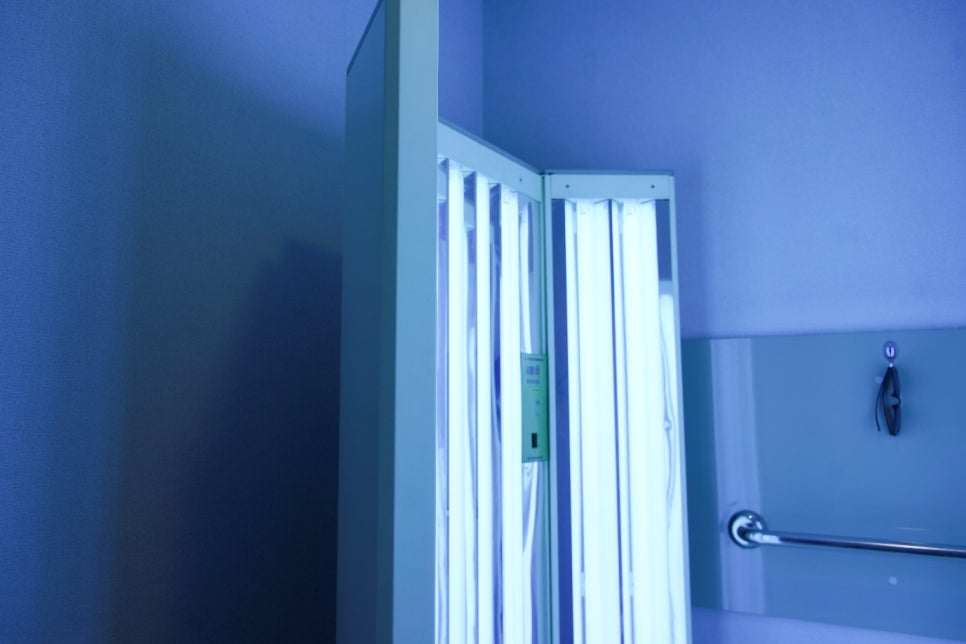
Another treatment method, phototherapy, is a way of controlling inflammation and immune responses by exposing the skin to ultraviolet light of a specific wavelength. It is used when symptoms are severe or lesions are widespread.
Because this treatment can leave the skin dry afterward, it is important to apply enough moisturizer.
In this way, the expected benefits can last longer only when daily care is also maintained after treatment.
Also, because phototherapy involves repeated exposure to ultraviolet light, redness, pigmentation changes, and aging of the skin may occur, so regular checkups and monitoring are necessary.
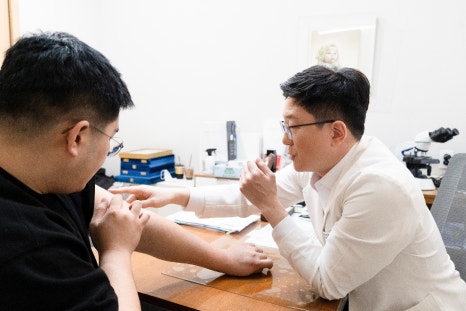

Adult atopic dermatitis should not be seen as just simple skin itching; symptoms can be stably controlled only when proper lifestyle habits and consistent treatment are combined.
In particular, ointment treatment and phototherapy must be carried out under the guidance of a specialist, and it is important not to forget that their effects can be sustained only when moisturizing, sunscreen use, and regular follow-up visits are also maintained after treatment.
Rather than managing it alone, it is important to establish a systematic treatment plan through professional consultation and medical care.
If you have any questions beyond the information above, please leave them in the comment box below.
We will kindly answer them.
Thank you for reading to the end.
| This post was written for informational purposes in compliance with Article 56, Paragraphs 1–15 of the Medical Service Act. All treatments carry the risk of side effects and complications depending on the individual. Before treatment, be sure to make a thorough decision after sufficient consultation with a medical professional who has extensive experience. |