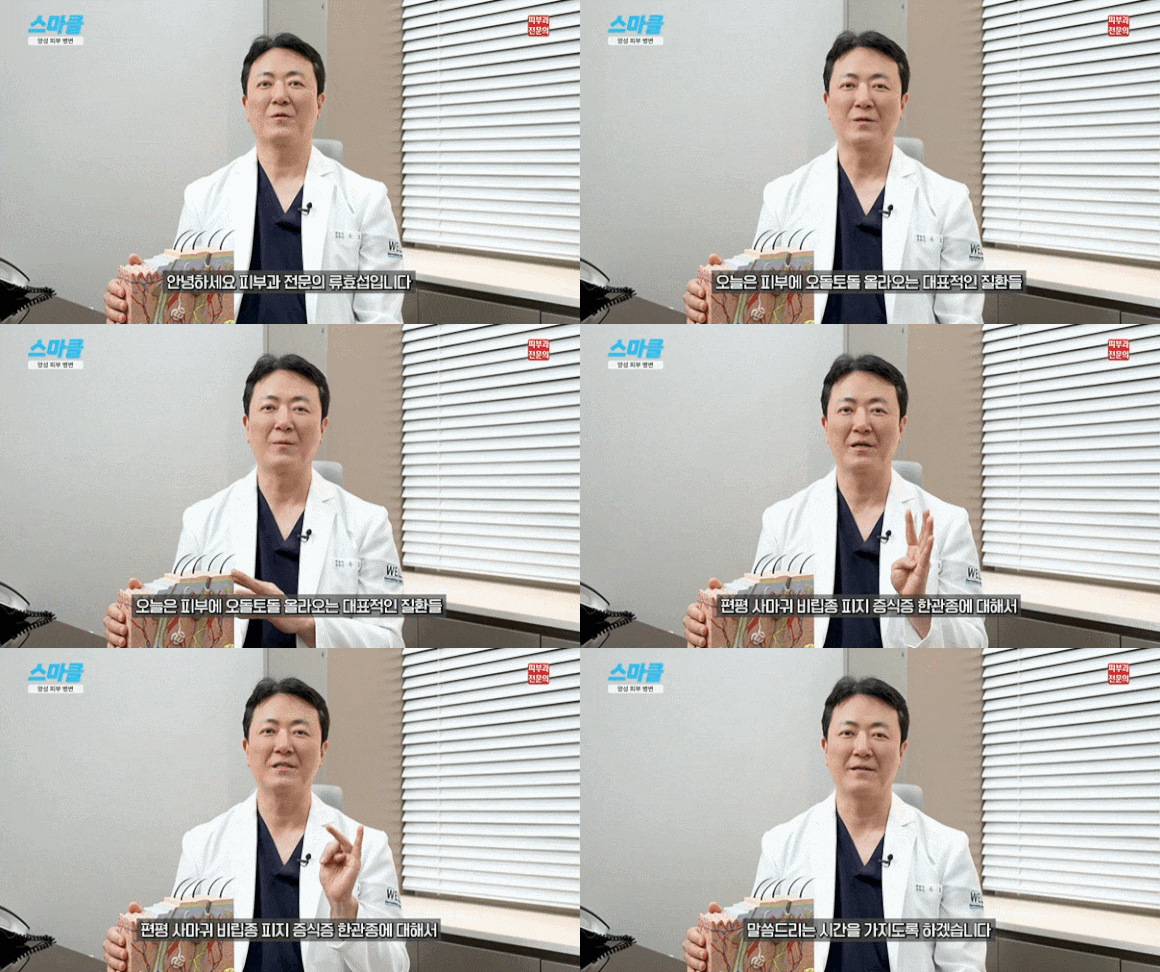
Hello,
I’m Yoo Hyo-seop, a dermatologist with 23 years of experience.
“Is this acne? Is it milia? Is it syringoma?”
This is a question I hear almost every day in the clinic.
When small, bumpy lesions appear on the face, many people think they are acne or guess that they are milia.
However, small facial lesions have different causes, occur at different depths, and naturally require different treatment methods.
Today, I’ll organize the differences and treatments for four representative benign skin lesions that appear as bumps on the face: flat warts, milia, sebaceous hyperplasia, and syringoma.
That’s because correctly distinguishing these four is the first step toward proper treatment.
Table of Contents
-
The four lesions have different depths
-
Treatment approaches differ depending on depth
-
Only flat warts spread
-
Can you squeeze them at home?
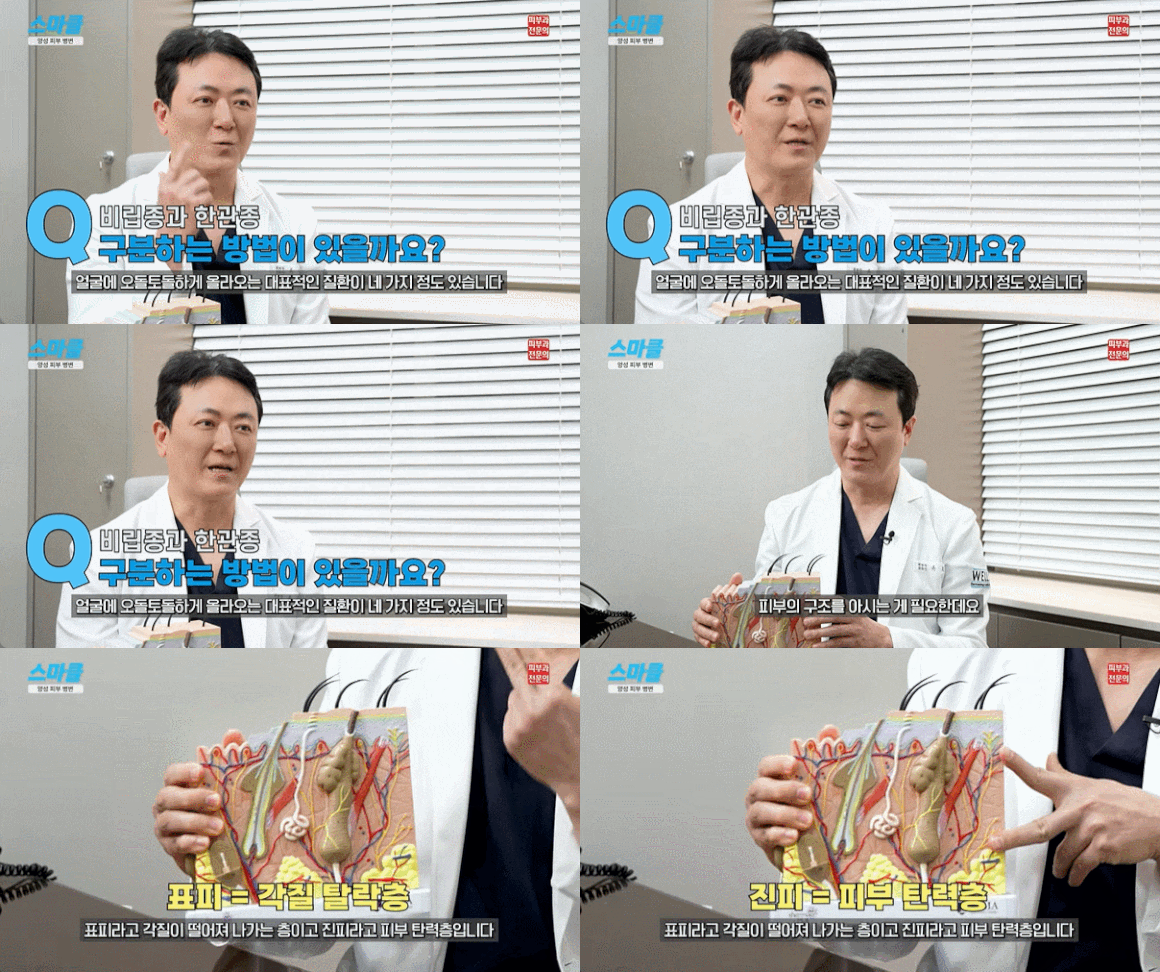 The four lesions have different depths
First, understanding the basic structure of the skin makes this much easier.
The four lesions have different depths
First, understanding the basic structure of the skin makes this much easier.
The skin is broadly divided into the epidermis and the dermis.
The epidermis is the outermost layer where dead skin cells are formed and shed, and the dermis is the layer underneath that maintains the skin’s elasticity.
Structures such as sebaceous glands and sweat glands are located within the dermis.
These four lesions exist at different depths within this structure.
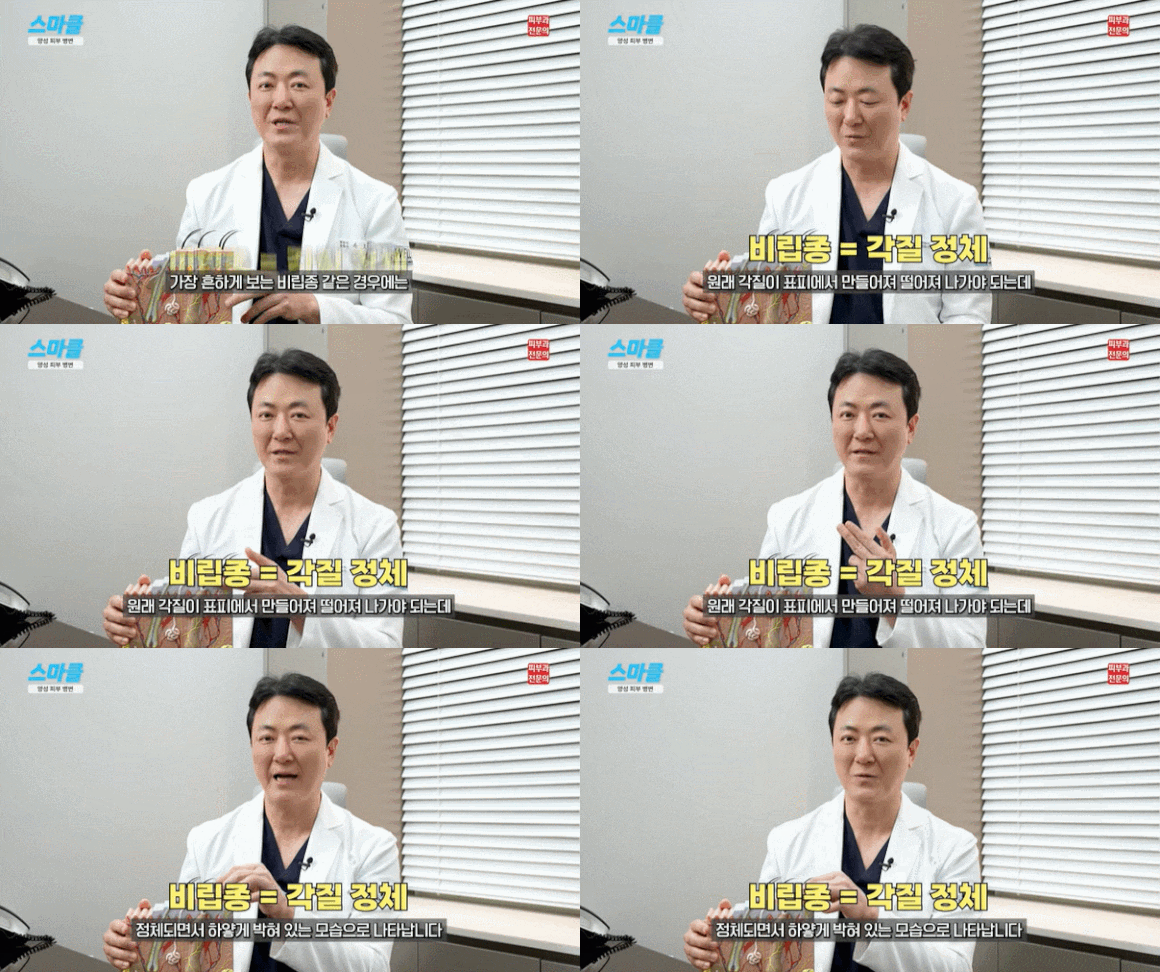 The most superficial ones are flat warts and milia.
Flat warts are a slight raised area of the epidermis caused by a viral infection,
The most superficial ones are flat warts and milia.
Flat warts are a slight raised area of the epidermis caused by a viral infection,
and milia are a condition in which keratin that should normally be produced in the epidermis and shed outward gets trapped and remains as a white plug.
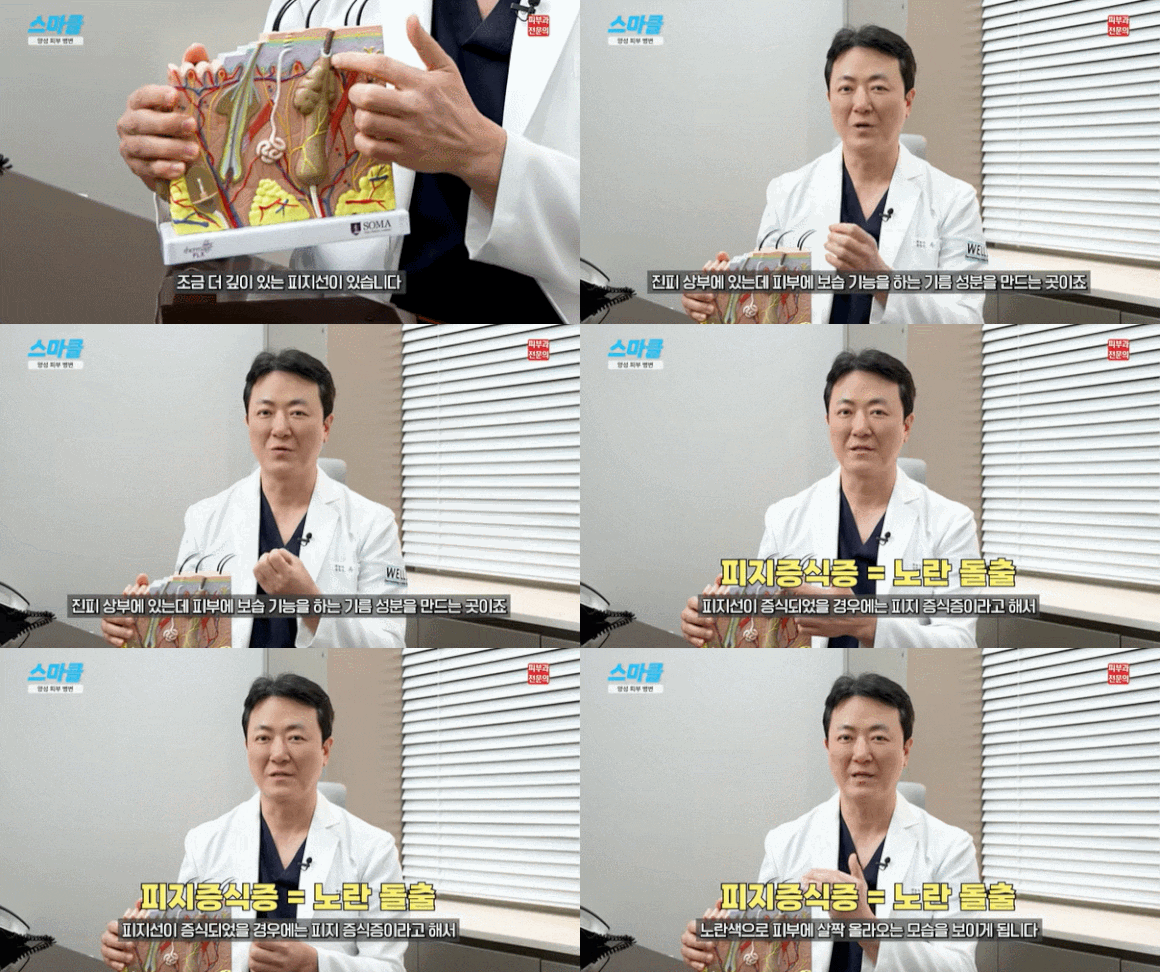
Below that, in the upper dermis, is sebaceous hyperplasia.
It is an overgrowth of the sebaceous glands that produce the oily substances responsible for the skin’s moisturizing function,
and it appears yellowish and slightly raised above the skin surface.
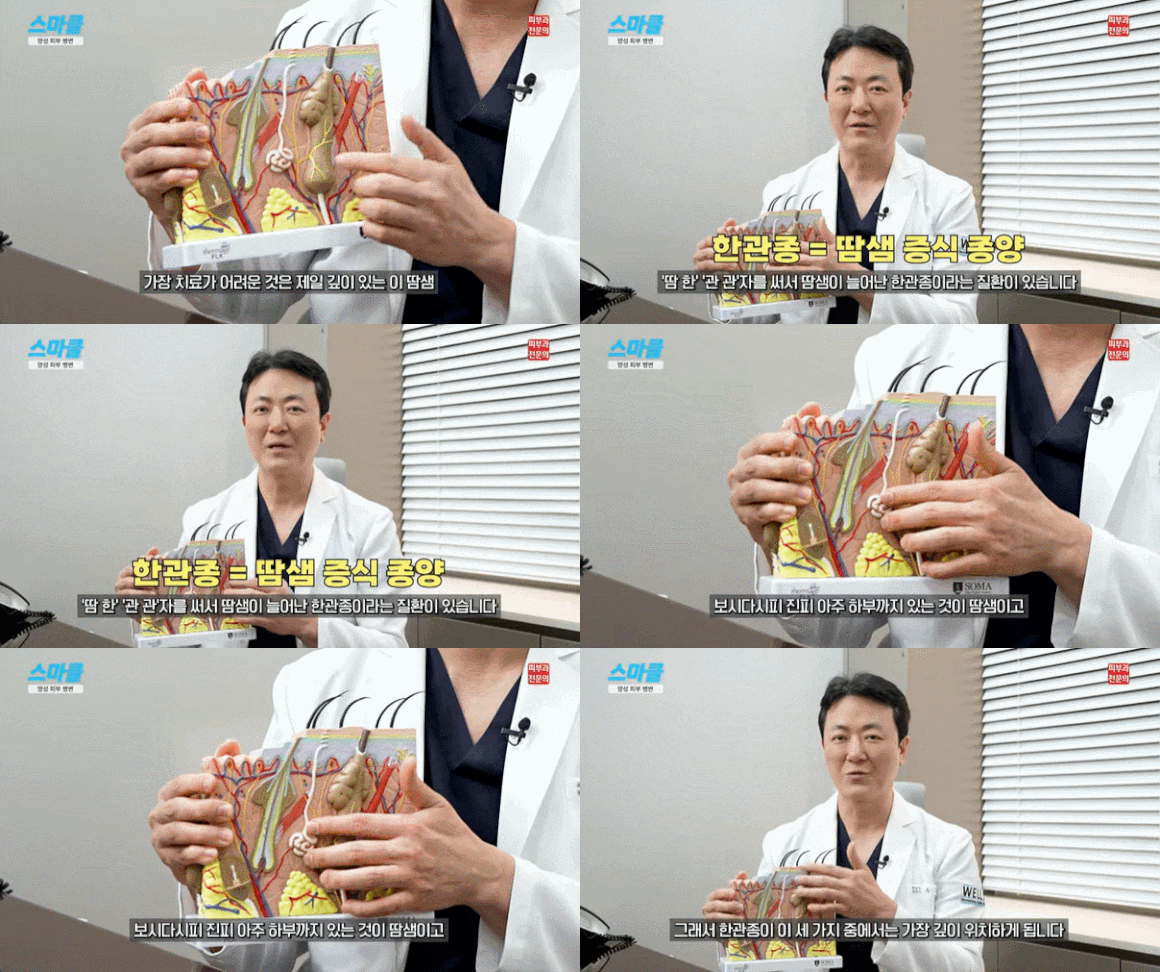
The deepest one is syringoma.
It is a lesion caused by the proliferation of the ducts of sweat glands that release sweat,
and because it extends down to the lower dermis, it is the most difficult of the four to treat.
 Treatment approaches differ depending on depth
For all four lesions, the goal of treatment is to remove the relevant structure.
Treatment approaches differ depending on depth
For all four lesions, the goal of treatment is to remove the relevant structure.
Because only the lesion itself must be destroyed accurately without causing unnecessary damage to the skin tissue, tissue-destructive lasers such as CO2 lasers or erbium lasers are used.
Flat warts and milia, which are located near the surface, are relatively easier to treat.
By checking the lesion with magnification, they can be removed at a low level in one or two treatments.
Sebaceous hyperplasia is a bit more challenging.
Because it is located in the upper dermis, it is difficult to remove the deeper sebaceous gland with a single conventional laser treatment, and if it is simply finished that way, it can quickly recur.
In my case, I use a three-step treatment approach: first remove the epidermis covering the surface, then liquefy the oily component with a CO2 laser and express it, and then treat the remaining tissue once more.
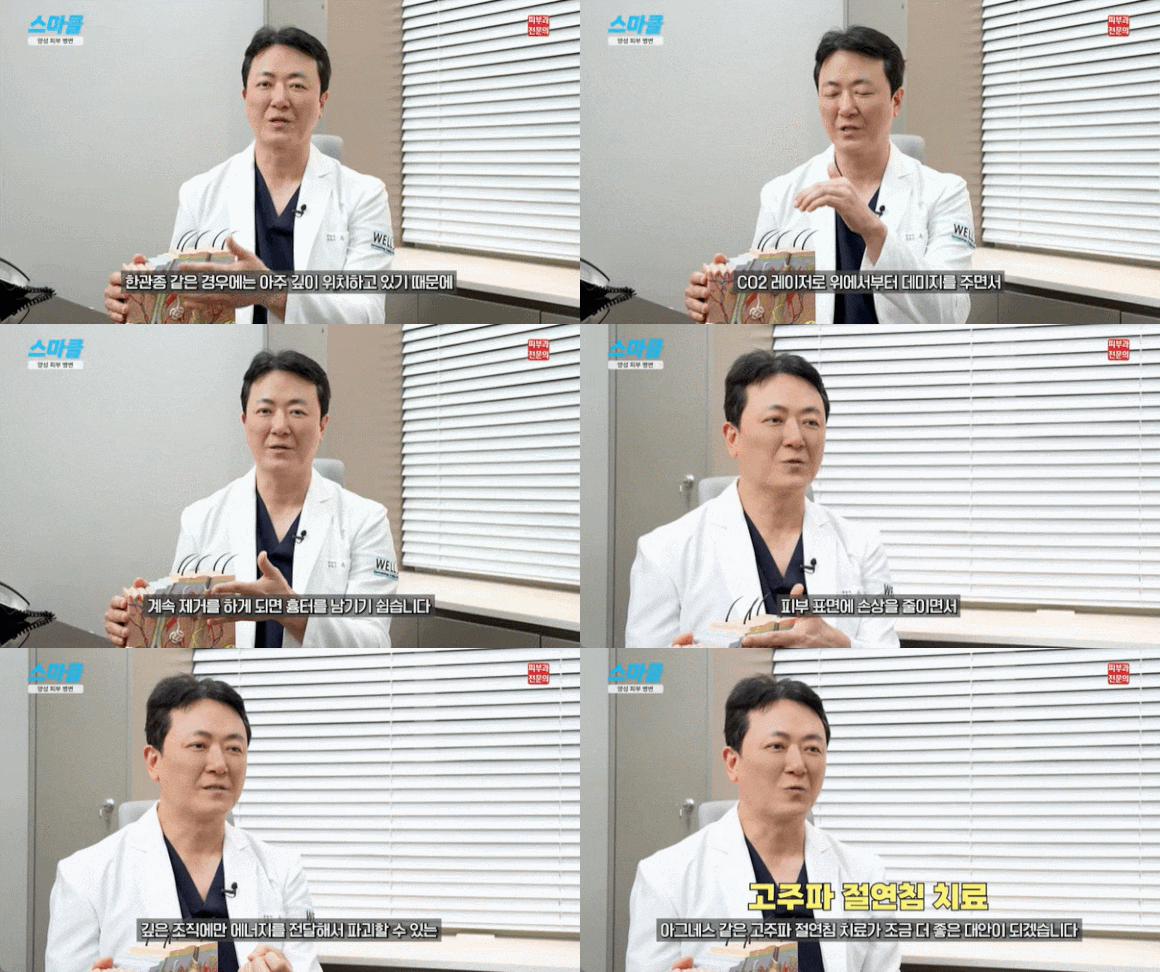 Syringoma is the most difficult of the four to treat.
It extends deep into the dermis, so removing it continuously from the top with a CO2 laser can easily leave scars.
Syringoma is the most difficult of the four to treat.
It extends deep into the dermis, so removing it continuously from the top with a CO2 laser can easily leave scars.
Therefore, radiofrequency needle treatment such as Agnes, which can reduce damage to the skin surface while delivering energy only to deep tissue for destruction, is a better option.
 Only flat warts spread
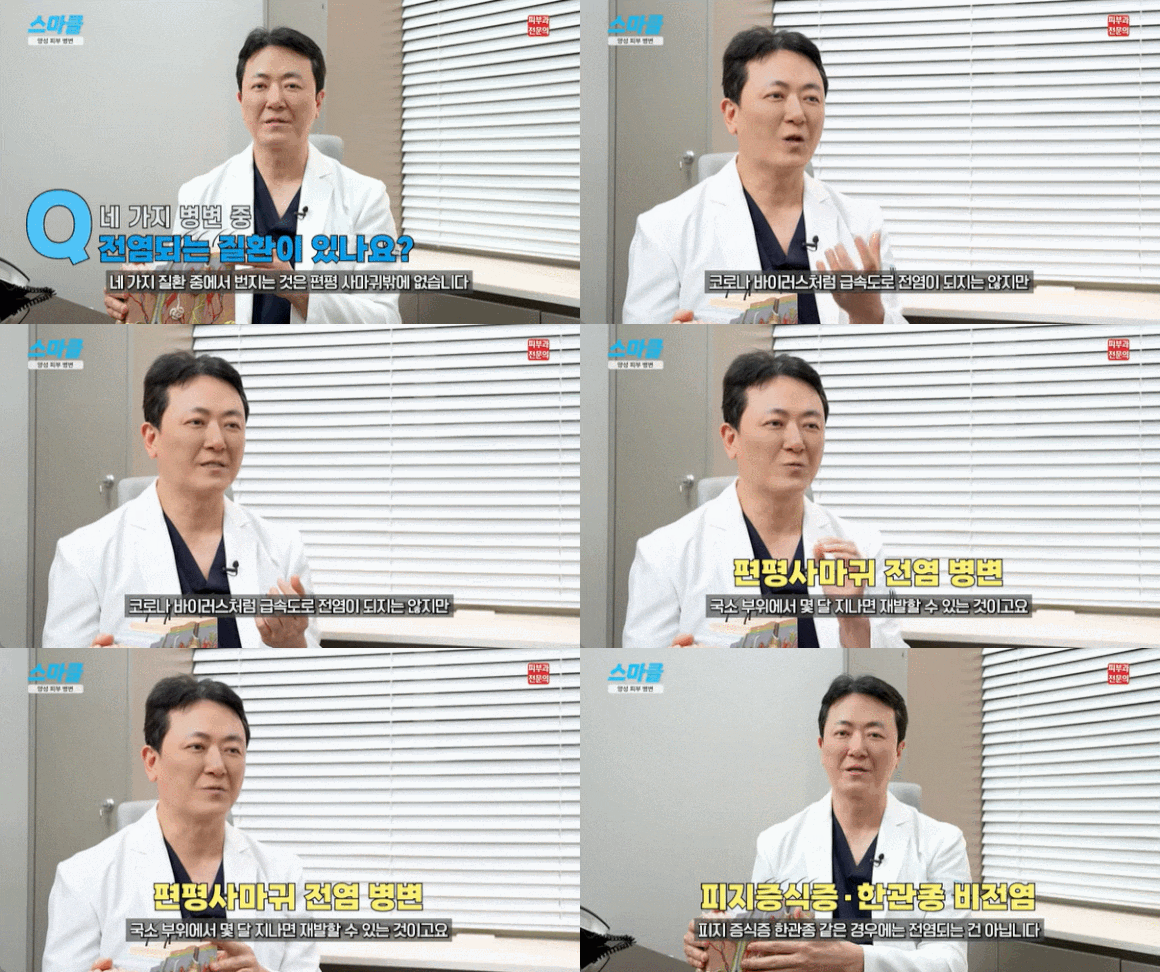
Among the four, only flat warts spread to other areas.
Only flat warts spread
Among the four, only flat warts spread to other areas.
Because the cause is a virus, they can reappear locally after a few months.
However, they do not spread as rapidly as a coronavirus; rather, they tend to recur gradually around the same area.
Sebaceous hyperplasia and syringoma are not contagious conditions.
They are not spread because each lesion becomes a source of infection; rather, the sebaceous glands or sweat gland ducts proliferate as part of skin aging.
In the case of syringoma, inheritance has not been clearly established, but similar patterns can appear within families when they share similar lifestyle habits and skin characteristics.
 Can you squeeze them at home?
Lesions located deep in the dermis cannot be extracted by squeezing.
Can you squeeze them at home?
Lesions located deep in the dermis cannot be extracted by squeezing.
Milia limited to the epidermis can be carefully opened by removing only the superficial layer and squeezed out by yourself, but because of the risk of infection and scarring, it is best to have them treated at a dermatology clinic if possible.
Sebaceous hyperplasia and syringoma are located in the dermis, so they cannot be removed by squeezing at home.
If you try too hard, inflammation or pigmentation may occur instead.
 In closing,
Milia are white keratin plugs; sebaceous hyperplasia has a skin-colored appearance with a slight yellowish oily tone; and syringoma appears as a slightly raised, shiny skin-colored bump.
In closing,
Milia are white keratin plugs; sebaceous hyperplasia has a skin-colored appearance with a slight yellowish oily tone; and syringoma appears as a slightly raised, shiny skin-colored bump.
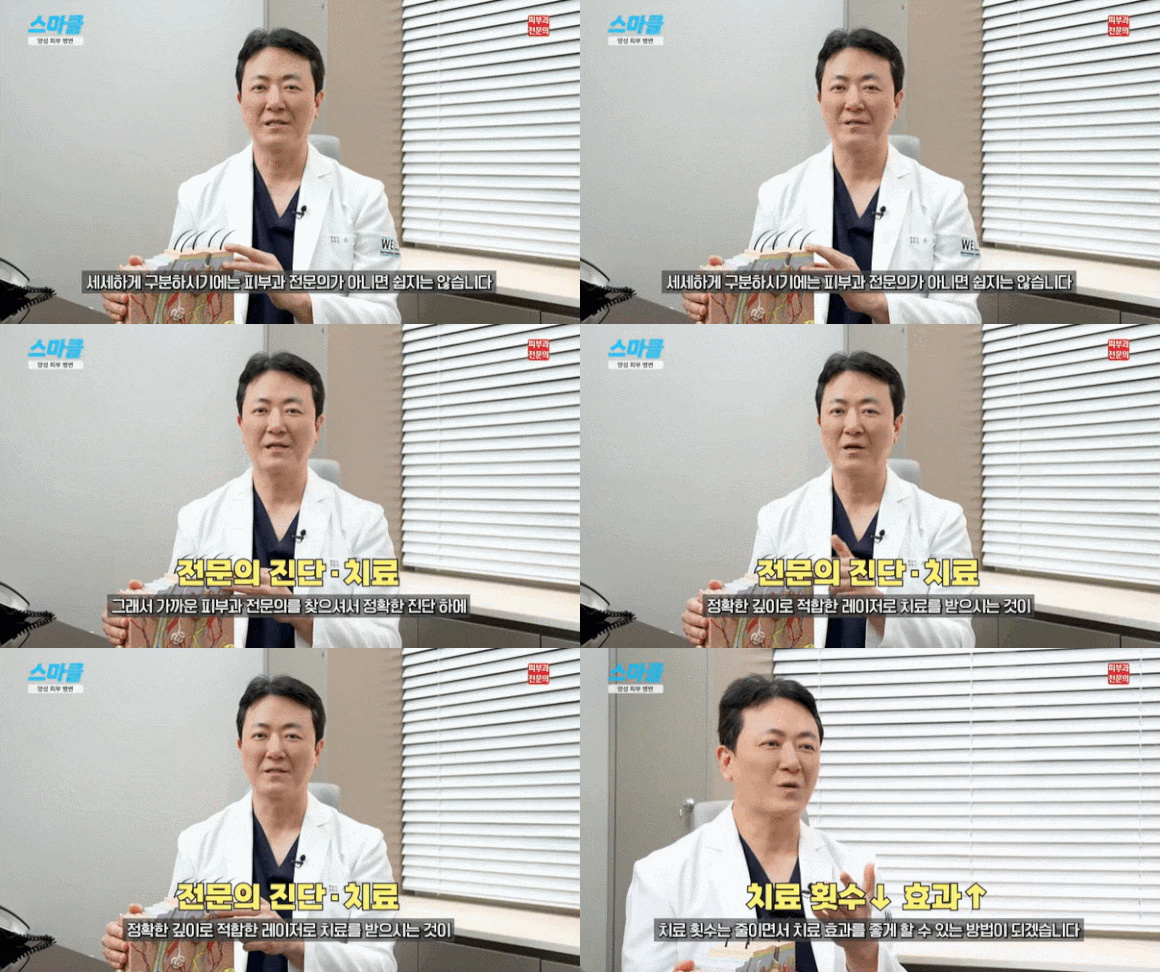
However, it is not easy for most people to distinguish these three in detail.
If you treat them with the wrong method without an accurate diagnosis, not only will the treatment be ineffective, but it may also leave scars or pigmentation.
If you develop small bumps on your face, the surest way to reduce the number of treatment sessions and improve results is to visit a nearby dermatologist, get an accurate diagnosis, and receive appropriate treatment according to the lesion’s depth and type.
Thank you for reading this long post.
This was Yoo Hyo-seop from Wells Dermatology.
[Recommended additional reading]
Best 1. Introductory post
Best 2. What causes cheek dents as a side effect of diet treatment?
Best 3. How can I reduce pores?
| Wells Dermatology main phone number (click the number below to connect) |
|---|
| 02 - 542 - 2372 |
| Clinic hours |
|---|
| Weekdays 10:00 ~ 20:00 |
| Saturday 10:00 ~ 17:00 |
| Lunch break 13:00 ~ 14:00 |
| Closed on Sundays and public holidays |
This post was written directly by Wells Dermatology Clinic and complies with all laws regarding medical advertising other than Article 56, Paragraph 1 of the Medical Services Act.
Please note that all surgeries and procedures may cause side effects depending on the individual, so after receiving sufficient guidance from medical staff, please carefully decide whether to undergo the procedure.