※ This article is content provided for medical information purposes.
We inform you that this content does not fall under the categories subject to review pursuant to Article 56, Paragraph 2 and Article 57 of the Medical Service Act, and that it is not a post intended for advertising purposes.
Hello,
I am Seong Hyeon-ju, director of Cheongdam OK Clinic.

| ▶ Full member of the Korean Academy of Aesthetic Plastic Surgery (KACS) |
|---|
| ▶ Full member of the Korean Society for the Study of Obesity (KSSO) |
| ▶ Full member of the Korean Academy of Aesthetic Medicine (KAAM) |
| ▶ Full member of the Korean Society of Liposuction and Body Contouring (KSSL) |
| ▶ Full member of the Korean Society of Aesthetic Surgery (KSAS) |
When starting a diet, if you feel that managing your weight through diet and exercise alone is difficult, you may look into diet medication at least once.
However, when you actually look into them, there are various types, ranging from medications that control appetite and medications that affect fat absorption to the recently widely known GLP-1 medications.
The important thing is not simply to choose a well-known medication, but to examine your current weight, health status, eating habits, and other factors to find an appropriate approach.

Today, we will look at the types of diet medications available and what should be checked before receiving a prescription.
| Table of Contents |
|---|
| 1. Do all diet medications work in the same way? 2. What types of medications are used? 3. Why prescriptions differ from person to person 4. What to check before taking them |
- Do all diet medications work in the same way?
Although people often think of diet medication as one type of medication, medications used for weight management differ in how they work.

Some medications help control intake by affecting appetite or feelings of fullness, while others work by reducing the absorption of dietary fat.
Recently, GLP-1 medications, which affect appetite-regulation signals between the gastrointestinal tract and the brain, have also been used for weight management.

Therefore, rather than choosing the same medication simply because someone else experienced results with it, it is necessary to consider both the mechanism of action of each medication and your own condition.
- What types of medications are used?
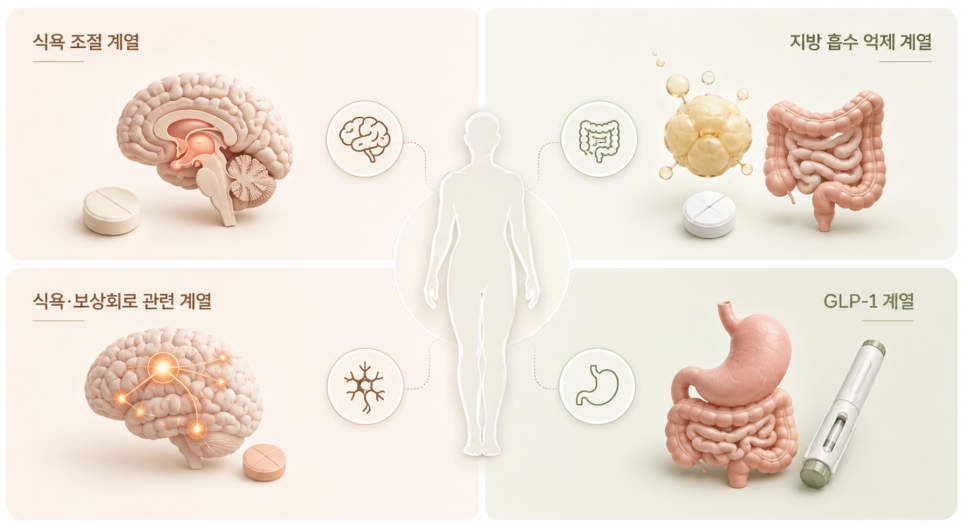
Some diet medications contain ingredients such as phentermine, which suppresses appetite by acting on the central nervous system. These medications are generally considered for short-term use.
Orlistat works by reducing the absorption of some of the fat consumed through food.
Because gastrointestinal discomfort may occur after eating fatty foods, eating habits should also be considered.
There are also medications such as the naltrexone–bupropion combination, which affects appetite and the reward pathways associated with food.
GLP-1 medications such as liraglutide and semaglutide work by affecting feelings of fullness and appetite regulation.
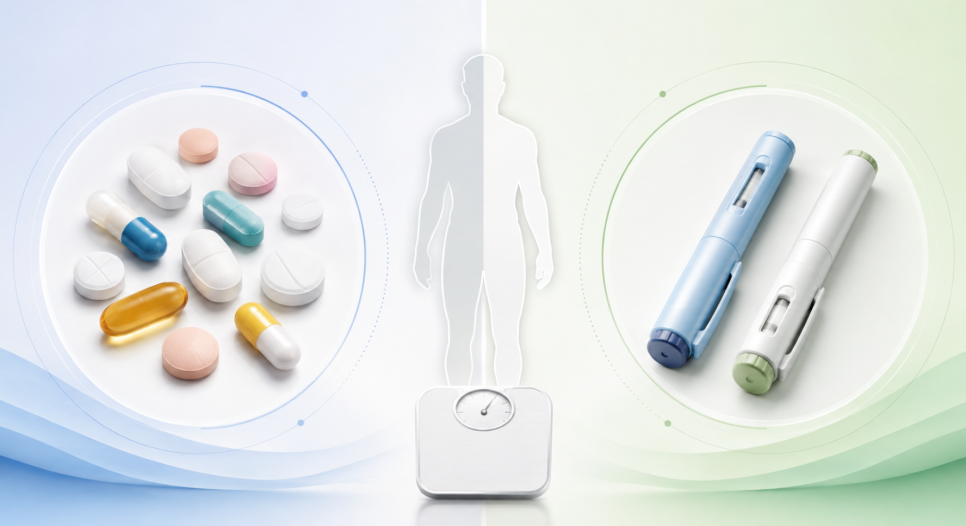
Because each diet medication differs in how it is taken or administered, its precautions, and who can use it, it is important to use it following an evaluation by a medical professional.
- Why prescriptions differ from person to person
Having the same weight does not mean that the same diet medication is appropriate for everyone.

It is necessary to comprehensively assess factors such as whether you usually eat large amounts, whether you frequently eat late-night meals or binge eat, and whether you are currently taking any medications.
Body mass index, coexisting conditions, blood pressure or pulse, medical history, and past reactions to medications may also be considered when determining the medication.

In particular, some medications may cause increased heart rate, insomnia, dry mouth, nausea, or digestive symptoms, so prescribing based on the individual's condition and monitoring progress are necessary.
- What to check before taking them
Rather than approaching diet medication simply as a means of losing weight quickly, the first priority should be to determine whether you have a condition that requires treatment.

Confirm your current health status and weight, as well as your target weight-loss range.
If medication treatment is needed, it is advisable to consult a medical professional about which class is appropriate and how long it should be used.
Even after taking the medication, changes in appetite and any discomfort should be checked along with changes in weight. The dosage or treatment approach may be adjusted as needed.

Ultimately, it is difficult to decide which diet medication is right for you based on search rankings or reviews from people around you.
Because each medication has a different mechanism of action and different precautions, it is important to first consider your current health status and lifestyle habits and establish an appropriate weight-management plan.
↓↓↓ Related content you may find helpful ↓↓↓
-Operating Hours-
| Weekdays 10:00–19:00 (last registration at 18:30) Saturdays 10:00–16:00 (last registration at 15:30) Public holidays / Wednesdays and Sundays: Closed regularly |
-Contact-
-How to Get Here-