Hello.
Today I’ll explain Invisalign orthodontic treatment for orthognathic surgery.
It would be best if correction could be done without orthognathic surgery,
but there are also cases where it is better to do nothing than to proceed with orthodontics without surgery.
The combination of orthognathic surgery and Invisalign clear aligners often leads to good surgical results, and orthodontic treatment also progresses quickly and well.
So today, I’ll introduce how orthognathic surgery orthodontics is done with Invisalign.
This is the usual sequence: pre-surgical orthodontics - orthognathic surgery - 1 month of rest - post-surgical orthodontics.
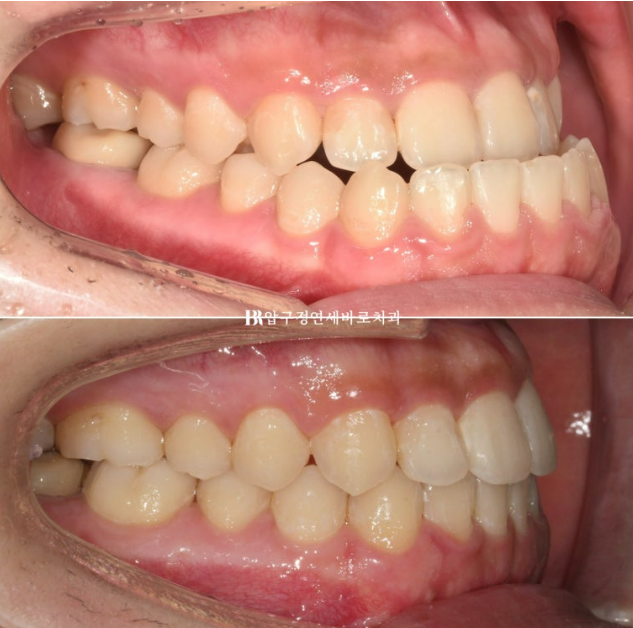
23.7~24.8
A patient considering orthognathic surgery visited the clinic.
They had already visited and compared consultations at several orthognathic surgery hospitals,
and came in saying they wanted the surgical orthodontic treatment to be done with Invisalign.
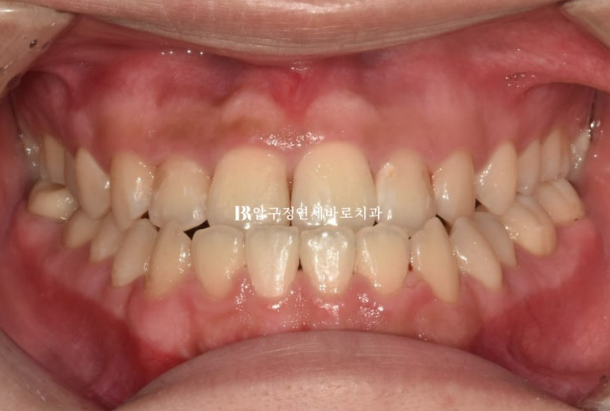
23.07
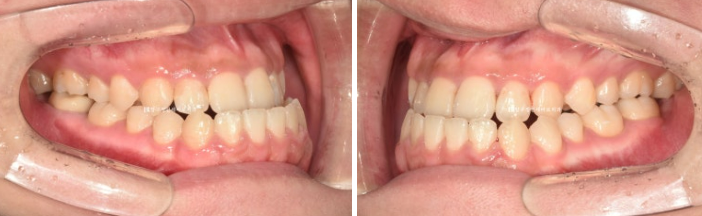
Because this was a case of severe crossbite and prognathism, orthodontic correction was not possible without orthognathic surgery.
The patient understood this part as well.
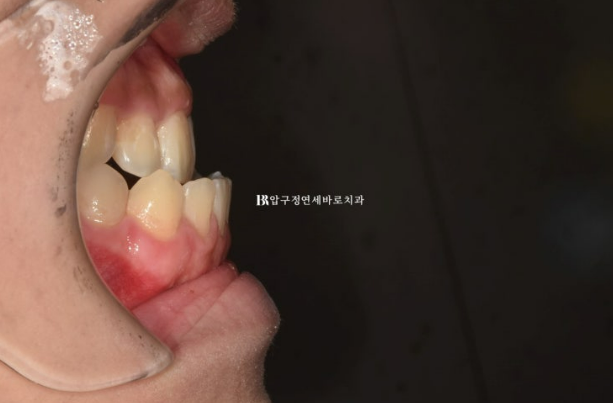
23.07
It was decided to undergo orthognathic surgery during the winter vacation,
and pre-surgical orthodontics was also carried out.
Because the initial consultation took place in July and it took about a month and a half to receive the appliance, the actual orthodontic treatment began in August.
The goal of pre-surgical orthodontics is to make the bite stable for orthognathic surgery.
In prognathism (Class III malocclusion), the upper back molars often have no opposing teeth and are over-erupted.
To address this, orthodontic mini-screws were placed in the palate and pre-surgical orthodontics was performed.
This is the result after about 4 months of pre-surgical orthodontics.
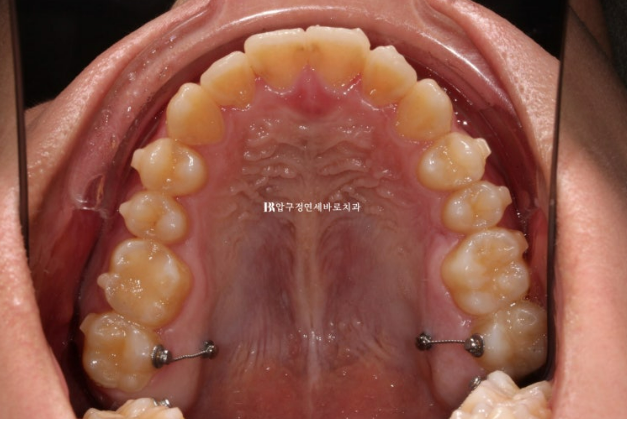
23.12
The upper back molar that had been over-erupted was successfully moved back into position, and it was fixed with a wire for the orthognathic surgery.
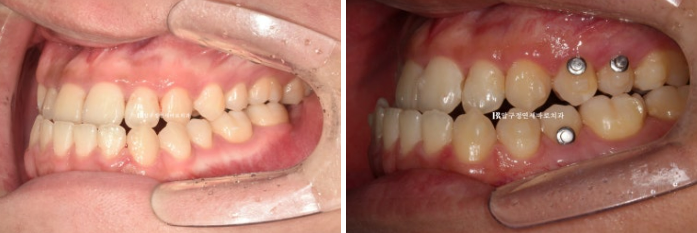
23.07~24.12
The left side is the initial consultation, and the right side is the final stage of pre-surgical orthodontics.
Compared with the beginning, the gap between the upper and lower front teeth may look even wider.
You might say that.
In pre-surgical orthodontics, the teeth are moved in a way that makes the prognathism appear more severe, so the condition immediately before orthognathic surgery becomes the most severe and uncomfortable state of malocclusion.
That is what leads to better surgical results.
The next photo shows the patient’s condition when they returned to the clinic after undergoing orthognathic surgery at the oral and maxillofacial surgery department and spending a month in recovery.
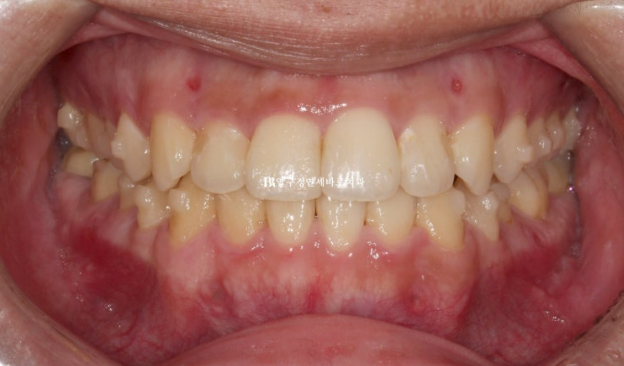
24.02
The bite is very good.
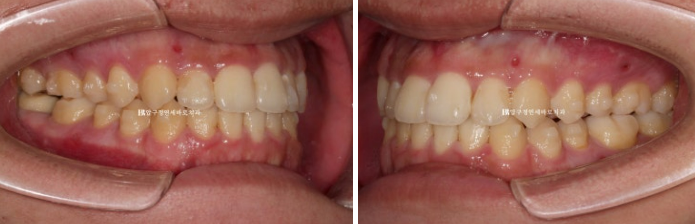
24.02
The pre-surgical orthodontics went so well, and the surgeon at the oral and maxillofacial surgery department also performed the surgery so well,
that there was actually not much left to do in the post-surgical orthodontics.
Still, an additional appliance was made for a more precise midline and a tighter bite.
Post-surgical orthodontics with the additional appliance was carried out for about 5 months, from 3 months through August, and the treatment was finally completed.
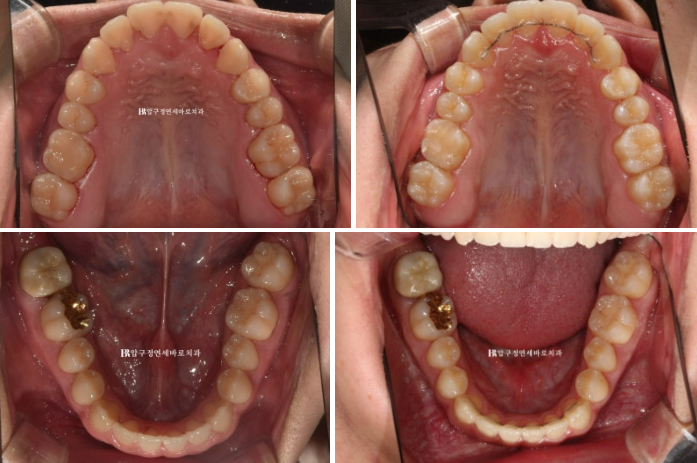
23.07~24.08
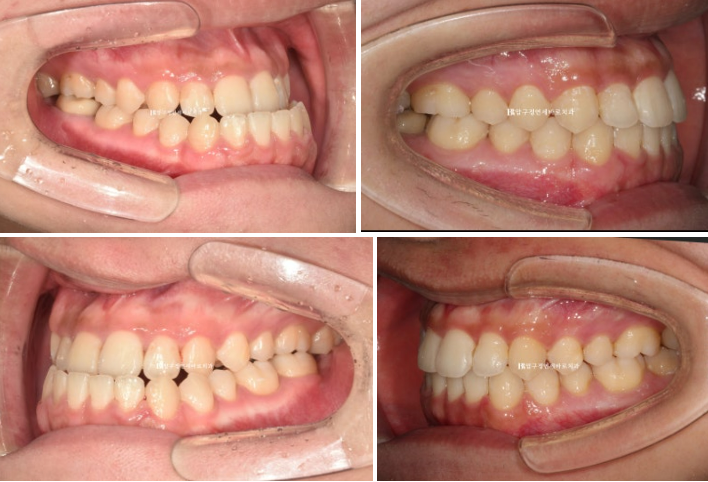
23.07~24.08
Excluding the surgery, recovery period, and appliance fabrication period, the total orthodontic treatment period was 9 months: 4 months of pre-surgical orthodontics and 5 months of post-surgical orthodontics.
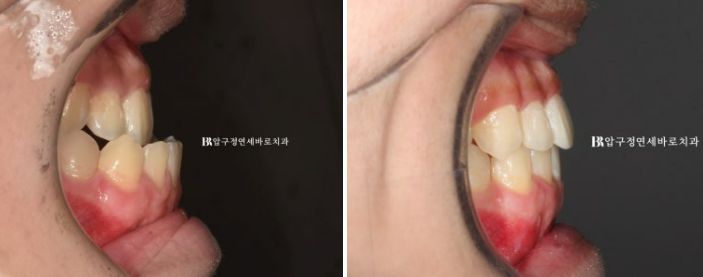
23.07~24.08
The results of orthognathic surgery orthodontics with Invisalign are good.
I hope this post is helpful for those who need orthognathic surgery.