AI-translated archive post

Non-Surgical, Non-Extraction Invisalign Correction for Prognathism and Asymmetry in a Patient in Their 40s

Yonsei Baro Dental Clinic · 치과미슐랭 · July 11, 2025

Hello. It is not possible to correct skeletal prognathism and asymmetry with orthodontics alone. Double-jaw surgery is needed. However, orthodontics alone can make anterior crossbi...

AI translation notice

This page is an English translation of a Korean Naver Blog archive entry. For exact wording and source context, verify against the Korean archive original and the original Naver post.

Clinic: Yonsei Baro Dental Clinic

Original post date: July 11, 2025

Translated at: April 20, 2026 at 3:43 PM

Medical note: This translation does not guarantee medical accuracy or suitability for treatment decisions.

Hello.

It is not possible to correct skeletal prognathism and asymmetry with orthodontics alone.

Double-jaw surgery is needed.

However, orthodontics alone can make anterior crossbite and a deviated midline into a normal bite.

Treatment that normalizes the bite while leaving the bone problem unchanged, without double-jaw surgery, is called compensatory treatment.
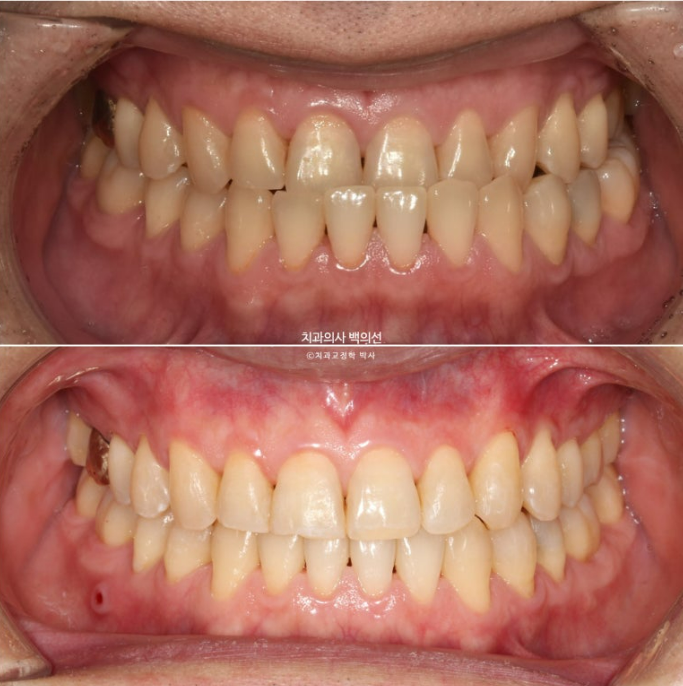
Non-Surgical, Non-Extraction Invisalign Correction for Prognathism and Asymmetry in a Patient in Their 40s image 1

23.12~25.03

Today, I will show you how prognathism and asymmetry were treated with Invisalign without double-jaw surgery.

The total treatment period was 1 year and 3 months. There was 1 remaking.
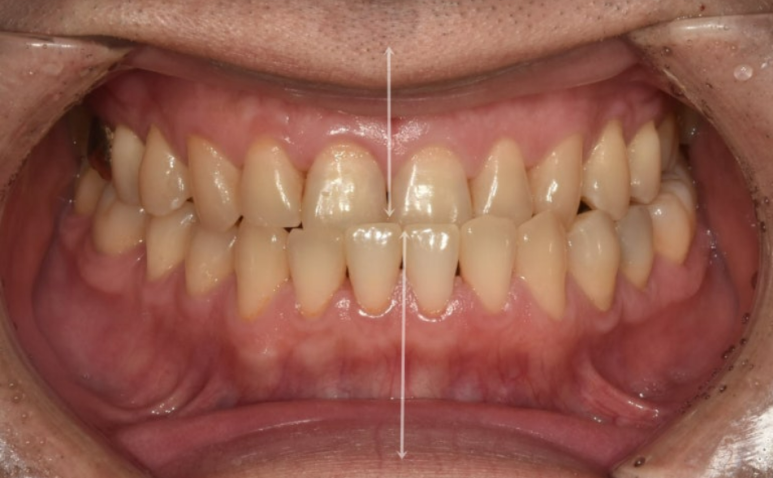
Non-Surgical, Non-Extraction Invisalign Correction for Prognathism and Asymmetry in a Patient in Their 40s image 2

23.12

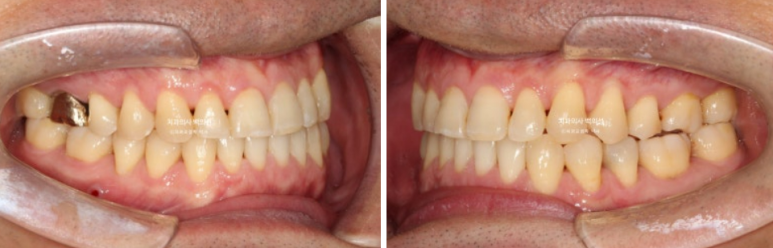
This is a patient in their 40s who visited in December 2023 for prognathism treatment.

In addition to skeletal prognathism, there is also asymmetry with the lower jaw shifted to the left.
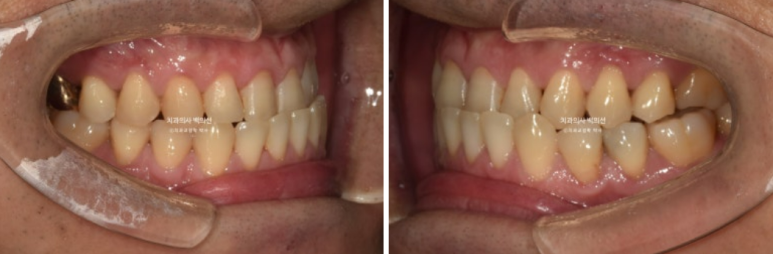
Non-Surgical, Non-Extraction Invisalign Correction for Prognathism and Asymmetry in a Patient in Their 40s image 3

23.12

The front teeth are completely in reverse occlusion.
Non-Surgical, Non-Extraction Invisalign Correction for Prognathism and Asymmetry in a Patient in Their 40s image 4

23.12

Non-Surgical, Non-Extraction Invisalign Correction for Prognathism and Asymmetry in a Patient in Their 40s image 5

23.12

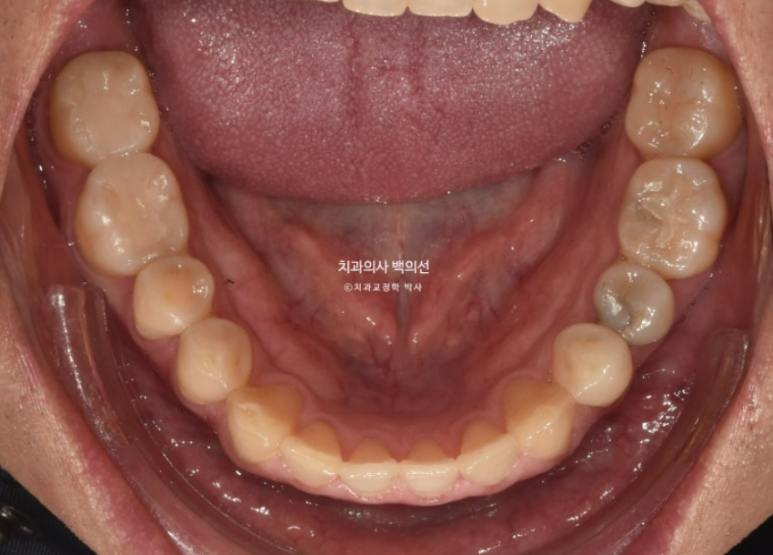
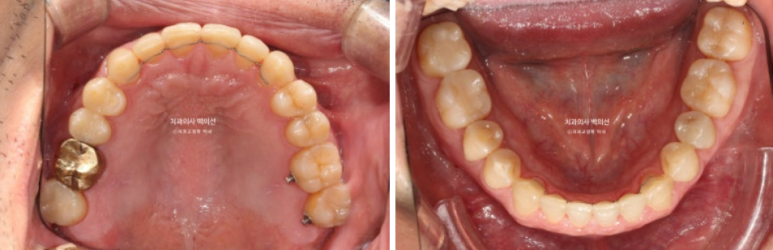
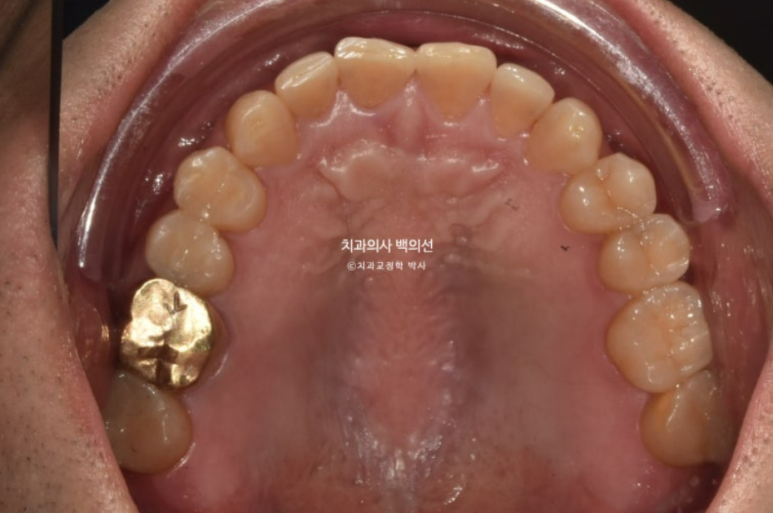
The teeth are relatively well aligned, but after living for a long time with an anterior crossbite, the upper front teeth show severe wear from hitting the lower front teeth.

Non-extraction treatment with Invisalign was recommended. The plan was to push the entire lower arch backward into the wisdom tooth space to resolve the anterior crossbite and midline discrepancy.
Non-Surgical, Non-Extraction Invisalign Correction for Prognathism and Asymmetry in a Patient in Their 40s image 6

24.10

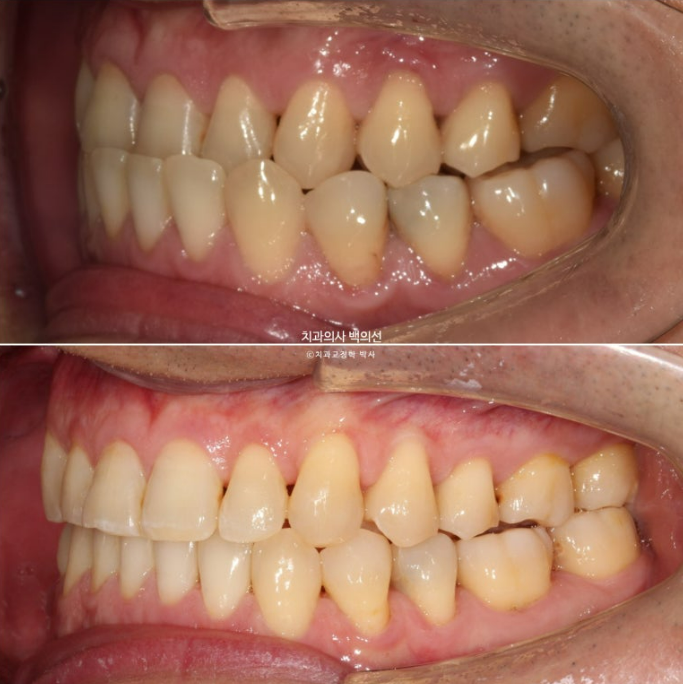
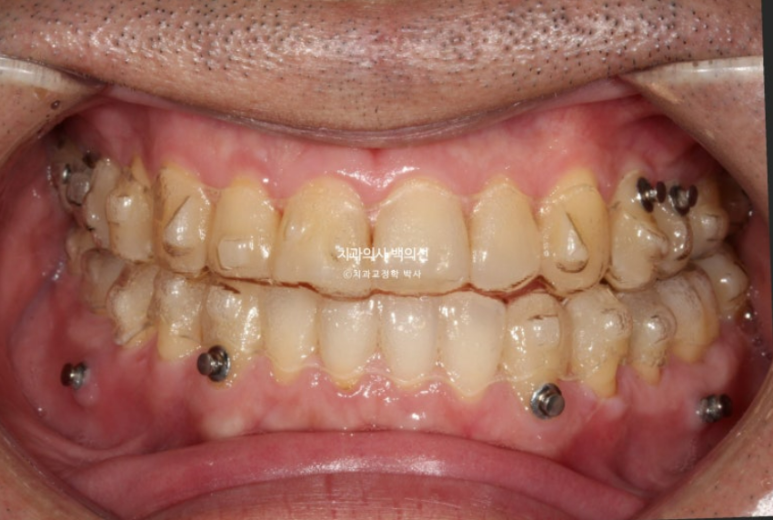
The treatment is being carried out with two mini-screws, which are orthodontic anchors, placed in the lower jaw, and Class III elastics are being used.

This is what it looked like after wearing all the appliances from the first set at 10 months into treatment.
Non-Surgical, Non-Extraction Invisalign Correction for Prognathism and Asymmetry in a Patient in Their 40s image 7

24.10

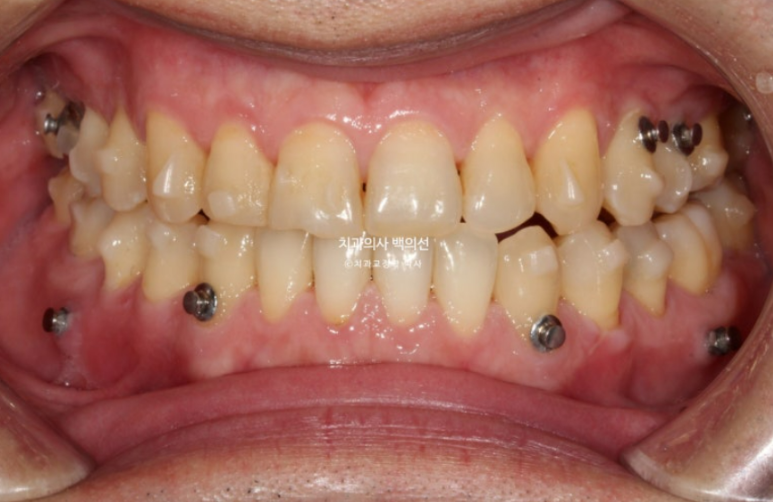
The major work is done, but some unfinished parts remain.

The anterior crossbite has been resolved, but the midline is still slightly off.
Non-Surgical, Non-Extraction Invisalign Correction for Prognathism and Asymmetry in a Patient in Their 40s image 8

24.10

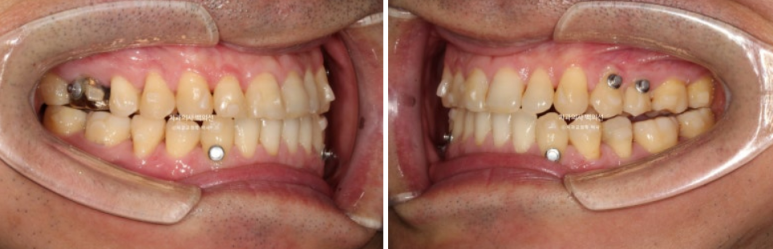
There is still an area where the molar bite is open, so remaking began in October 2024.

After wearing all the additional appliances for 4 months until March 2025, the treatment was completed.
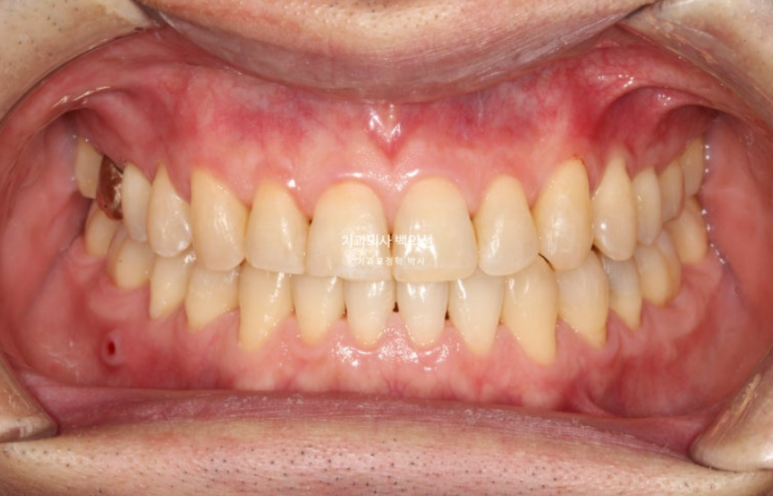
Non-Surgical, Non-Extraction Invisalign Correction for Prognathism and Asymmetry in a Patient in Their 40s image 9

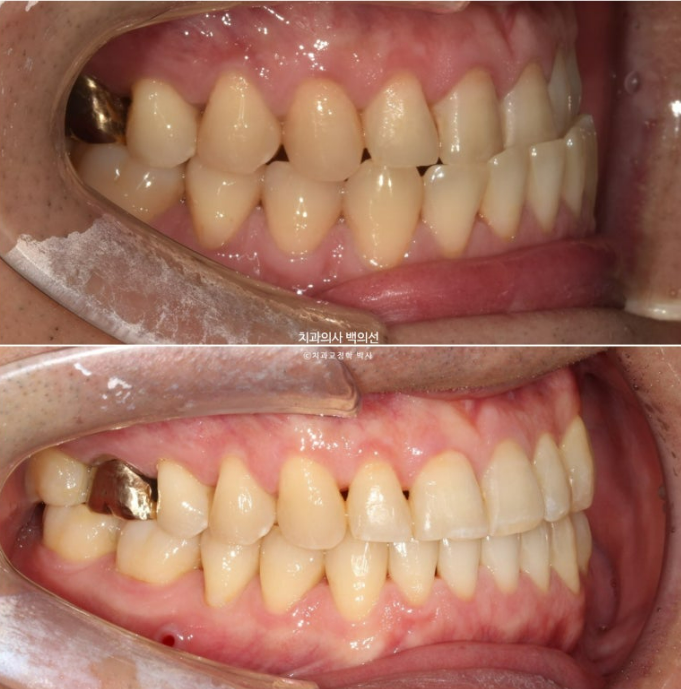
25.03

The midline is well aligned.

Non-Surgical, Non-Extraction Invisalign Correction for Prognathism and Asymmetry in a Patient in Their 40s image 10

25.03

The molar bite is good.

Non-Surgical, Non-Extraction Invisalign Correction for Prognathism and Asymmetry in a Patient in Their 40s image 11

25.03

This is what it looks like with the retainers attached.

At first, the expected treatment period was explained as 1 year and 6 months, but the treatment was successfully completed in 1 year and 3 months.

Let's look at the before-and-after comparison.
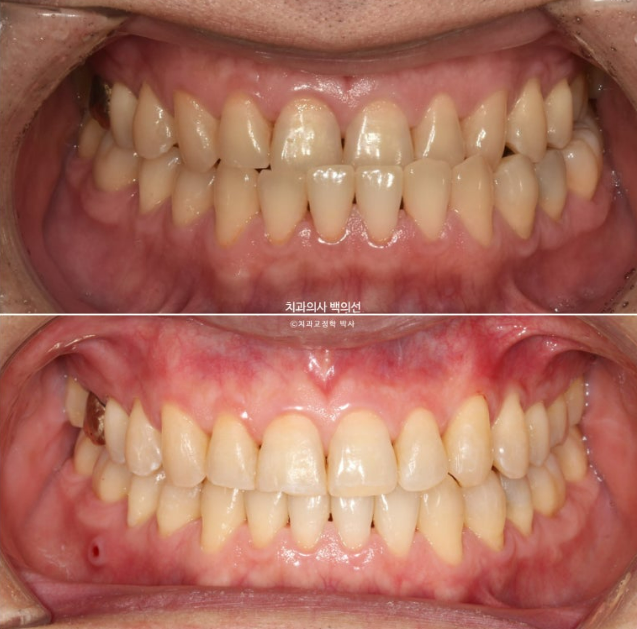
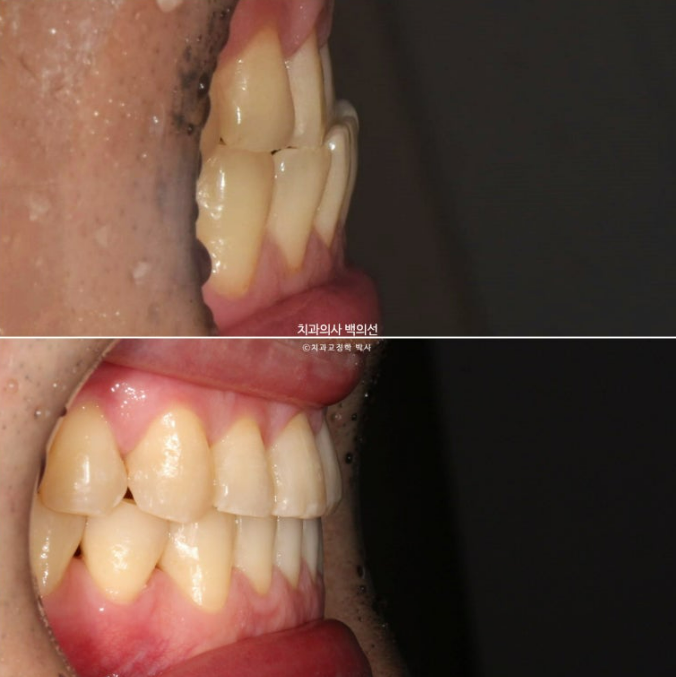
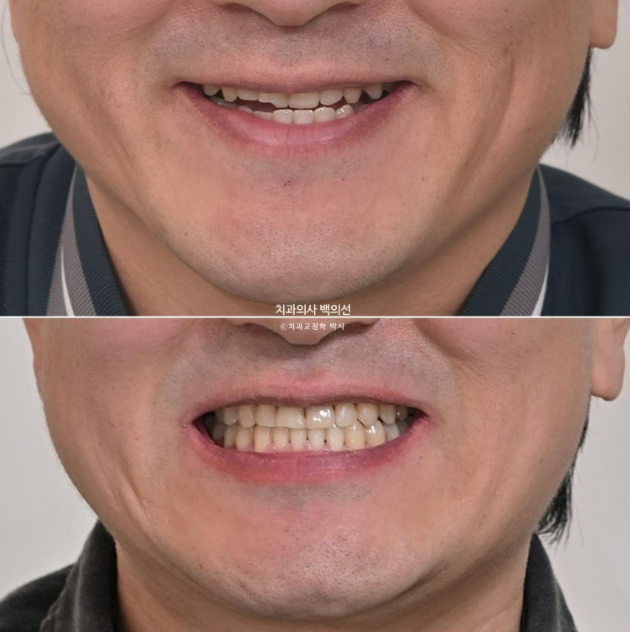
Non-Surgical, Non-Extraction Invisalign Correction for Prognathism and Asymmetry in a Patient in Their 40s image 12

23.12~25.03

Non-Surgical, Non-Extraction Invisalign Correction for Prognathism and Asymmetry in a Patient in Their 40s image 13

23.12~25.03

Non-Surgical, Non-Extraction Invisalign Correction for Prognathism and Asymmetry in a Patient in Their 40s image 14

23.12~25.03

Non-Surgical, Non-Extraction Invisalign Correction for Prognathism and Asymmetry in a Patient in Their 40s image 15

23.12~25.03

Non-Surgical, Non-Extraction Invisalign Correction for Prognathism and Asymmetry in a Patient in Their 40s image 16

23.12~25.03

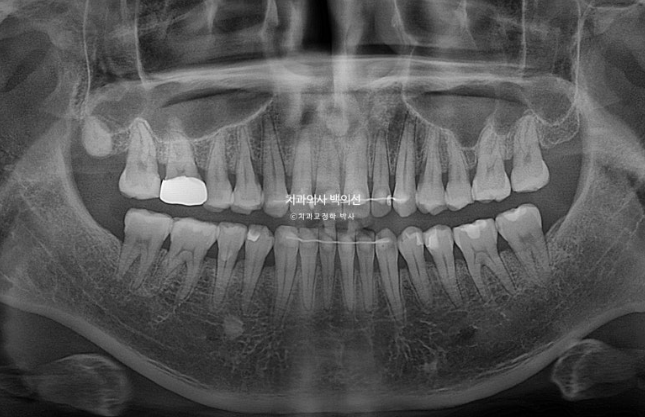
Non-Surgical, Non-Extraction Invisalign Correction for Prognathism and Asymmetry in a Patient in Their 40s image 17

25.03

On the post-treatment panoramic X-ray, there is no root resorption, and the root alignment is good.

The reason this seemingly difficult non-surgical prognathism and asymmetry treatment, even though it was done with Invisalign, finished quickly and well is bite force.

When the biting force is strong, Invisalign treatment often finishes quickly and well. If your usual biting force is strong, the clear aligners stay firmly attached to the teeth, which helps transmit force effectively.

That is why close fit of the Invisalign appliance is so important.

Non-Surgical, Non-Extraction Invisalign Correction for Prognathism and Asymmetry in a Patient in Their 40s image 18

Non-Surgical, Non-Extraction Invisalign Correction for Prognathism and Asymmetry in a Patient in Their 40s image 19