Hello,
This is Apgujeong Invisalign Dental Clinic.
If crowding is severe, extraction orthodontic treatment may be needed, but if there is room from the wisdom teeth, treatment without extraction is also possible.
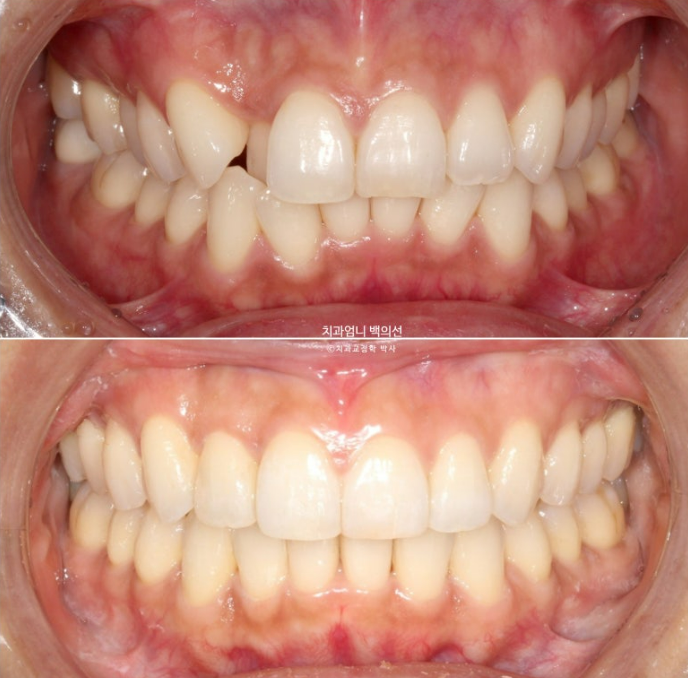
Today, I will show a case of non-extraction crowding correction using Invisalign, in which the molars were moved backward by using the space from the wisdom teeth.
Please focus on how the upper front teeth midline, which was leaning toward the crowded side, comes into alignment with the face.
A patient visited in September 2023 for orthodontic treatment.
There were three things the patient wanted to improve:
Crowding, asymmetry, and difficulty closing the mouth properly
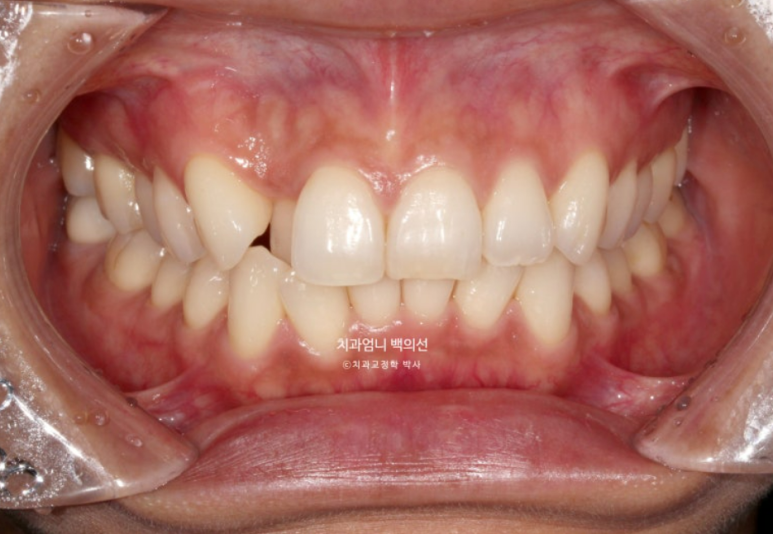
You can see that the upper and lower front teeth midlines do not match.
An X-ray showed no skeletal asymmetry, but because of the crowding, the upper front teeth midline was shifted to one side, creating a sense of asymmetry.
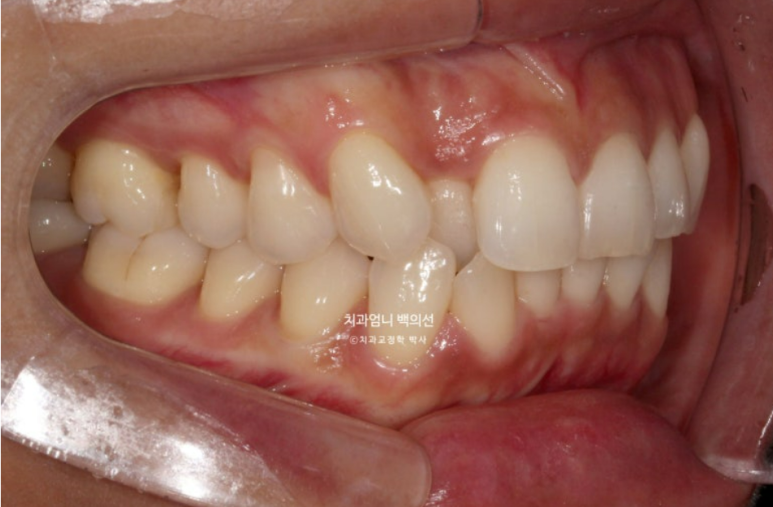
The lateral incisor that had moved into the palate was in crossbite with the lower teeth.
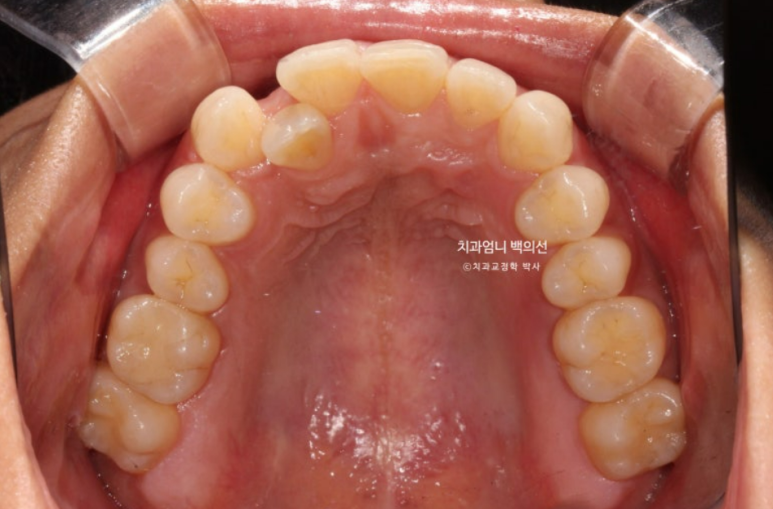
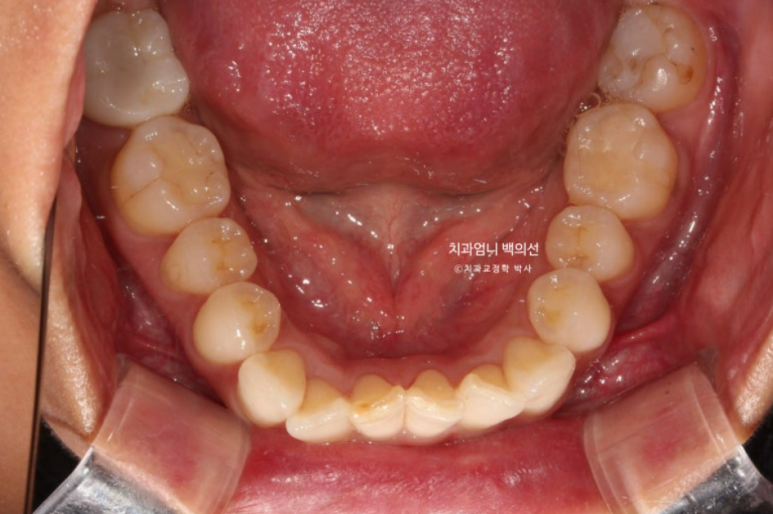
Although the crowding was severe and the mouth did not close easily, lip analysis showed no lip protrusion, so premolar extraction was not performed.
Instead, there was enough wisdom tooth space, so we decided to align the crowded teeth by moving the molars backward into the wisdom tooth space.
Mini-screws, which are orthodontic anchors, are essential for molar distalization.
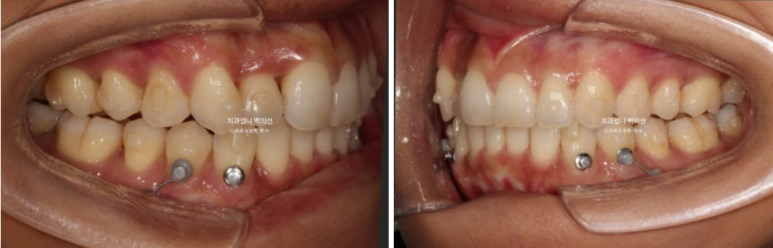
Because the patient had to travel a long distance, Invisalign was chosen due to the interval between visits, and this is the condition after wearing all 44 aligners in the first set from October 2023 to August 2024.
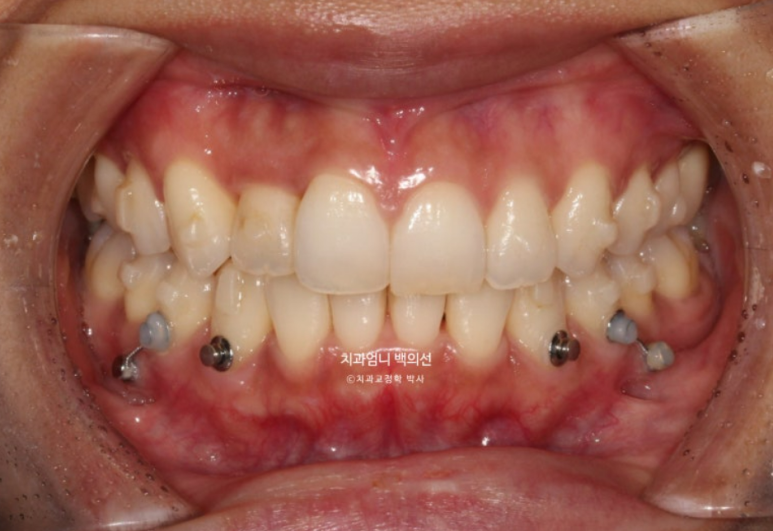
The midline is well aligned, but the lateral incisor that had been positioned in the palate has not yet fully moved into place.
The crown of the crowded tooth is well brought forward, but
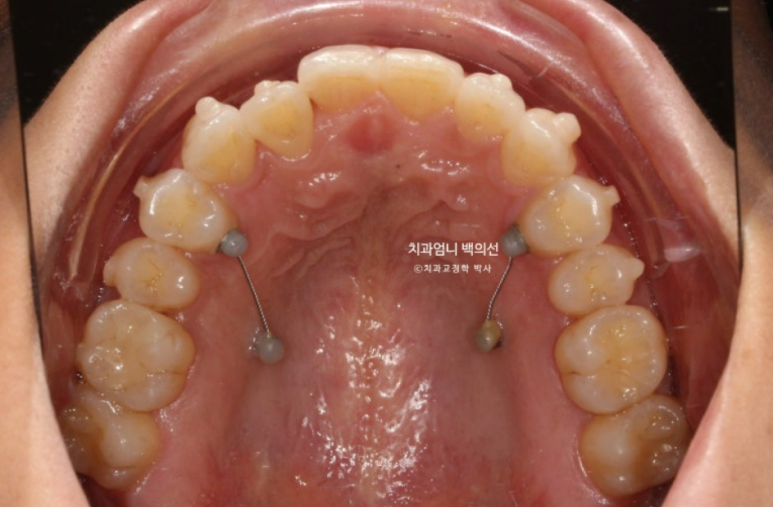
From the occlusal view, the root portion of the crowded tooth that had been positioned in the palate is still located toward the palate.
As a side note, in the process of resolving anterior crossbite, there is a period of premature contact as the interlocking areas with the opposing teeth are released.
This is an unavoidable part of the intermediate process, but during this period the teeth touch first, the molars do not meet well, and the relevant teeth often bump into each other, causing discomfort.
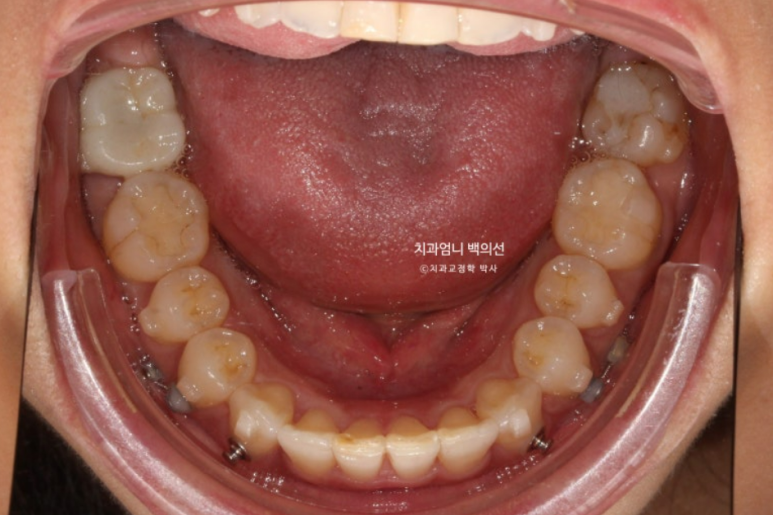
The lower arch appears to need no further correction.
A smile photo was also taken to check the midline.
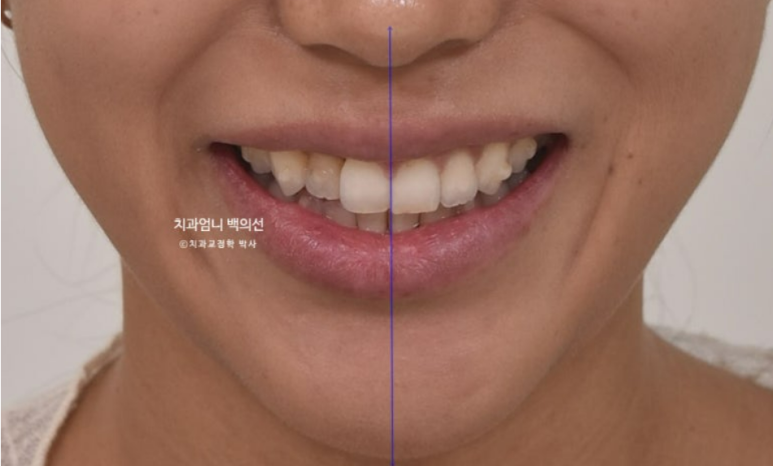
The midline that had been leaning toward the crowded side has now found the center.
Now that the major work is done, we move on to the smaller finishing work.
The remake period takes about one month until the additional aligners are received.
This is the condition after wearing all of the additional aligners for five months from September 2024 to January 2025.
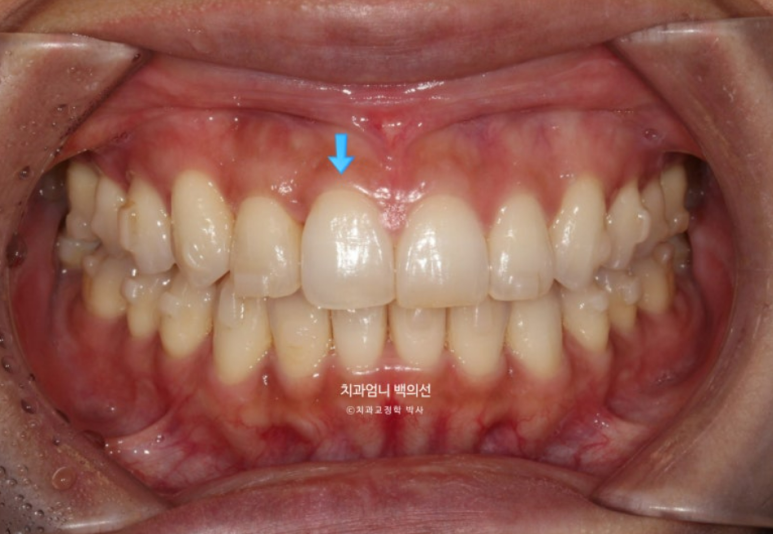
At last, the crowding was completely corrected, but
there was still about 1 mm of upper-lower midline discrepancy, so the axis of the patient’s right central incisor appears to be slightly tilted.
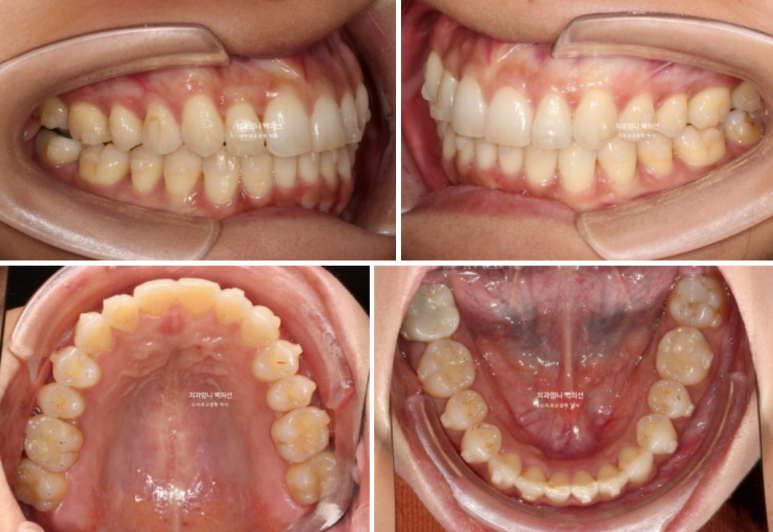
The patient was satisfied, and it was already good enough, but to align the front teeth midline more and improve the one front tooth whose axis appeared slightly tilted, we proceeded with fabrication of the second additional aligner set.
After wearing the second set of additional aligners for three months from February to April 2025, the treatment was finally completed in April 2025.
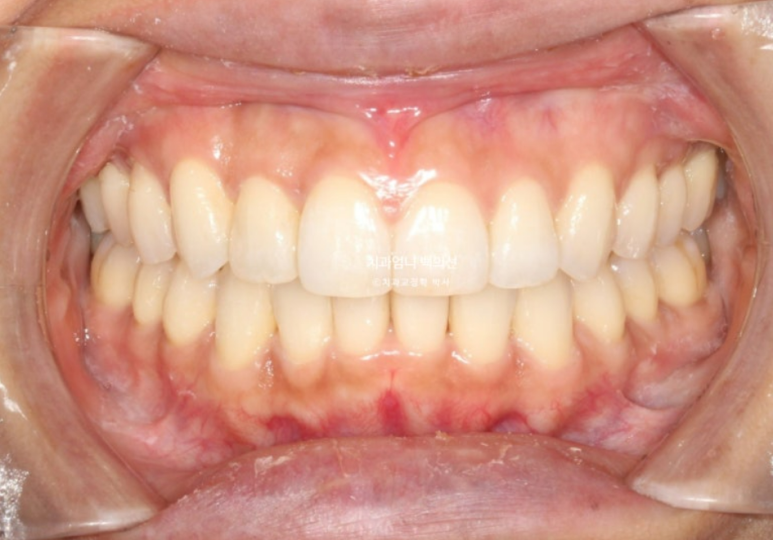
The total treatment period was 1 year and 6 months, and the total number of remakes was 2.
The midline is well aligned, and the front tooth that had appeared slightly tilted was also improved.
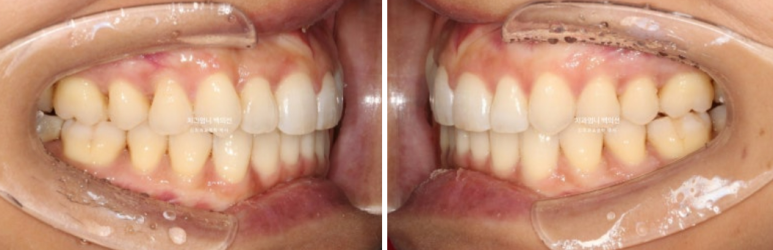
The basic principle of orthodontic treatment is the bite. If the bite is not good, the orthodontic treatment is not finished.
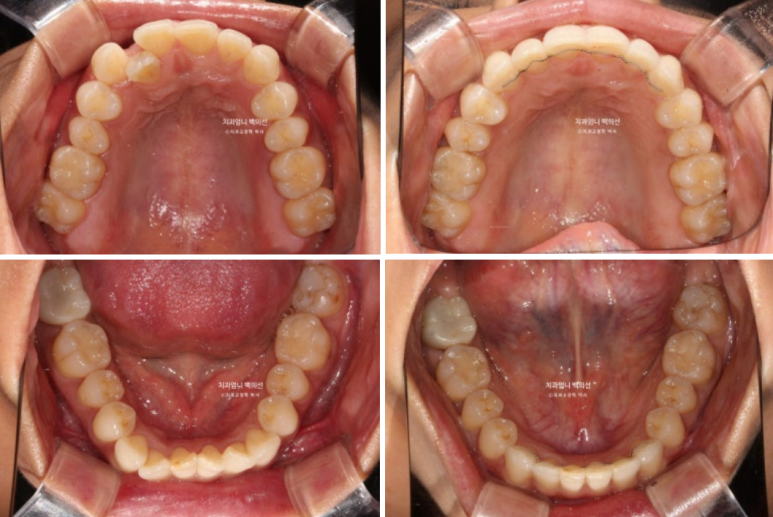
Here is the aligned tooth arrangement and the retainer.
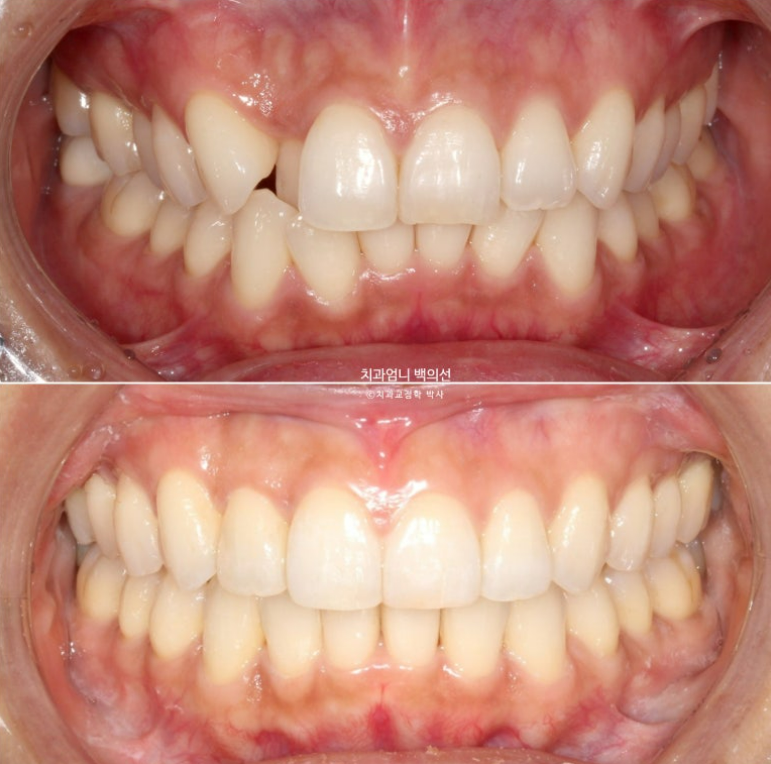
The upper and lower front teeth midlines match exactly.
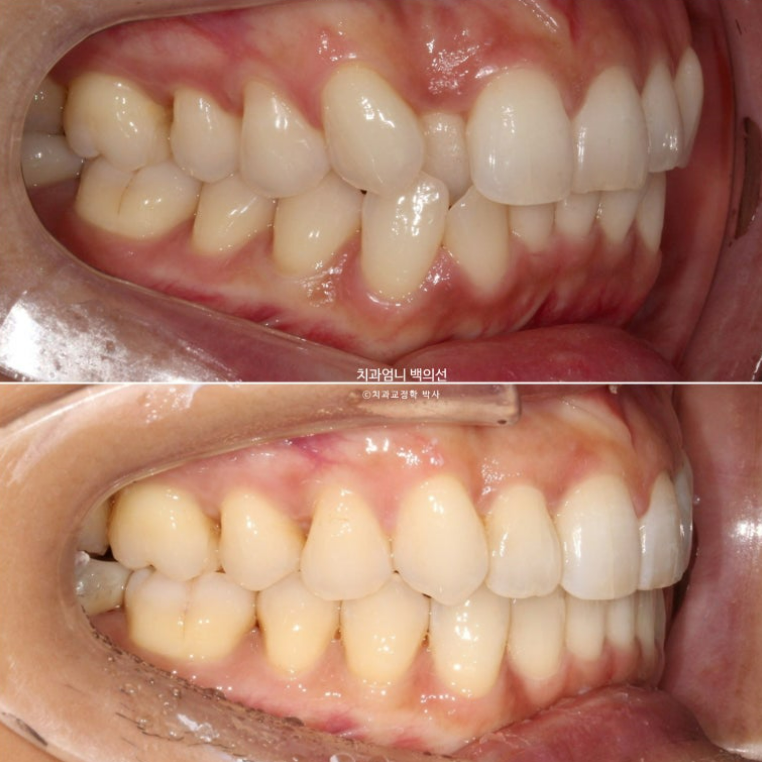
The crowded teeth have been well aligned.
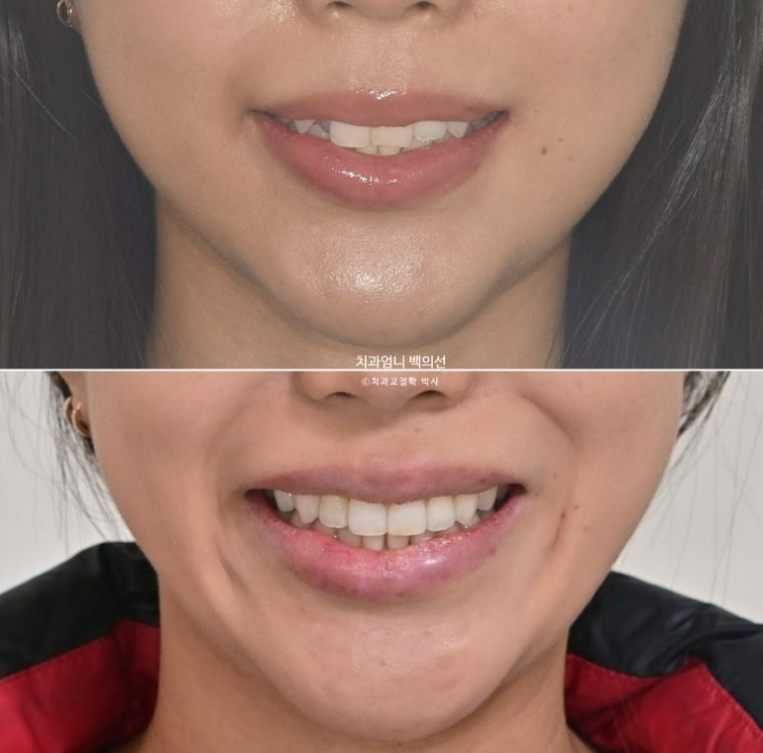
A neat and appropriate smile line
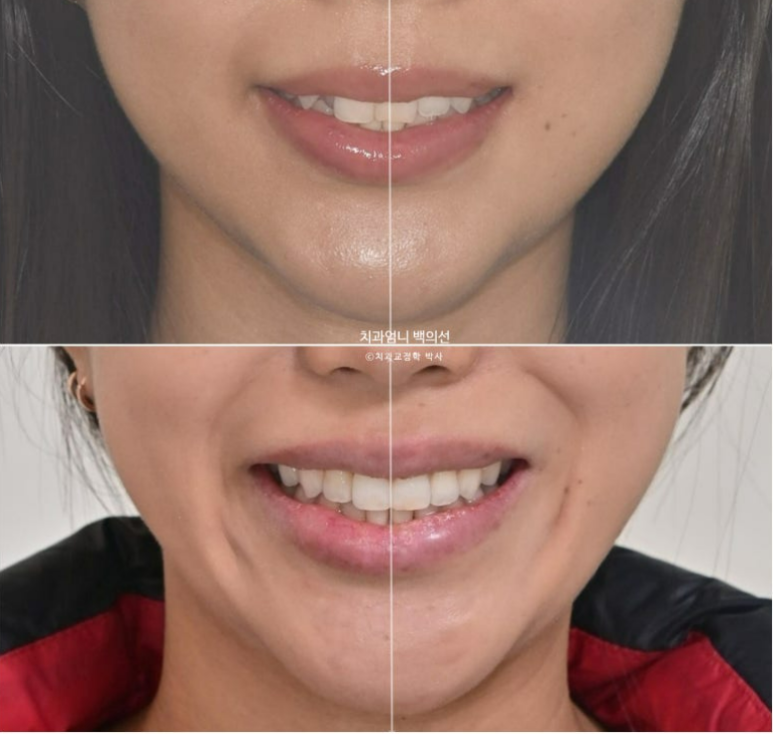
The front teeth midline that had been shifted toward the crowded side now matches the nose and philtrum.
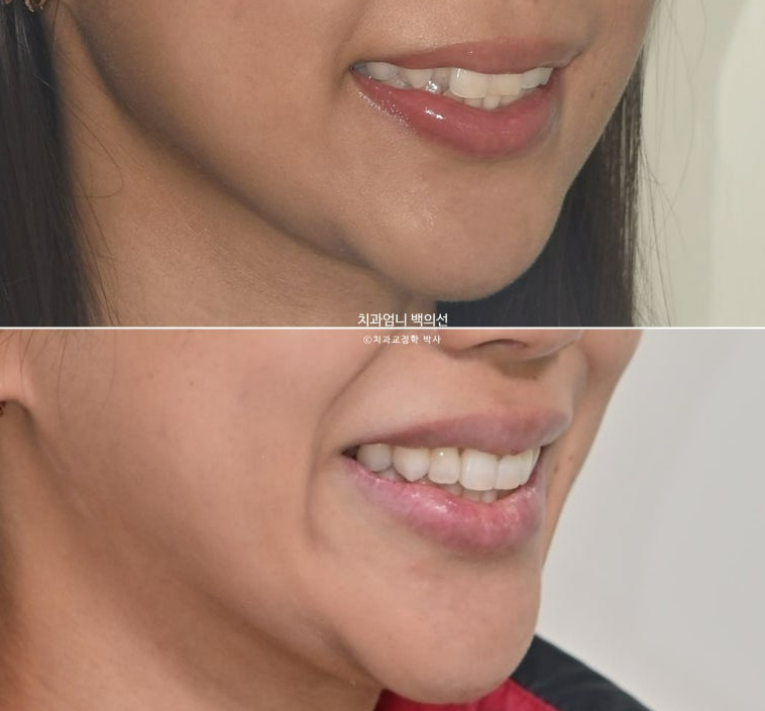
The angle of the front teeth is also appropriate.
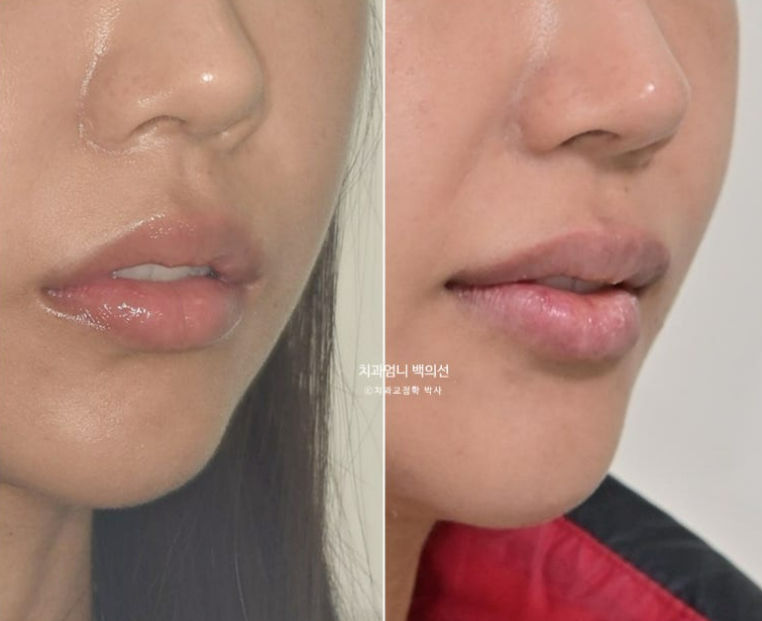
The lip shape that was originally pretty has been well maintained.
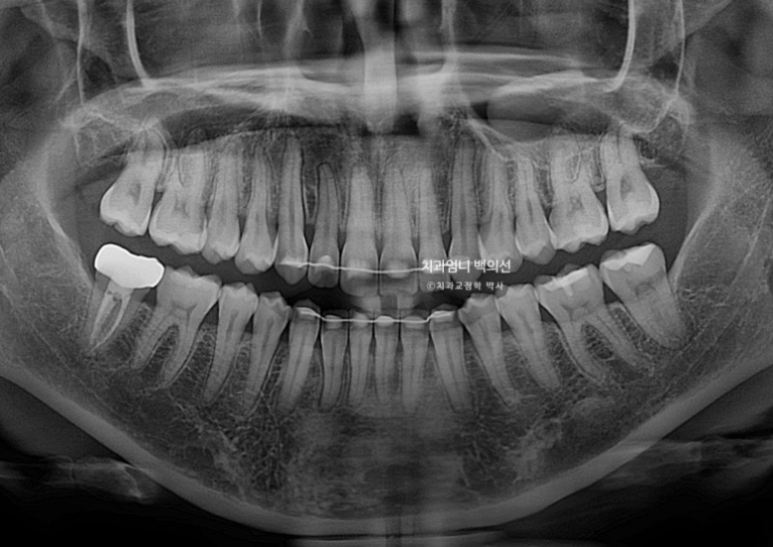
There is no root resorption, and root parallelism is good.
Compared with wire-bracket orthodontics, Invisalign applies less force to the teeth, so in my experience, even when treatment takes a long time, root resorption is generally minimal.
Over 1 year and 6 months of changes, the lips can now close more comfortably.
I hope this post was helpful for those who are curious about Invisalign treatment.