Among the treatment methods for open bite of the front teeth, the one with the lowest chance of relapse after orthodontic treatment and the added effect of making the lower face shorter is molar intrusion treatment.
The principle of open bite correction using orthodontic miniscrews to intrude the molars is the same, but the treatment method may be Invisalign clear aligners or conventional wire braces such as Clippy-C.
Because molar intrusion can trigger mandibular autorotation, which creates the effect of a shorter lower face, it is a favorable treatment for people with a retruded chin or a long lower face. The open bite of the front teeth also closes naturally.
However, mandibular autorotation always comes with a slight forward movement of the chin along with the shortening of the lower face.
If there is a skeletal Class III tendency, meaning the lower jaw is large or the chin appears prominent, it is better not to induce mandibular autorotation.
Also, molar intrusion treatment requires full orthodontic treatment and takes about a year and a half, so it is not suitable for those who want a simple treatment.
Today, I will explain the simplest way to treat open bite of the front teeth.
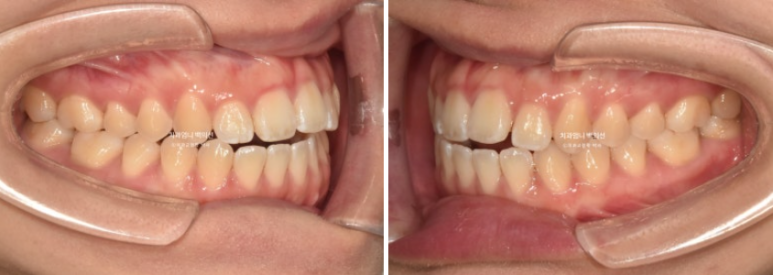
This is a patient who visited in December 2024 for retreatment.
They had orthodontic treatment in middle school, but after the wire retainer came off, the front teeth became crooked again.
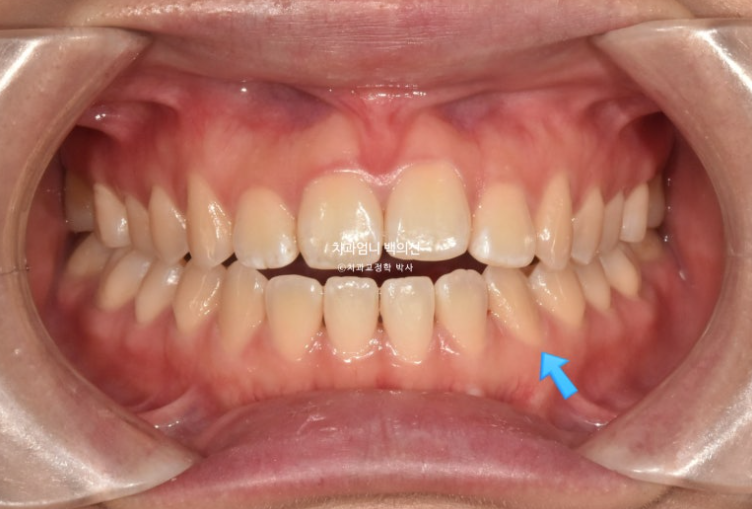
A difference in the height of the front teeth and open bite are also visible.
The canine indicated by the blue arrow is tipped inward.
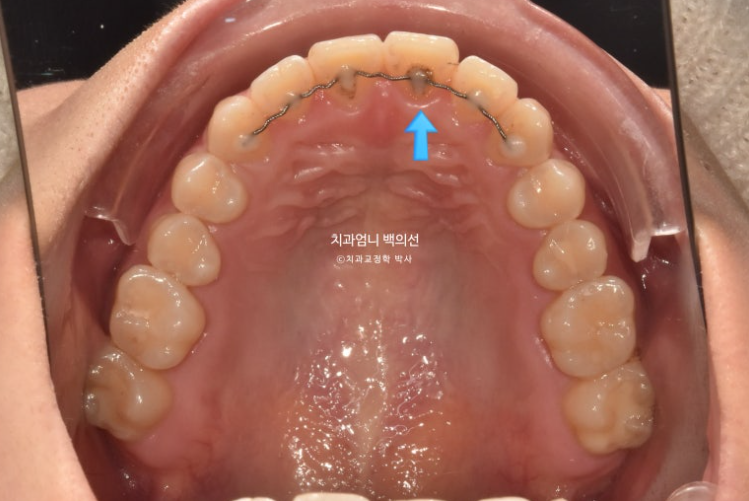
The upper front tooth has moved upward because the wire came off, which is correct.
The adhesive shown as black in the blue arrow is because the adhesive has separated from the tooth.
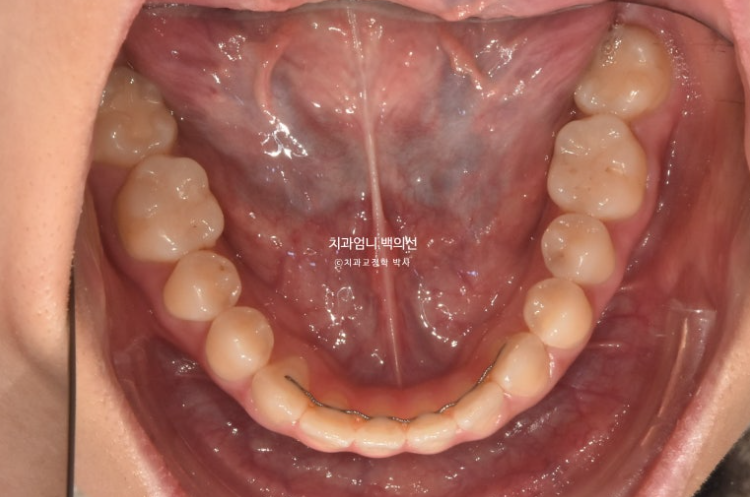
24.12
But below, there was no detached wire, and there had never been one. Even with the wire still attached, there are cases where the alignment becomes distorted due to deformation of the wire itself. This is called wire syndrome.
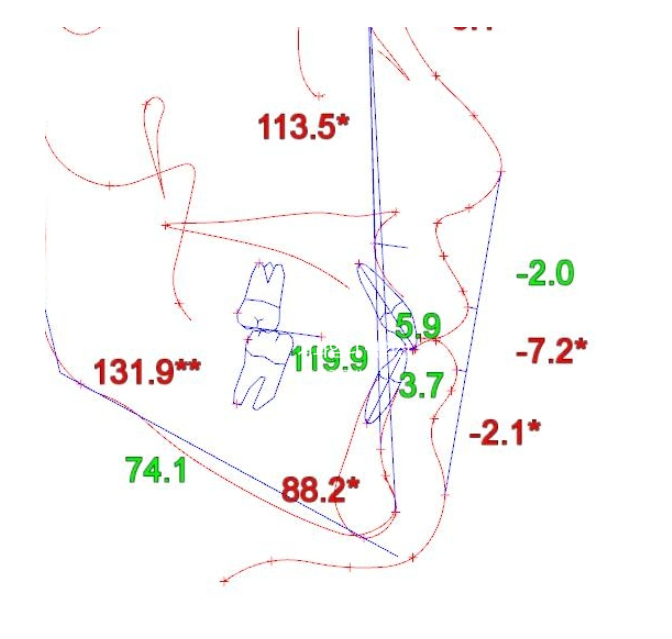
On skeletal analysis, the skeletal relationship was at the boundary between normal and prognathism, so the chin already appeared somewhat prominent.
If open bite is resolved through molar intrusion, mandibular autorotation makes the chin appear even more prominent than before.
Because this was retreatment and the patient wanted a simple procedure, we decided to resolve the open bite with partial orthodontic treatment for the front teeth.
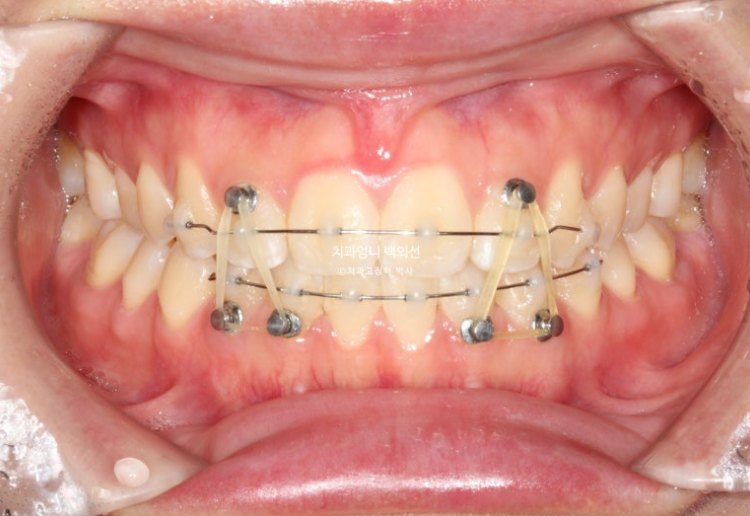
25.05
The partial orthodontic appliance used was MTA mini-tubes, and rubber band instructions were also included.
To make the upper teeth stably overlap the lower teeth from the front, a small amount of interproximal reduction was needed on the lower front teeth.
The total treatment period from December 2024 to June 2025 was 6 months.
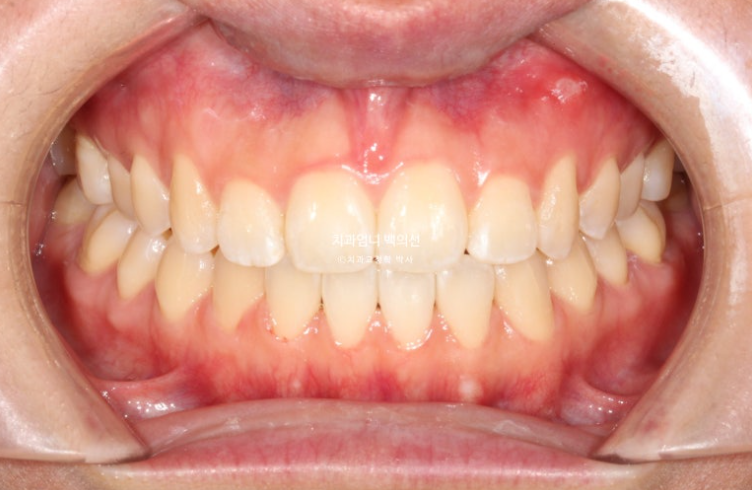
25.06
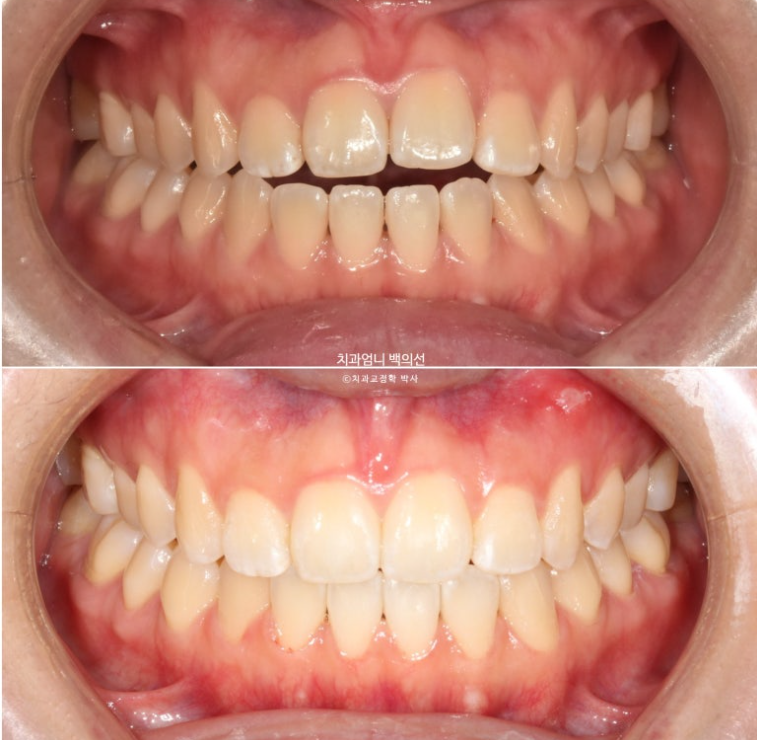
Corrected height differences of the front teeth and proper anterior occlusion
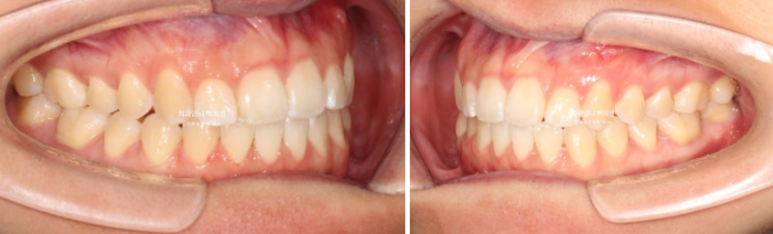
The open bite of the front teeth was neatly resolved.
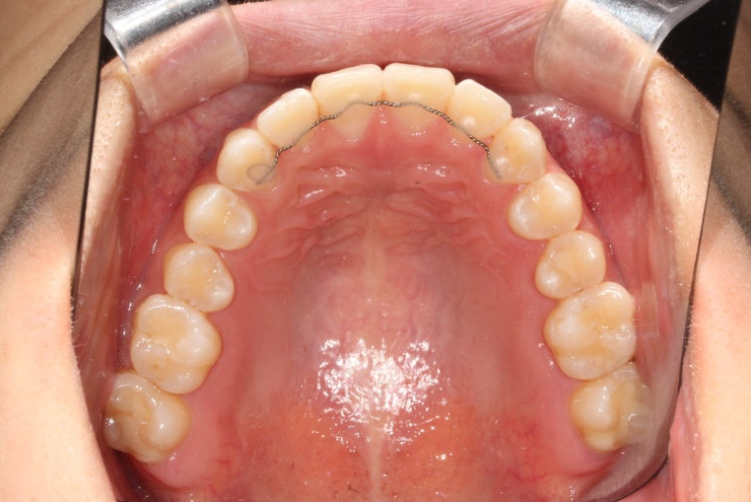
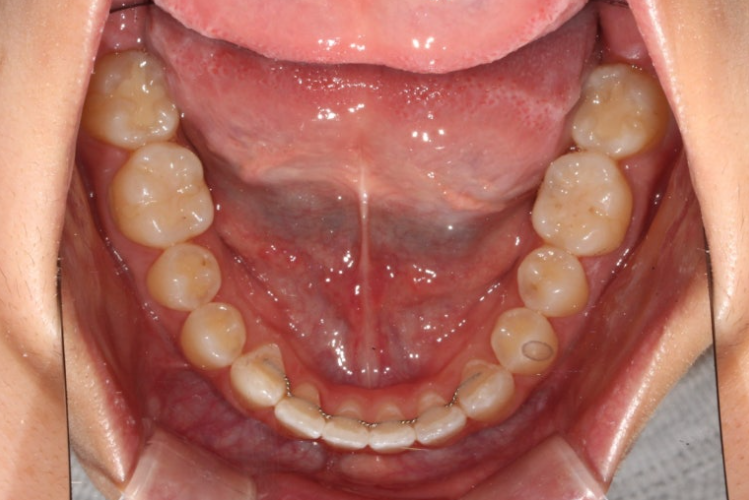
Now, let’s look at the before-and-after comparison.
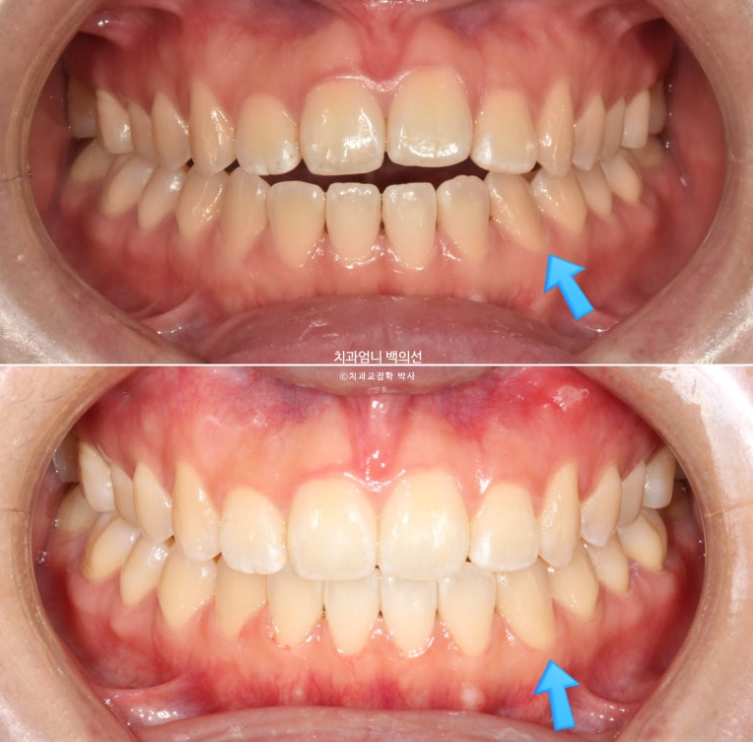
24.12~25.06
In addition to the open bite, the canine that had tipped due to wire deformation was also uprighting.
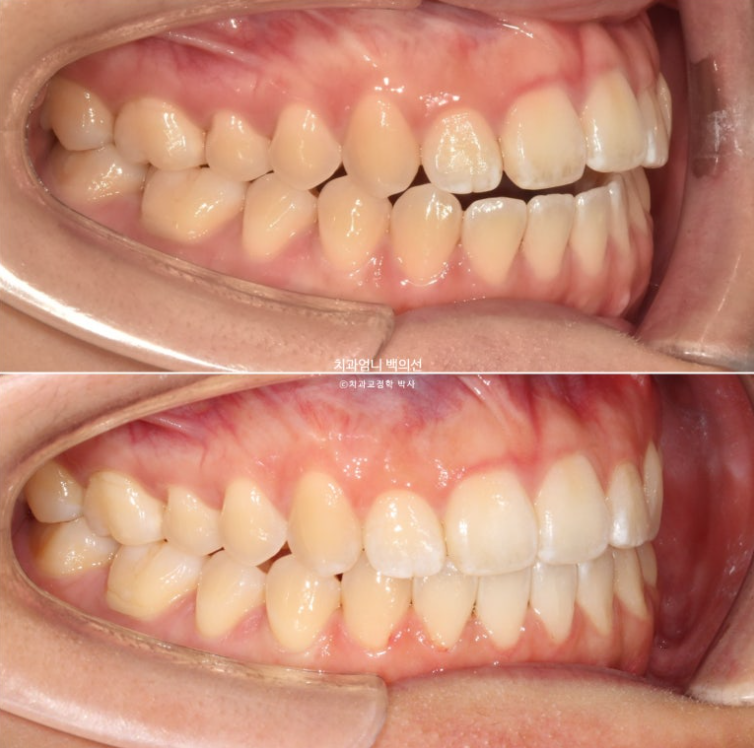
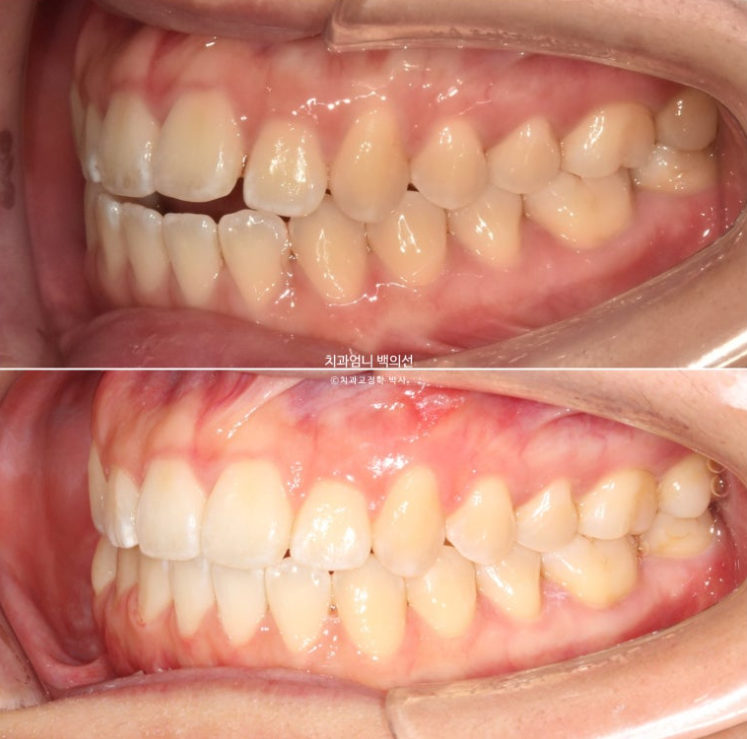
24.12~25.06
The previously good bite was well maintained.
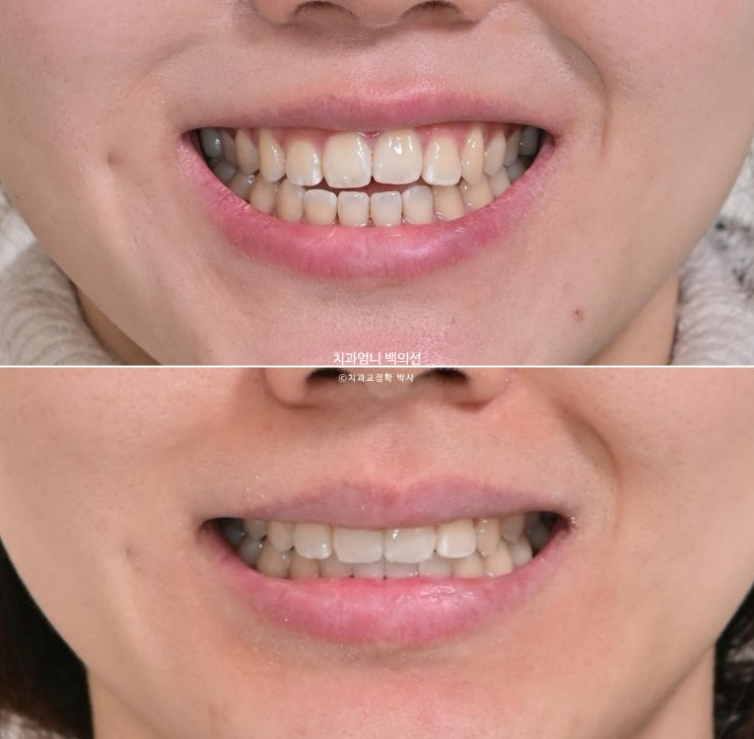
24.12~25.06
The change over 6 months of partial orthodontic treatment for the front teeth is dramatic.
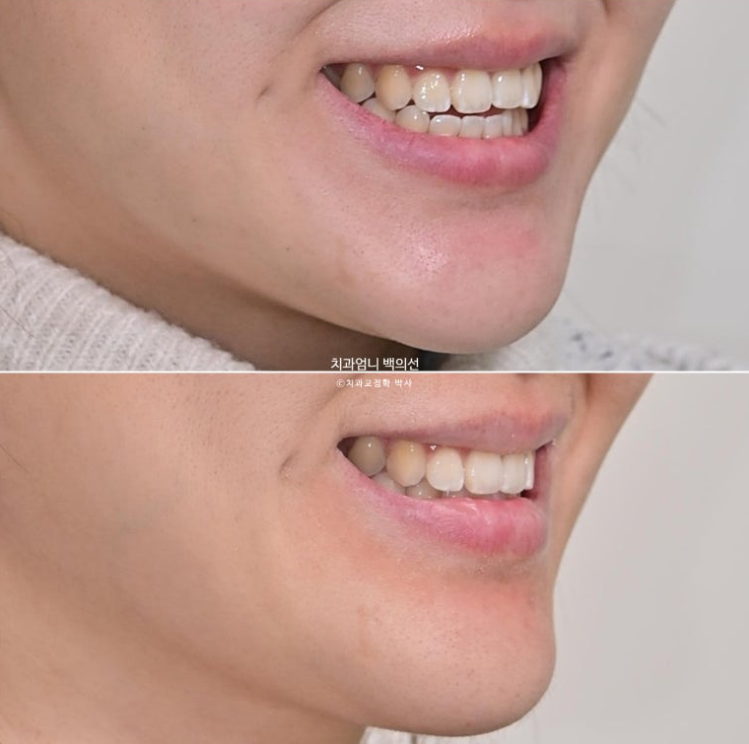
24.12~25.06
Retreatment should be approached carefully.
A simple method that places less burden on the teeth and gums would be better.
We find the most appropriate method based not only on the teeth, but also on the patient’s facial and skeletal analysis.
I hope this helps those who are considering retreatment for open bite.