Hello,
Today, I’d like to introduce Invisalign Lite.
Invisalign Lite is a short program used for mild malocclusion that can be resolved within 14 aligners, but
there are quite a few types of malocclusion that can be corrected with Invisalign Lite, such as scissor bite, deep bite, gummy smile, extraction of lower front teeth, and crossbite.
Following the last post, today’s topic also ended up being: "How far can treatment go with Invisalign Lite?"
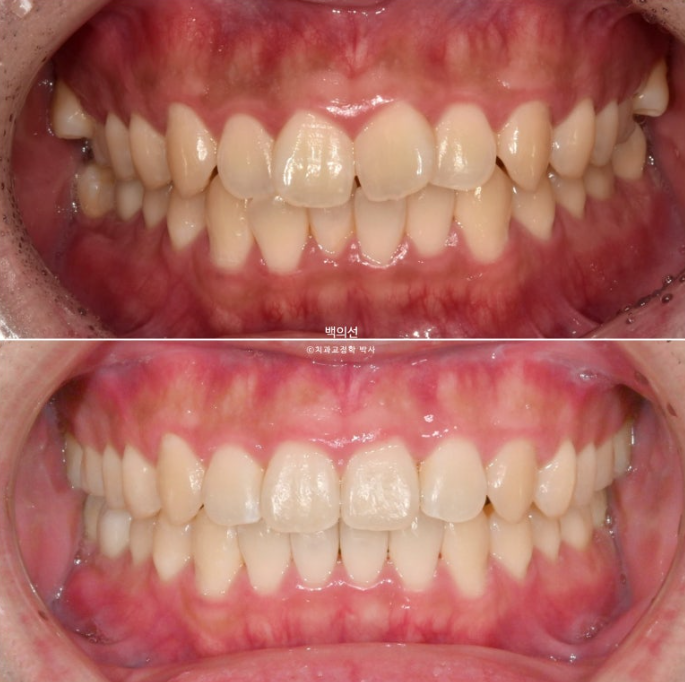
24.01~25.05
I do a lot of Invisalign orthodontic treatment, but Invisalign does not work well for every case.
Even if a patient wants treatment with Invisalign, if a molar has tipped over and is hooked against another molar, I recommend bracket-and-wire treatment such as Clippy C instead of Invisalign.
That’s because correcting a tipped molar requires a lot of extrusion force, and clear aligners have difficulty delivering that force properly to the tooth.
However, in some cases, we first improve only the parts that need wire force by attaching Clippy C brackets partially as <partial orthodontic treatment> to establish the foundation, and then use clear aligners for the remaining areas.
Today, I’ll talk about that.
You can also find the Invisalign treatment story for this patient in this post on YouTube.
This patient in their 20s visited in January of last year for orthodontic treatment. They came with their younger sibling, and the two siblings were both handsome, kind, and well-mannered.
They also gladly agreed to the YouTube filming. Thank you again.
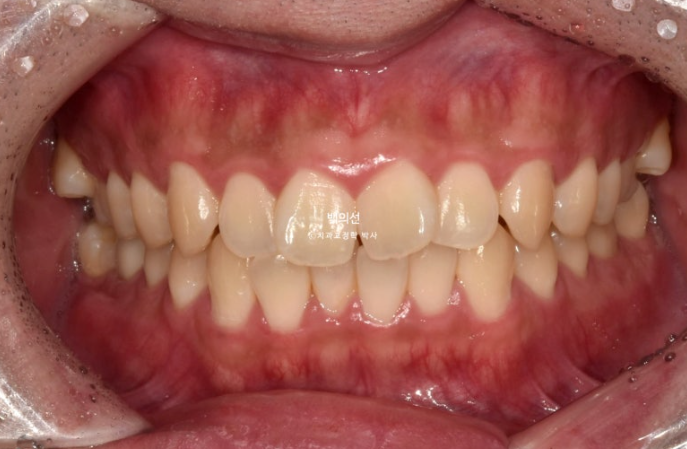
24.01
The front teeth are crooked, what is commonly called butterfly teeth. The last molar on the far back is protruding outward like a crowded tooth.
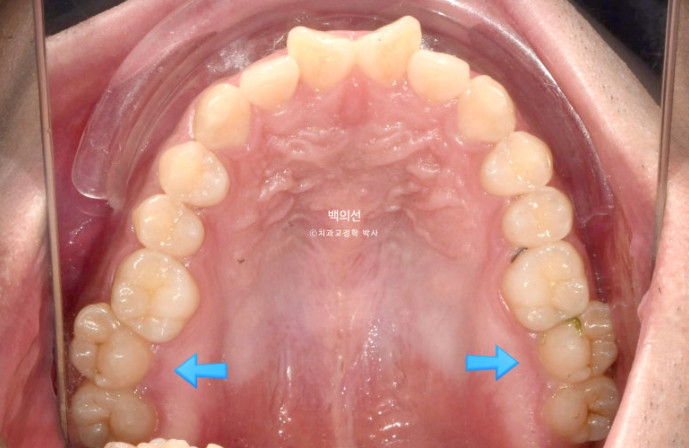
In the occlusal view, you can clearly see the butterfly teeth and the second molar protruding outward.
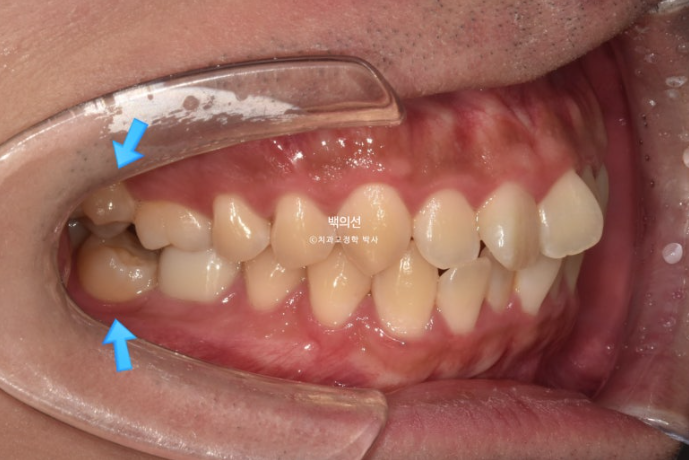
The blue arrows show a scissor bite, where the teeth interlock improperly and do not fit together well.
In particular, the lower second molar is tipped over.
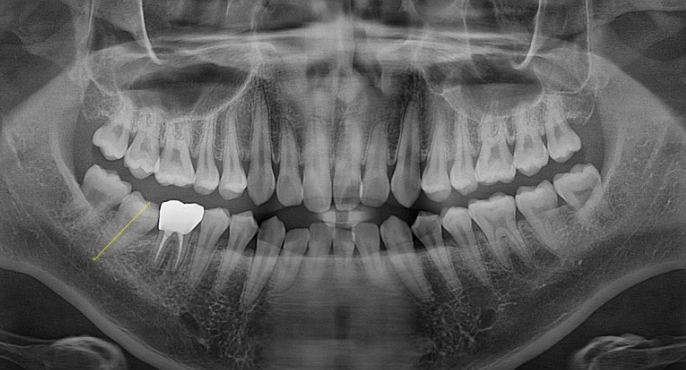
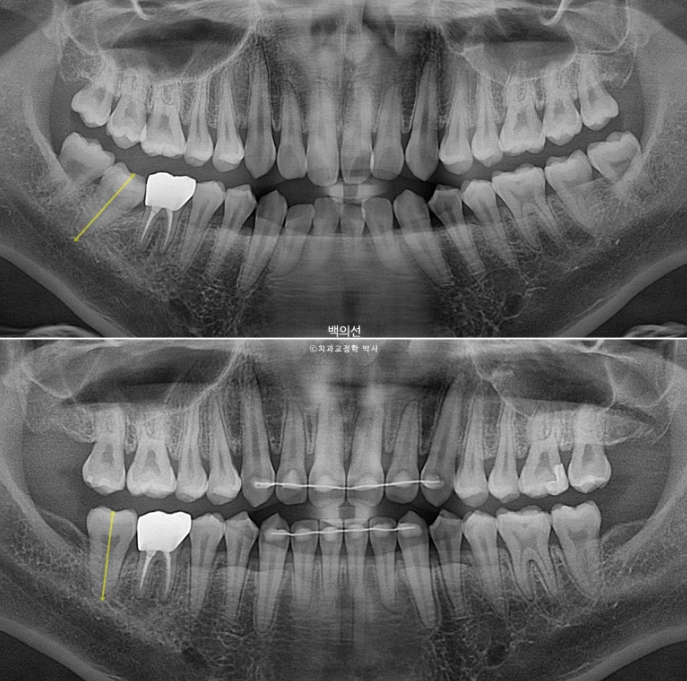
The yellow line shows the tipped molar. The wisdom teeth need to be removed and the tooth needs to be uprighted.
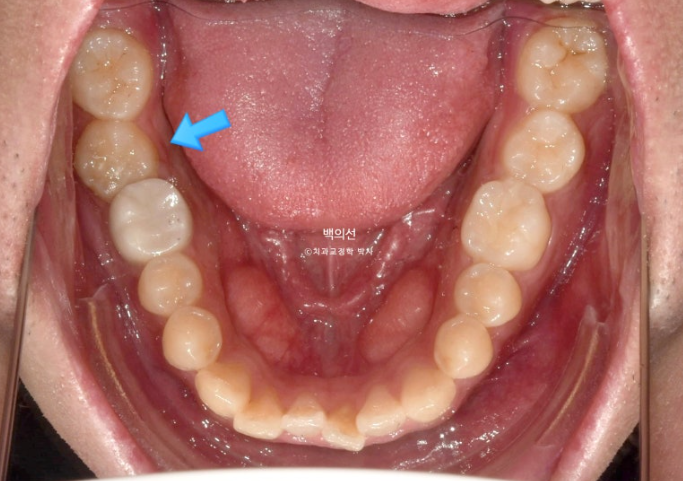
The problematic tipped molar is hooked behind the molar in front of it, so it is difficult to upright it with Invisalign clear aligners alone.
We need to attach brackets such as Clippy C and use wire force.
Since the patient wanted clear aligner treatment, we decided to improve the tipped molar and the scissor bite first before making the aligners, and then solve the remaining crooked front teeth with Invisalign Lite.
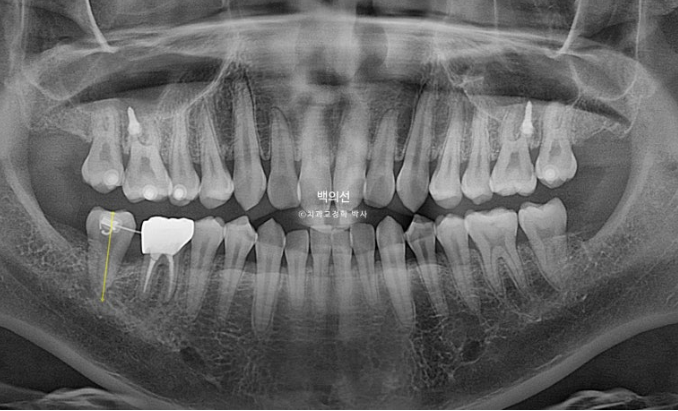
24.04
This is a photo from the third month of treatment. First, all four wisdom teeth were removed.
A total of two brackets were attached to the tipped molar and the molar in front of it, and wires were placed to upright the teeth.
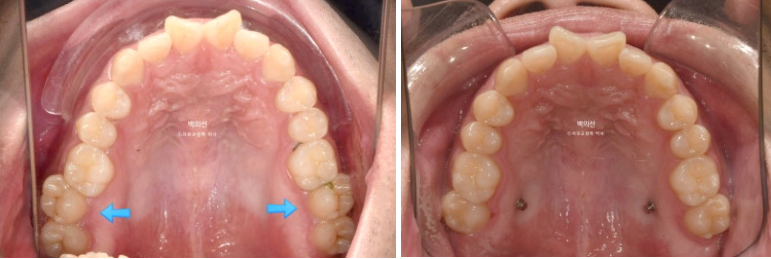
24.01~24.07
In the meantime, an orthodontic mini screw was placed in the palate to improve the scissor bite, and the molar that had been protruding outward was moved into the correct position.
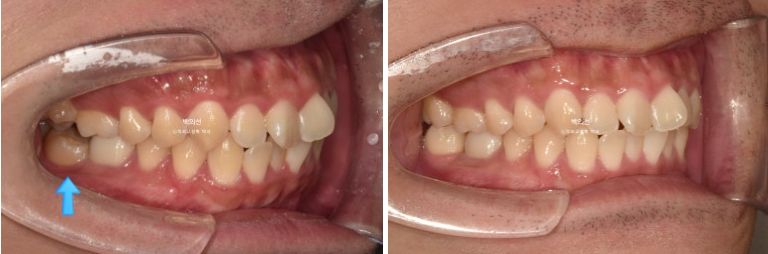
24.01~24.07
At the six-month mark of treatment, the tipped molar had been uprighted and the scissor bite had been resolved.
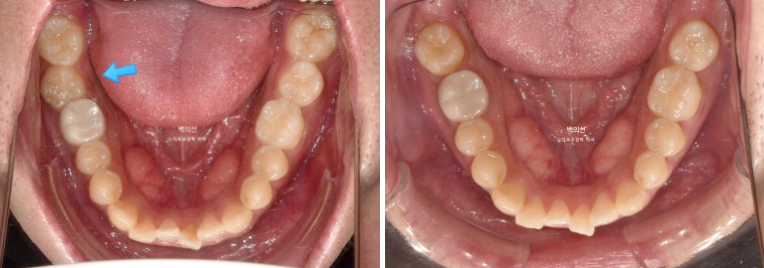
24.01~24.07
Now that the major work has been completed with prior partial orthodontic treatment, we can begin the full clear aligner treatment in earnest.
After scanning, we began producing the Invisalign aligners.
The first set of aligners started in August 2024.
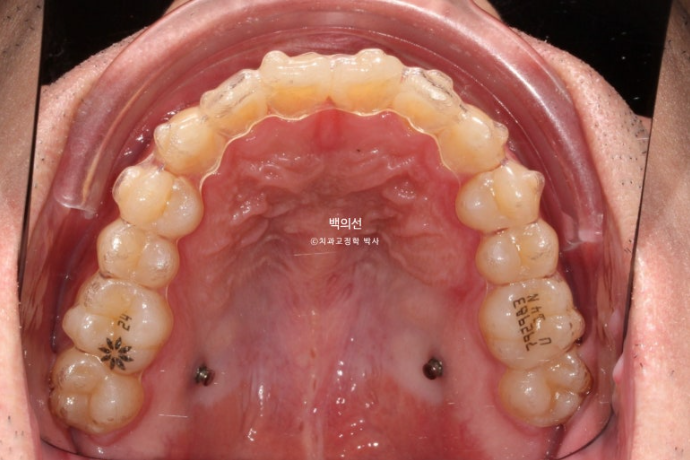
24.11
This is the result after wearing all 14 aligners over about 3.5 months from August to December 2024.
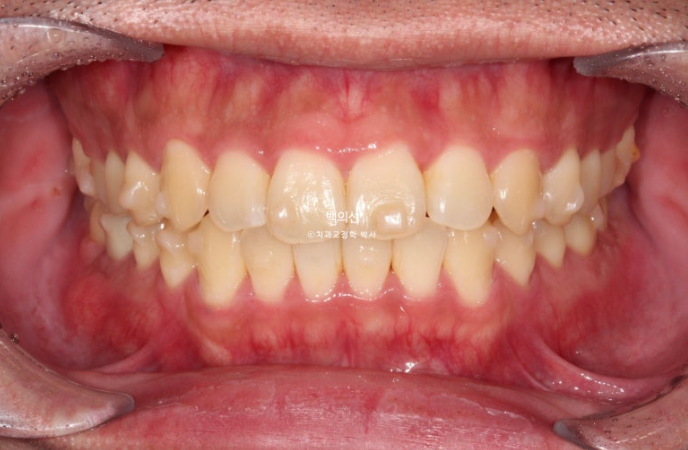
24.11
The alignment has improved, but the midline is still slightly off.
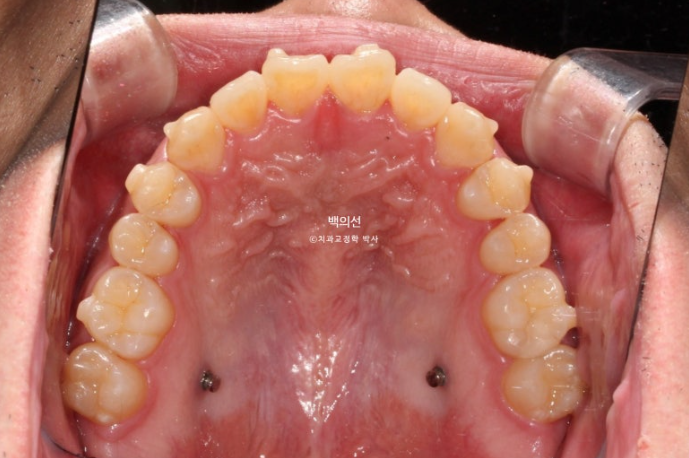
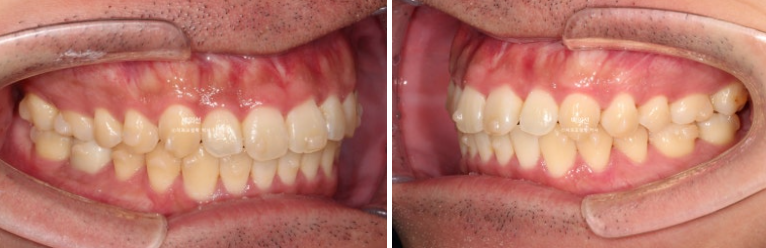
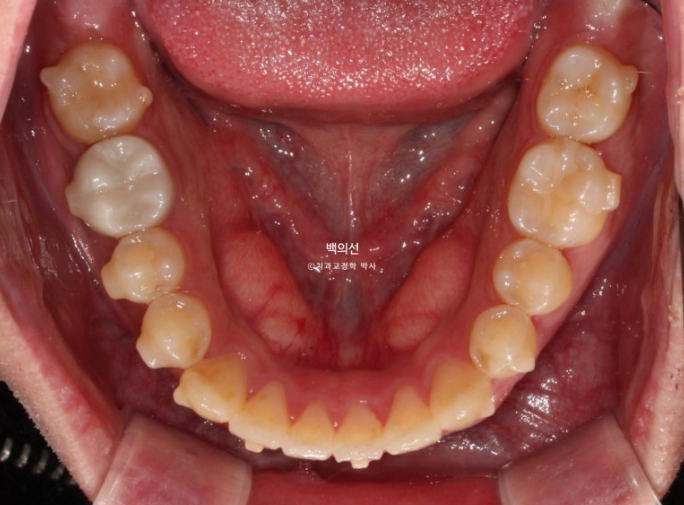
24.12
To further improve the remaining areas, we began making additional aligners. After wearing all of the additional aligners until May 2025, the treatment was finally completed.
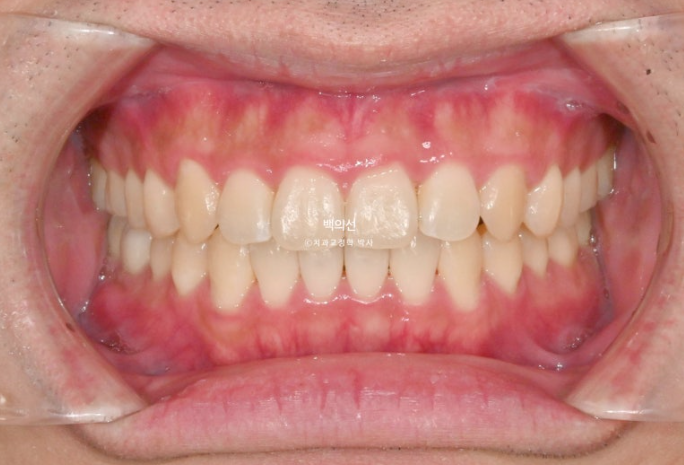
25.05
The midline is well aligned,
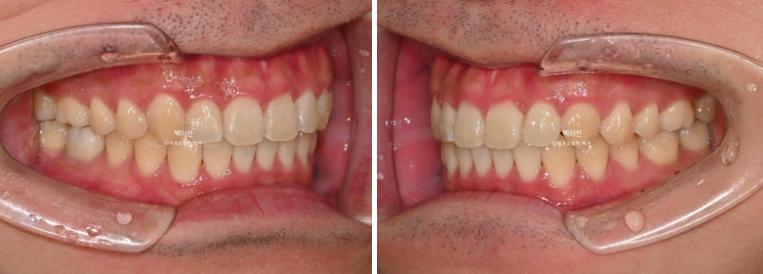
25.05
and the bite is good.
Let’s compare before and after treatment.
Left: before treatment / Right: after treatment
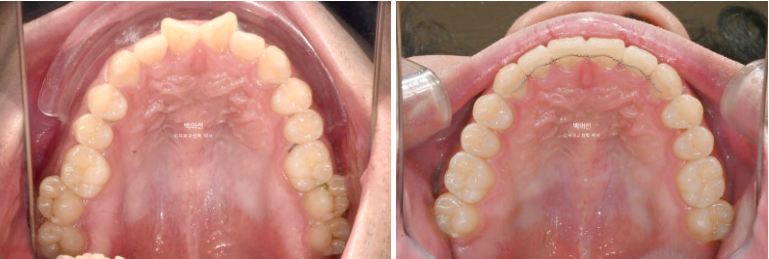
24.01~25.05
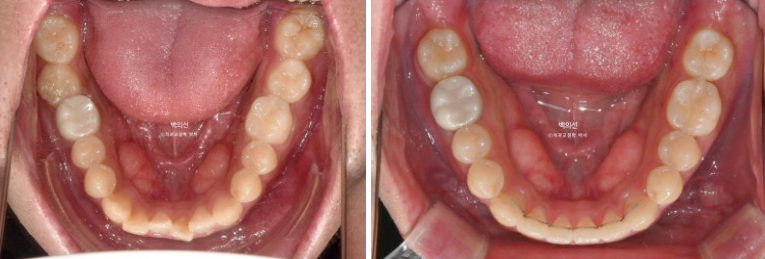
The total treatment period was 1 year and 4 months, and the period treated with Invisalign was 9 months.
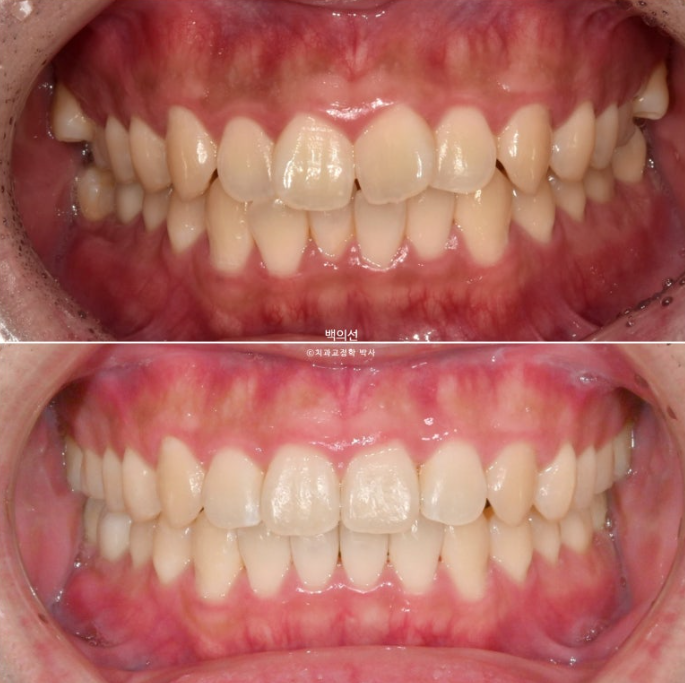
24.01~25.05
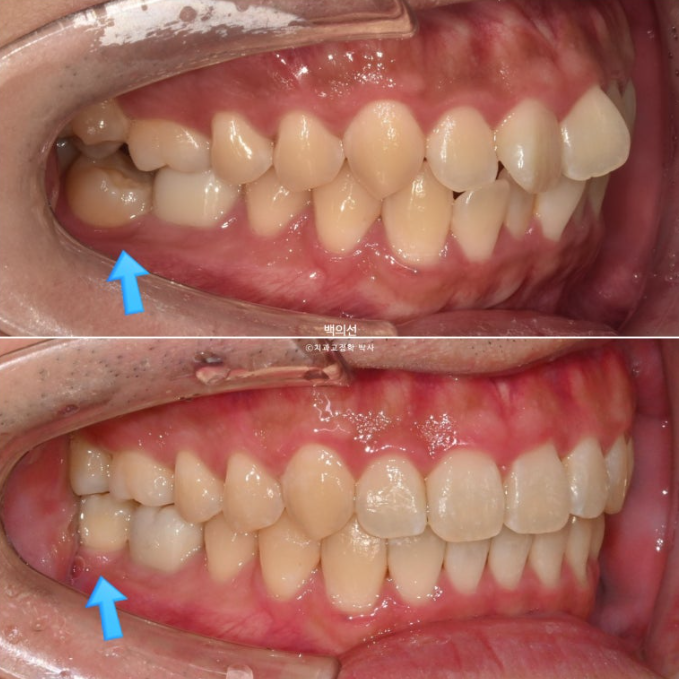
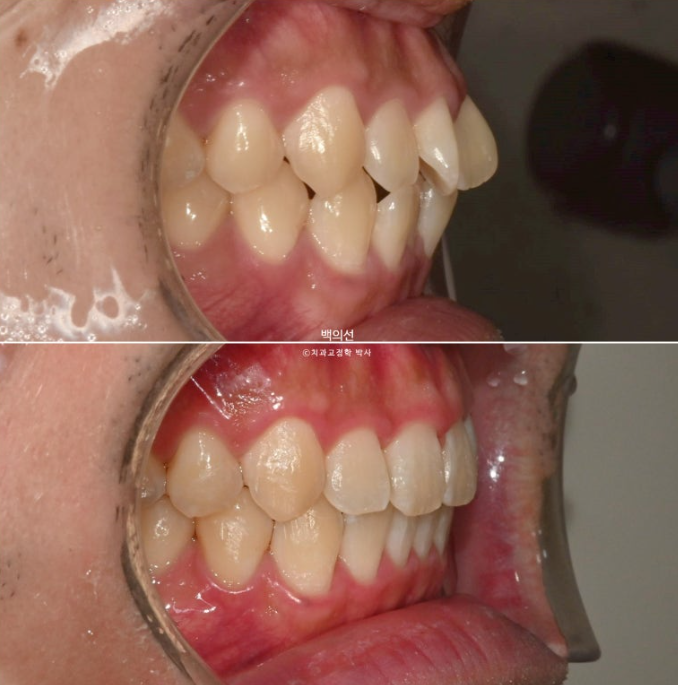
24.01~25.05
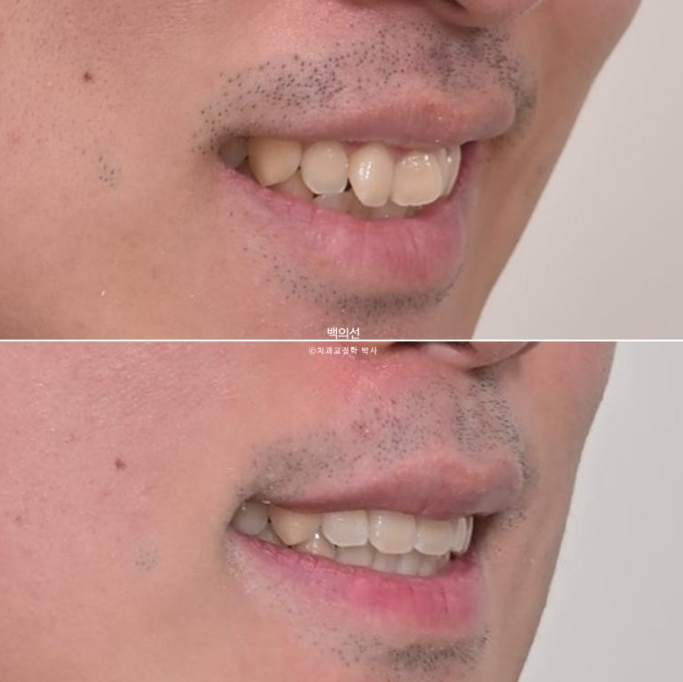
Improvement in front tooth protrusion
24.01~25.05
The cleaner smile stands out.
24.01~25.05
There is no root resorption, and the root parallelism is good.
Based on extensive clinical experience, if we clearly distinguish what is and isn’t possible and take a strategic approach from the treatment planning stage, we can achieve what the patient wants and also obtain good results.