Hello,
I’d like to introduce an Invisalign treatment case for a patient in their 40s.
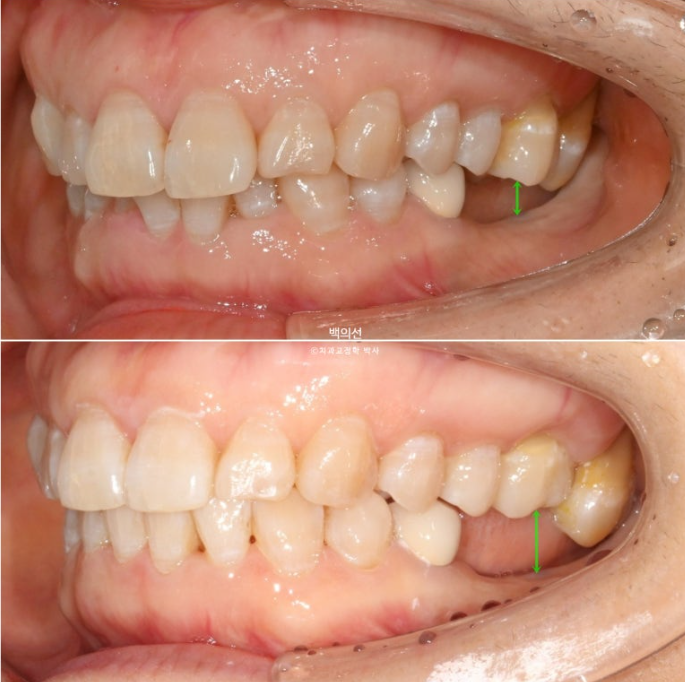
If a gap is left open for a long time, the opposing tooth often descends, which can make implants difficult.
In such cases, the opposing tooth needs to be intruded through orthodontic treatment and lifted back up. If orthodontic treatment is not feasible, the descended tooth may be shaved down and crowned in order to secure space for an implant.
2024.10~2025.07
Today, I’ll show how a somewhat complicated case with several issues was treated using a short program called Invisalign Lite.
This patient came in last September for protruding front teeth and crooked tooth alignment.
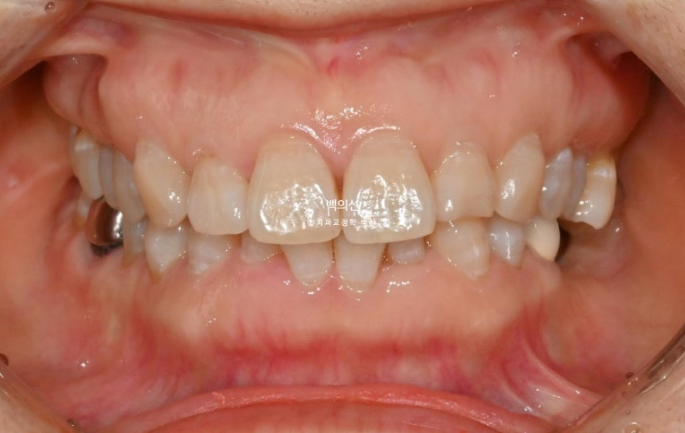
24.10
From the front, the condition shows severe deep bite, with part of the lower front teeth hidden behind the upper teeth and not visible.
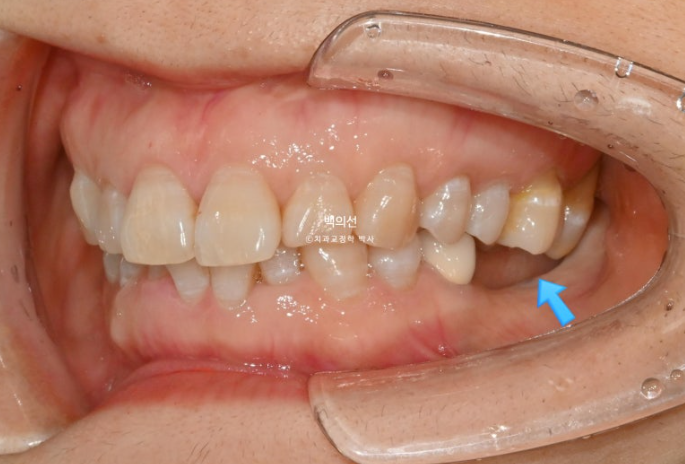
The lower left back molar had been missing for a long time.
If an area that needs an implant is left untreated for a long period, the opposing tooth gradually erupts downward.
The blue arrow indicates that, to place an implant, the descended opposing tooth must be intruded with orthodontic treatment.
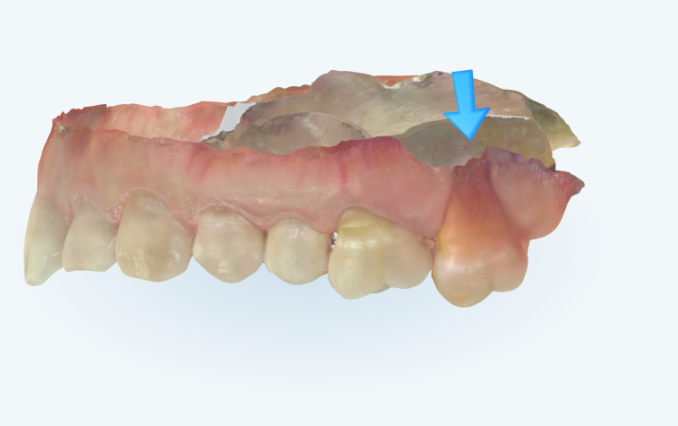
In particular, among the descended molars, the very back second molar could not be saved and had already been diagnosed for extraction at another clinic.
The gum has receded down to the root tip, and the condition is not good.
In cases like this, rather than removing the tooth in advance, if it is not causing discomfort, it can be strategically used to support orthodontic treatment and then extracted after the orthodontic treatment is finished.
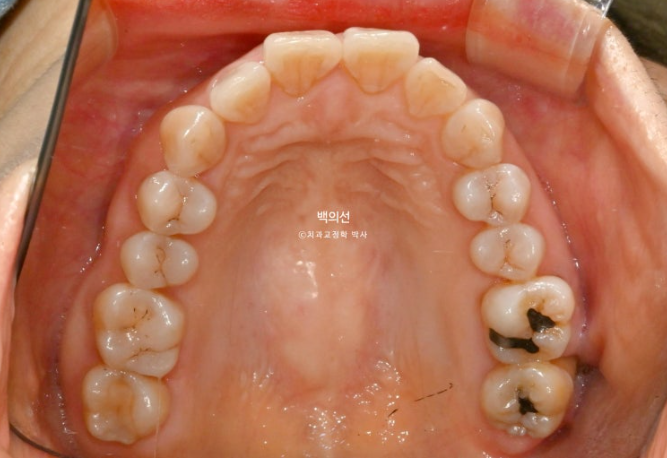
The two front teeth protrude forward.
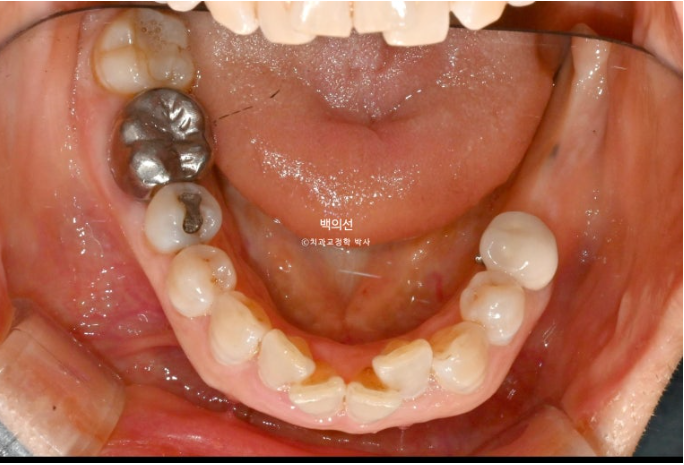
The lower front teeth are significantly overlapped.
In particular, the central incisor and the lateral incisor overlap by about 50%.
Areas with a lot of overlap tend to develop large black triangles once alignment is completed.
Black triangles cannot be eliminated 100%, but they can be reduced through interproximal reduction.
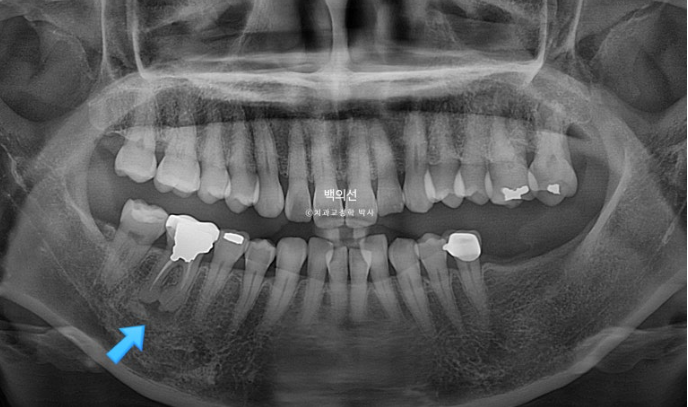
24.10
There is one more issue. The tooth marked with the blue arrow had root canal treatment, and there is inflammation at the root tip.
This tooth, too, had been understood as something to keep using until it became a problem, with extraction and an implant planned if issues arose.
In cases like this, where there is apical inflammation or teeth with weak gums that should not be subjected to orthodontic force, Invisalign has a major advantage.
If the treatment plan is designed so that those teeth do not move at all from start to finish, orthodontic treatment can still be performed by moving only the remaining target teeth without putting too much strain on the teeth.
The patient had come in after being told at another orthodontic clinic that Invisalign Lite would not be possible and that Invisalign Comprehensive would be needed, but it looked sufficiently treatable with Invisalign Lite, so I recommended Invisalign Lite.
However, when intruding the back molar that had descended into the empty space, orthodontic miniscrews are needed.
After wearing all 14 aligners allowed by Invisalign Lite for four months from October 2024 to February 2025, this is the result.
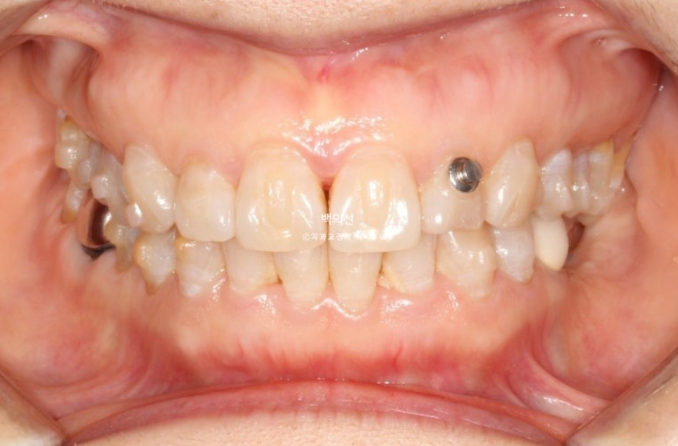
25.02
The midline was aligned precisely, and the deep bite improved.
The metal part in the photo is a hook for elastics, and it is an attachment used to add more force from the elastics because that tooth was not moving smoothly during treatment.
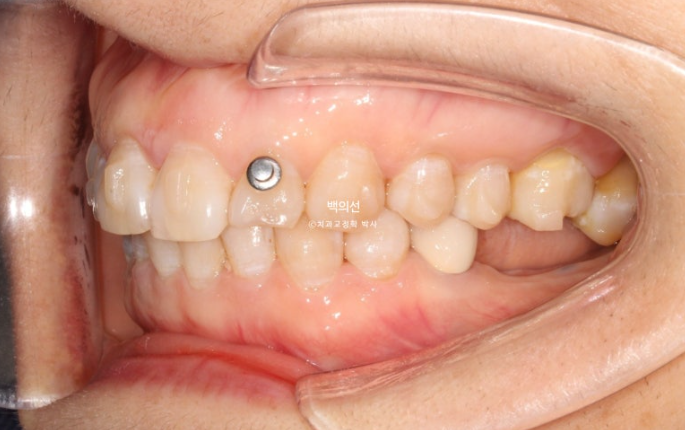
The first molar that had descended was lifted significantly back to its original position.
Space for the implant has now been secured.
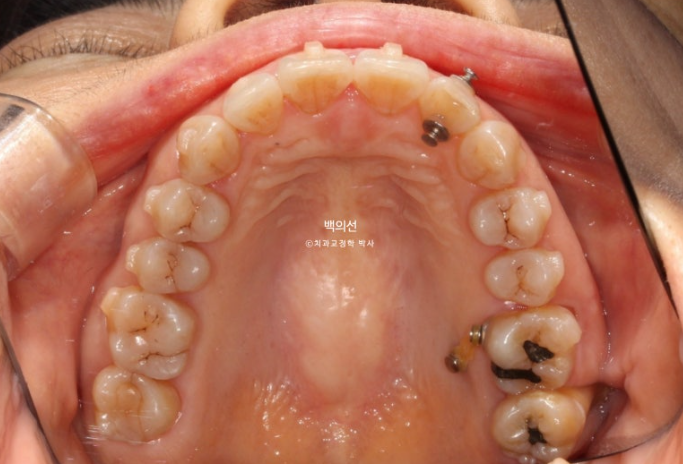
One orthodontic miniscrew was placed in the palate to help intrude the extruded first molar.
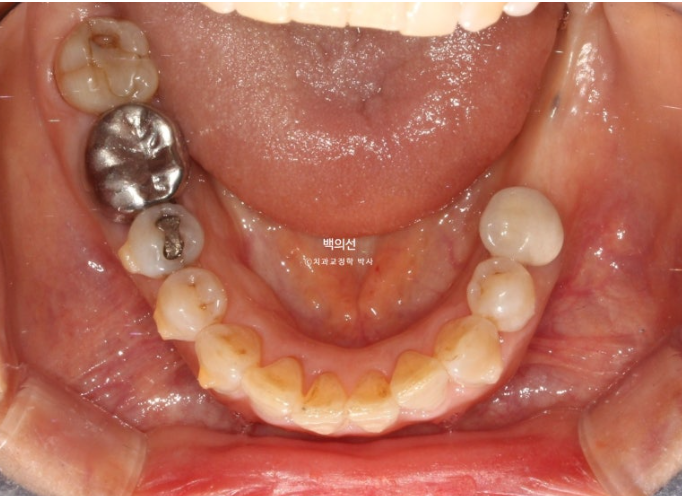
The alignment of the lower front teeth improved a lot, but it was still not perfect.
For a better result, a remake was started.
After wearing all 14 additional aligners for four months from April to July 2025, this is the result.
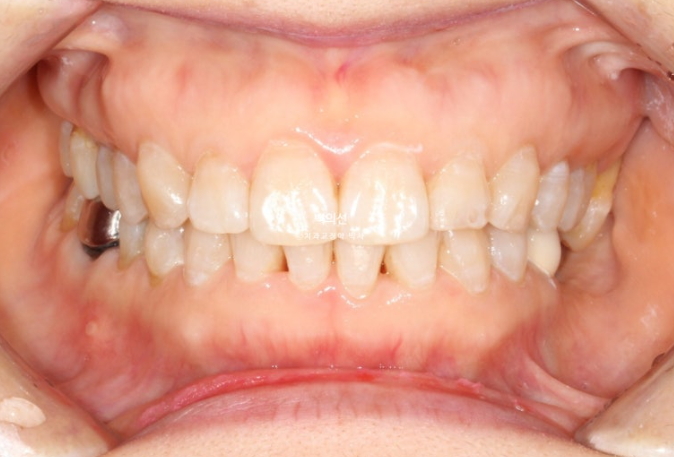
25.07
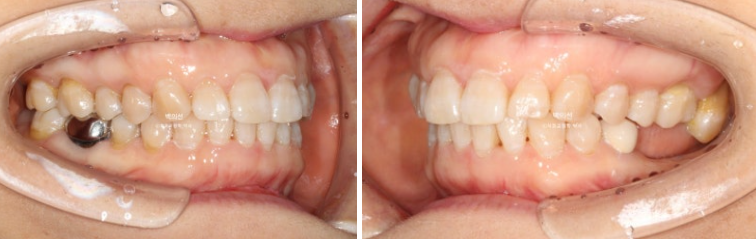
If the bite is not good, treatment is not finished.
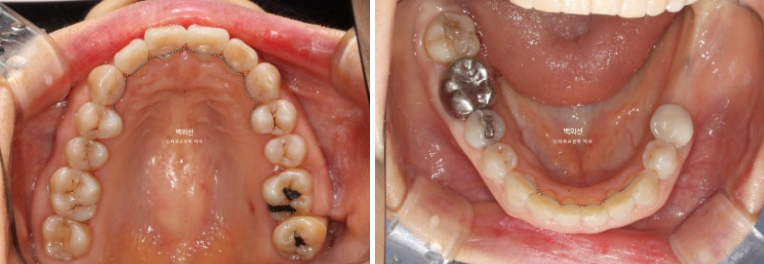
The retainer has been fitted neatly.
Now let’s look at the before-and-after comparison.
The total treatment period was 10 months.
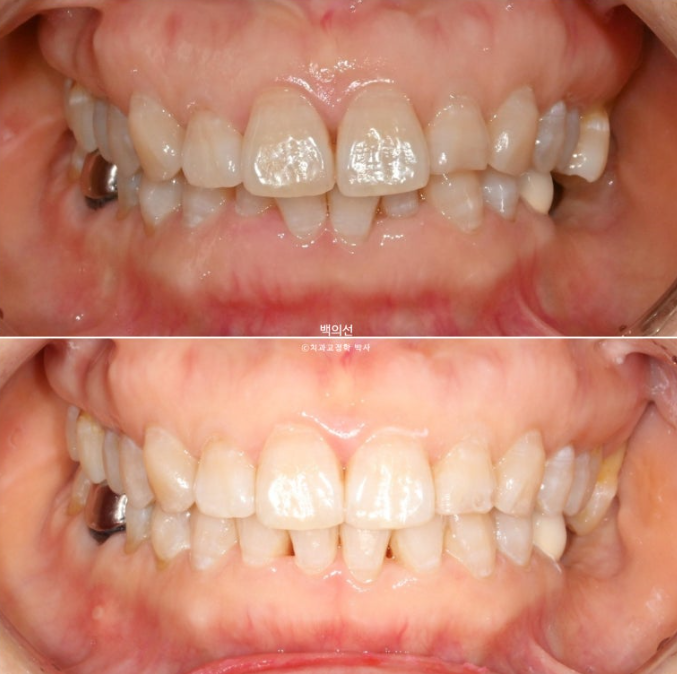
24.10~25.07
Improvement in deep bite and midline.
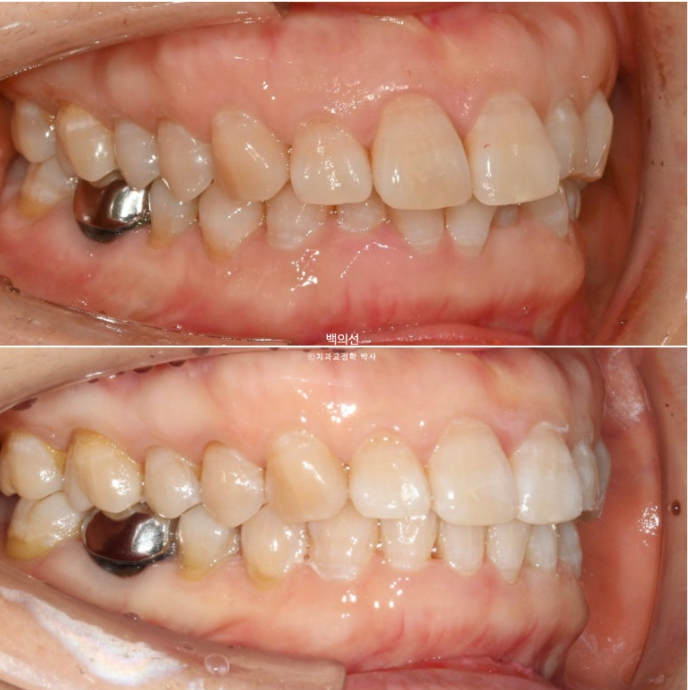
The central front teeth that had descended and protruded moved backward, reducing the protrusion.
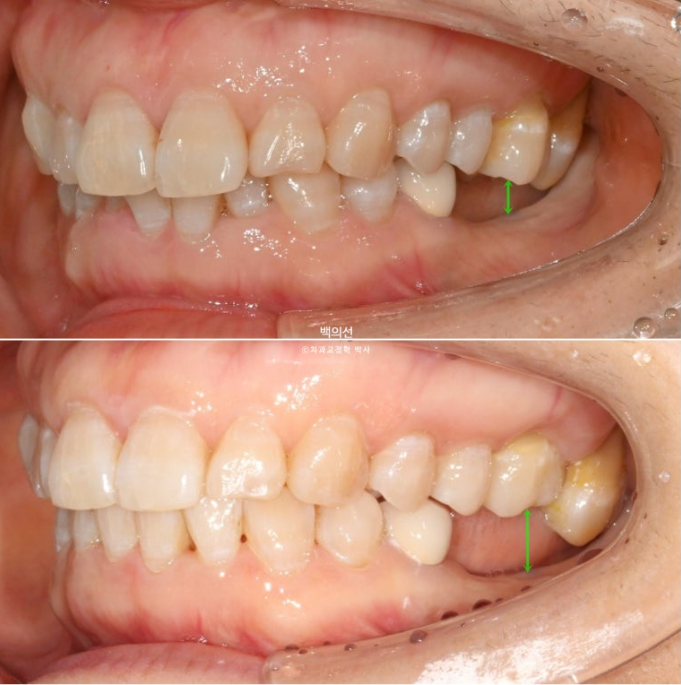
24.10~25.07
Space for the implant was finally secured by intruding the back molar that had descended into the empty space.
The second molar behind it, whose extraction had been postponed and which was used during treatment, is scheduled to be extracted together with the implant surgery.
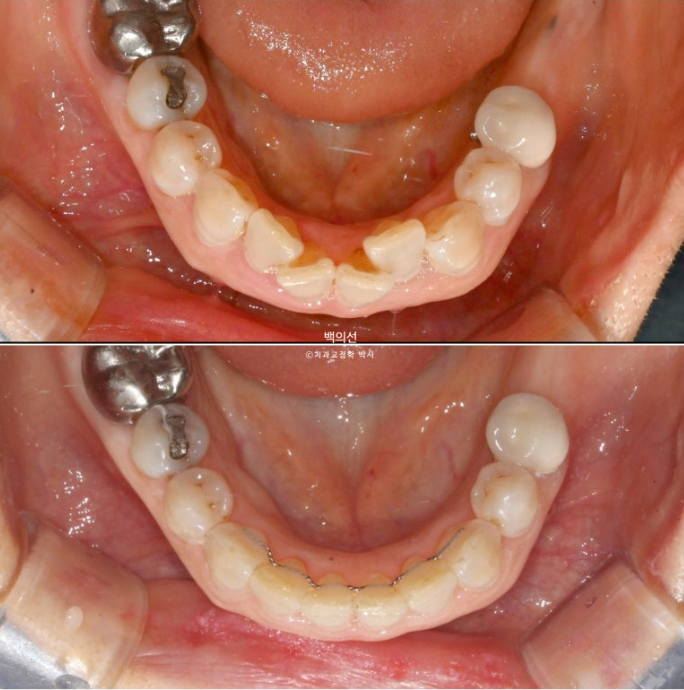
24.10~25.07
The lower front teeth are now aligned neatly.
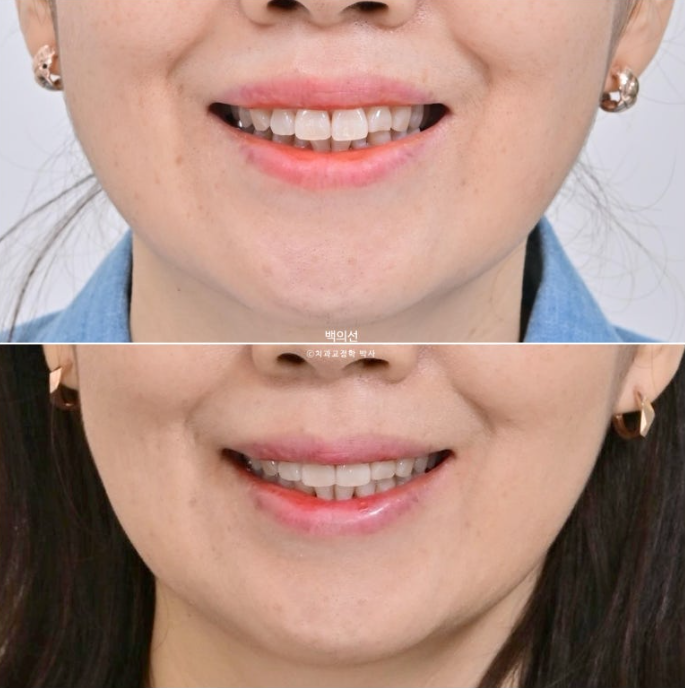
24.10~25.07
The more organized smile line stands out.
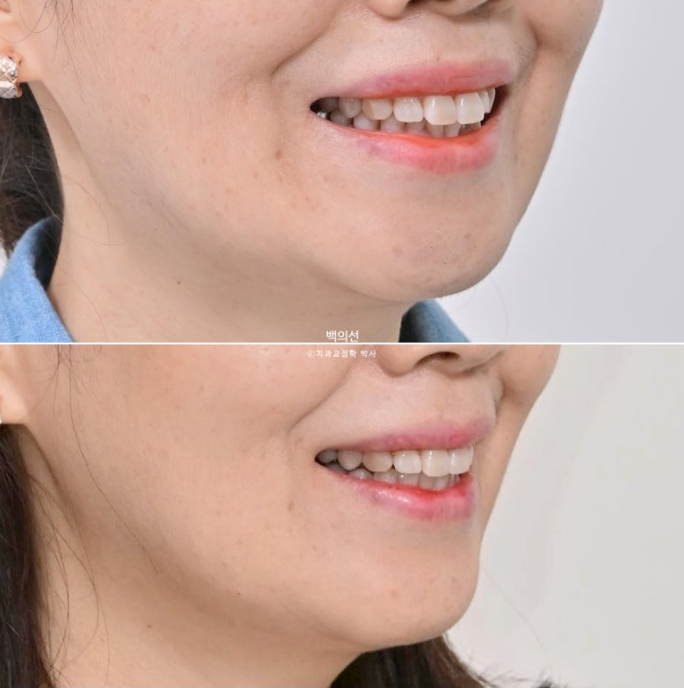
24.10~25.07
The protrusion of the front teeth has improved.
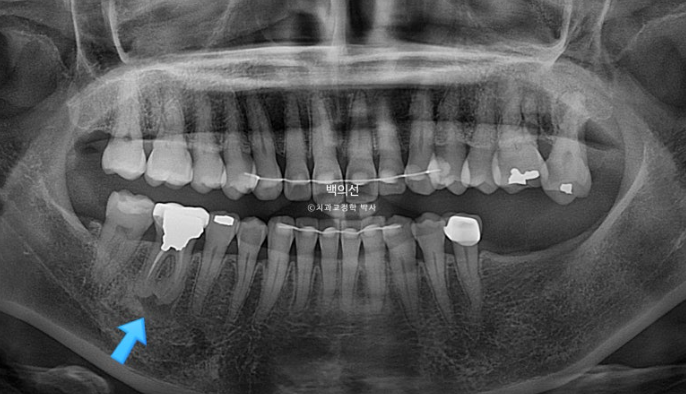
25.07
The apical inflammation of the problem tooth marked with the blue arrow did not enlarge compared with the initial visit and was well maintained. This was because the treatment plan ensured that no movement occurred at all.
The root parallelism is better than at the beginning, and there is no root resorption.
After the implant surgery is completed, the patient plans to have a Vivera clear retainer made that will include the implant tooth as well.
Even when several issues are somewhat complicated and intertwined, if the treatment plan is designed to minimize strain on the gums and teeth, good results can still be achieved with a short orthodontic program such as Invisalign Lite.