Hello.
This is Apgujeong Invisalign Dental Clinic.
Today, in cases where teeth are congenitally missing or impacted, primary teeth often remain.
These are called retained primary teeth.
Sometimes these primary teeth are extracted and implants are placed, sometimes orthodontic treatment is used to close the space, and sometimes the primary tooth is kept and used until it can no longer be used.
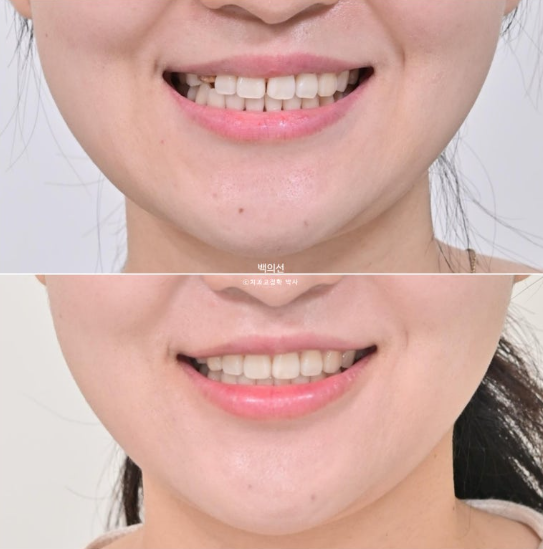
24.10~25.07
Today, I’ll show a case where orthodontic treatment was completed with Invisalign Lite, and the retained primary tooth was restored with a crown as the final step.
I’ll also write about my experience using Smile Architect, the digital diagnostic program recently launched by Invisalign.
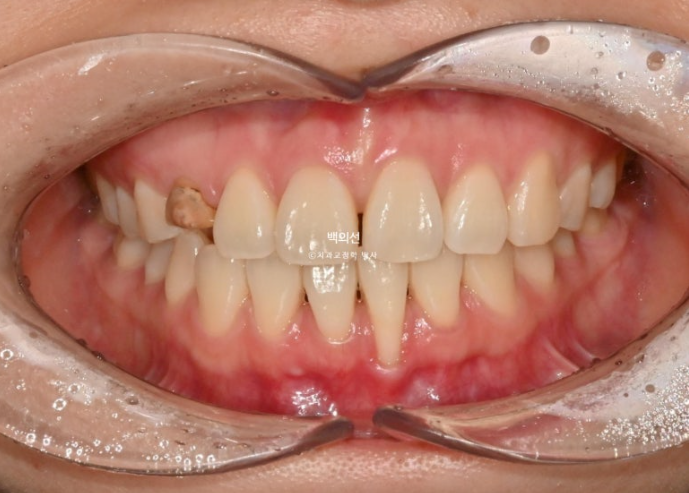
24.10
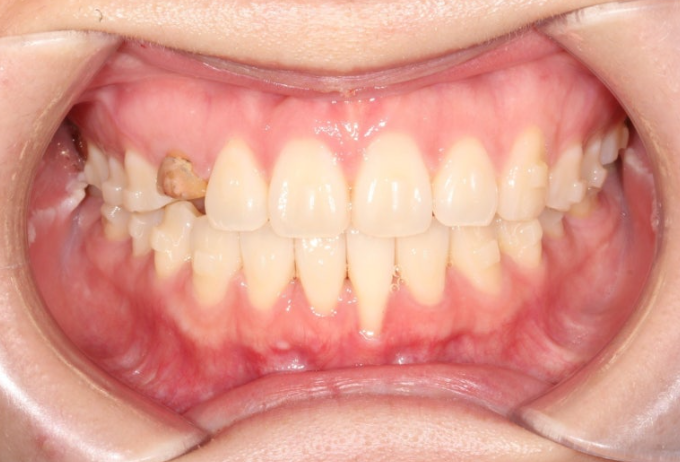
This patient visited last fall for orthodontic treatment.
They had already received orthodontic treatment a long time ago and came in with a fixed wire retainer attached.
One lower front tooth had a root that was drifting outward, causing severe gum recession.
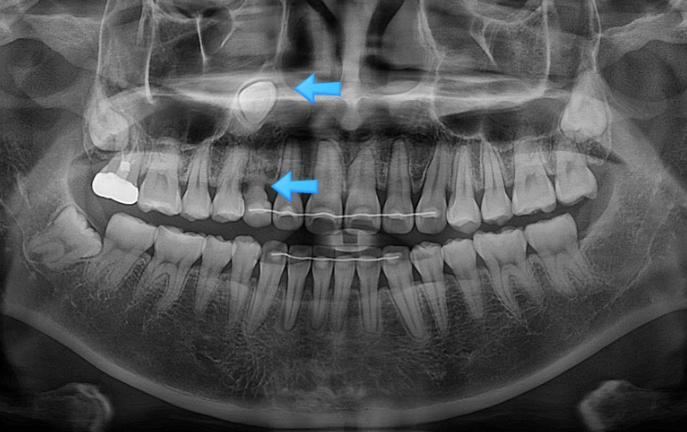
The retained primary tooth remained because the permanent canine was impacted.
The root of the retained primary tooth was not especially strong, but since there was no mobility at all, we decided to keep using it until it could no longer be used.
However, if orthodontic force is applied to a retained primary tooth, the already weak root may resorb, so the retained primary tooth should be planned as a locked position with no tooth movement throughout the treatment period, and it is best not to attach even an attachment.
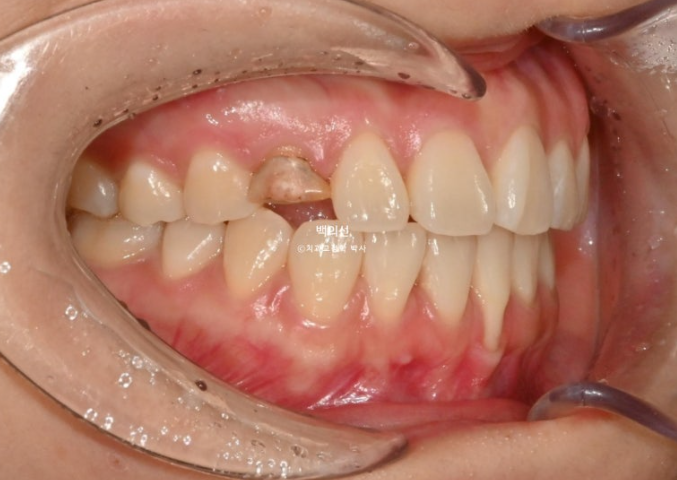
The dark-colored tooth is a retained primary tooth covered with resin, and this time, while undergoing retreatment, the patient wanted this tooth to be treated neatly as well by removing the discolored resin and restoring it with either a laminate or a crown.
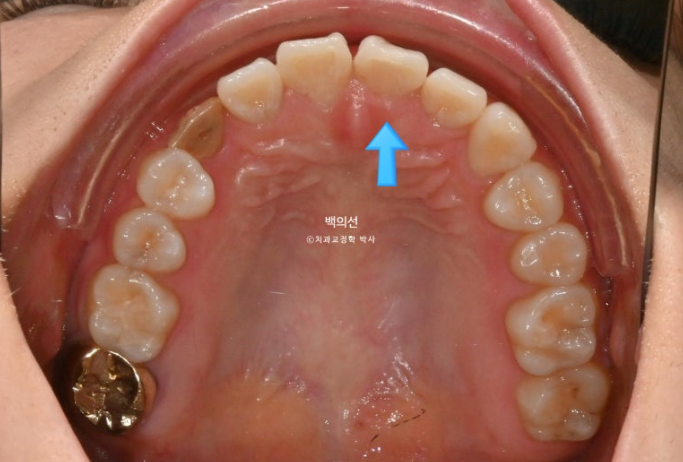
Not only the lower front tooth, but also the front tooth indicated by the blue arrow has a root that is positioned forward. Gum recession has not yet occurred like it has with the lower front tooth, but treatment is needed to move the protruding root toward the palate in order to prevent the gums from receding.
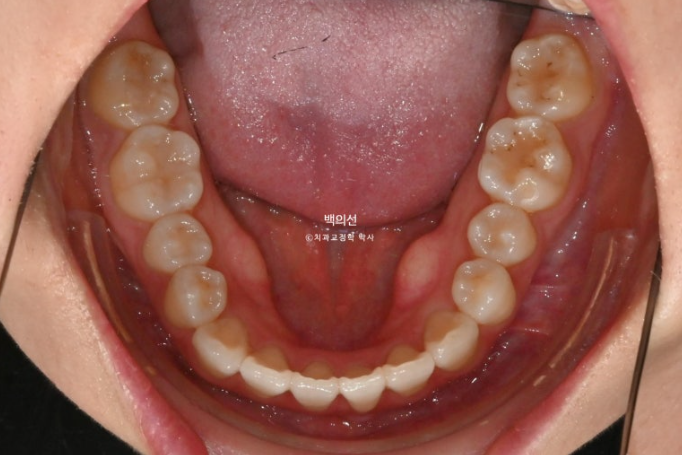
24.10
Because of orthodontic treatment done long ago, the molar occlusion was in fairly good condition.
I recommended Invisalign Lite to align the front teeth and move the roots deeper into the bone.
I also planned interproximal reduction to reduce the size of the black triangles.
The Invisalign treatment planning program is called ClinCheck. Recently, a function was launched in this ClinCheck program that overlays the patient’s smile face. It is called Smile Architect. Rather than looking only at the teeth, treatment planning can now be done while also considering harmony with the face.
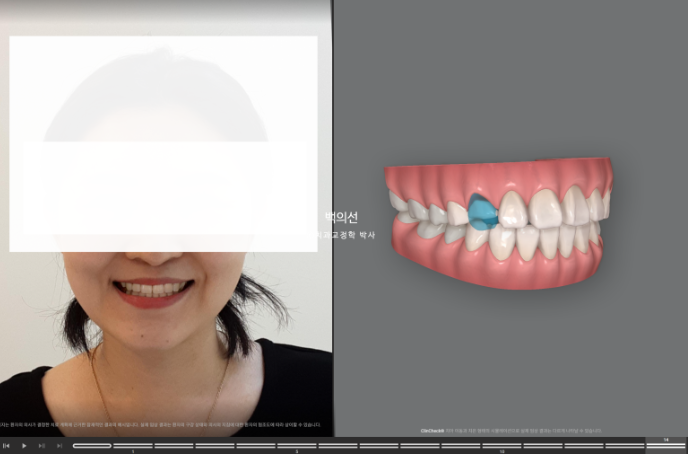
I usually already display the patient’s smile photo together with ClinCheck and make detailed adjustments to the final tooth positions, but it is convenient not to have to keep two screens open. In addition, it allows the patient to see a simulation of the pre-treatment, post-orthodontic, and final prosthetic results, so from the patient’s perspective, it is nice because they can preview the outcome after treatment.
From top to bottom, this is a simulated view of the pre-treatment state, the state after Invisalign Lite orthodontic treatment, and the state after prosthetic completion for the retained primary tooth.
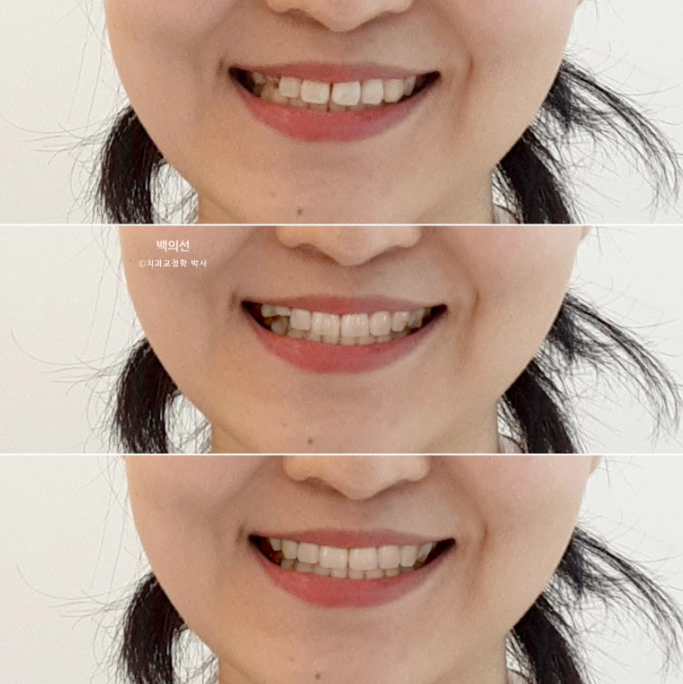
The upper front teeth are tilted to one side, and one canine is not visible, so the canting of the front occlusal plane looks severe. This is what we call canting.
This kind of issue is also reflected in the treatment plan so that it can be improved.
After showing the patient the treatment process and treatment goals visually, we began Invisalign orthodontic treatment.
25.03
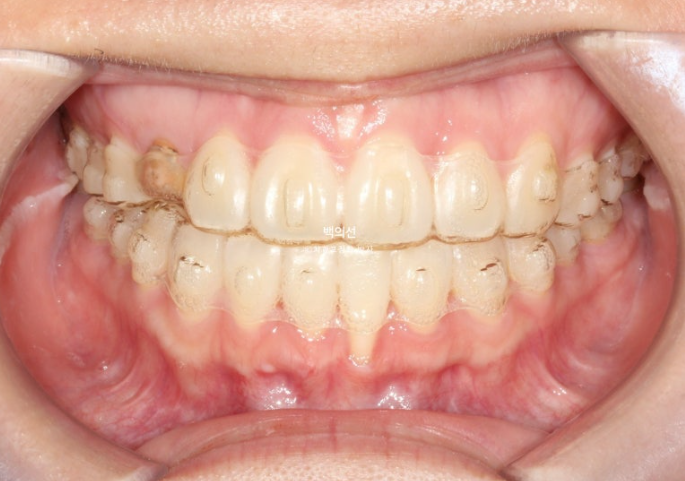
In November 2024, the patient started wearing the first aligner. This is the appearance after wearing all 14 aligners through March 2025.
25.03
The axis of the tilted front teeth improved to a straight position, and the size of the black triangles was greatly reduced. The midline still needed improvement.
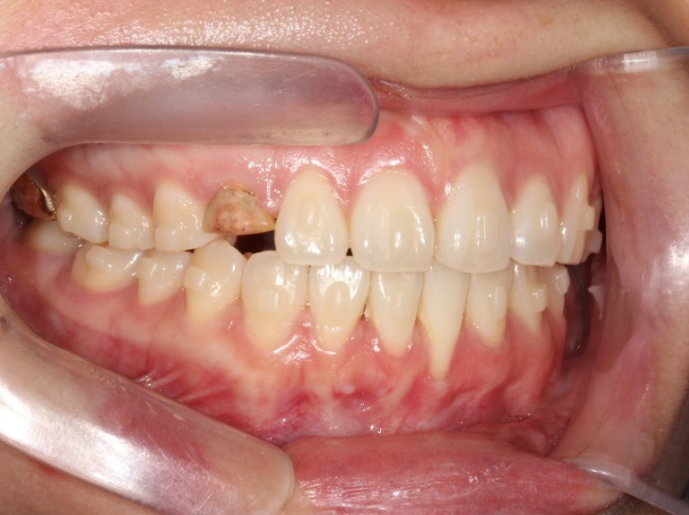
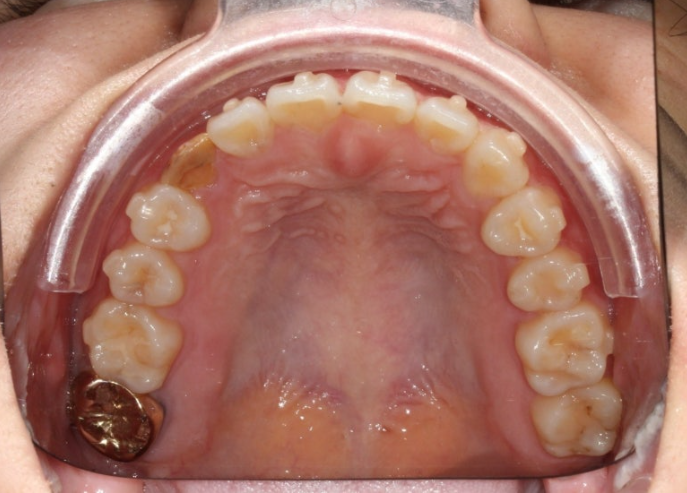
25.03
For the upper front tooth with gum recession and the lower front tooth root, we planned to move them further inward, and decided to use one more set of additional aligners.
From April to July 2025, this is the appearance after wearing all the additional aligners.
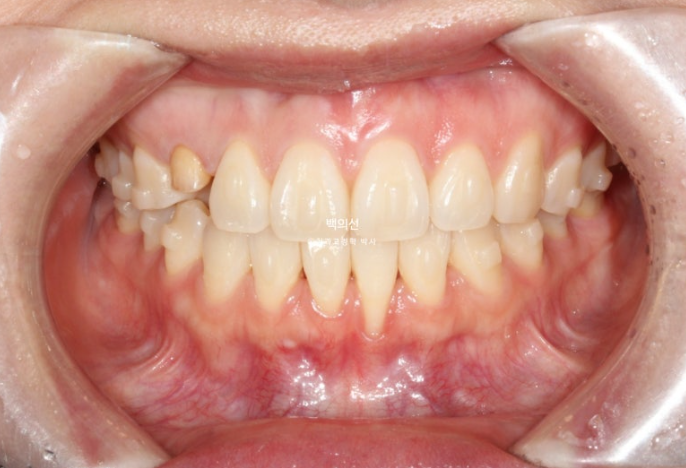
25.07
The axis of the tilted front teeth was completely corrected, and the midline is well aligned.
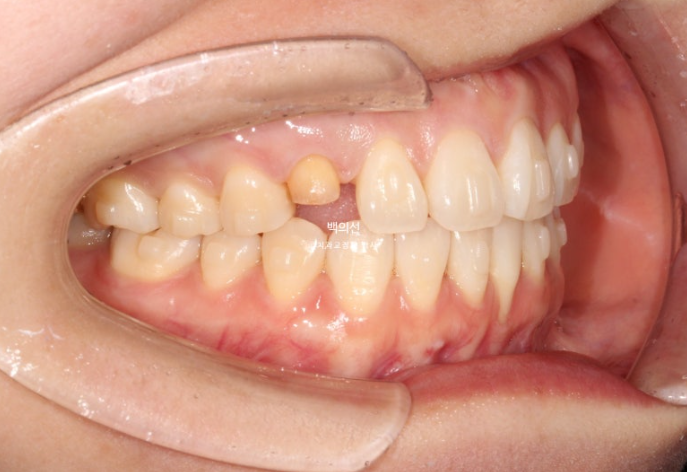
This is the retained primary tooth after the discolored resin was removed and its true appearance was revealed. Now prosthetic preparation is needed. For stability, we decided to restore it with a crown instead of a laminate.
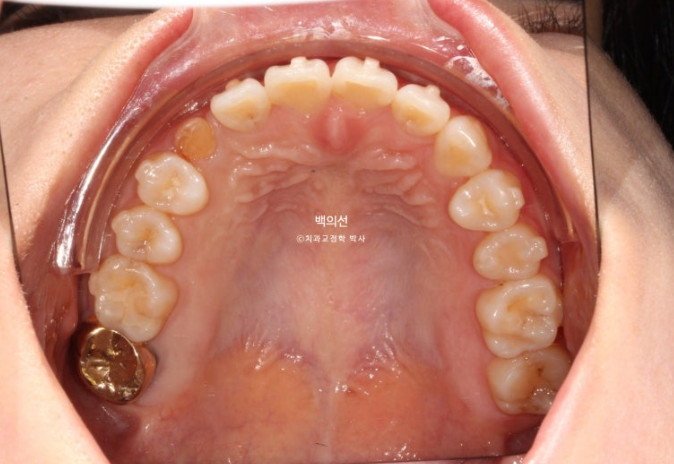
25.07
After the crown restoration was completed, all attachments were removed and treatment was finished.
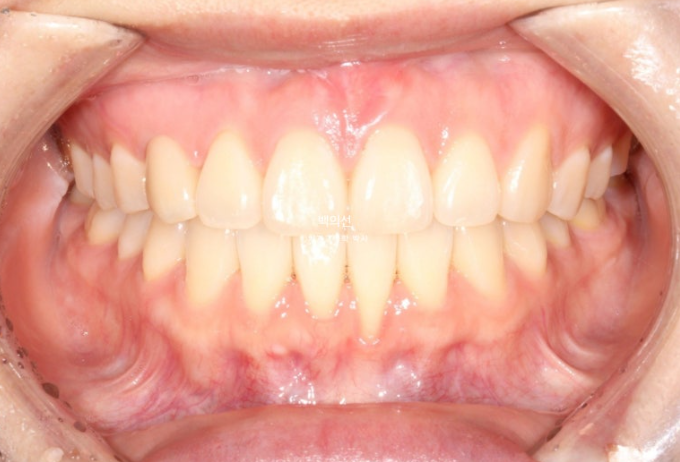
25.07
It is hard to tell which one is the crown and which one is the natural canine.
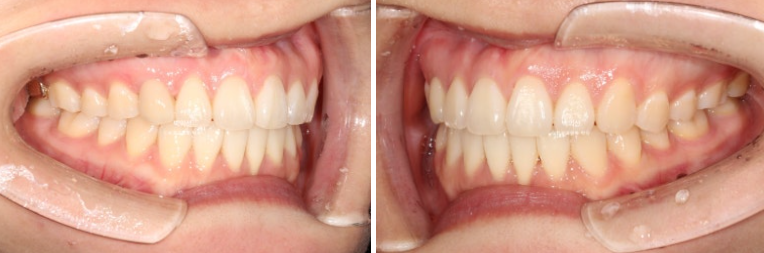
25.07
The occlusion is good.
Now let’s compare before and after.
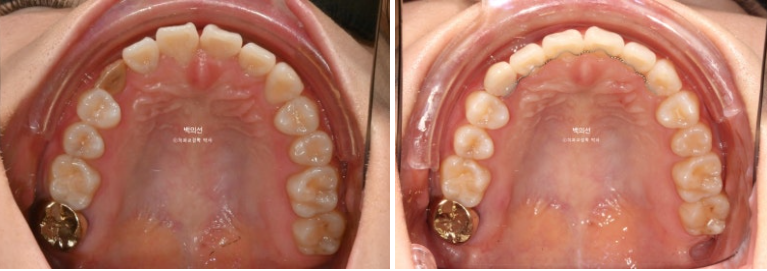
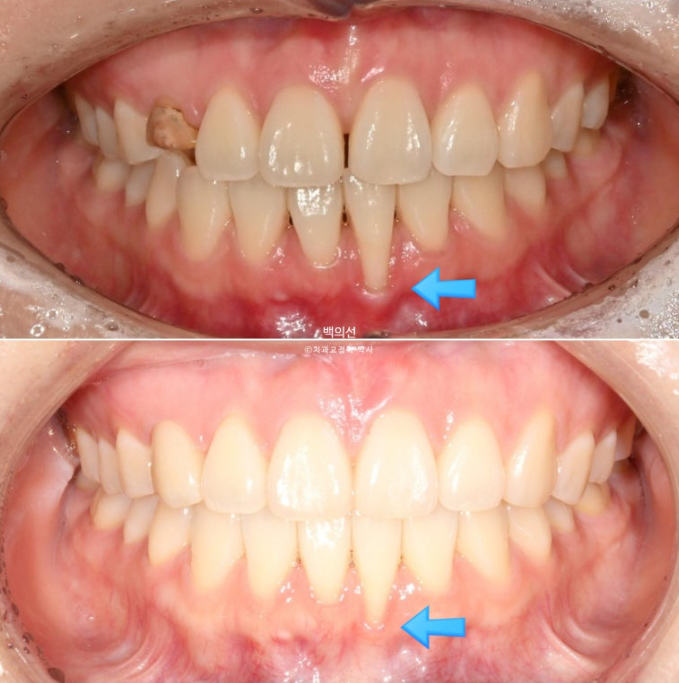
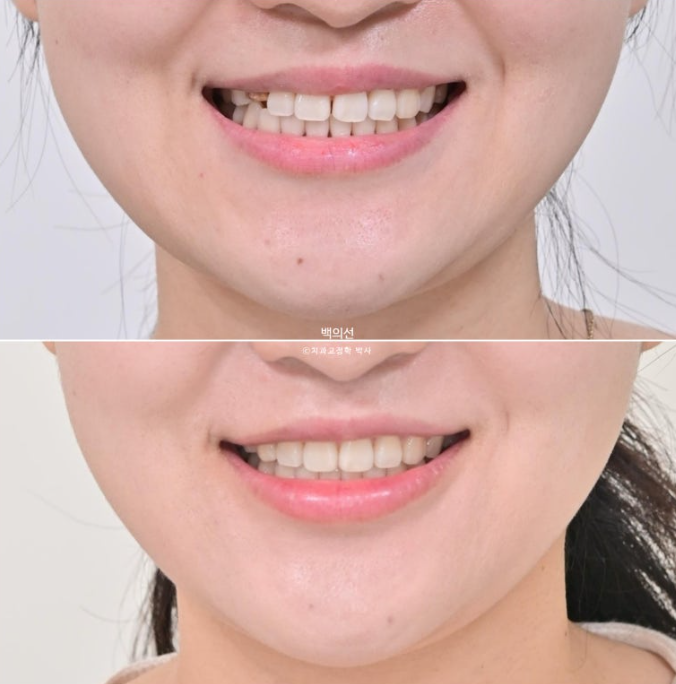
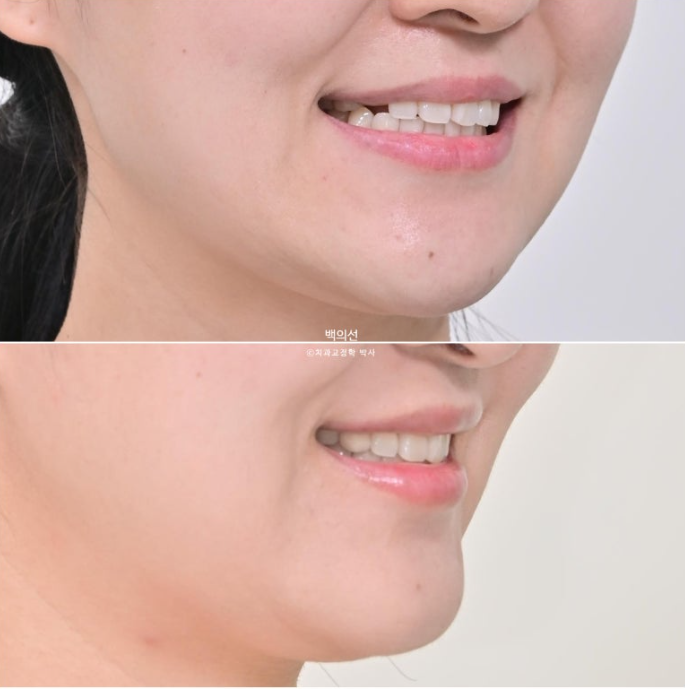
24.10~25.07
The treatment period was 10 months.
24.10~25.07
What stands out is that the gum recession improved after treatment.
By moving the protruding root of the tooth with receding gums inward, the area of exposed root caused by gum recession was reduced.
In addition, the improvement of the black triangles through a small amount of interproximal reduction is also noticeable.
24.10~25.07
Improved smile and smile line, and improvement in the angle of the tilted front teeth
24.10~25.07
A neat smile line stands out.
Many patients who had been delaying orthodontic treatment because they were burdened by the idea of braces often try Invisalign and say, “I should have done this earlier.”
I hope this post is helpful for people considering orthodontic treatment due to impacted permanent teeth or missing teeth.