Hello,
This is Apgujeong Yonsei Baro Dental Clinic.
Today, while looking at a case handled by our vice director, I will show you the treatment process from Invisalign orthodontics to implants in a case where two front teeth are congenitally missing (a missing-tooth case).
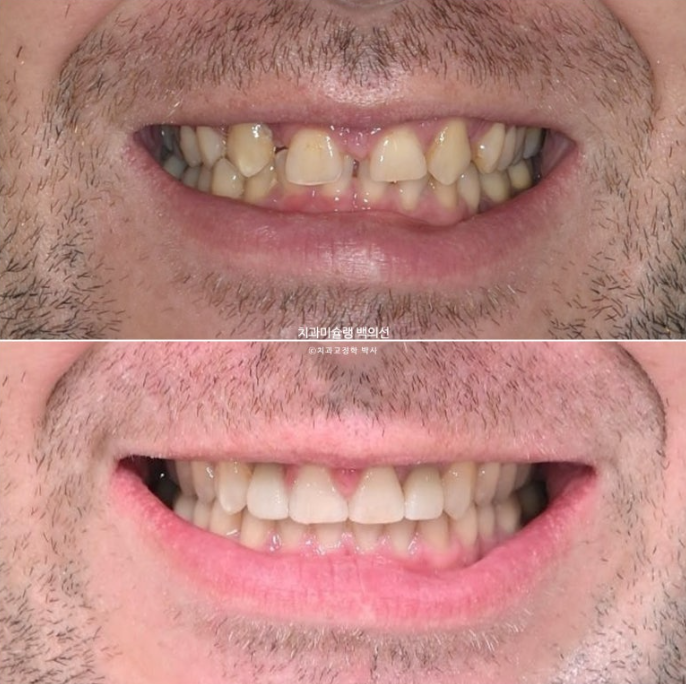
23.01~25.09
After Invisalign treatment is finished, if there are minor remaining issues such as slight differences in height, it may be helpful to see how these are corrected with MTA partial orthodontic treatment.
This is a foreign patient who visited for orthodontic treatment in January 2024.
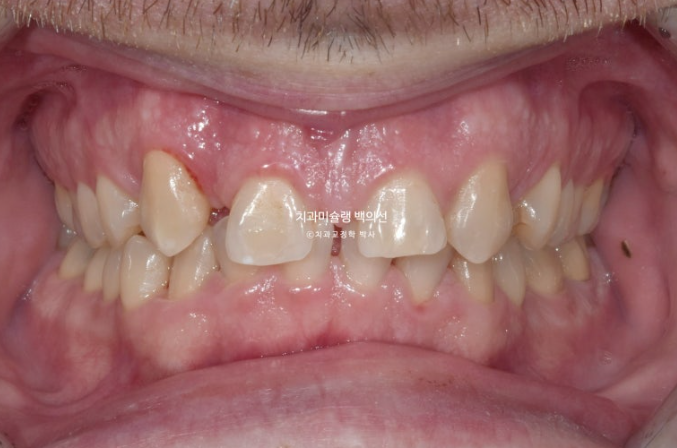
23.01
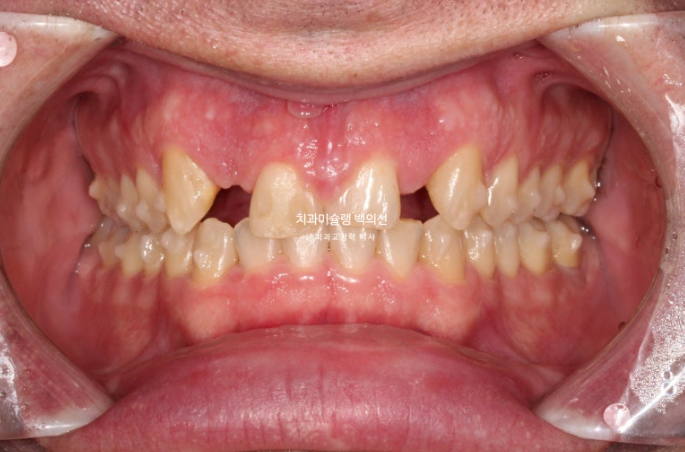
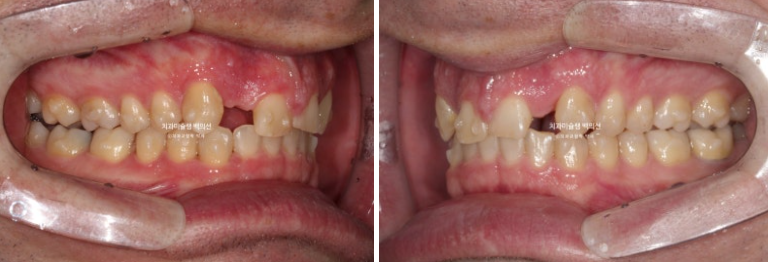
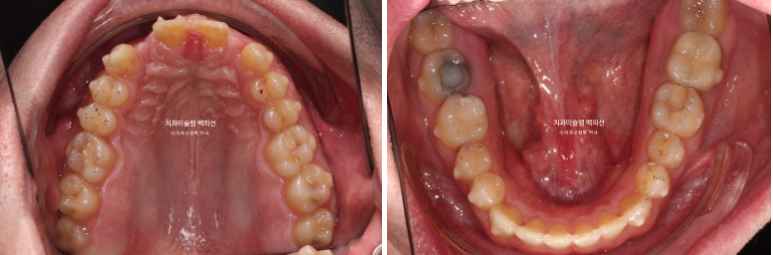
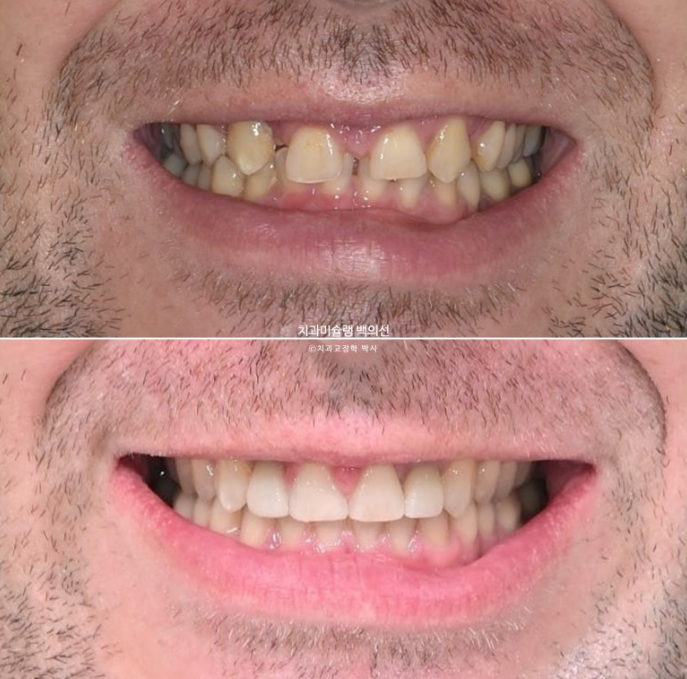
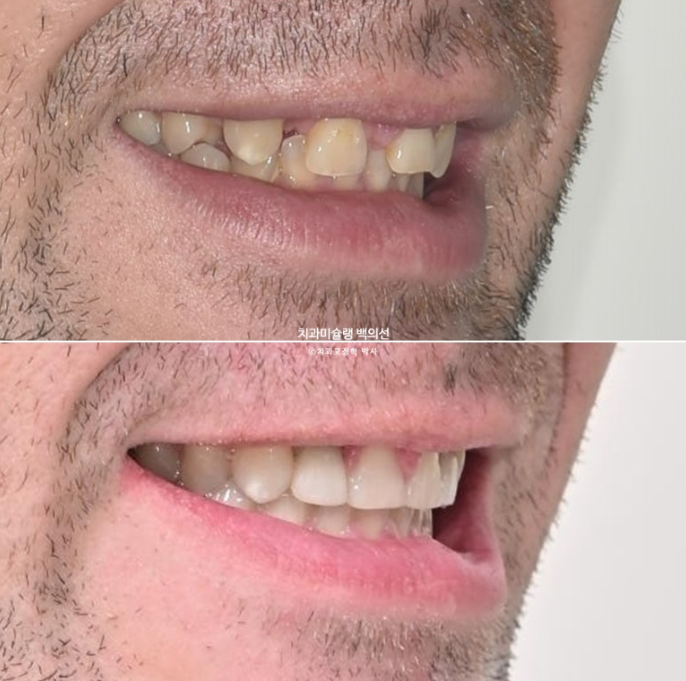
Two of the four upper front teeth are missing. The front teeth are widely spaced, and the lower front teeth are protruding upward enough to strike the upper palatal gums, showing severe overbite.
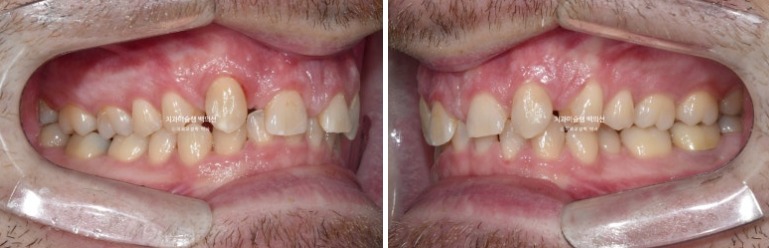
If congenital missing teeth and protrusive teeth are combined like this, treatment may sometimes be planned by considering the missing teeth as extracted teeth and closing the opened spaces to relieve the protrusion.
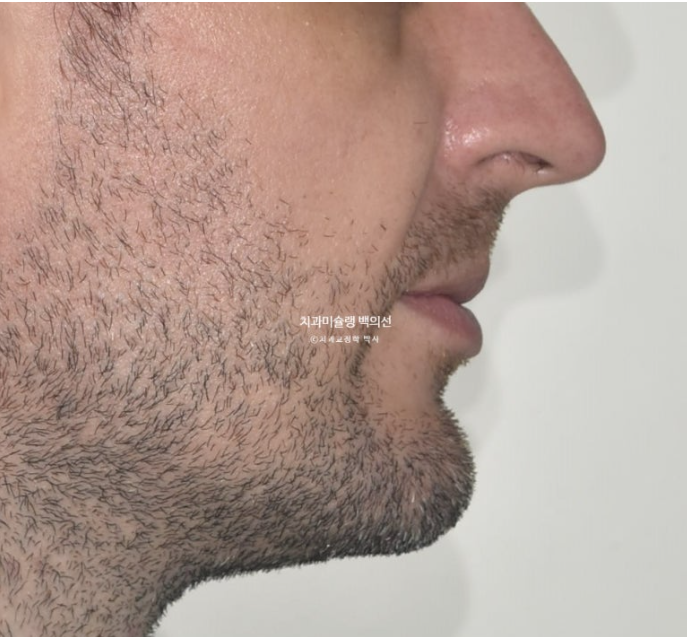
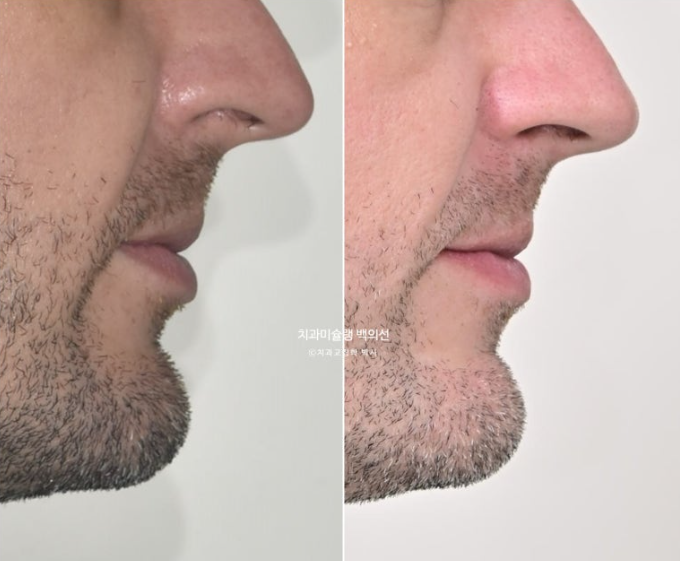
However, the patient shows a typical Caucasian facial profile.
In other words, the lips are thin, the nasal bridge is high, and the chin is prominent, so it would be a big problem if the front teeth were moved further back.
In such cases, it is better to concentrate the space to one side and place implants in the missing-tooth area.
We decided to move the canine that had shifted into the front-tooth area back to its original position and place two implants in the missing front-tooth sites.
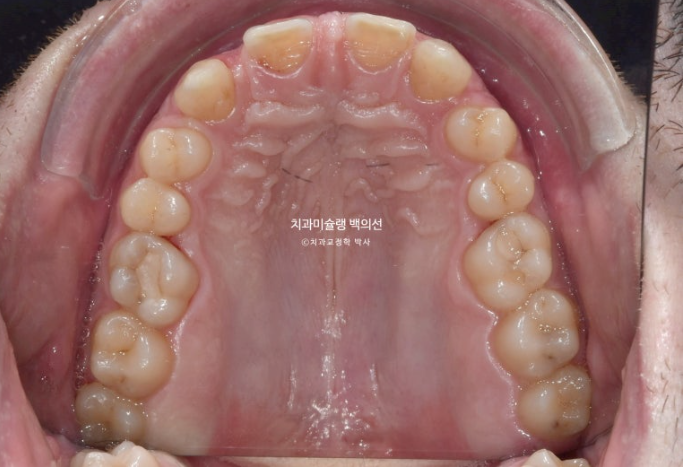
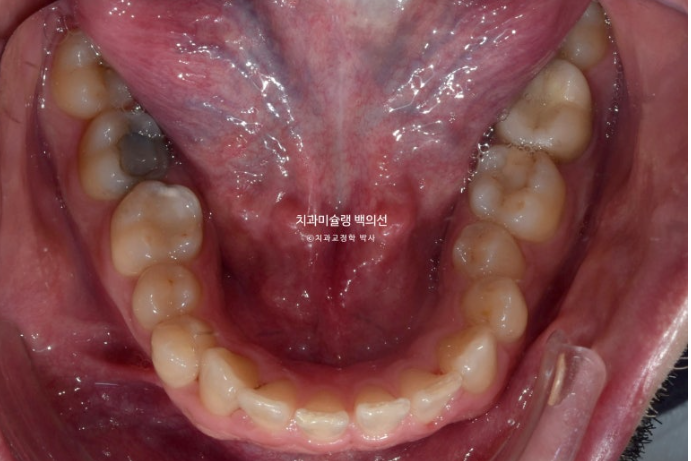
Considering that the patient might return to their home country in a year, Invisalign treatment was recommended so that treatment could continue overseas.
The first set consisted of 32 aligners, and the patient started wearing them in February 2023.
23.07
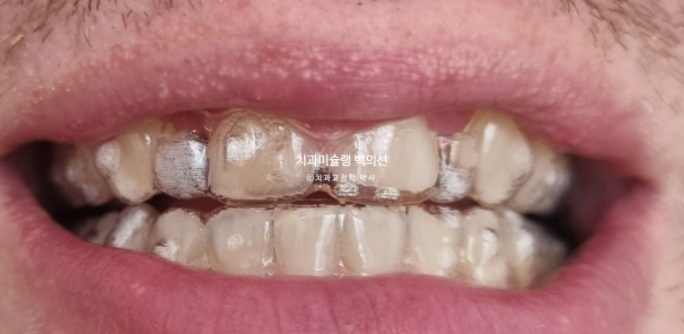
During treatment, a gap appeared at the front teeth where the aligner was lifting.
This is a phenomenon in which, while the front teeth are moving, the roots do not follow and the crowns tip over.
We planned to correct this in the next set of aligners and continued to create space for the implants.
23.10
In October 2023, after wearing all 32 aligners over 9 months, this is the result.
There is a visible height difference between the two central incisors. The midline is off by about 1 mm.
There is some lift in the molar bite.
The alignment is good.
We then proceeded with making a second set of aligners with the goals of improving the midline, improving the molar occlusion, and correcting the tipped front tooth root angle.
After wearing all 24 additional aligners over 5 months until April 2024, this is the result.
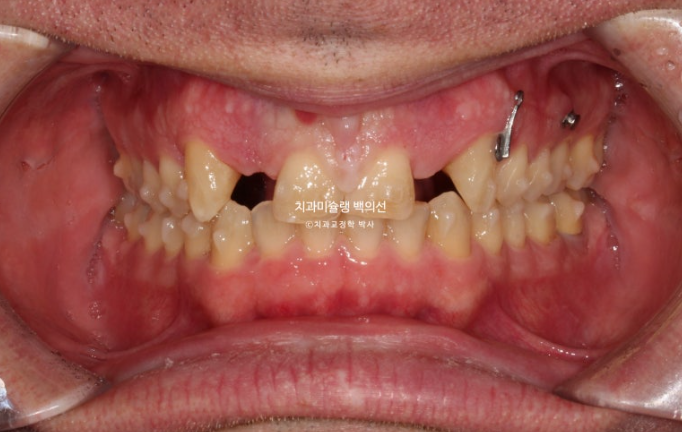
24.04
The midline is well aligned, and the tipped front tooth roots and the height difference between the central incisors have improved.
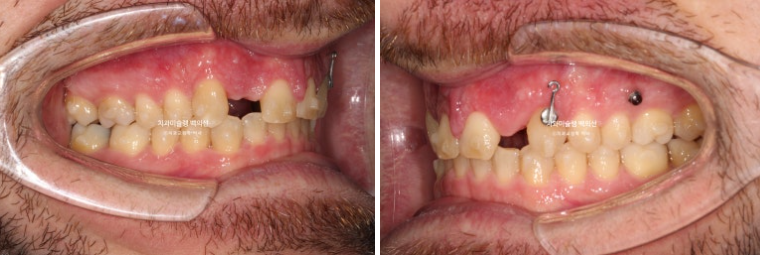
The molar bite has also achieved Class I on both sides, and there is no longer any lifting.
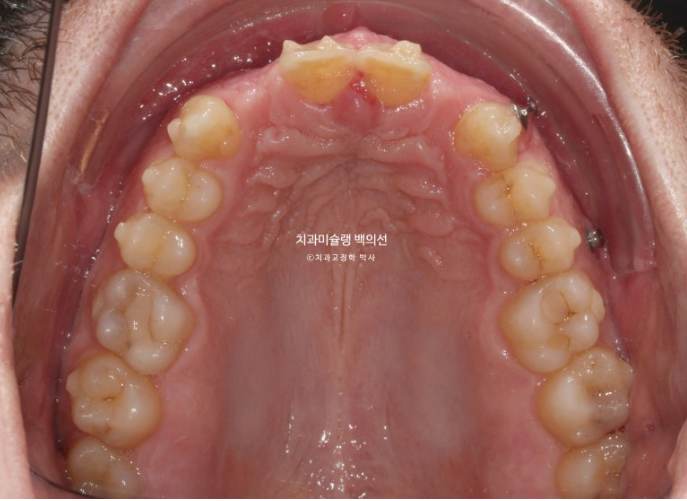
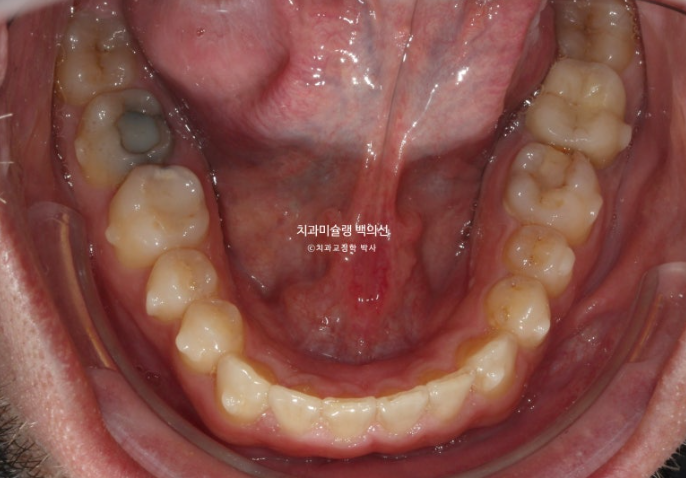
To make the implant placement site more stable, we began making a second additional set of aligners.
Although it is not visible, this was a necessary treatment for the patient.
From May to October 2024, after wearing 20 more aligners, orthodontic treatment was completed.
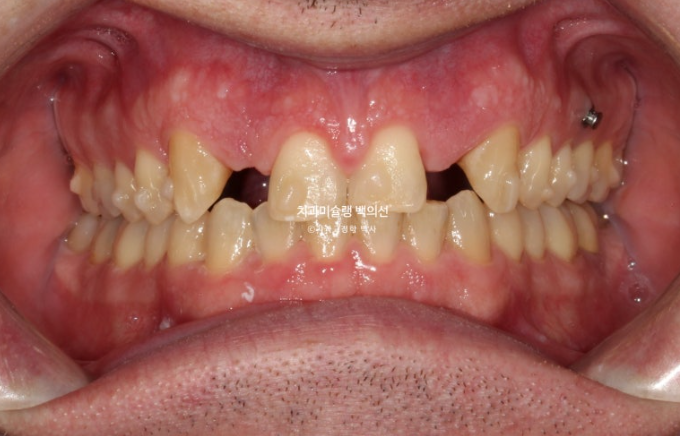
24.10
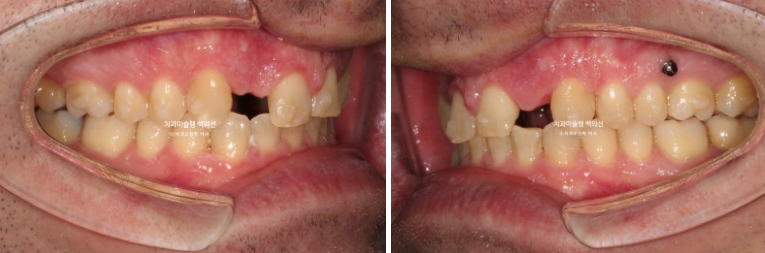
24.11
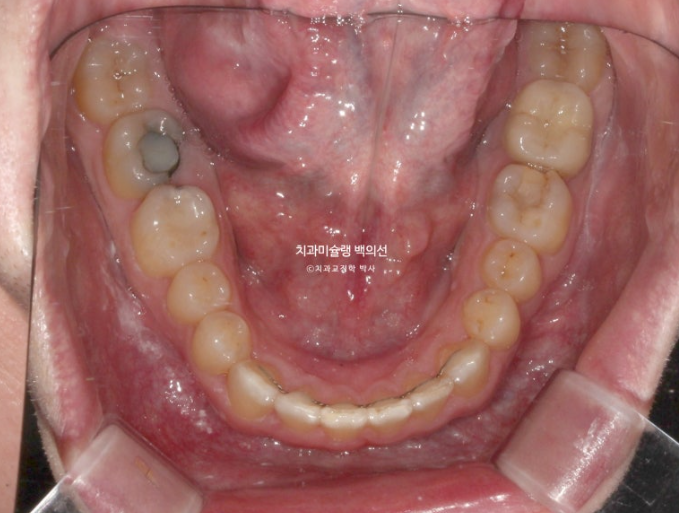
24.10
Below, the implant is placed after finishing with the retainer attached as well.
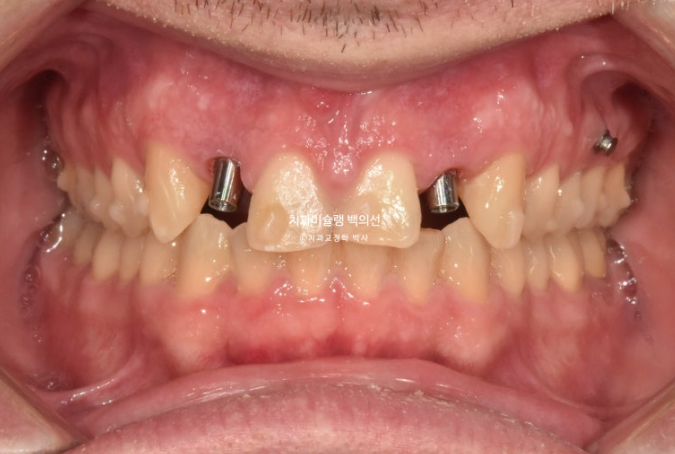
25.04
For implants, the root is placed first, then after several months of stabilization, the crown is made.
After allowing a sufficient stabilization period of about 6 months, the implant crown was placed in April 2025.
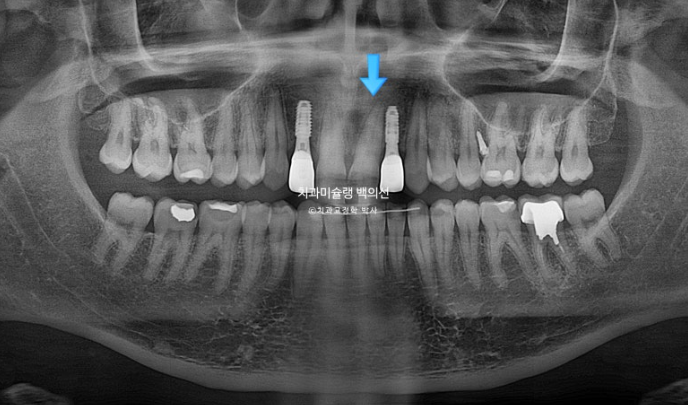
25.05
During the 6-month waiting period, the patient may not have worn the retainer diligently, and the uprighting of the front tooth roots shifted slightly again.
To improve this, we decided to attach MTA partial orthodontic appliances to the four front teeth.
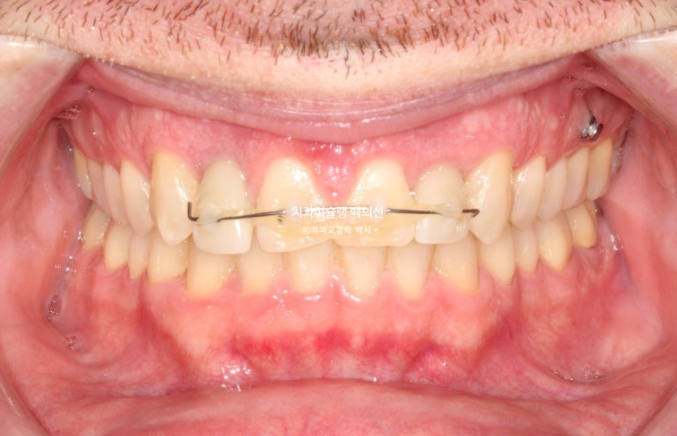
25.05
Right after the MTA partial orthodontic appliance was attached, the patient returned to their home country to spend a long three-month summer vacation and came back to Korea in September 2025.
After confirming the improvement in the front tooth axis, the treatment was finally completed.
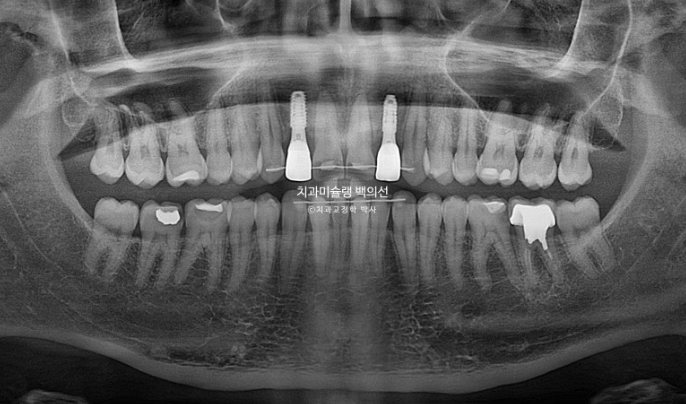
25.09
The parallelism of the tooth roots is good all the way to the wisdom teeth.
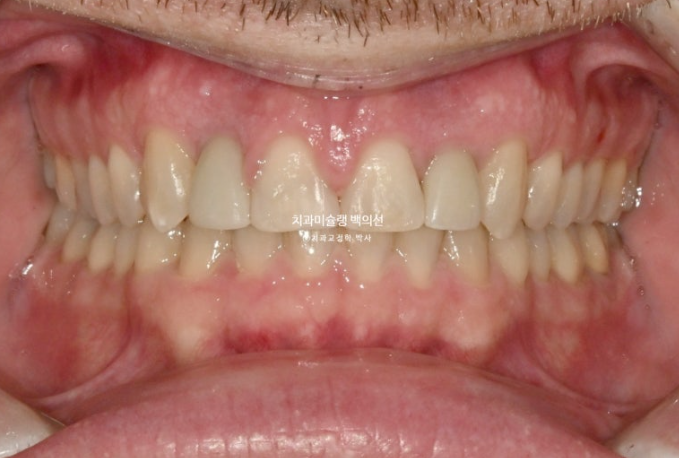
25.09
The midline is well aligned, and the overbite has been neatly improved.
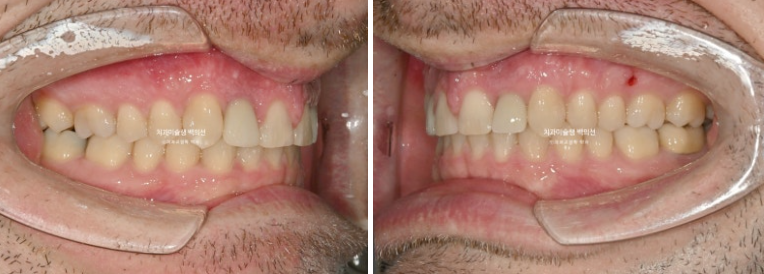
25.09
The molar bite is tight and clean, showing a Class I occlusion.
Now let’s look at the before-and-after comparison.
The treatment period was 1 year and 9 months, and it took 4 months to correct the relapsed front tooth axis.
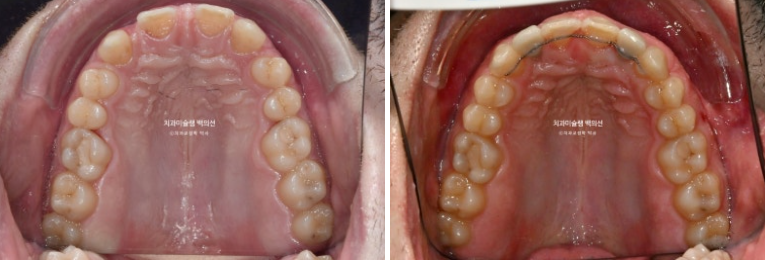
23.01~25.09
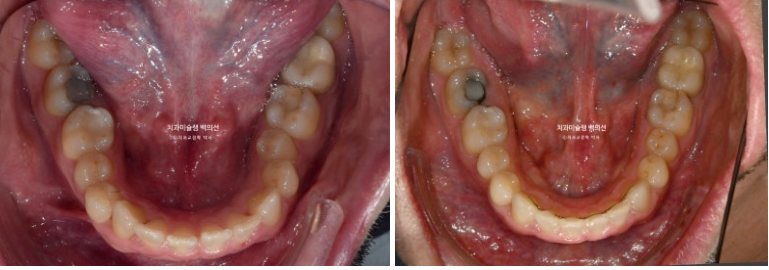
23.01~25.09
The teeth are well aligned all the way to the wisdom teeth.
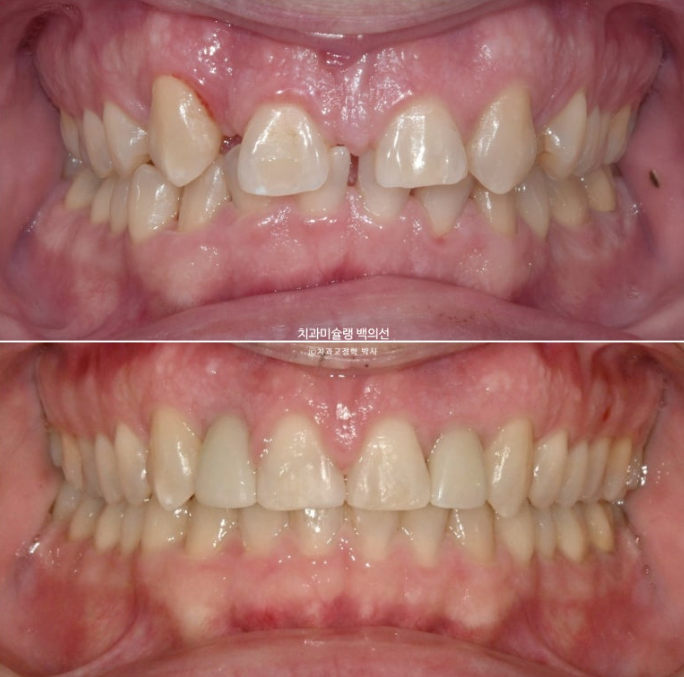
23.01~25.09
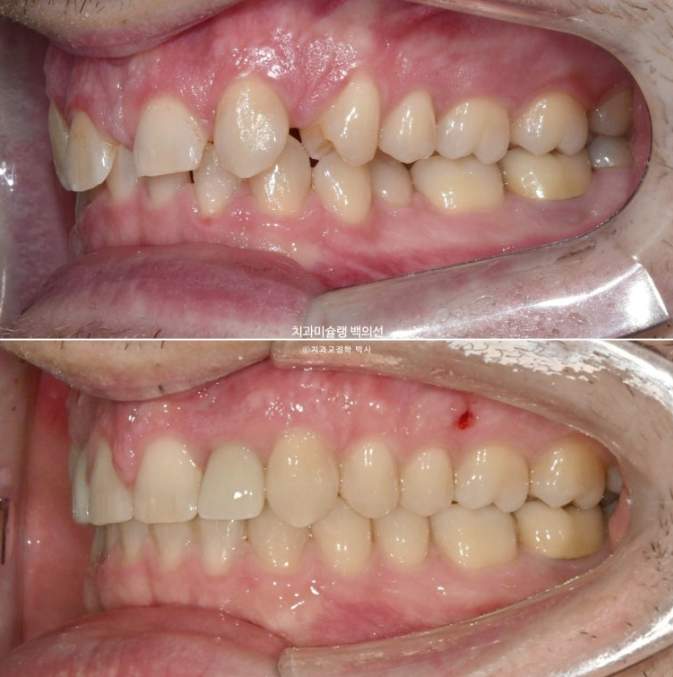
23.01~25.09
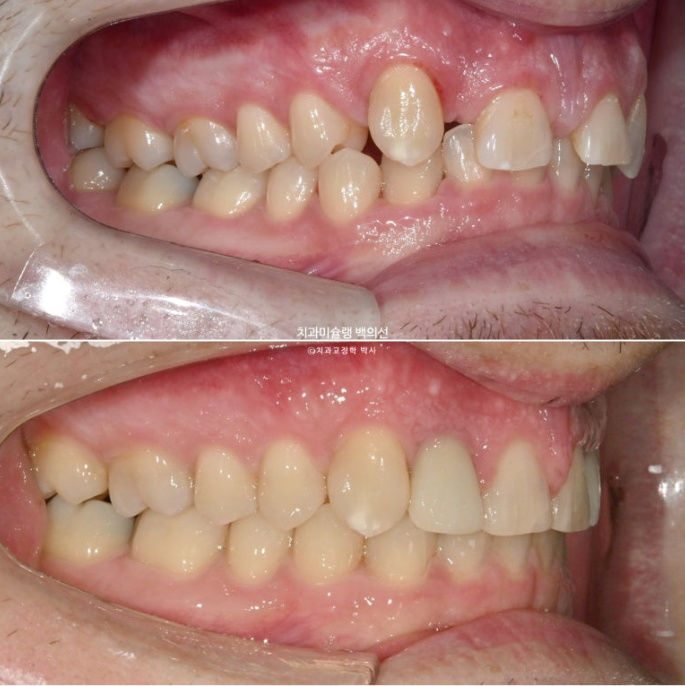
23.01~25.09
23.01~25.09
A neater smile
23.01~25.09
23.01~25.09
The lip line was well maintained.
The treatment method for missing teeth varies greatly depending on the facial profile and whether protrusion is present at the initial visit.
I hope this is helpful for those considering orthodontic treatment for missing teeth or spacing.