Hello,
This is the Apgujeong Invisalign orthodontic clinic.
Today, I’d like to share a story about non-extraction Invisalign treatment.
In consultation, we often receive requests to explain what patients were told during consultations at other clinics.
Likewise, this is a post responding to the question, “I heard Invisalign can never move wisdom tooth spaces backward, is that true?”
23.09~25.09
This patient first visited us in September 2023 for treatment of slight protrusion and lip incompetence.
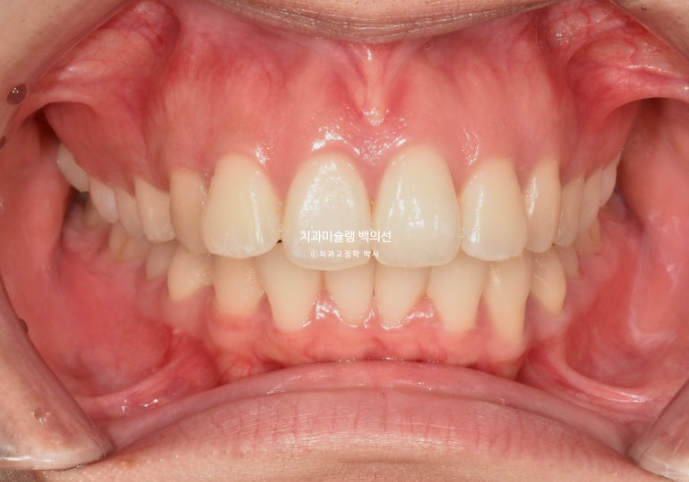
23.09
Lip incompetence refers to a condition in which the lips cannot close comfortably because of protrusion.
To close the mouth, the chin has to tense up, so it is often mentioned together with a dimpled chin or chin crease.
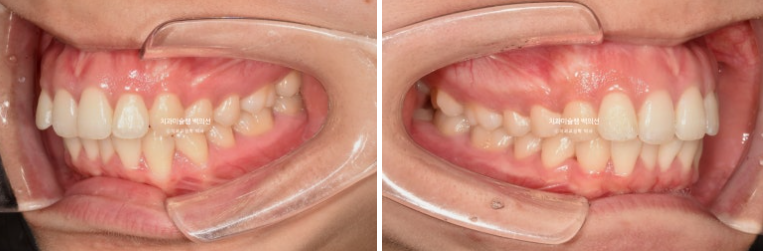
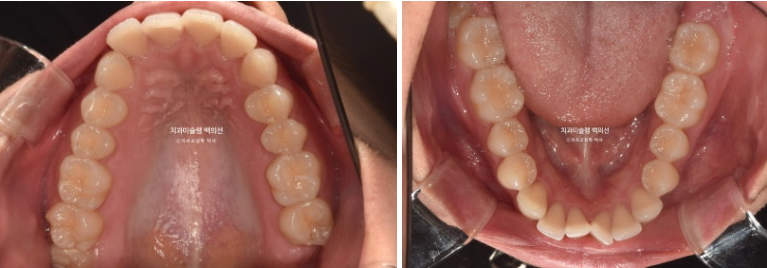
The front teeth are somewhat crooked.
Skeletally, the lower jaw is small, resulting in a receded chin.
The patient did not want extraction orthodontic treatment, so the treatment plan was to extract the wisdom teeth and move the molars backward into the wisdom tooth space to align the front teeth and retract them.
The patient chose Invisalign treatment.
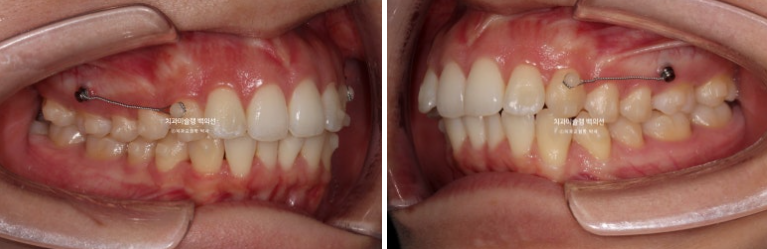
23.10
We placed orthodontic mini-screws needed for molar distalization and proceeded with treatment.
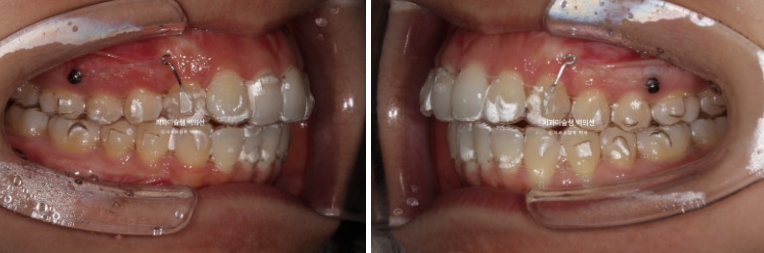
24.02
At the stage when the front teeth and canines needed to move backward, we also attached this kind of appliance.
These days, for various reasons, the patient would likely also have been prescribed elastic bands to take in and out, but at that time we retracted them like this without elastic band prescription.
After wearing all 42 aligners for 10 months until July 2024, this is the result.
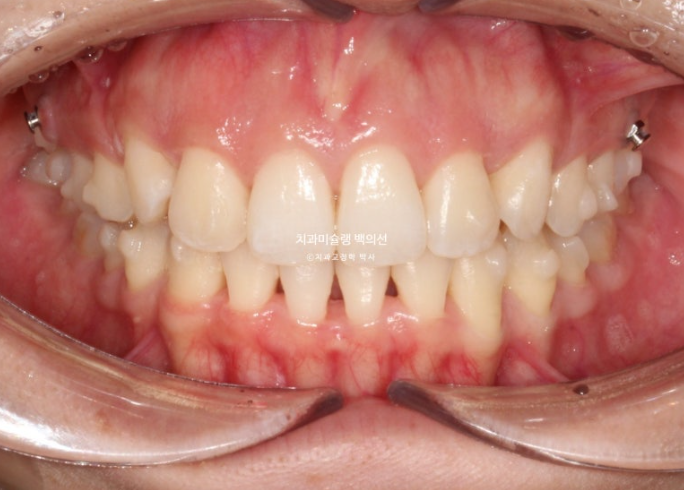
24.07
The midline is well aligned, but
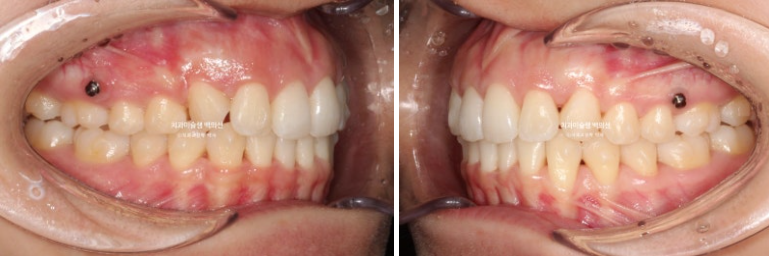
you can see rotation in the canine where the appliance for distal movement had been attached.
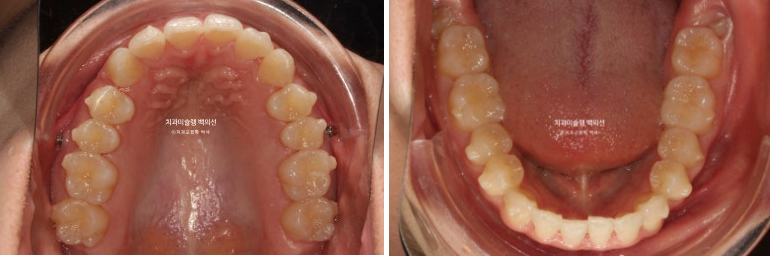
To address the remaining issues, we moved on to making additional aligners.
The number of additional aligners was 20, and they were worn from August 2024 to January 2025.
25.01
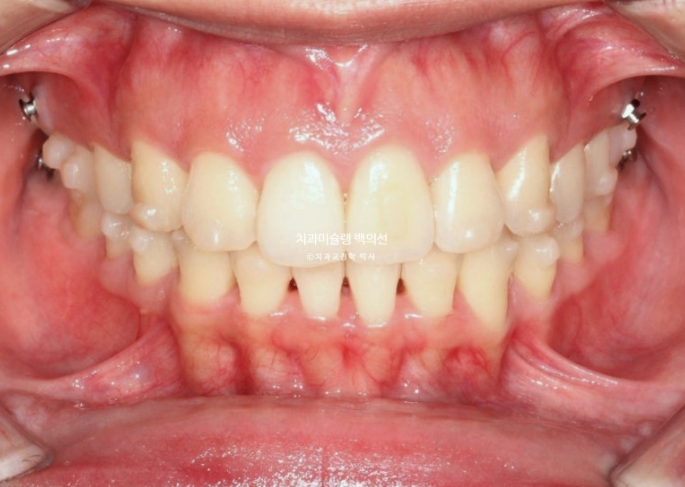
This is the result after wearing all of the first additional aligners.
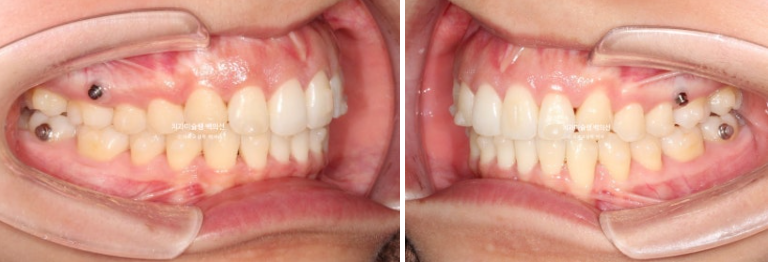
The occlusion is already complete as a Class I occlusion relationship.
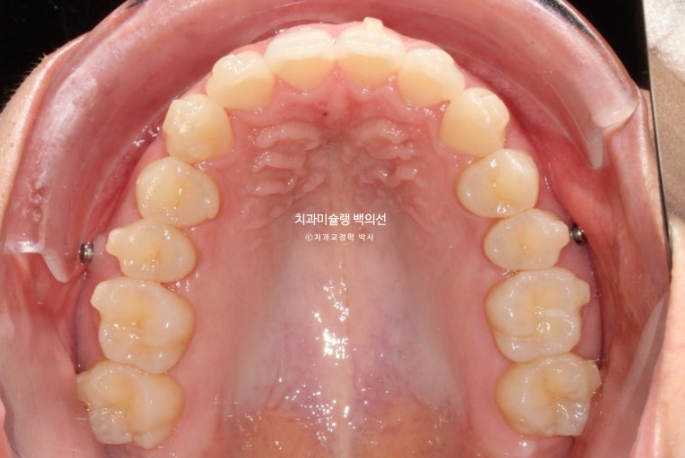
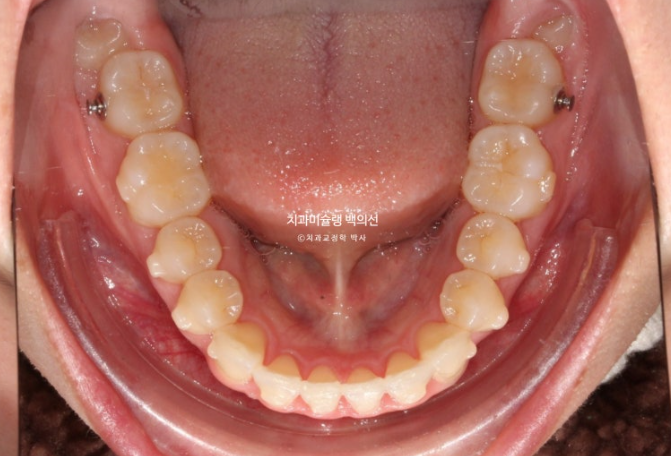
The alignment is also perfect.
The treatment could have been finished at this point, but the patient wanted a further improvement in the angle of the front teeth, so we proceeded with a second set of additional aligners.
While remaking them, we also moved the roots of the front teeth further into the alveolar bone to seek a more stable result from the standpoint of gum health.
We also decided to reduce the size of the black triangles between the lower front teeth through interproximal reduction.
From February 2025 to September 2025, treatment was completed after wearing all 23 additional aligners.
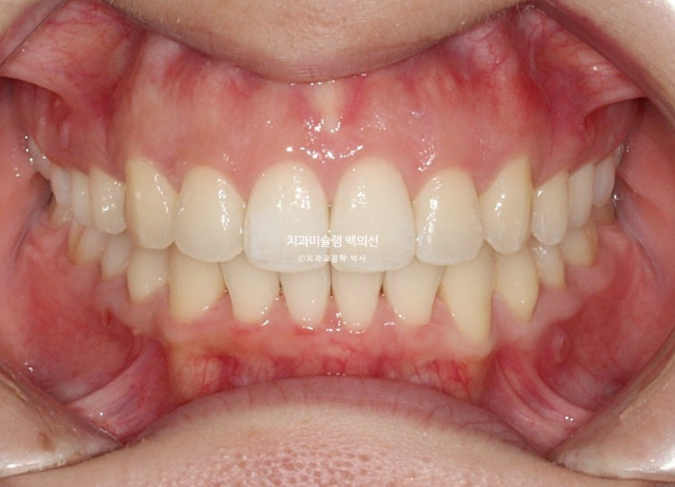
25.09
The black triangle size has been greatly reduced, and the midline is well aligned.
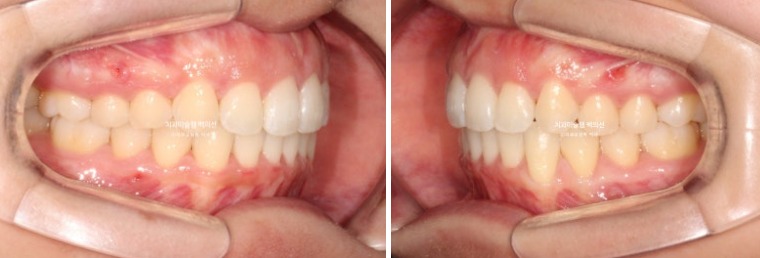
The molar occlusion is a perfect Class I relationship.
Now let’s look at the before-and-after comparison.
The total treatment period was 2 years.
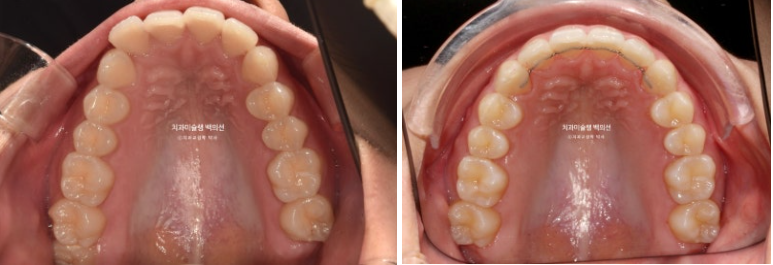
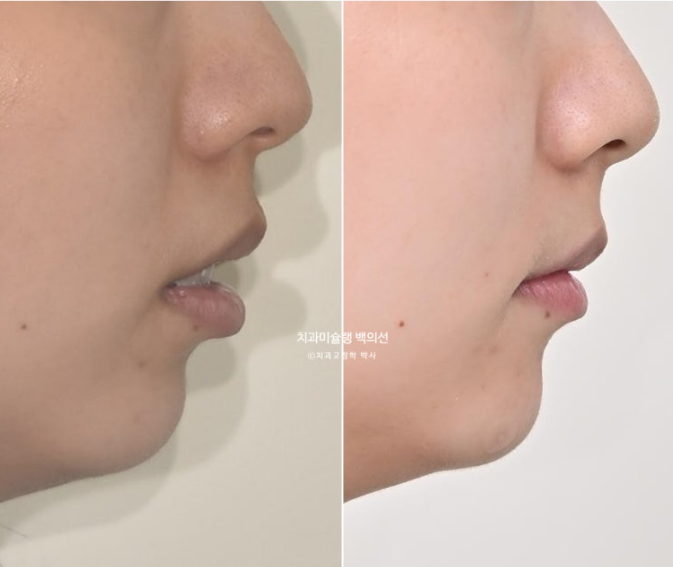
23.09~25.09
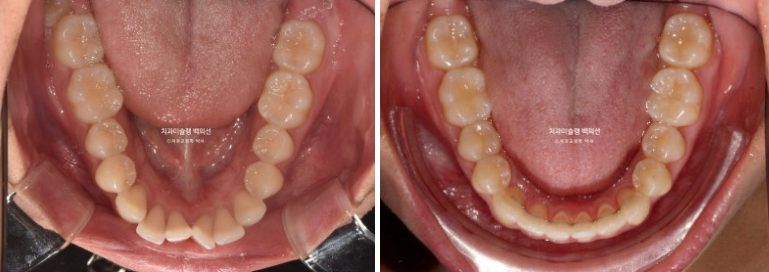
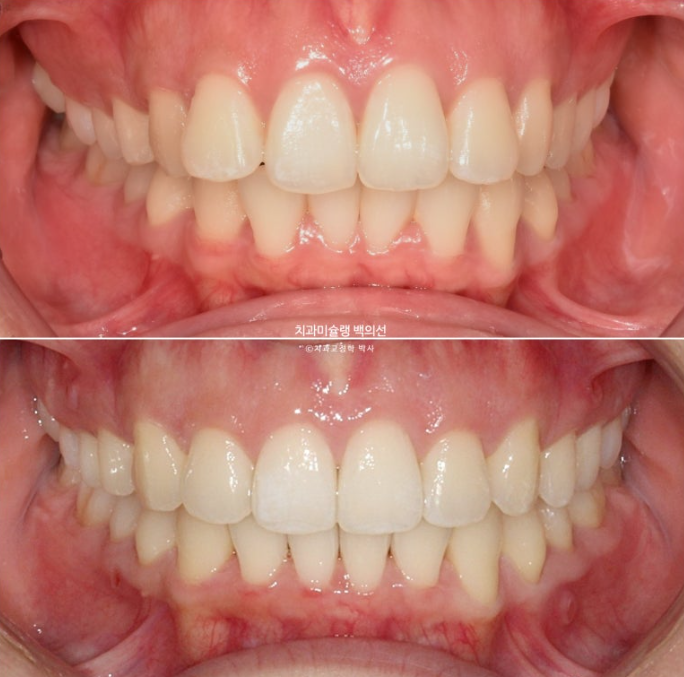
23.09~25.09
Let’s compare the facial profile.
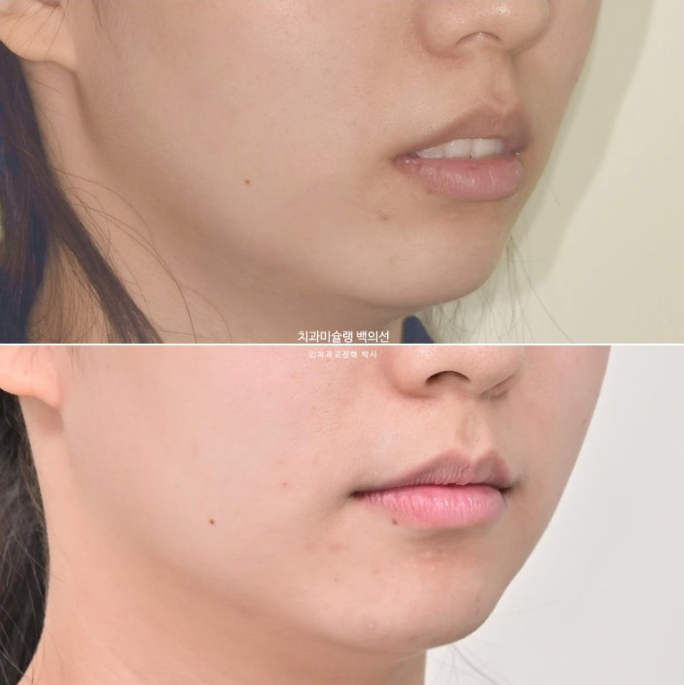
23.09~25.09
With the front teeth moved backward, the lips can now close comfortably.
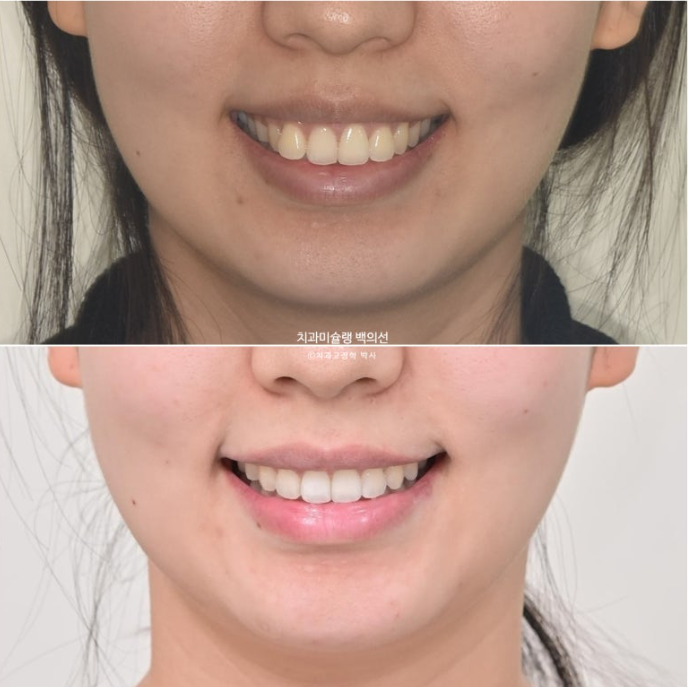
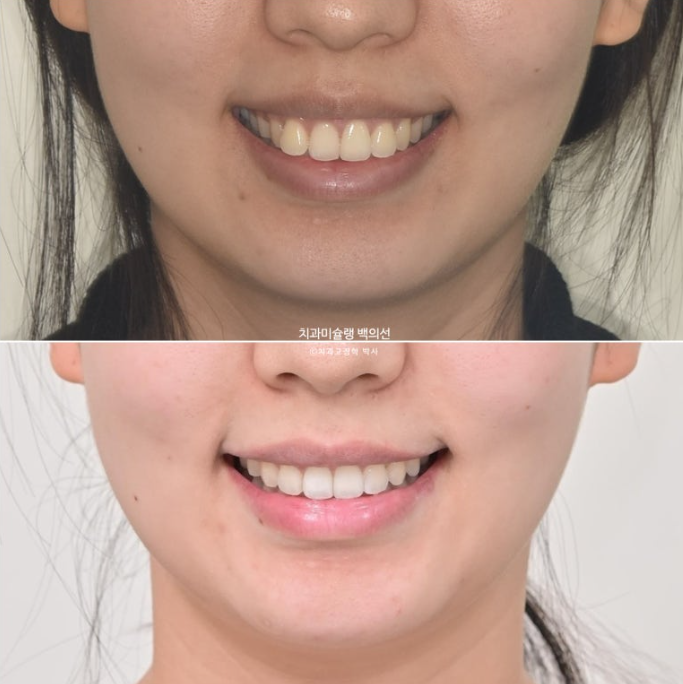
23.09~25.09
The smile line forms a perfect arc parallel to the lower lip.
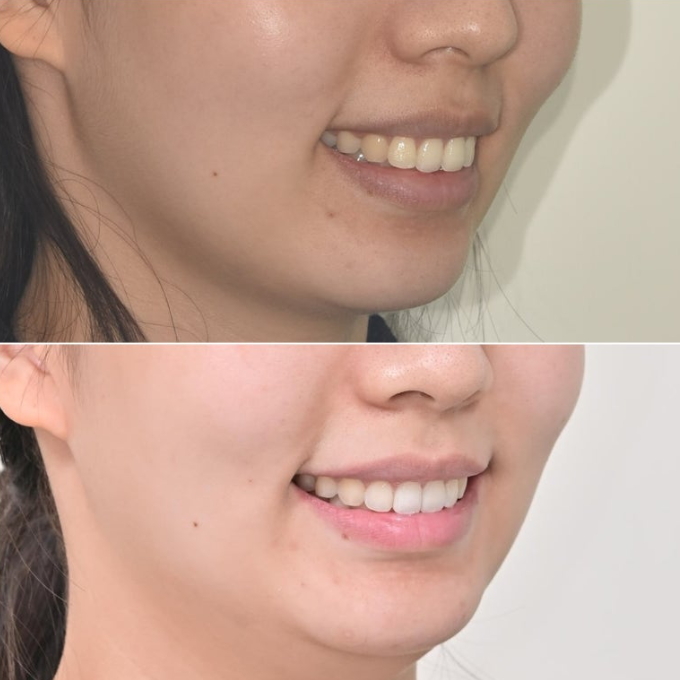
23.09~25.09
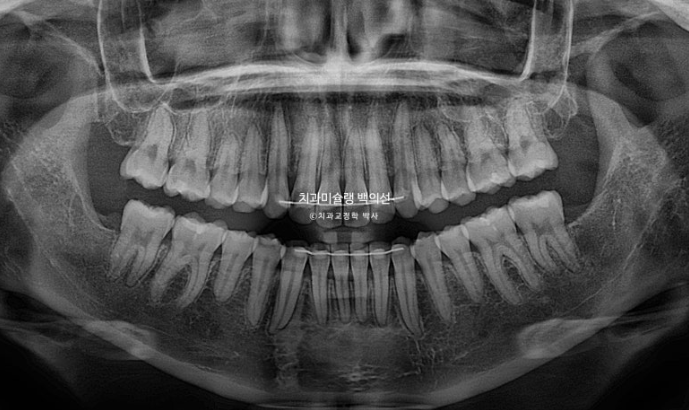
25.09
During the 2-year treatment period, there was no root resorption, and the root parallelism was good.
As the front teeth moved backward, it became easier to close the mouth, and the large molars moved about 2 mm well into the wisdom tooth space.
During treatment, slight intrusion occurred throughout the dentition overall, causing the lower jaw to autorotate and come forward.
Mandibular autorotation causes the lower jaw to close more, moving forward relative to the chin point and also upward.
This can make the lower face slightly shorter and produce a mild improvement in a receded chin.
Invisalign is designed so that the appliance contacts the occlusal surfaces, so some intrusion occurs due to ordinary chewing force.
In particular, people with strong bite force may experience quite a bit of molar intrusion.
According to research, regardless of treatment duration, Invisalign orthodontic treatment results in an average of about 0.9 mm of intrusion in the upper and lower molars.
For those worried that orthodontic treatment might make the face look longer afterward, Invisalign can be a good treatment method.