Hello,
This is Apgujeong Invisalign Dental Clinic, here to introduce extraction-based orthodontic treatment for people in their 50s.
When gum disease, that is, periodontitis, becomes severe, the surrounding bone can dissolve, and in some cases a tooth has to be removed.
In such cases, if the space left by the extracted tooth can be used to straighten the teeth with orthodontic treatment, there is no need for an implant, the smile becomes more attractive, and it becomes a very beneficial treatment for long-term oral health.
24.09~25.09
Today, I’d like to talk about a patient in their 50s who came to the orthodontic clinic wisely when they needed a tooth extracted because of periodontitis and left with a good result.
A patient in their 50s who first came in a year ago because their teeth were becoming more and more crooked
In the past, their mouth closed comfortably, but as the teeth became crooked, spaced, and descended, it became uncomfortable because the lips no longer closed comfortably.
24.09
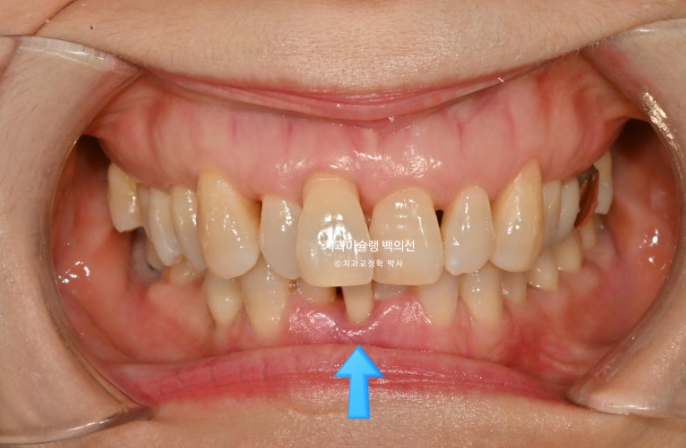
The tooth indicated by the blue arrow shows dark reddish gums.
On X-ray, periodontitis had already progressed considerably, so extraction was unavoidable.
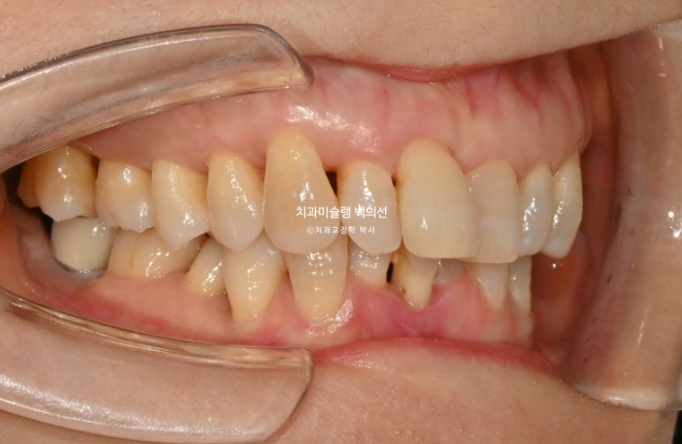
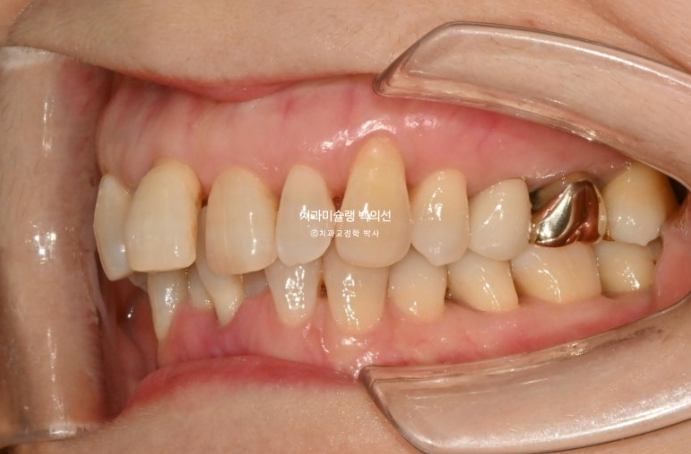
The upper front teeth were not being held firmly by the gums, so they gradually extruded and protruded, creating spaces between the teeth.
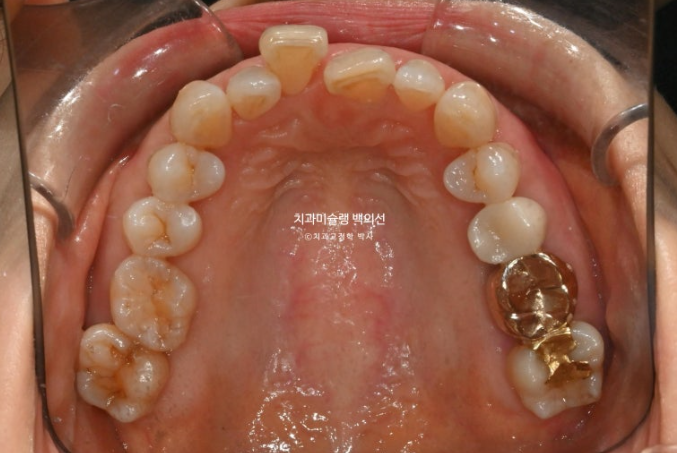
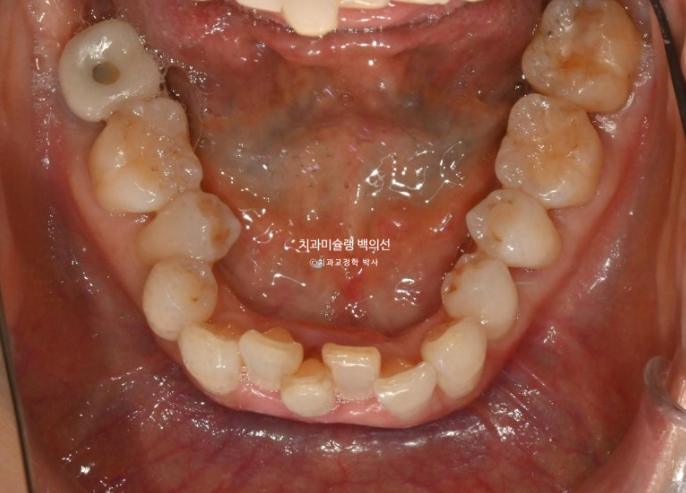
The premolars had also tipped inward, so this was a scissors bite where they occluded crosswise with the upper teeth.
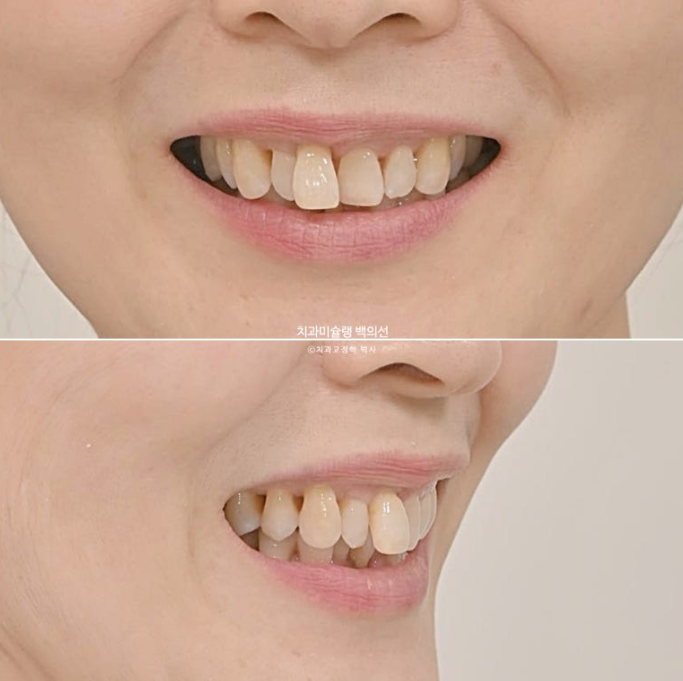
24.09
We decided to extract one lower front tooth, use that space to align the teeth, and bring the extruded upper front teeth back to their original positions.
When the periodontium is already significantly weakened, we do not make an overly grand treatment plan.
We focus on moving only the problematic areas and minimize unnecessary tooth movement for the other teeth to reduce the burden on the gums.
With Invisalign Lite, we began treatment with the goals of front teeth alignment, intrusion of the extruded teeth, correction of deep bite, and correction of scissors bite.
Normally, extraction-based orthodontic treatment is not possible with Invisalign Lite, but in the exceptional case of extracting just one mandibular incisor, good results can be achieved with Invisalign Lite.
Before treatment, we control periodontitis through full-mouth gum treatment, then begin orthodontic treatment.
After wearing all 14 aligners in the first set for 6 months.
When the gums are weak, the replacement interval is made longer than the usual 7 days.
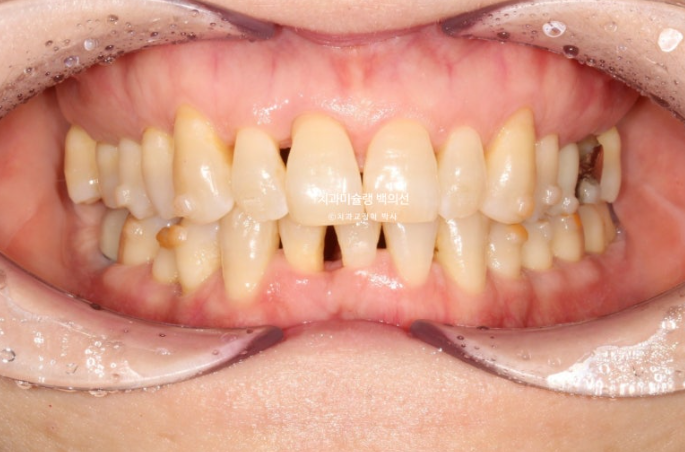
25.02
The extraction space has improved almost completely, but a large black triangle remains at the site where the tooth was removed.
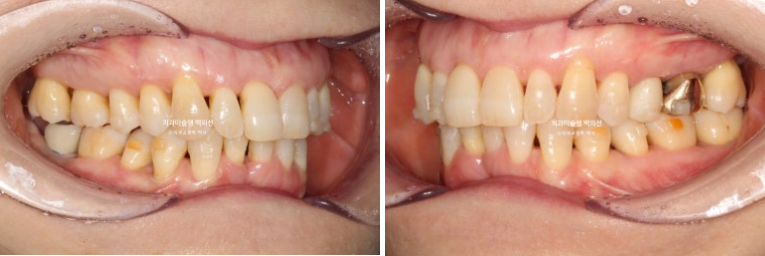
The bite is good.
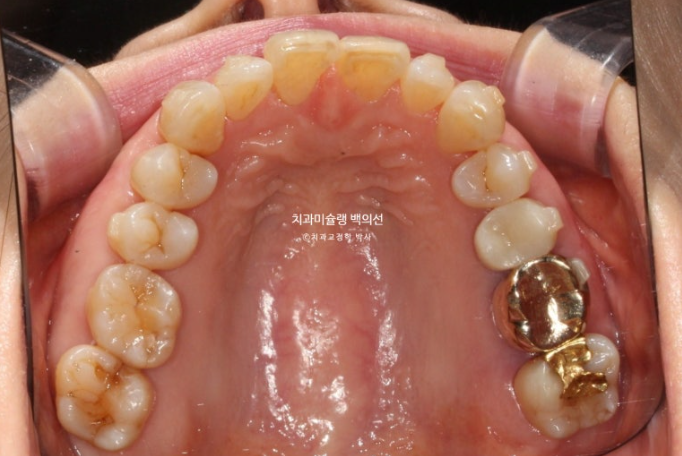
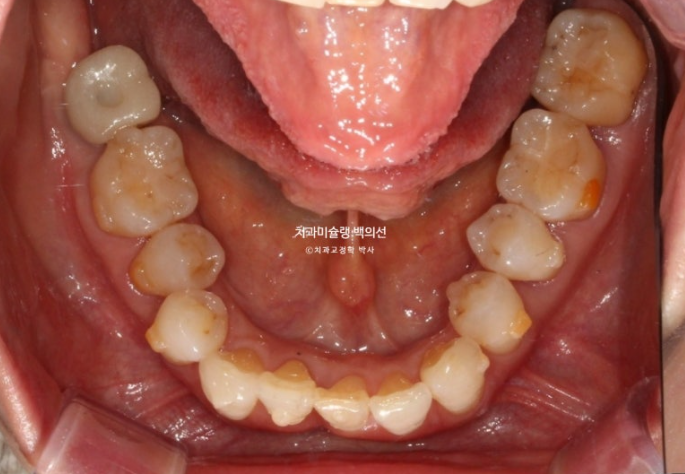
To further improve the remaining areas of alignment, we proceeded with a remake.
After wearing all 14 aligners again from March to September 2025 for 6 months, treatment was completed.
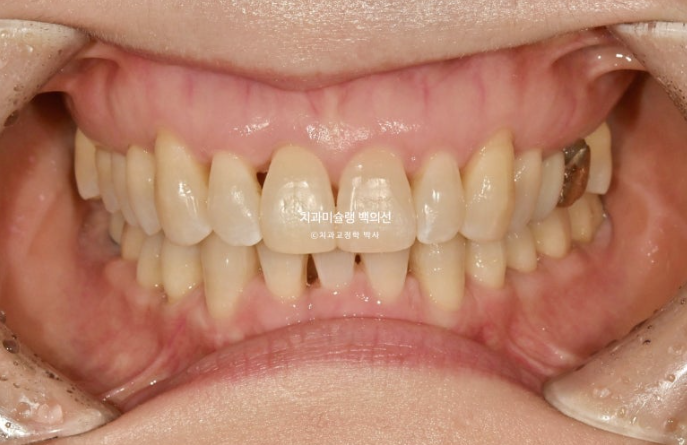
25.09
The size of the black triangle was slightly reduced through interproximal reduction.
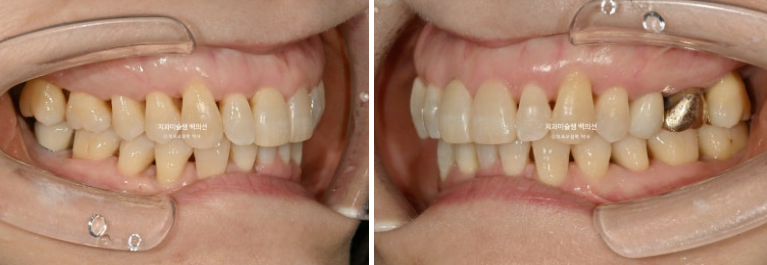
The bite is perfect.
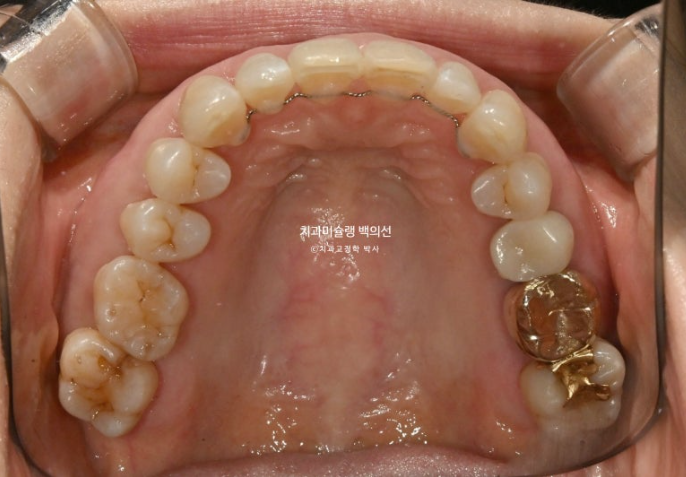
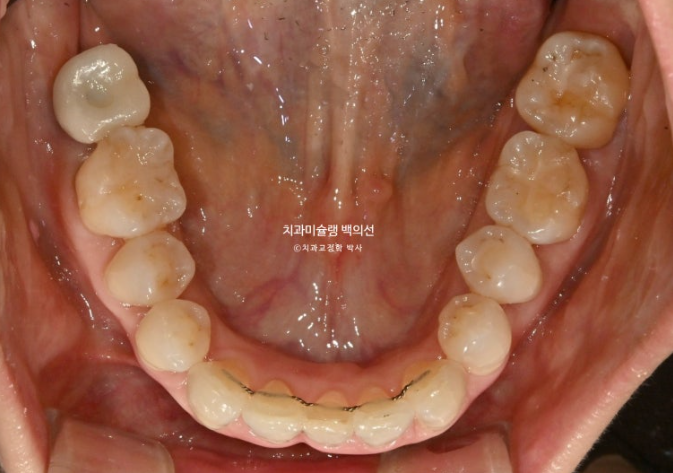
The alignment is good.
Now let’s look at the before-and-after comparison.
The total treatment period was 1 year, longer than the usual Invisalign Lite treatment period, and there was one remake.
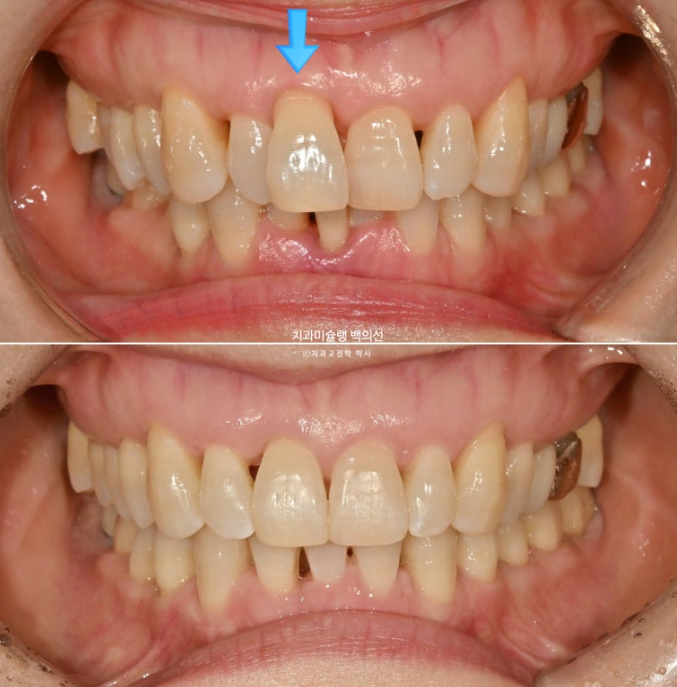
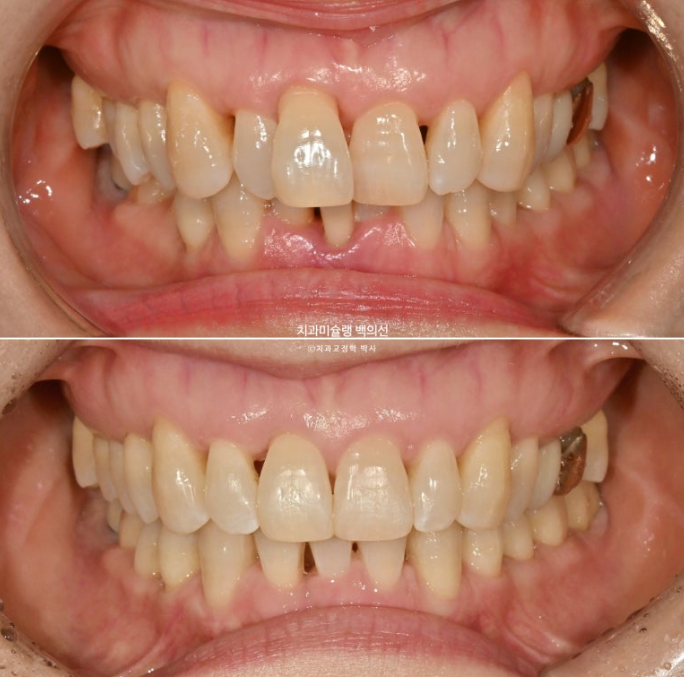
24.09~25.09
The deep overbite of the front teeth was improved.
In particular, the front tooth indicated by the blue arrow, which had extruded so much that the root was visible, was intruded back into a healthy position, and the exposed root area was stably covered by the gum again.
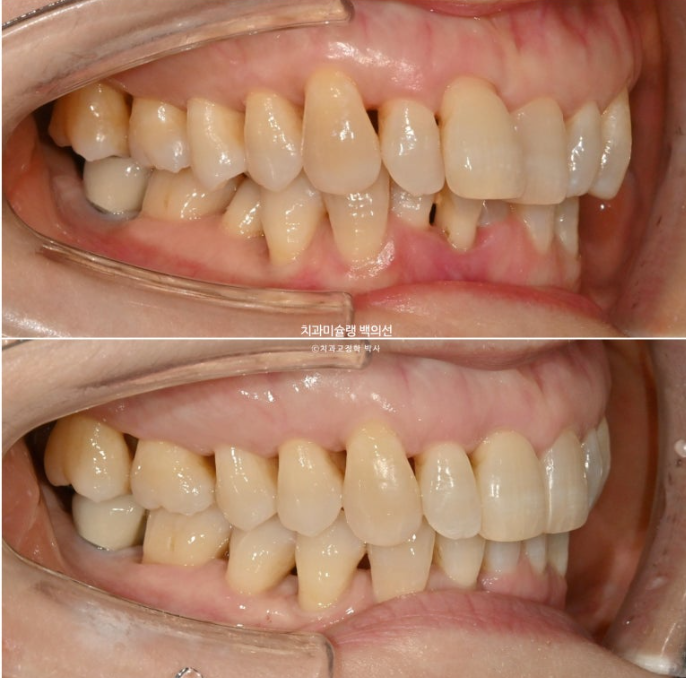
24.09~25.09

24.09~25.09
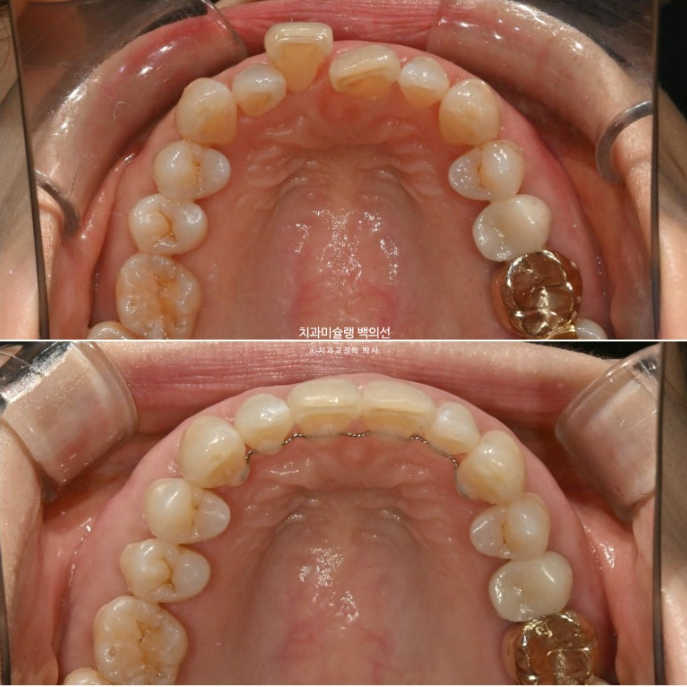
24.09~25.09
The alignment is very neat.
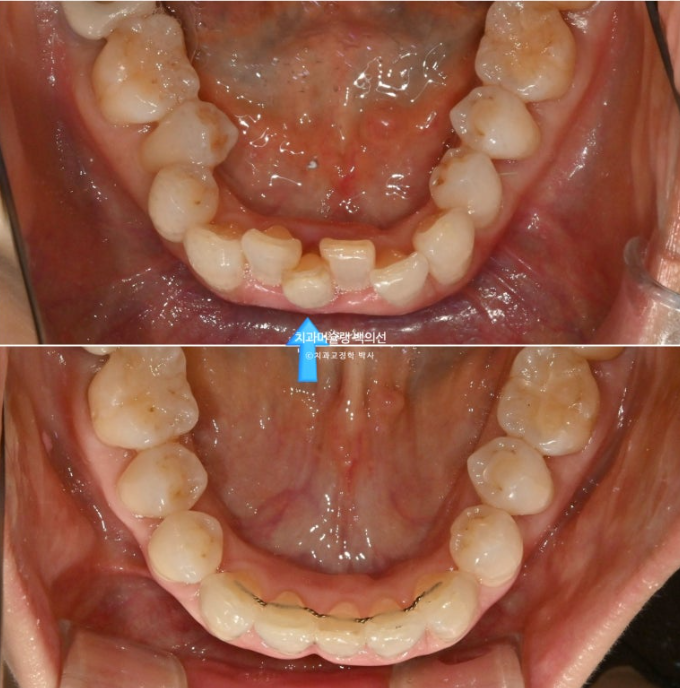
24.09~25.09
The tooth marked by the blue arrow was extracted because of severe periodontitis.
Now let’s compare the facial appearance.
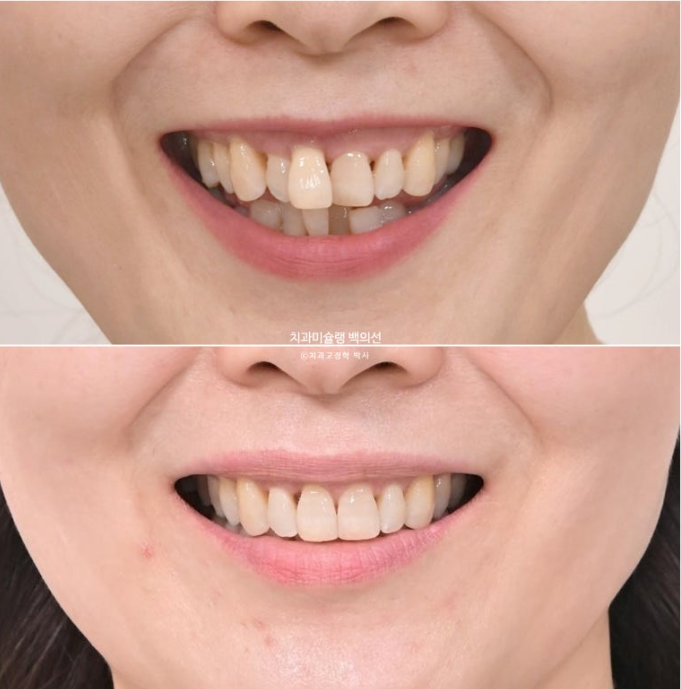
24.09~25.09
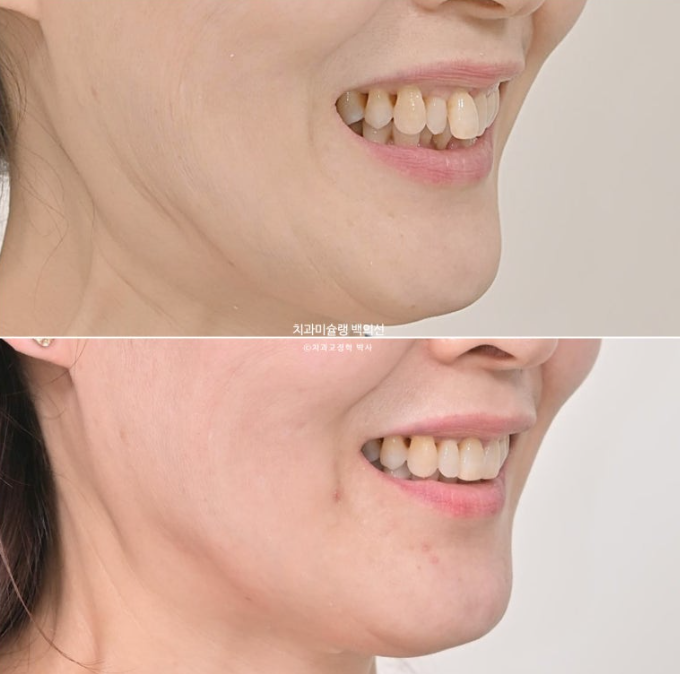
24.09~25.09
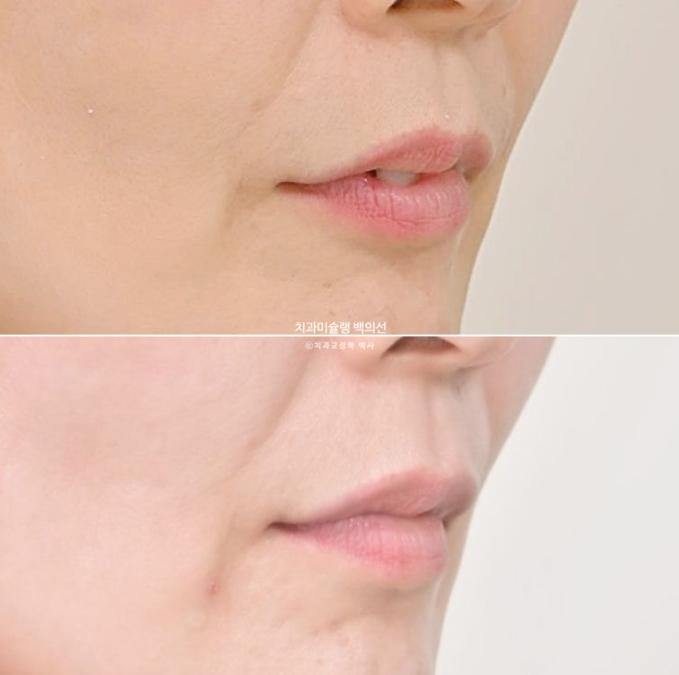
24.09~25.09
Because the front teeth protruded due to weakened gums, the lips that could not close comfortably were finally able to close comfortably, which is also a major functional improvement.
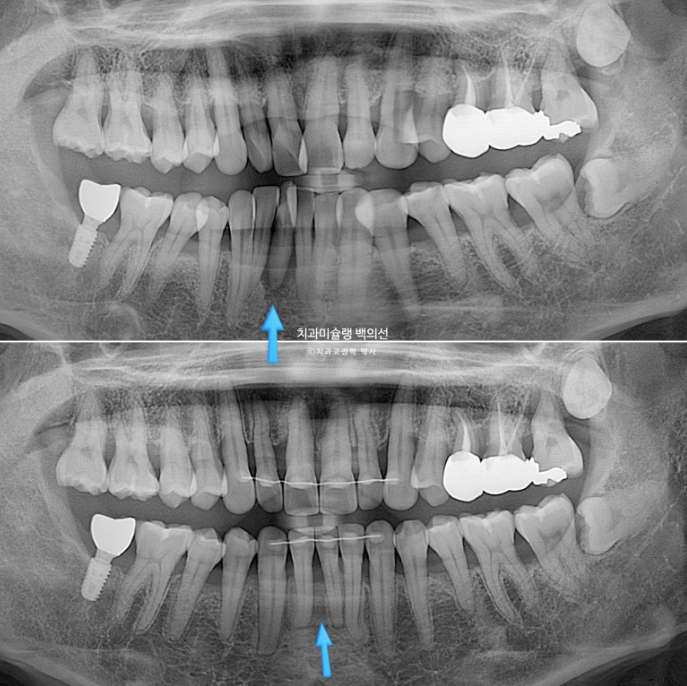
24.09~25.09
During the 1-year orthodontic treatment period, the alveolar bone was well maintained, and root parallelism is satisfactory.
Personally, I tend to be particular about root parallelism in order to be thorough even in areas that are not visible, but it is a little disappointing that the roots of the lower front teeth are not perfectly parallel.
The blue arrow indicates the site of the extracted tooth, and because bone loss was severe from advanced periodontitis, the adjacent tooth roots could not move sufficiently into that area.
Teeth move well toward areas with strong bone. Conversely, teeth cannot move into areas without bone.
I hope this post helps patients suffering from gum disease.
If a careful treatment plan is made with the condition of the gums in mind, good results comparable to those of young adults with healthy gums can be achieved.