Hello.
This is Apgujeong Orthodontic Clinic.
Today, we will talk about non-extraction, non-surgical underbite correction.
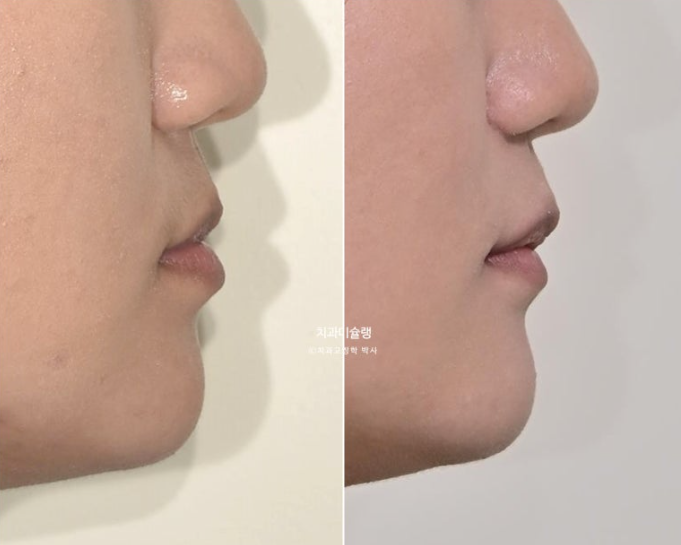
23.09~25.07
This patient decided to undergo re-correction in September 2023.
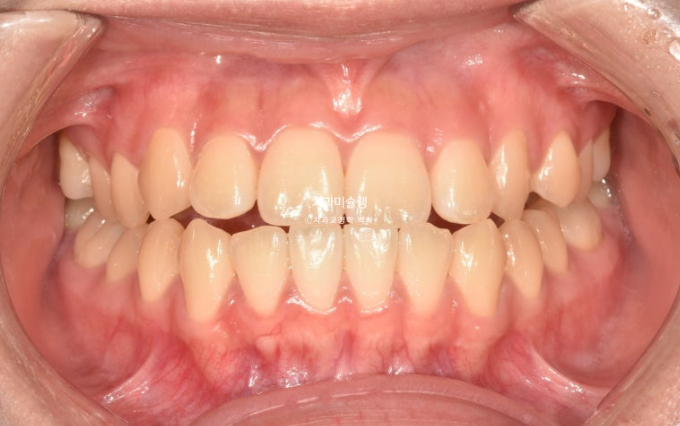
23.09
They had orthodontic treatment when they were young, and as the lower jaw grew, the front teeth ended up biting in reverse.
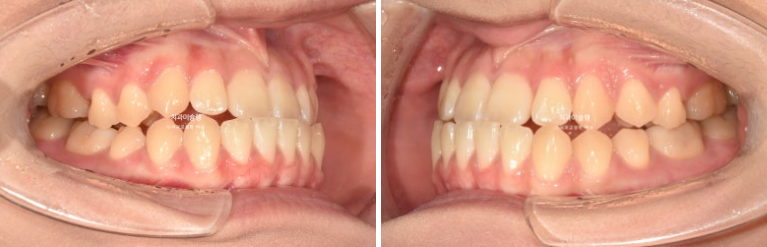
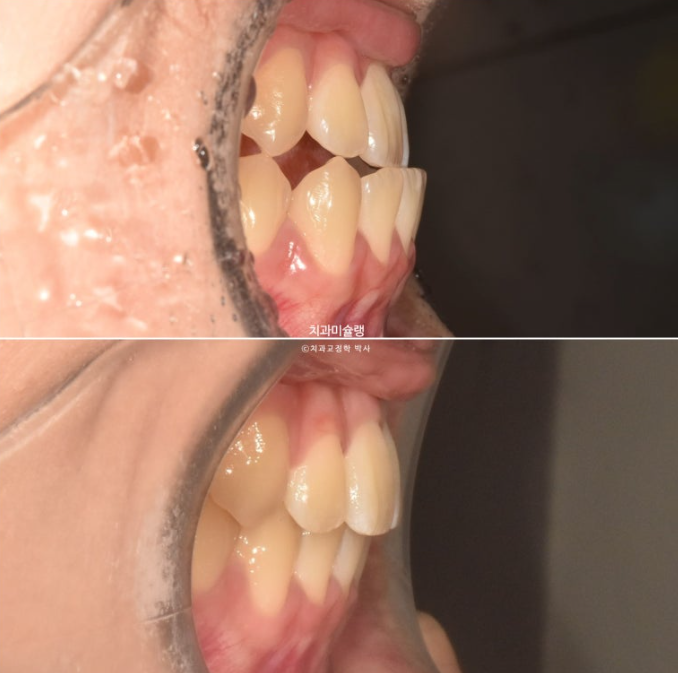
Open bite is seen in the lateral tooth group, that is, the canines and premolars.
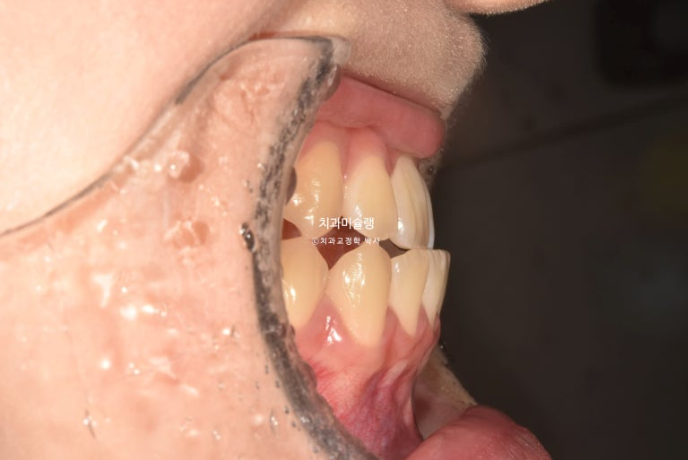
The lower front teeth bite in front of the upper front teeth, showing a reverse bite, or crossbite.
Because there is an impacted lower wisdom tooth, the wisdom tooth needs to be extracted and orthodontic treatment is needed to move the entire lower dentition backward into the wisdom tooth space.
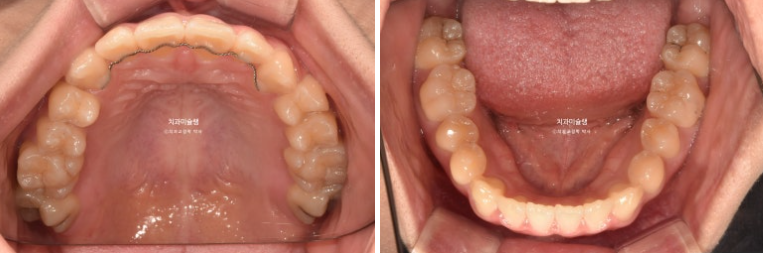
After removing the existing bonded retainer, the plan was to proceed with Clippy-C orthodontic treatment.
In non-surgical, non-extraction underbite correction, the lower dentition takes longer than the upper dentition, so
we begin treatment by attaching appliances to the lower dentition first, and then attach appliances to the upper dentition at least 6 months later.
The reason for doing it this way is to minimize the time the patient has appliances on, reducing discomfort.
If appliances are not attached to the upper teeth, other people will not even know the person is undergoing orthodontic treatment.
24.07
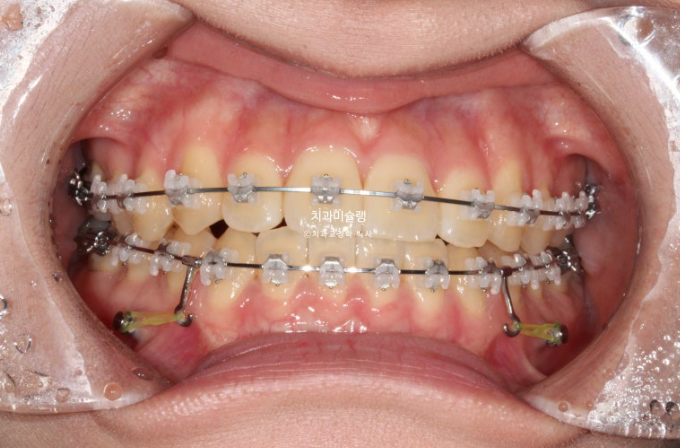
This is what the patient looked like one year into treatment.
The lower teeth had Clippy-C appliances attached in September 2023, and the upper teeth had appliances attached for the first time in April 2024.
That means upper-arch orthodontic treatment started belatedly, 8 months after treatment began.
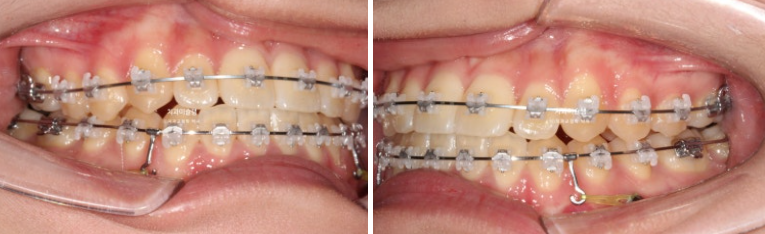
Here, orthodontic screws were placed, and the entire dentition was being moved backward into the wisdom tooth space.
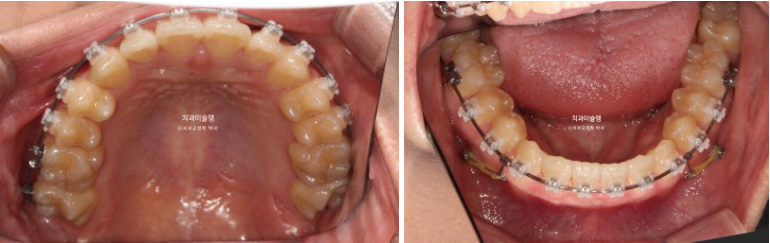
By continuing treatment in this way, the treatment was finally completed in July 2025.
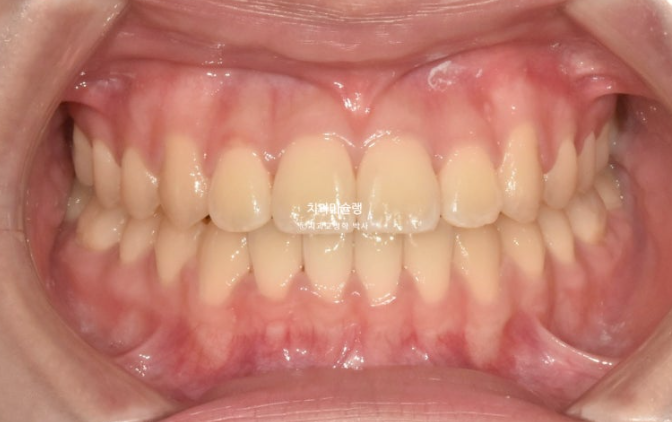
25.07
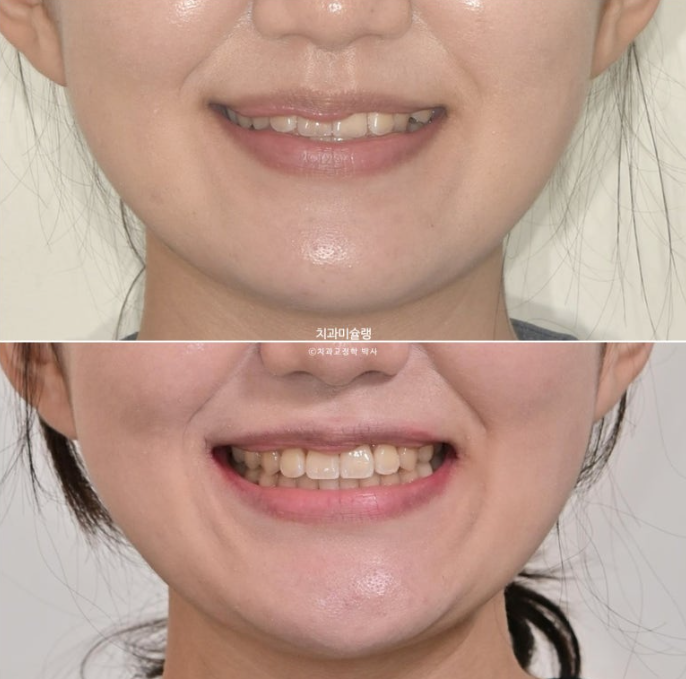
The midline is perfectly aligned, and
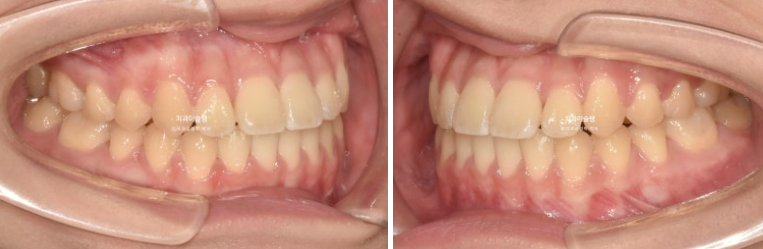
both molars show a Class I occlusal relationship.
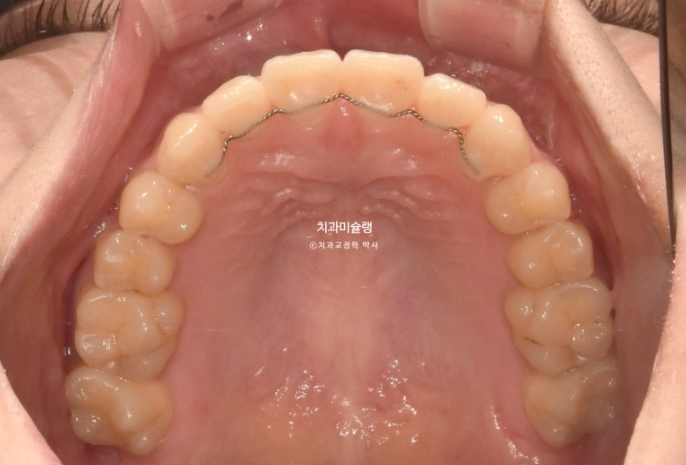
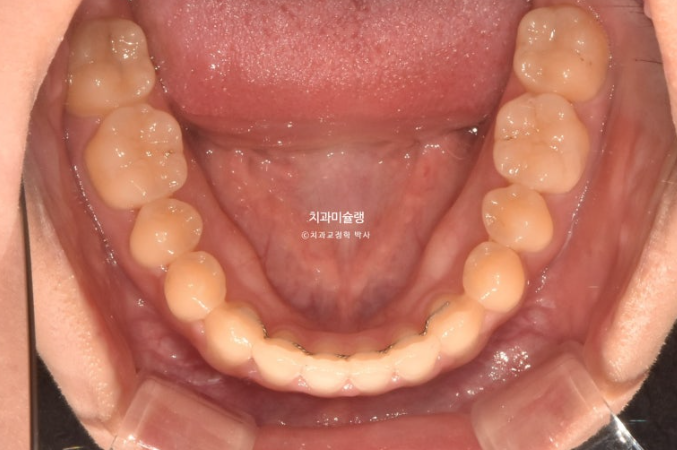
Now let’s look at the before-and-after comparison.
The total treatment period was 1 year and 10 months.
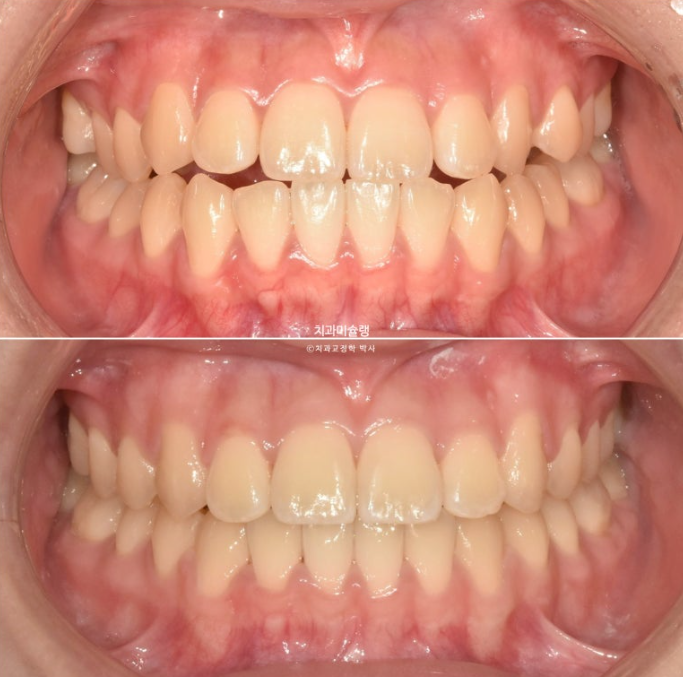
23.09~25.07
The open bite has been resolved.
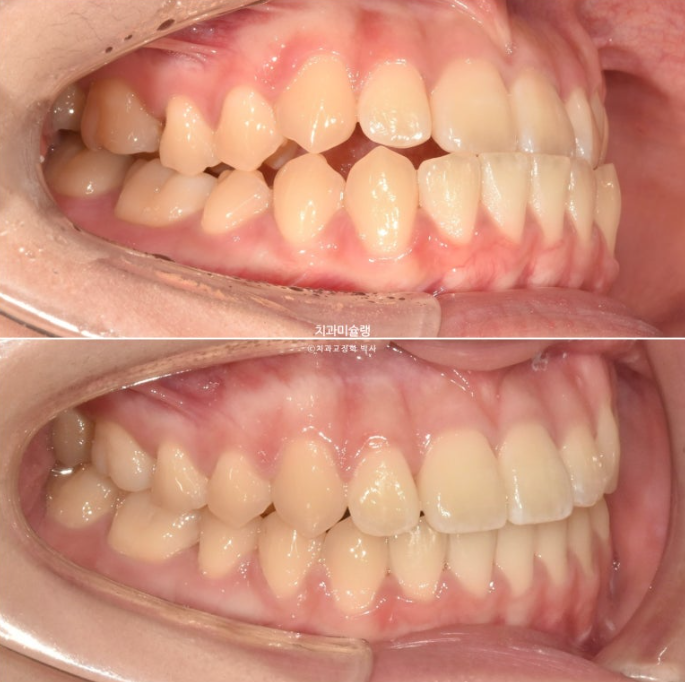
23.09~25.07
The occlusion shows a Class I relationship.
23.09~25.07
As the lower teeth moved backward, the reverse bite, in which the front teeth bite the wrong way, was resolved.
23.09~25.07
23.09~25.07
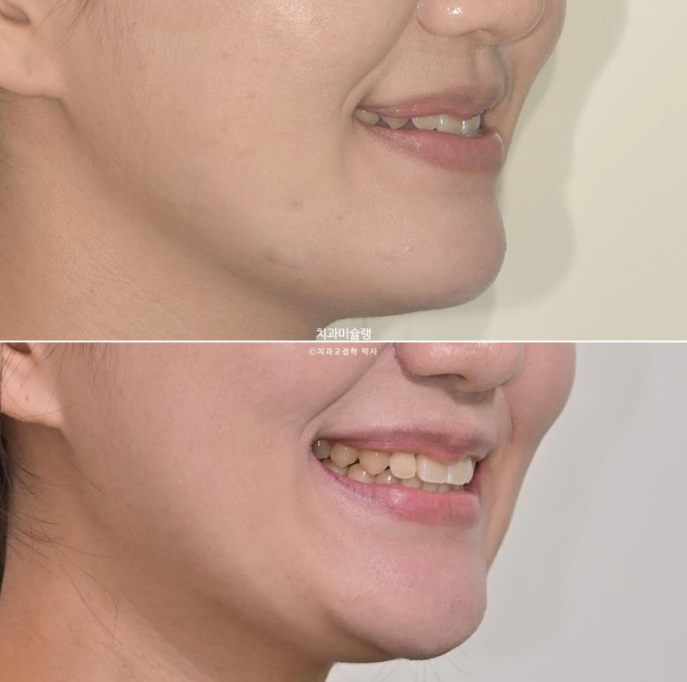
The smile looks better when fully opened.
23.09~25.07
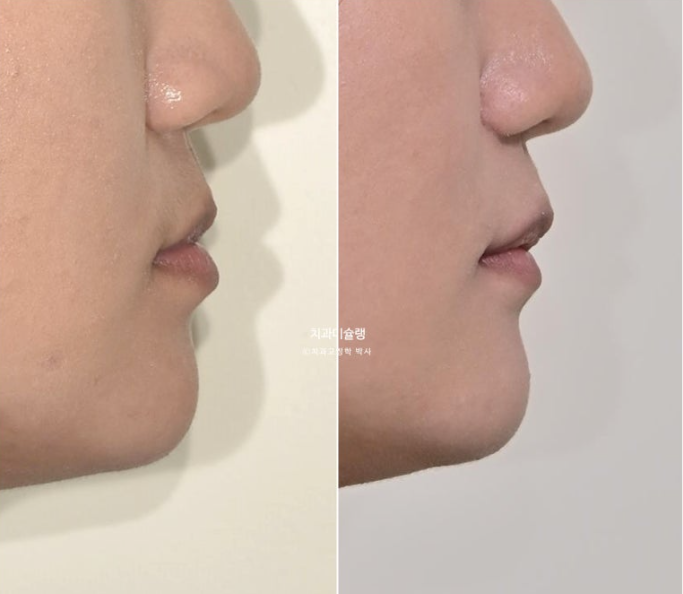
23.09~25.07
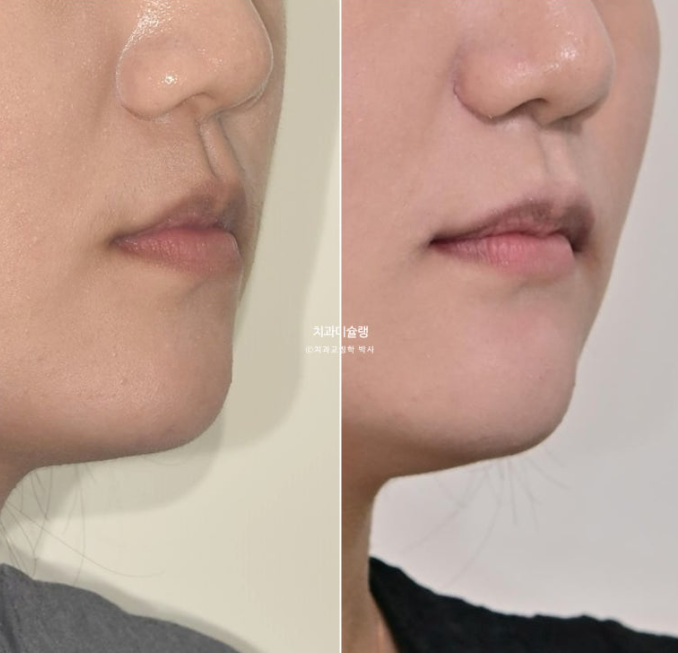
The upper lip was maintained, and the lower lip moved backward, improving the lip balance.
Orthodontic treatment cannot move the lower jaw backward, but if the lower lip is positioned appropriately farther back, the underbite can appear less pronounced.
However, if extraction is also performed and the front teeth are moved too far back, the chin may appear more prominent than before, which can make the underbite stand out more, so caution is needed.
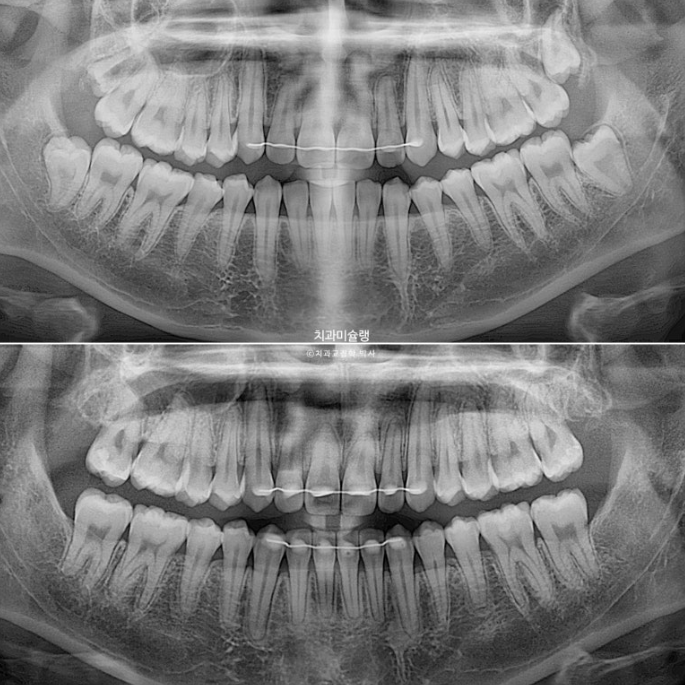
23.09~25.7
At the initial examination, there was quite a bit of root resorption in the upper front teeth from the previous orthodontic treatment, but
it did not worsen during this 1 year and 10 months of re-correction treatment.
The root parallelism is good.
Because the lower front teeth and lower lip were moved backward, the improved lip balance creates the effect of making the underbite look less severe.
I hope this post was helpful for those who are considering orthodontic treatment for an underbite.