Hello,
This is Apgujeong Orthodontic Clinic.
Non-extraction crowding correction refers to orthodontic treatment that removes wisdom teeth and uses the space from the wisdom teeth, with the goal of preventing the mouth from protruding any further than it currently does.
If the crowding is severe, it is often difficult to prevent protrusion with non-extraction treatment, so extraction of the premolars is often possible.
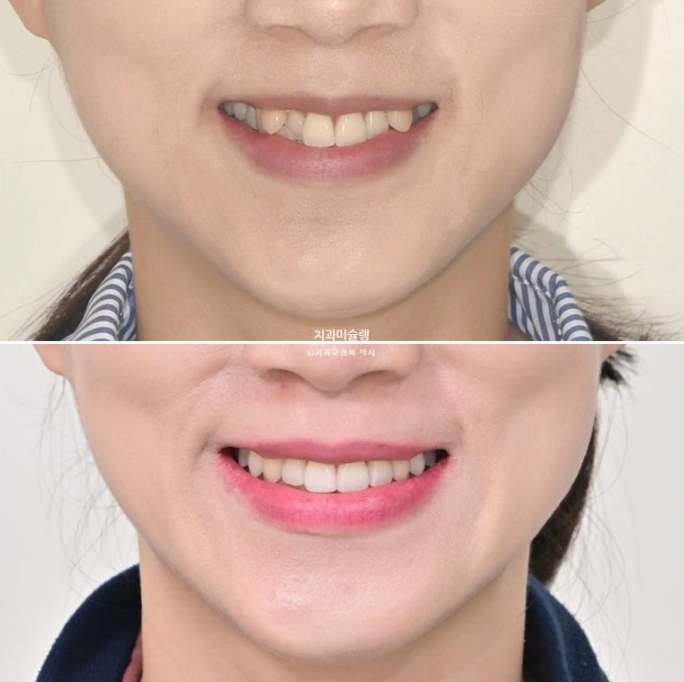
23.08-25.10
However, if considering the patient’s facial profile, extraction could make the mouth look excessively retruded, then it is worth thinking again about whether removing premolars is truly the right choice.
Today, I will show a case of severe crowding treated without extraction and without changing the facial profile, by extracting the lower wisdom tooth and the upper second molar, which was more favorable for treatment, instead of the wisdom tooth.
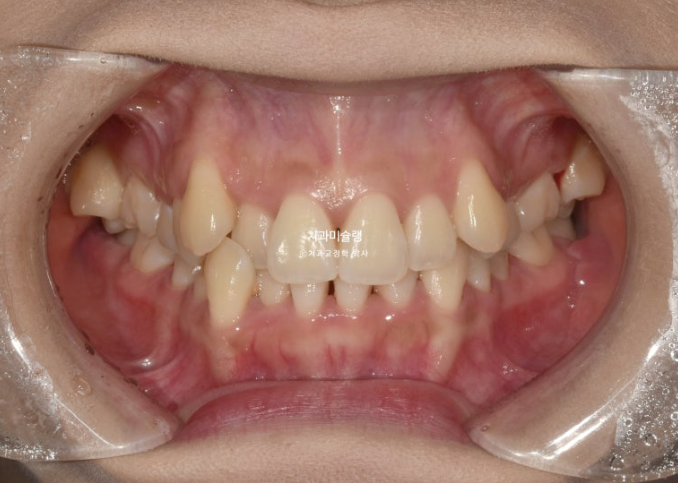
23.08
This patient visited for crowding correction two years ago.
There were issues with the midline, black triangles, deep bite, crossbite, and scissor bite.
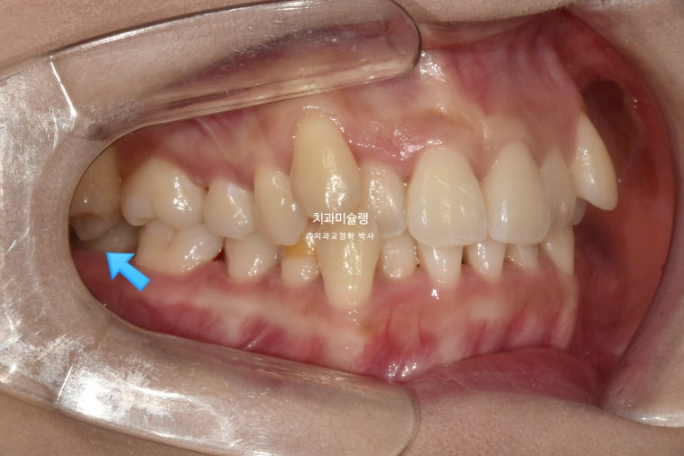
23.08
The blue arrow indicates the scissor bite.
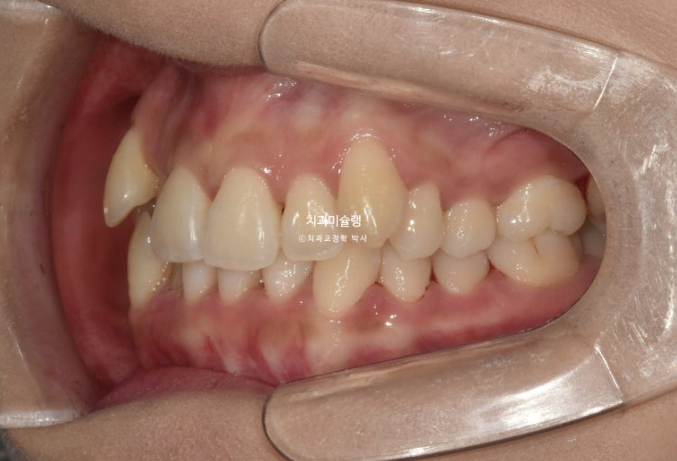
23.08
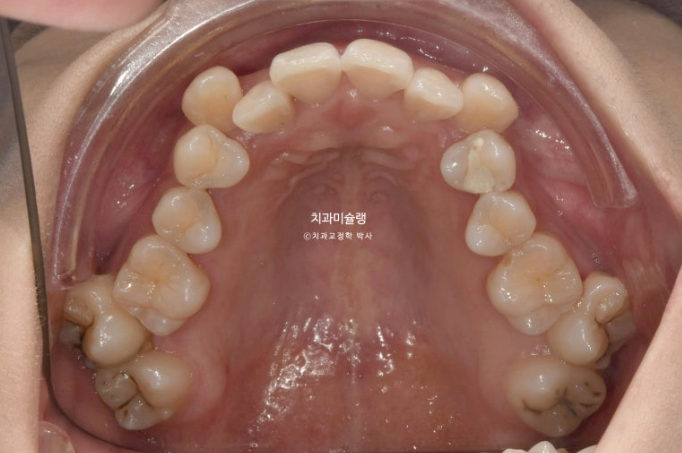
23.08
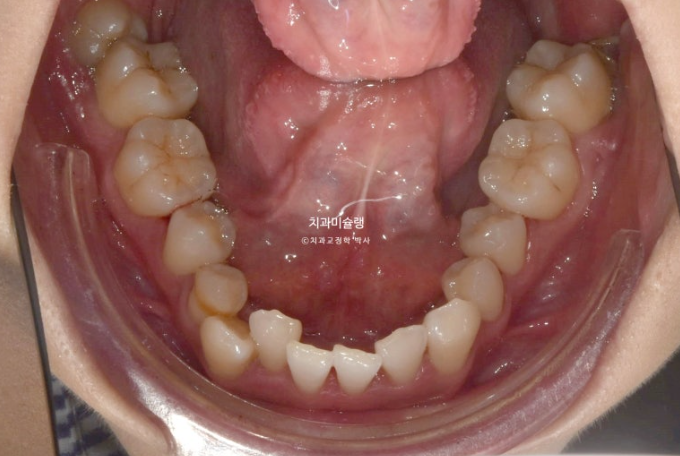
23.08
If we list the types of malocclusion that were found, they are as follows:
Midline discrepancy
Deep bite
Molar scissor bite
Severe crowding
Anterior crossbite
Not a malocclusion, but black triangles
That would be about it.
At this level, it would have been reasonable to diagnose extraction orthodontic treatment with removal of four premolars, but
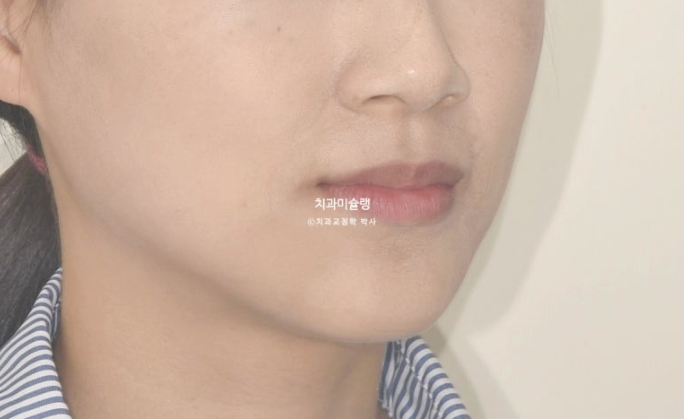
there was no lip protrusion and the lips were thin, so extraction orthodontic treatment was something to think carefully about.
In the end, after discussion with the patient, we decided to proceed with non-extraction treatment without changing the facial profile.
Typically, non-extraction crowding treatment aims to remove wisdom teeth and use the wisdom tooth space to create room for aligning the crowded teeth.
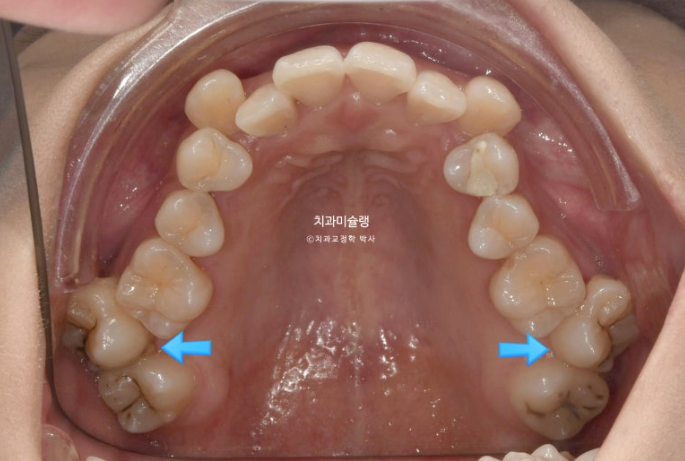
However, in this case, the lower wisdom tooth at the very back was not removed; instead, the blue arrow points to extraction of the second molar. The method was to finish treatment by substituting the extracted second molar space with the wisdom tooth.
The reason for extracting the second molar instead of the wisdom tooth is to remove the tooth causing the scissor bite and to gain the advantage of making posterior movement of the molars easier. In this patient, this treatment was possible because the wisdom tooth at the very back was the same shape and size as the second molar.
In other words, the wisdom tooth was in a situation where it could sufficiently replace the second molar functionally.
I will post more about second molar extraction orthodontic cases later. If the second molar is badly decayed, we extract the second molar instead of the wisdom tooth and move the fresh, unerupted wisdom tooth into the second molar position.
The patient chose Invisalign treatment, and we started treatment by removing one impacted wisdom tooth from the lower jaw and, in the upper jaw, removing the second molars on both sides instead of the wisdom teeth.
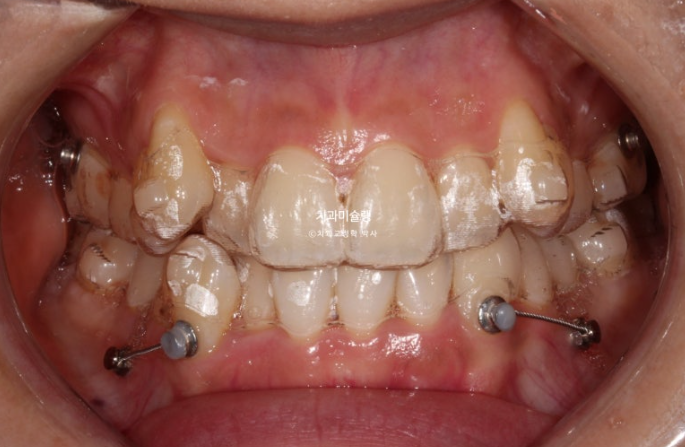
23.08
An orthodontic screw was also placed for posterior movement of the molars.
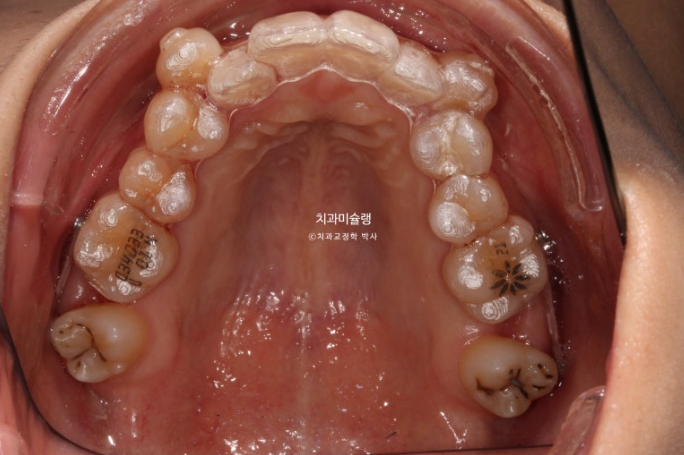
23.08
From the beginning, the wisdom tooth did not fit well with the appliance, so after trimming it, elastics were used to encourage rotation by hooking onto the tooth.
The initial set had 70 aligners, but remaking started at stage 50.
This is the appearance after wearing all 50 aligners by September 2024.
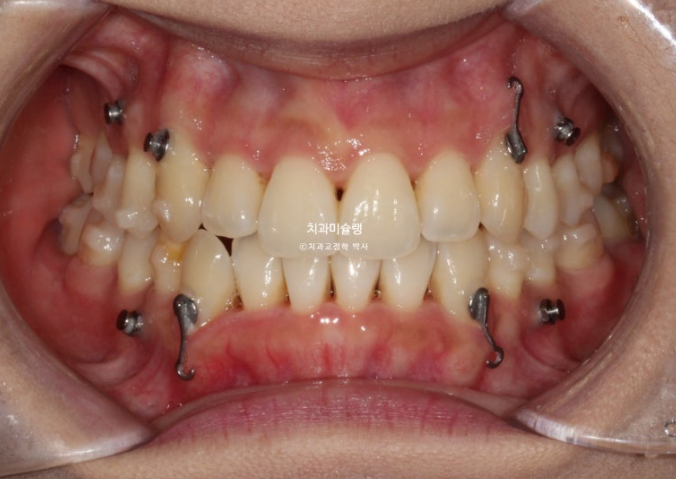
24.09
With Invisalign non-extraction treatment, the crowding was mostly resolved, but the midline discrepancy remained,
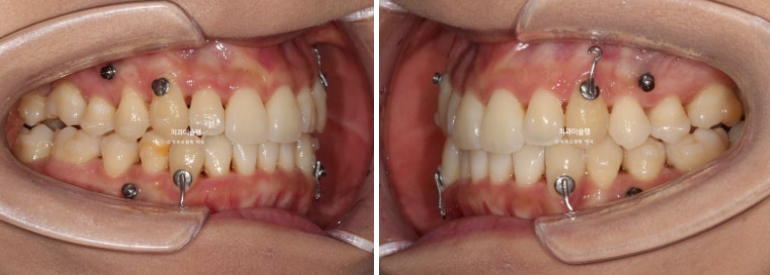
24.09
and the molar occlusion was still not well settled.
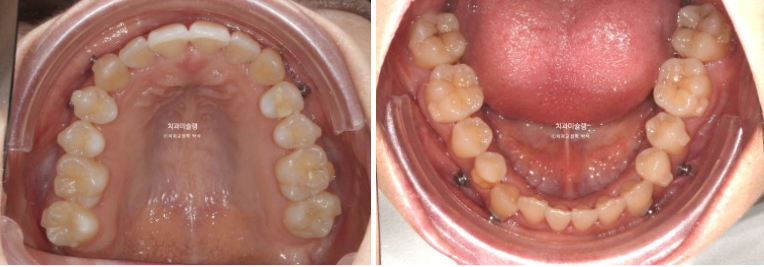
24.09
To improve the remaining issues, we began a non-extraction remake of Invisalign, and this is the appearance after wearing all 18 additional aligners from November 2024 to April 2025.
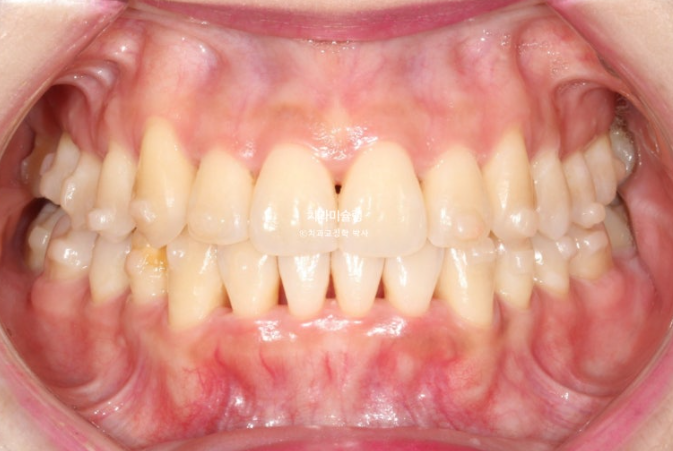
25.04
A slight midline discrepancy still remains.
Black triangles are noticeable between the previously crooked teeth.
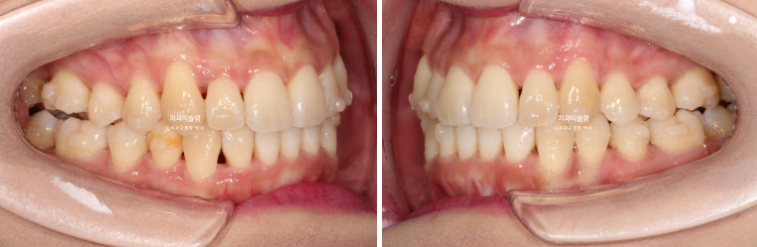
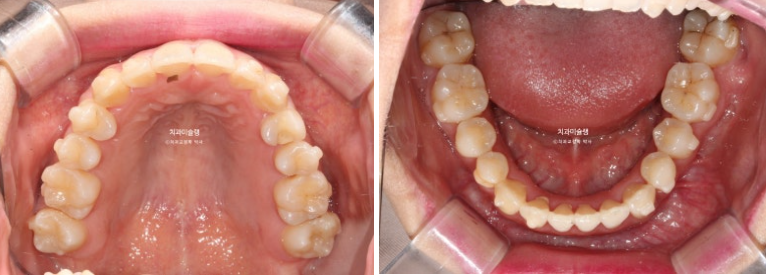
We prescribed interproximal reduction and began a second additional set of aligners with the goals of further improving the black triangles, improving molar occlusion, and improving the midline.
After wearing all 17 additional aligners, treatment ended in October 2025.
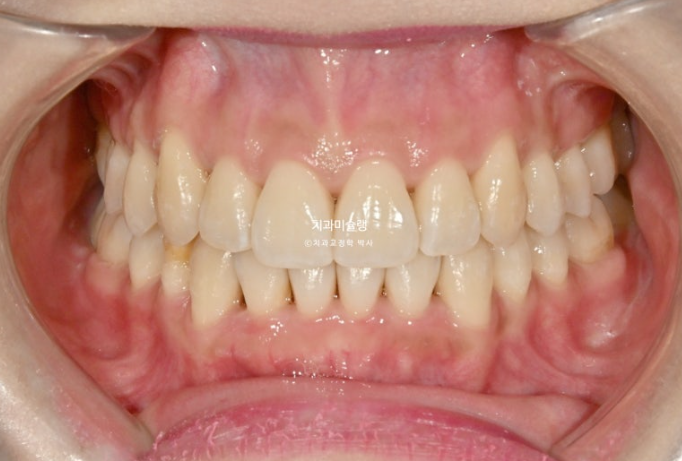
25.10
The total treatment period was 2 years and 2 months, but excluding the waiting time while remade aligners were being produced in the middle, the actual treatment period was 2 years.
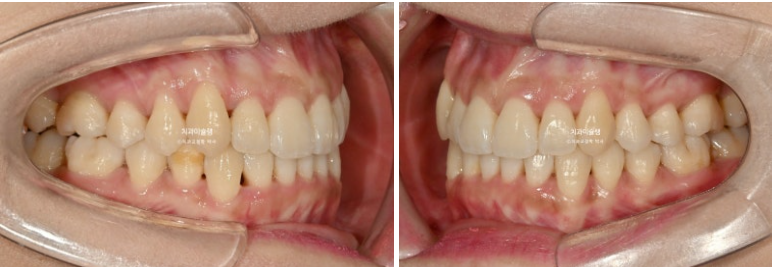
25.10
Because we remade the aligners twice to improve the molar occlusion, the molars now show a tight Class I occlusal relationship.
Now, let’s look at the before-and-after comparison.
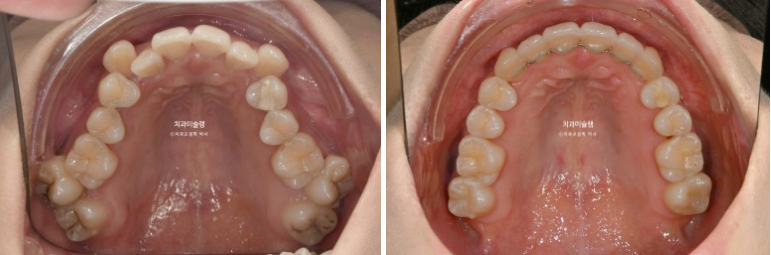
23.08~25.10
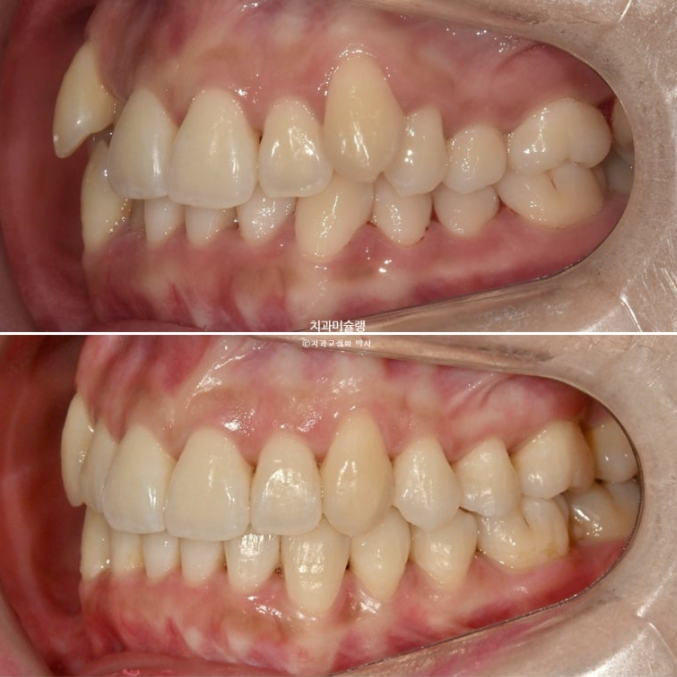
The crowding of the canines was aligned using the extraction space from the upper second molars.
The wisdom teeth are filling the extracted second molar spaces well.
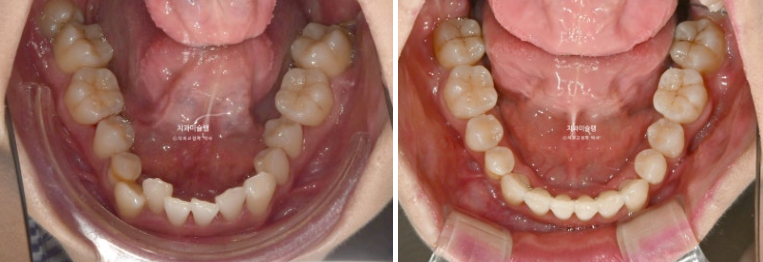
23.08~25.10
The crowding was aligned using the lower wisdom tooth space.
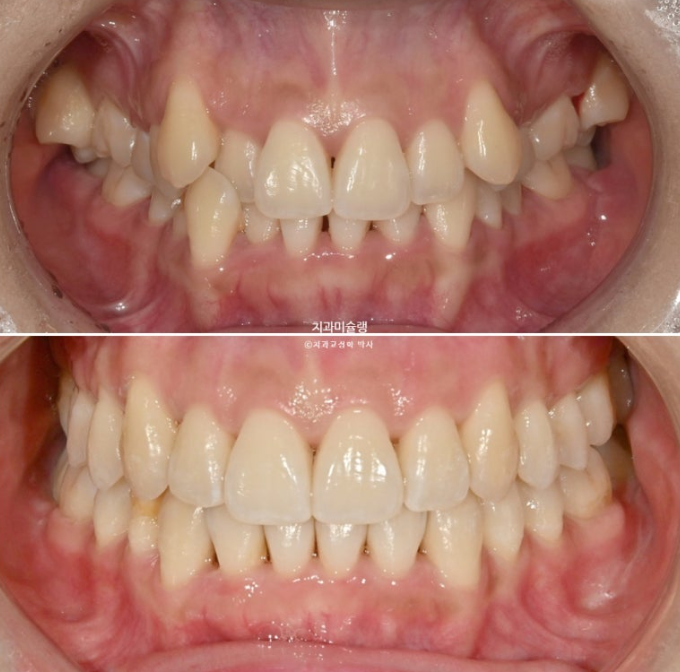
23.08~25.10
You can see improvement in the midline, deep bite, crowding, and black triangles.
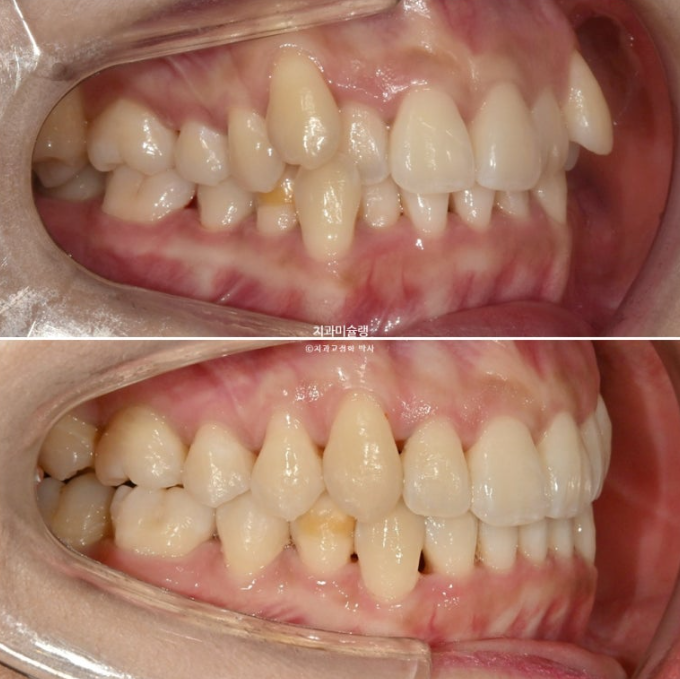
23.08~25.10
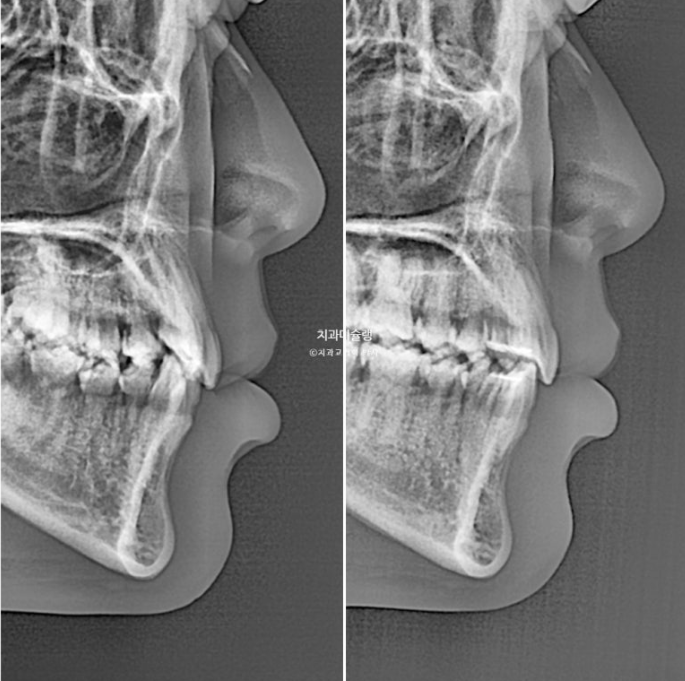
The front teeth were maintained well without moving inward or outward.
23.08~25.10
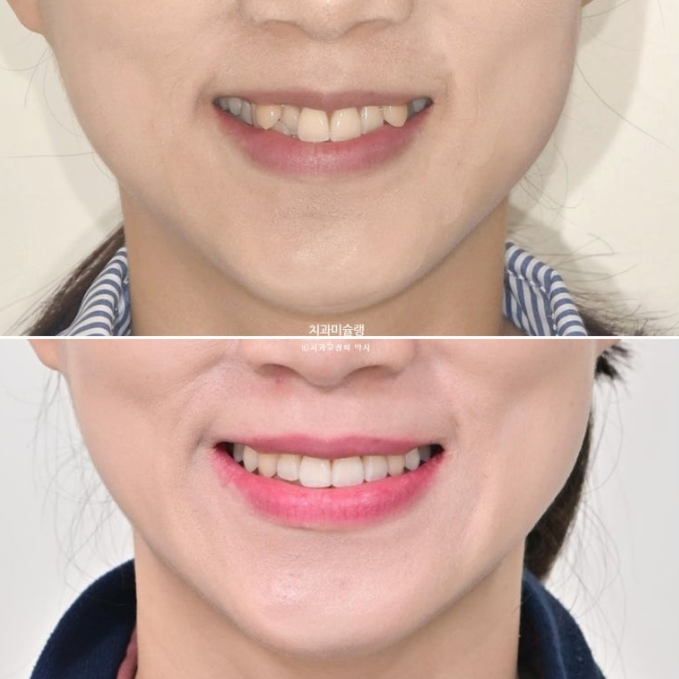
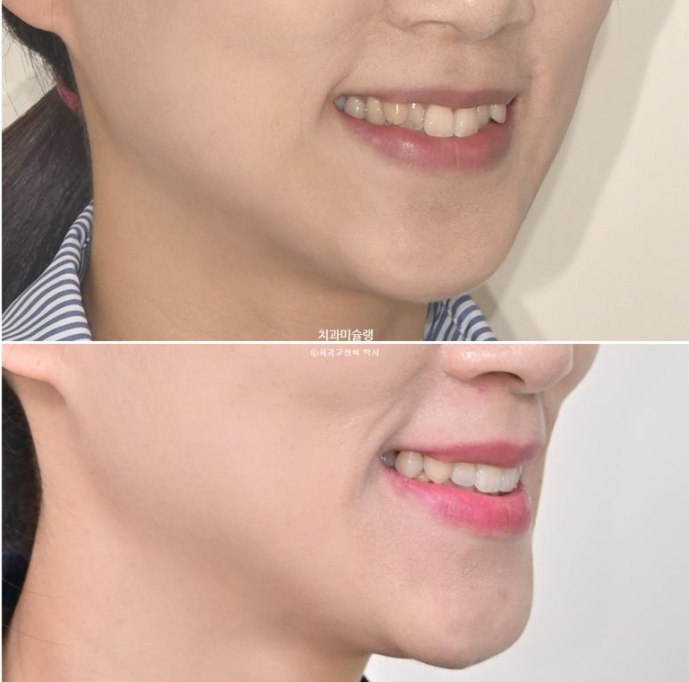
Now let’s compare the facial profile.
23.08~25.10
The canine crowding that overlapped the lower lip has moved back into place nicely.
23.08~25.10
After Invisalign non-extraction treatment, a clean smile and an appropriate front tooth angle stand out.
23.08~25.10
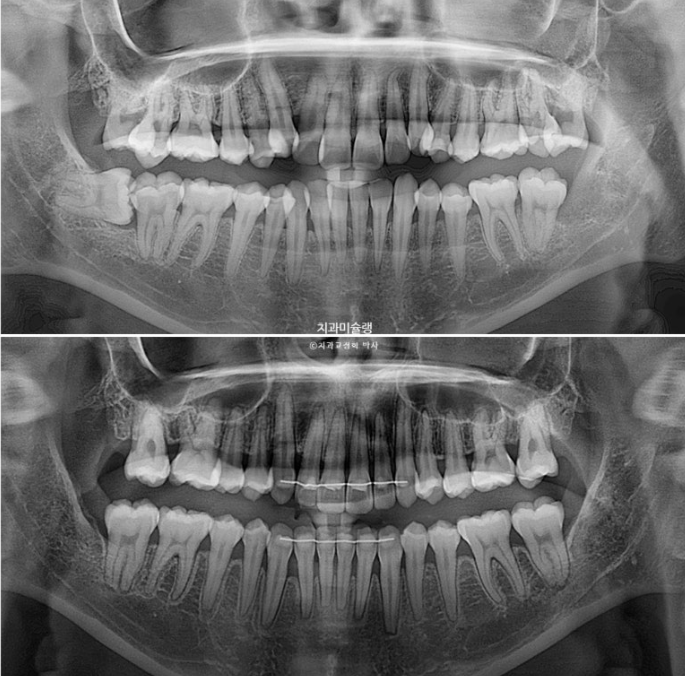
There is no root resorption, and the root parallelism is good.
In particular, the teeth that were moved posteriorly as planned into the extraction spaces from the wisdom teeth and second molars stand out.
23.08~25.10
Since the goal was to maintain the facial profile before and after treatment, there was no change in the angle of the front teeth or the facial profile.
For those who do not want extraction orthodontic treatment but are worried that their mouth may become protruded or their front teeth may flare,
I hope this post helps.