Hello,
This is Apgujeong Orthodontic Clinic.
Today, I’ll talk about Invisalign Lite and open bite correction.
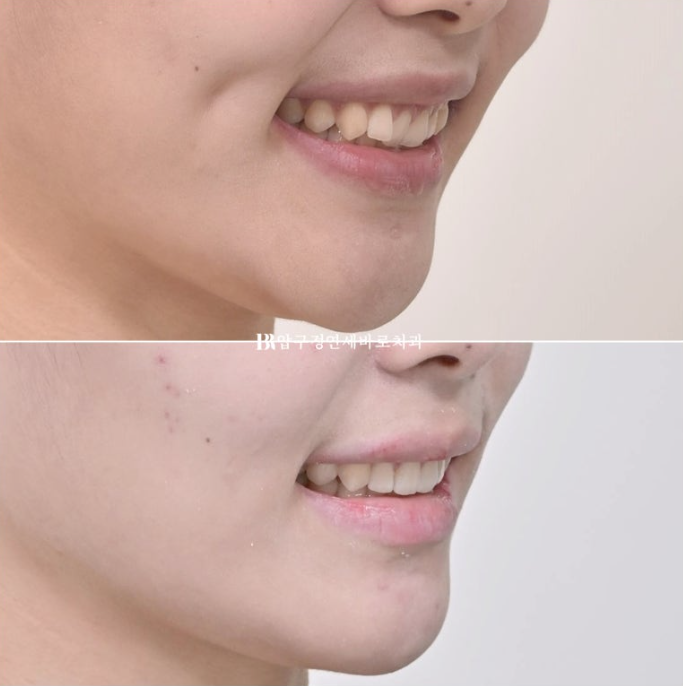
When the front teeth are tipped backward, it is called an open bite.
The teeth look shadowed, and the smile can appear somewhat tight or less attractive.
I’ll show you how an open bite is treated with Invisalign Lite, a short-term Invisalign program.
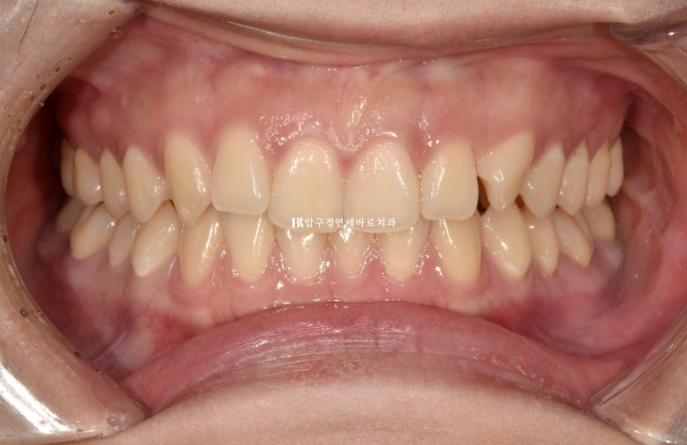
24.02
This patient came in for orthodontic treatment last February.
The main concern was the alignment of the front teeth.
They had already visited five clinics for consultations, and one treatment plan they heard was to extract wisdom teeth and move the molars backward.
The upper and lower midlines differed by about 2 mm, and crowding was also visible in the lateral incisors and canines.
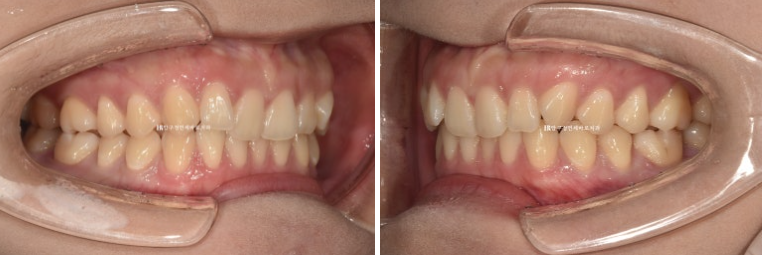
24.02
From the side, you can see that the three central front teeth are tilted backward.
On the right side, the bite relationship is Class II.
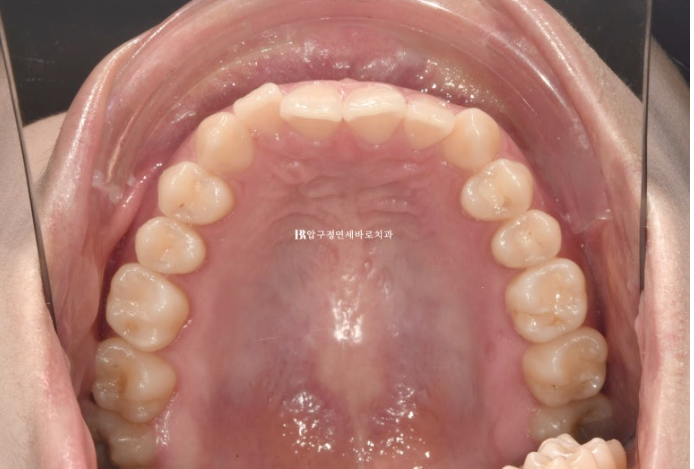
24.02
The three front teeth are positioned toward the palate.
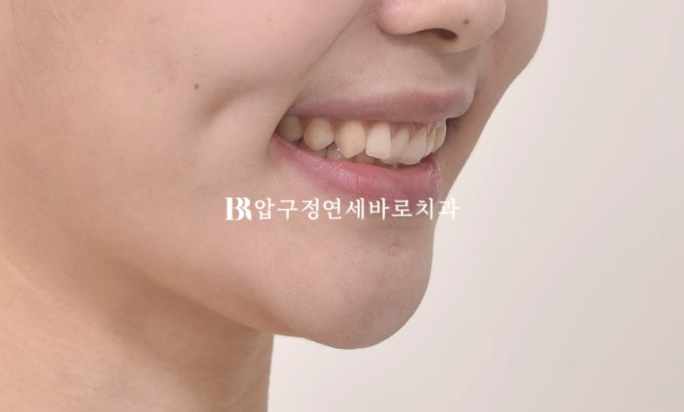
When the front teeth are tipped backward while smiling, they look shadowed and less attractive.
The right molar bite showed a Class II relationship, so if we were to follow the standard approach, as in the diagnosis from another clinic, a full Invisalign Comprehensive treatment of more than a year and a half would likely be needed to move all the molars.
However, the patient placed more importance on treatment duration and simplicity. So, instead of moving the teeth extensively, we chose Invisalign Lite with a goal of about 9 months, accepting some midline discrepancy and slight bite error in exchange for lower cost and shorter treatment time.
On the right side, which showed a Class II bite relationship, we decided to use elastics and guide it toward Class I as much as possible.
In February 2024, the appliance was ordered, and we received it in March.
They started wearing it from that point.
Invisalign Lite comes with up to 14 aligners, and the photos below show the condition after wearing them for 4 months, from March to June.
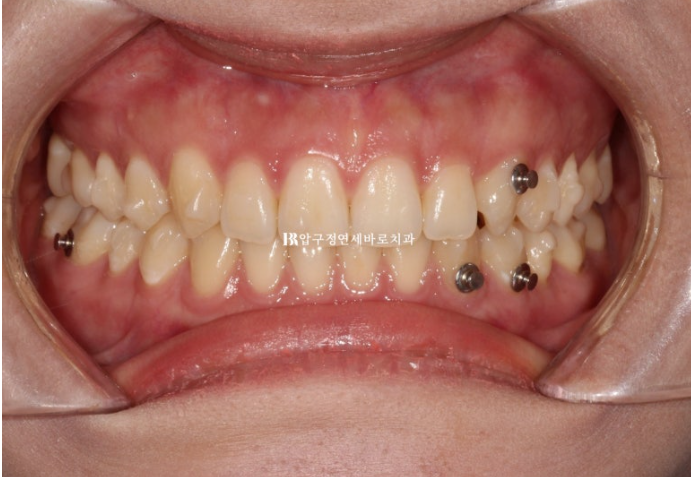
24.06
The alignment and crowding were corrected.
The improvement in the midline was still minimal.
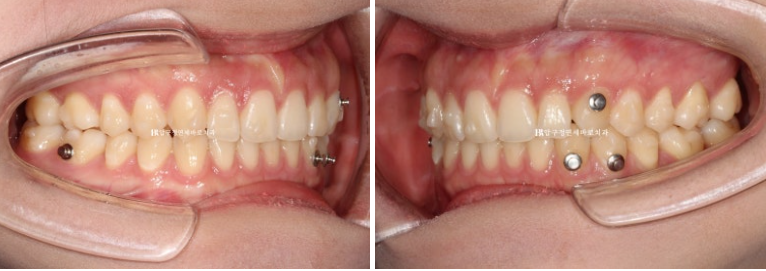
We diligently used Class II elastics on the right side, and the bite relationship improved somewhat.
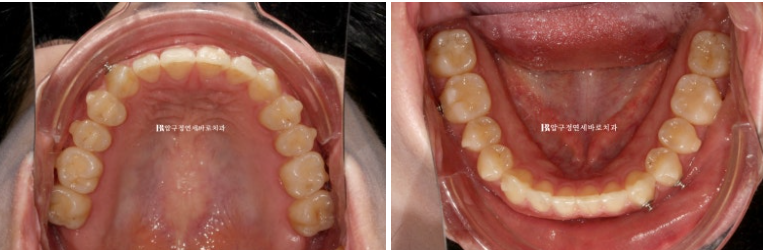
24.06
Improved alignment and open bite.
We wanted to further improve the right molar bite relationship with intermaxillary elastics and also make the front tooth inclination more upright, so we proceeded with additional aligners.
The additional aligners were worn from June to November 2024.
We also used elastics diligently.
And finally, treatment was completed in November.
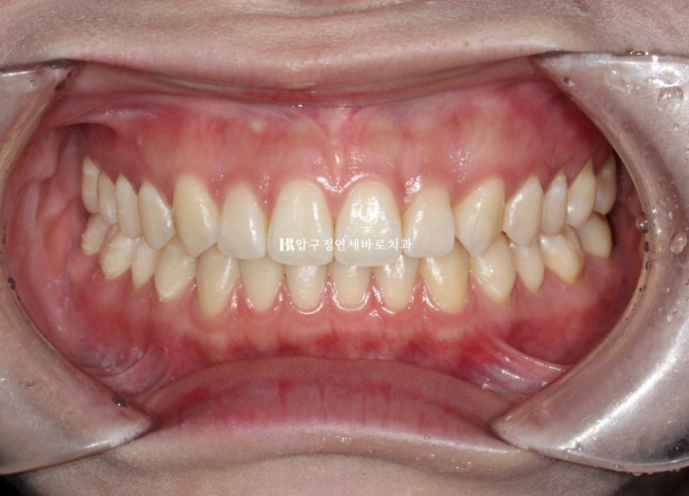
24.11
A tight bite relationship is visible.
For the last 1–2 weeks, we cut away the molar portions of the aligners and left only the front tooth area, in order to promote natural bite stabilization.
I’m writing this post to break the stereotype that Invisalign ends with a poor bite.
Let’s look at the before-and-after results.
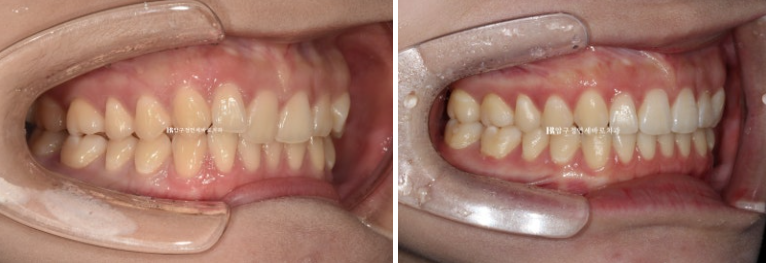
24.02~24.11
The problematic Class II bite relationship on the right side improved to almost Class I.
This was thanks to the diligent use of elastics.
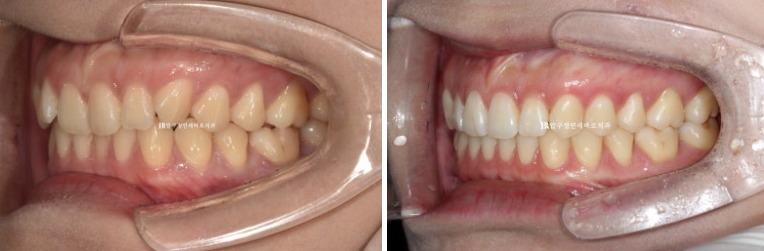
24.02~24.11
The left bite was originally Class I, and the upper and lower molar contact became even more precise.
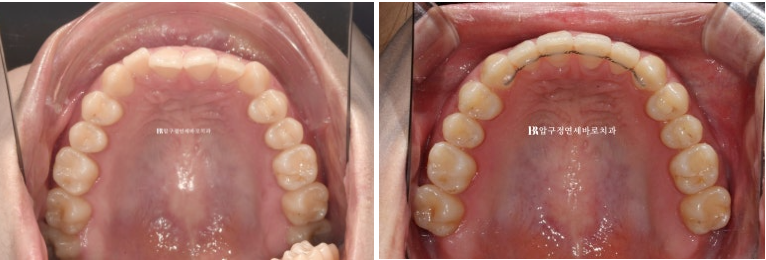
24.02~24.11
As the front teeth that had been tipped backward came forward, the arch shape changed from a square form to a more rounded one.
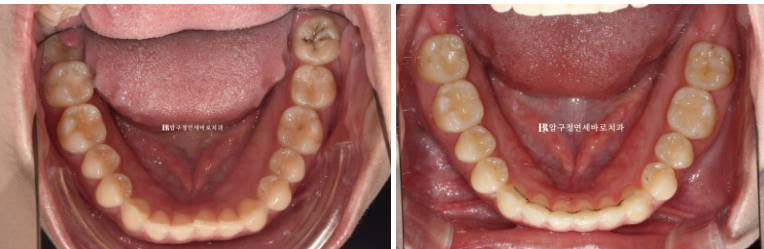
24.02~24.11
The lower arch shape improved.
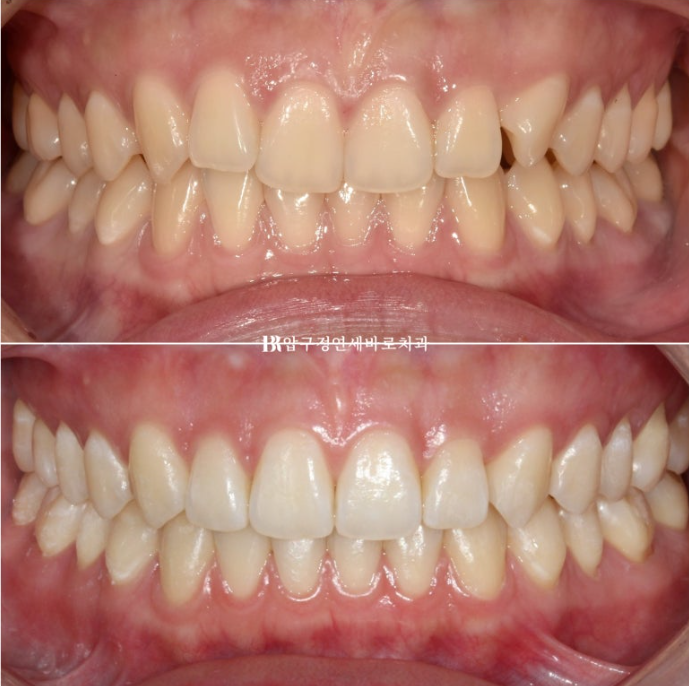
24.02~24.11
The midline still differs by about 1 mm, but it improved compared with the beginning.
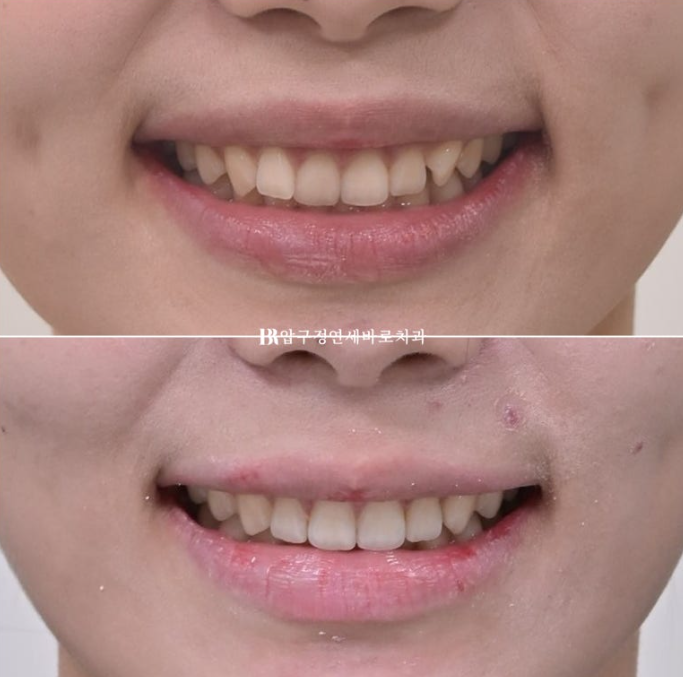
24.02~24.11
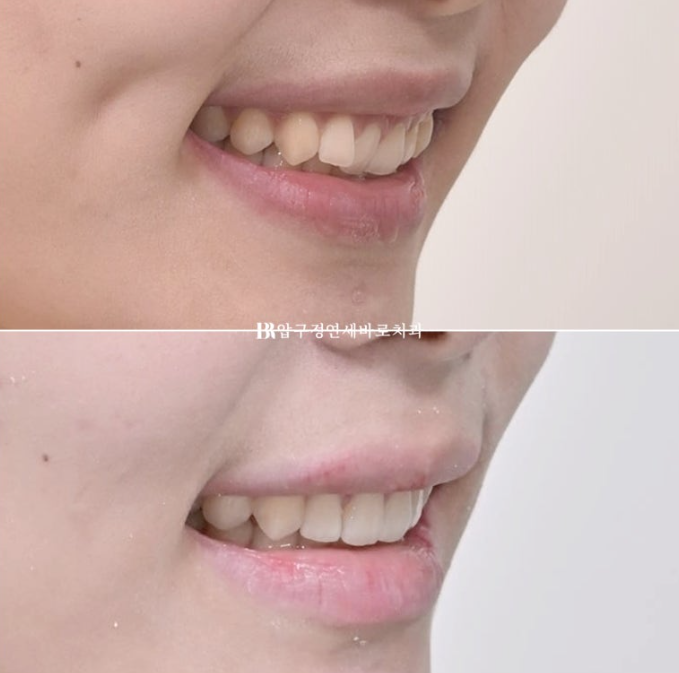
24.02~24.11
With the open bite and crowding resolved, the smile looks much cleaner and brighter.
Invisalign tends to allow fine adjustment of front tooth torque according to each individual’s bone condition.
In fact, it can sometimes be even more precise than bracket-and-wire treatment.
I hope this was helpful for those concerned about open bite.