Hello, this is Apgujeong Orthodontic Clinic.
Today, I’ll talk about retreatment.
Many people come for retreatment in their 20s after having non-extraction orthodontic treatment when they were young, but later feeling unsatisfied for one reason or another.
At the time of orthodontic treatment, they may not have cared much about appearance and felt that it was enough just to fix the crooked teeth, but as time passes,
parts they feel unhappy about start to become visible.
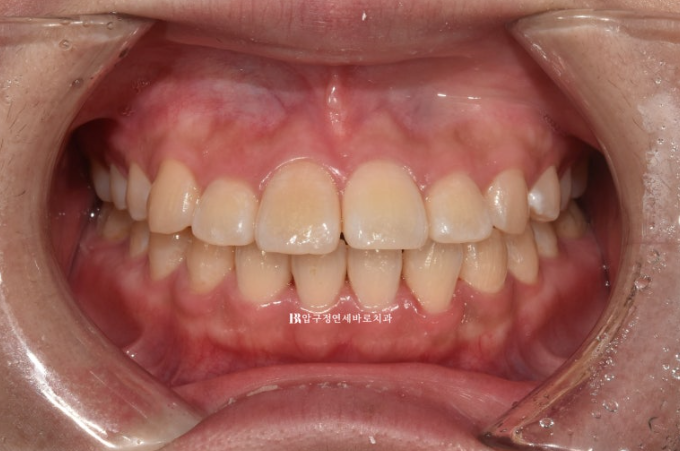
23.04
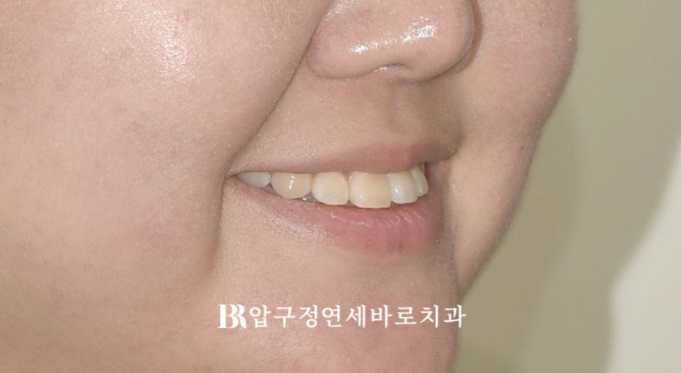
This patient had non-extraction orthodontic treatment 10 years ago when they were young.
The teeth were aligned and the molars were fitting well, but the reason for not doing retreatment was
protrusion of the front teeth.
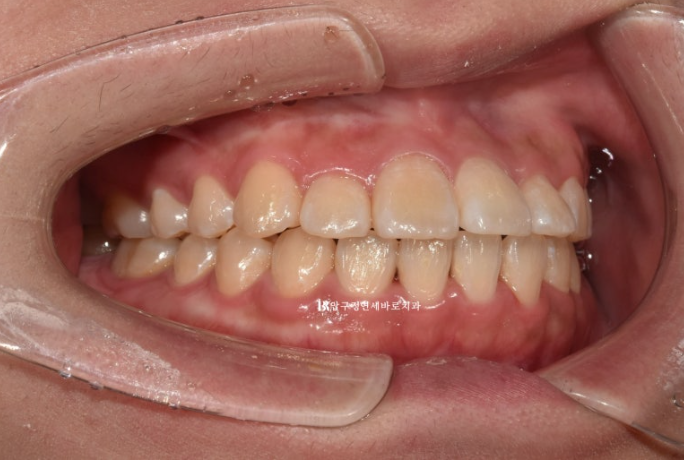
23.04
23.04
Orthodontic treatment is the process of creating space and using that space to correct malocclusion.
If there is not enough space, you have to get it from somewhere, whether by extracting teeth or by using space for wisdom teeth.
For those who want crooked teeth aligned but do not want extractions or interproximal reduction...
in fact, the teeth have no choice but to finish in a protruded position.
Even though there is not enough space, if the teeth are straightened into alignment, the teeth end up protruding forward more than before.
Protruding front teeth are not aesthetically ideal, and as you age, the gums covering the tooth roots are already thin, so the gums recede more quickly, so this is best avoided.
This patient decided to improve the protrusion of the front teeth with Invisalign Lite, combined with interproximal reduction.
Fortunately, the front teeth were relatively large, and on the periapical X-ray, the outermost enamel layer of the teeth was also thicker than average, so a certain amount of interproximal reduction would not be a problem.
If the naturally sized front teeth had originally been small and interproximal reduction had already been done during the previous orthodontic treatment, then interproximal reduction would not have been recommended. We would have considered Invisalign Comprehensive, which is comparable to full orthodontic treatment and takes 1-2 years, to move the front teeth backward.
Interproximal reduction, when applied in small amounts within physiological limits, can be a good tool for correcting malocclusion, but if overdone, it can instead weaken the teeth.
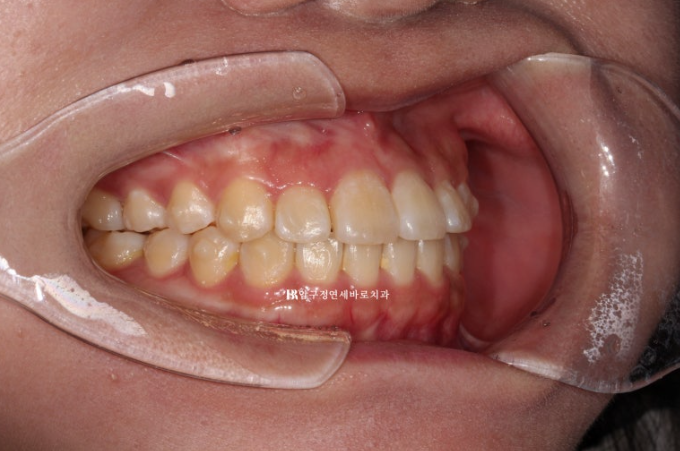
After completing the first set of 14 aligners over 3 months, this is what the patient looked like.
The protrusion of the front teeth improved a lot, but in response to the patient’s request to bring the front teeth back a little more, we began making additional aligners.
23.08
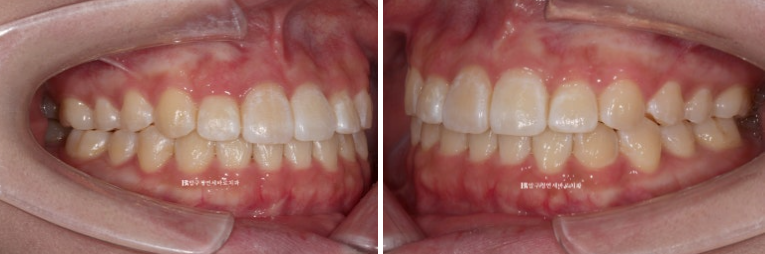
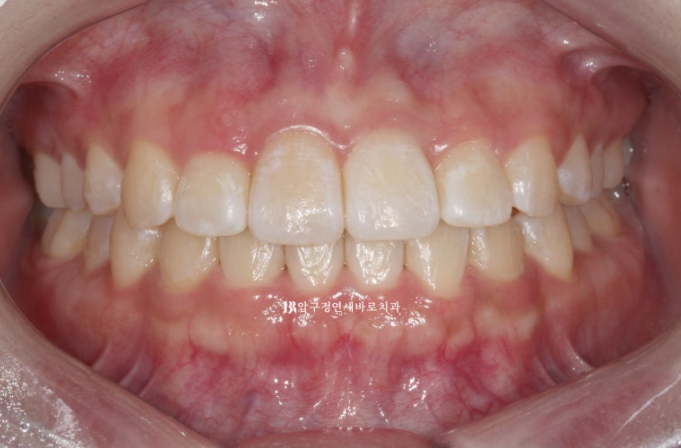
After 1.5 months of waiting for the additional aligners, the patient started wearing them in October, and treatment was completed about 3 months later, in January of this year.
Excluding the time spent waiting for the appliance, the actual treatment period was 3 months for the first set and 3 months for the additional set, for a total of 6 months.
24.01
24.01
As the teeth came down from their tipped position into a straight line, they appear slightly longer than before.
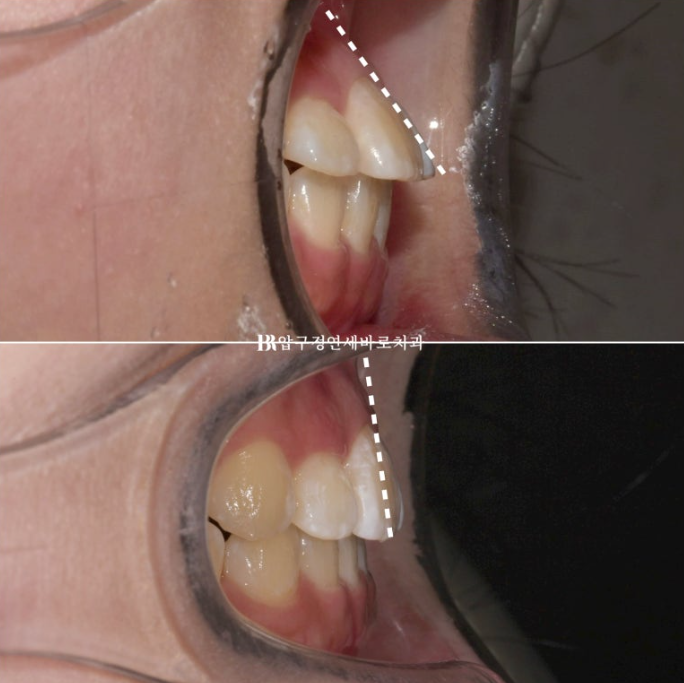
23.04~24.01
These are the before-and-after changes in the angle of the front teeth.
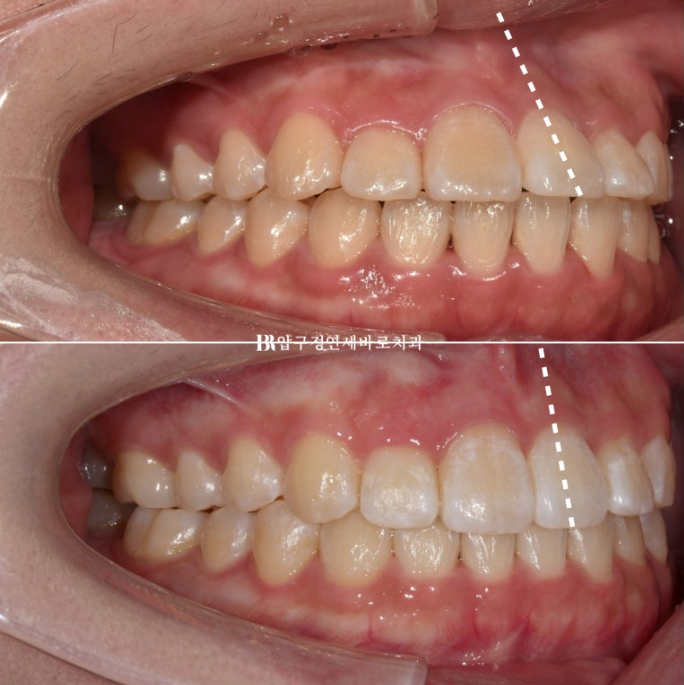
23.04~24.01
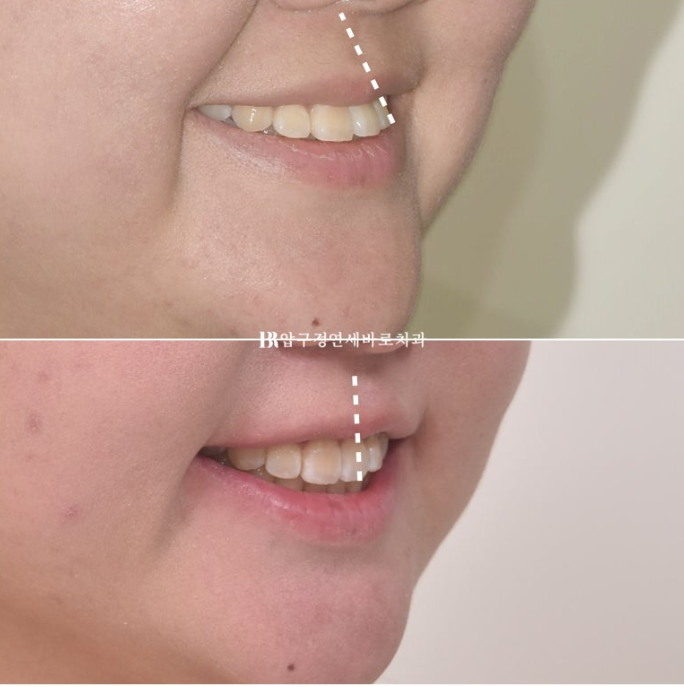
23.04~24.01
When smiling, teeth that line up neatly in a straight row look the best.
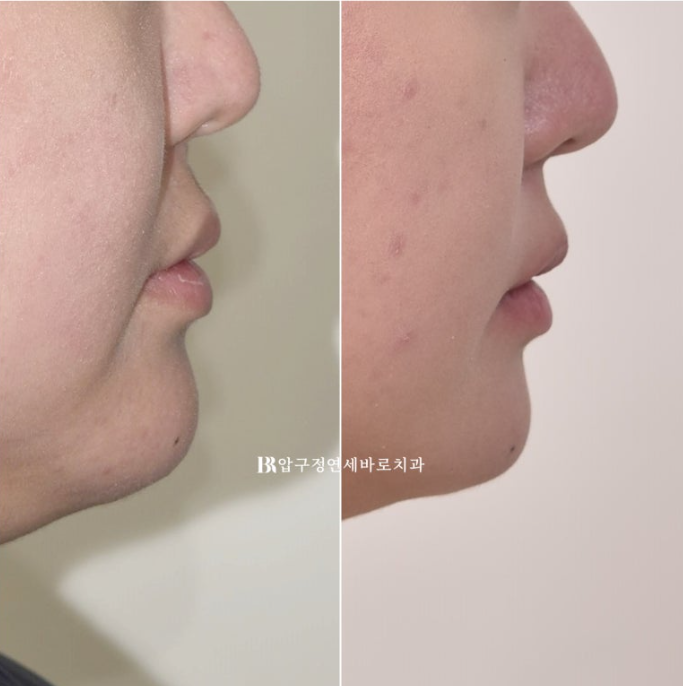
23.04~24.01
The front teeth moved back quite a bit, and the lips also moved backward.
If you look at the superimposed X-rays before and after treatment, the improvement in the angle of the front teeth is striking.
Even in retreatment or protrusion correction, depending on the patient’s condition, good results can be achieved with just 6 months of treatment.
Please consult with a nearby orthodontic clinic.