Hello,
This is Apgujeong Children’s Orthodontic Clinic.
Today, after a long time, I’ll talk about clear aligners for children.
Invisalign First has a warranty period of 18 months.
The warranty period is the time during which remaking is possible.
In Invisalign treatment, remaking can be done several times within the warranty period.
Around the 17-month mark, a final remake can be done, and if this is used well, the total treatment period can be extended to about two years.
23.10~25.11
Of course, Invisalign First for children has major differences from Invisalign for adults.
Because it is orthodontic treatment for children with baby teeth still remaining, there are periods during treatment when space is secured for the permanent teeth, and then we wait for the remaining baby teeth to fall out and the permanent teeth to erupt. These periods can last several months during treatment—sometimes as short as 3–4 months, and sometimes as long as a year.
It is not like adults, where you keep wearing the appliance continuously until treatment is finished.
If Invisalign First treatment is carefully carried out with a long-term view of the child’s future oral changes, it can even help them avoid needing orthodontic treatment again as an adult.
Today, I’ll show you how treatment can be done to reduce the possibility of adult orthodontic treatment, that is, second-time orthodontic treatment.
October 2023, Apgujeong Children’s Orthodontics
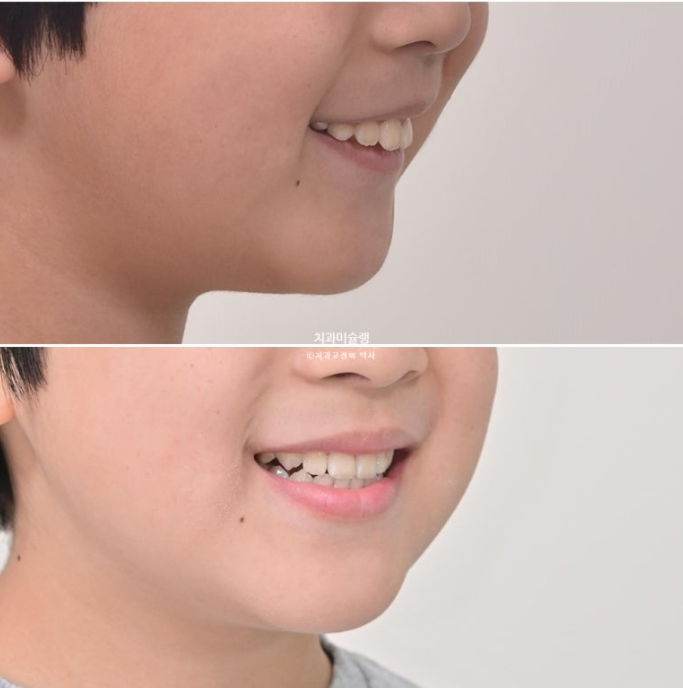
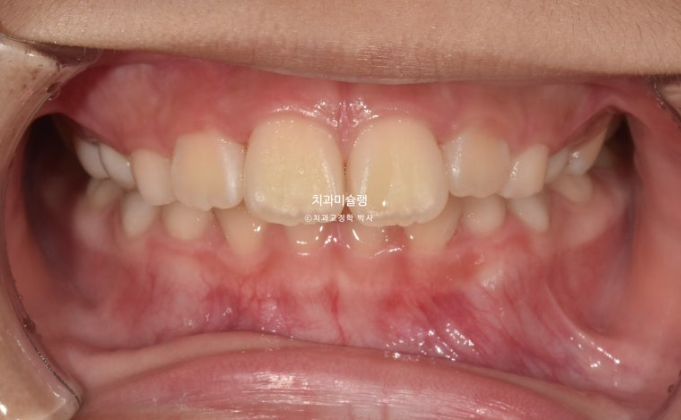
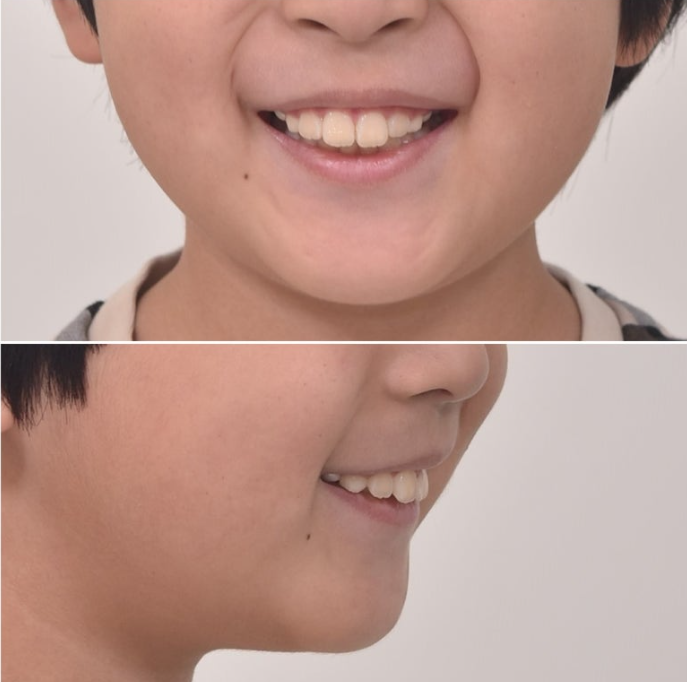
This child came in for orthodontic treatment.
23.10
The upper teeth overlap the lower teeth significantly, so the lower front teeth are not visible, which is a deep overbite.
A midline discrepancy is also seen.
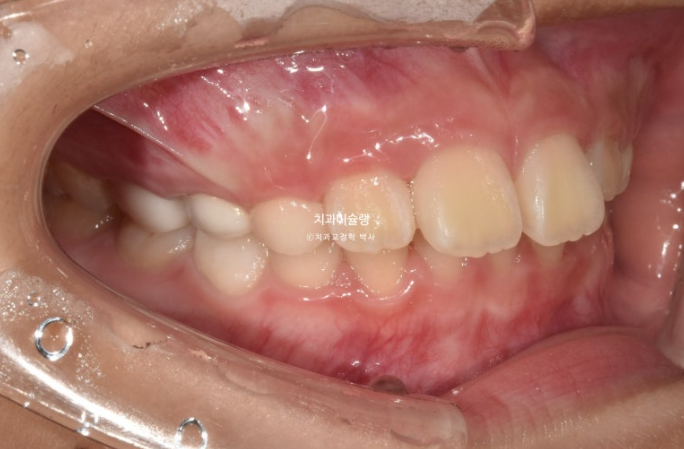
Because the upper front teeth protrude, the child feels that the teeth stick out.
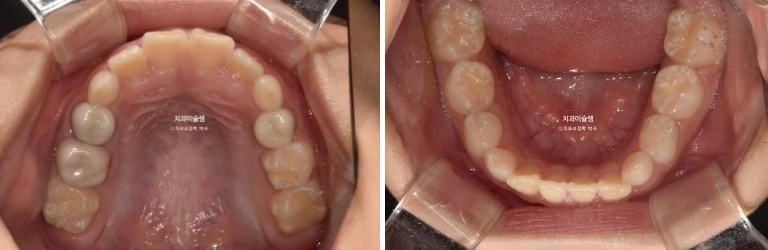
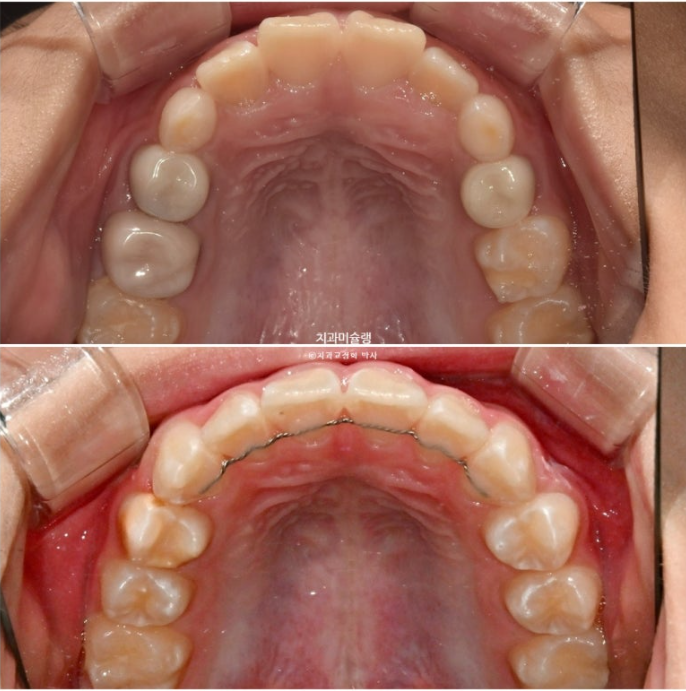
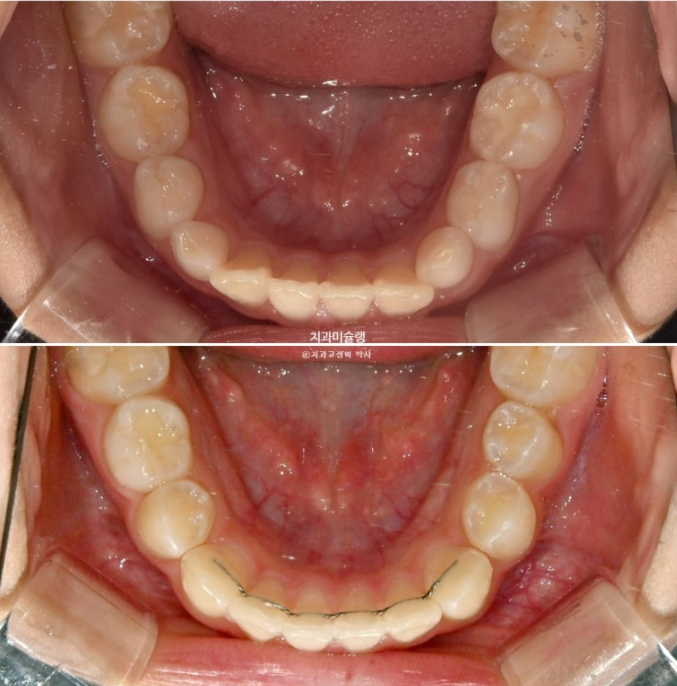
The four upper and four lower front permanent teeth, eight in total, are somewhat crooked, but they have come in fairly well without major lack of space.
23.10
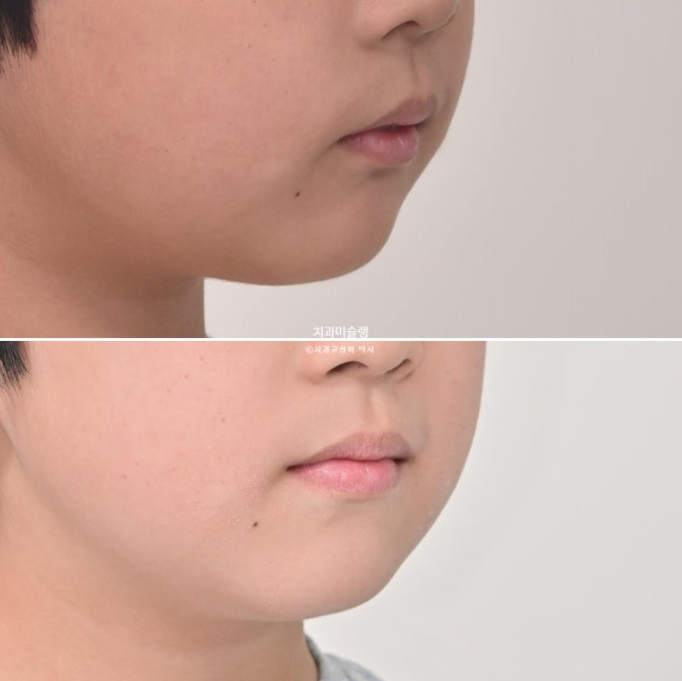
Based on X-ray skeletal analysis, the child was diagnosed with skeletal Class II malocclusion due to a small lower jaw (commonly called an underdeveloped chin), so we decided to treat that as well.
With the Mandible Advance function of Invisalign First, we can help the underdeveloped lower jaw grow.
The first set of appliances consisted of a total of 46 aligners.
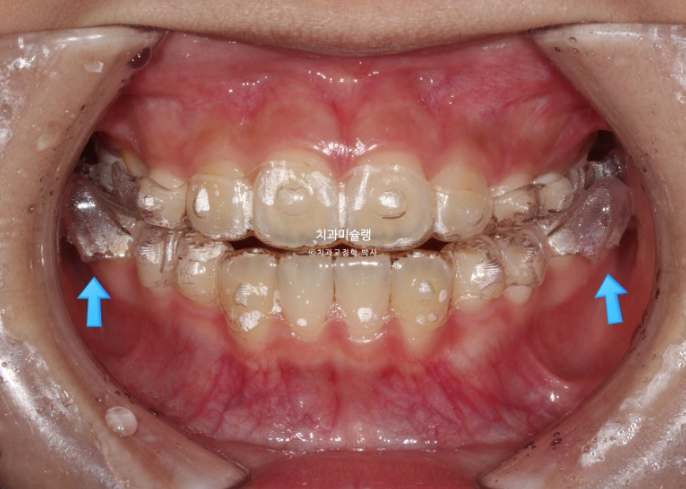
For four months until February 2024, we first carried out arch expansion, created space for permanent teeth to erupt, aligned the front teeth, and improved the deep overbite. Then in February, we entered the Mandible Advance stage.
24.02
The protruding part of the blue arrow is called a wing.
It is named that because it looks like a wing.
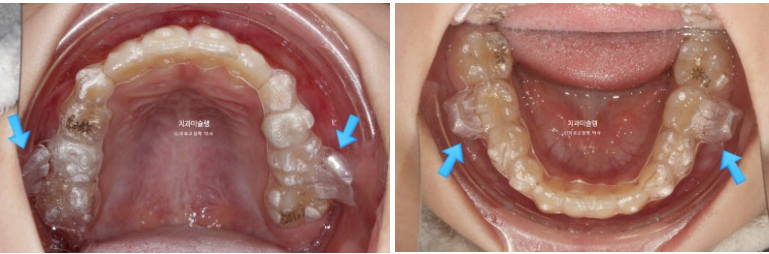
A total of four wings emerge on the upper and lower appliances, and these wings guide the lower jaw into a forward biting position.
Simply put, the principle of a functional appliance is to help the jaw adapt to the correct position, which in turn allows the lower jaw bone to actually grow.
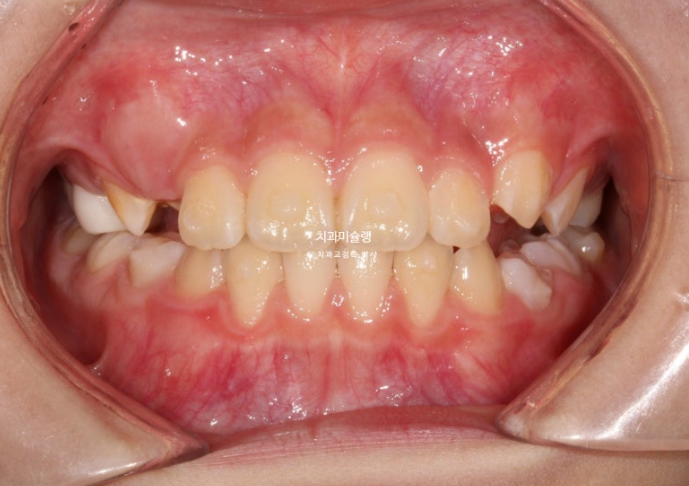
After wearing all 46 appliances from the first set over about nine months until November 2024, this is the result.
24.11
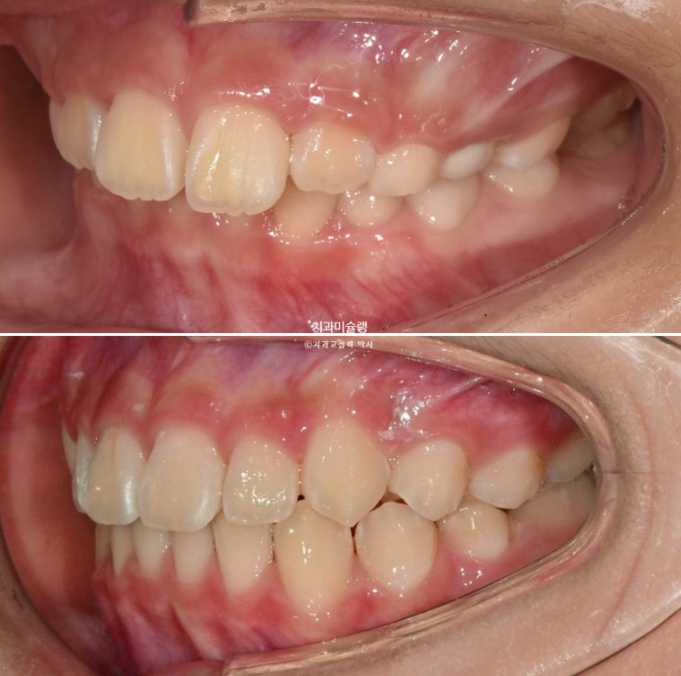
The midline is well aligned, and the deep overbite has improved.
Meanwhile, the baby canine teeth and baby molars fell out, and the permanent teeth came down.
At this stage, we do not end treatment by attaching a retainer.
After confirming that the canines are coming down properly, we extend the retainer to the canines and finish treatment.
To do that, it is necessary to allow enough time for the remaining permanent teeth to erupt while checking periodically.
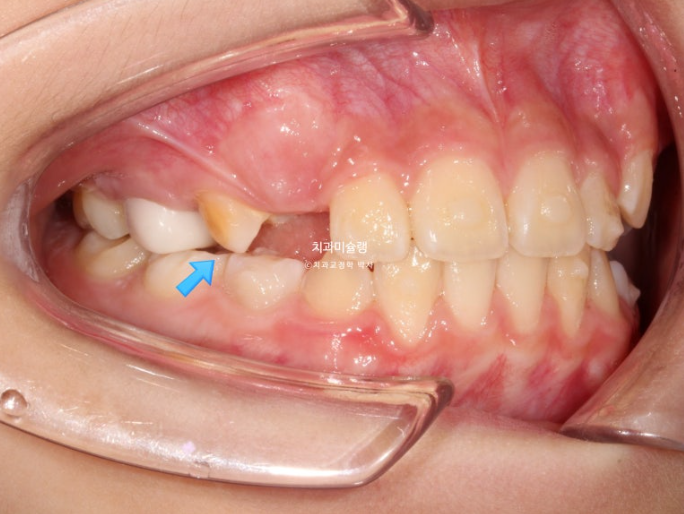
The tooth marked by the blue arrow, which has just started to erupt, is not decayed; it is a tooth that naturally shows enamel hypoplasia.
It does not affect function.
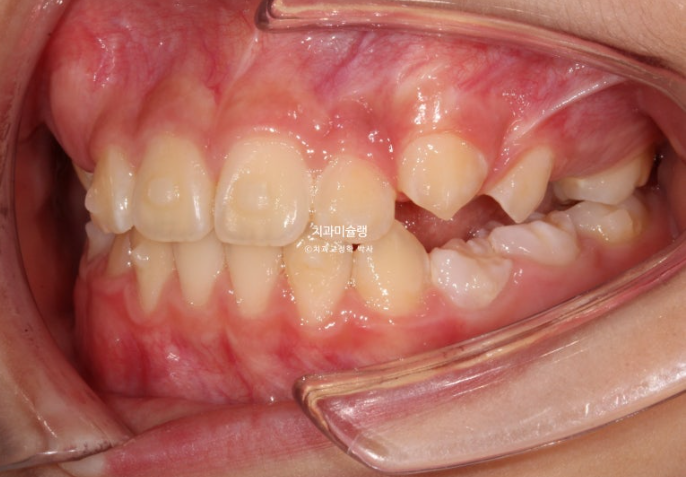
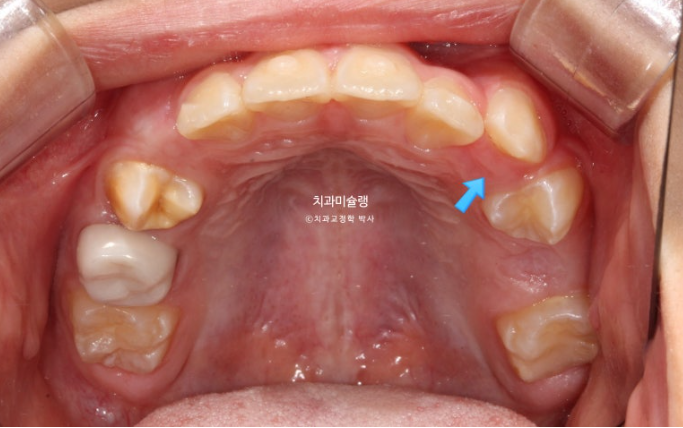
In Invisalign First treatment, aligning the four front teeth and securing space for permanent teeth to erupt are basic steps, but as shown in the photo, even when enough space is secured for the canines, they can still come in somewhat like crowding.
That is why we tend to delay the end of treatment until the canines and other lateral teeth come in stably and the bite is completed.
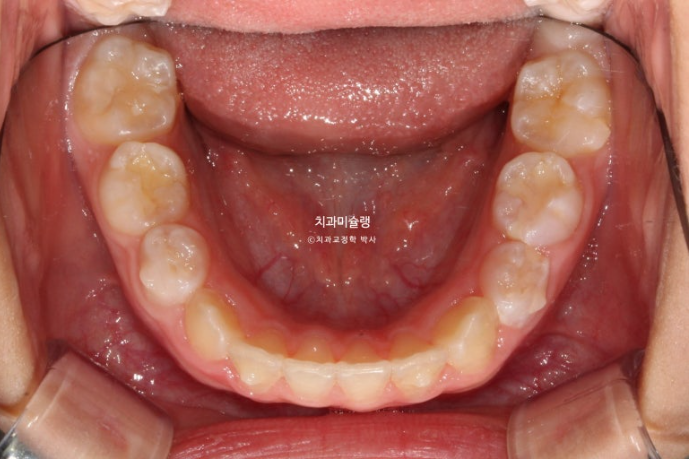
Everything else is good, but since the canine alignment is a little disappointing, we enter a break period with the possibility of remaking later before the warranty period ends.
During the break, we trim away parts that interfere with permanent tooth eruption, leave only the front-teeth section to maintain alignment, and wear it only at night for retention.
While wearing it with only the front teeth left and the wings removed, we also need to see whether the guided position of the lower jaw is being maintained stably.
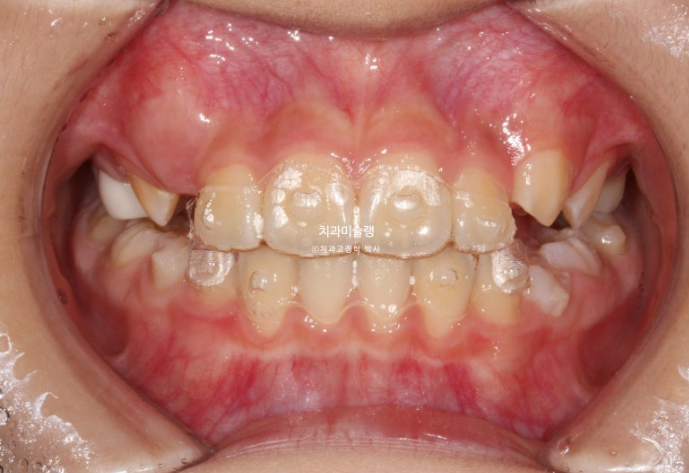
24.11
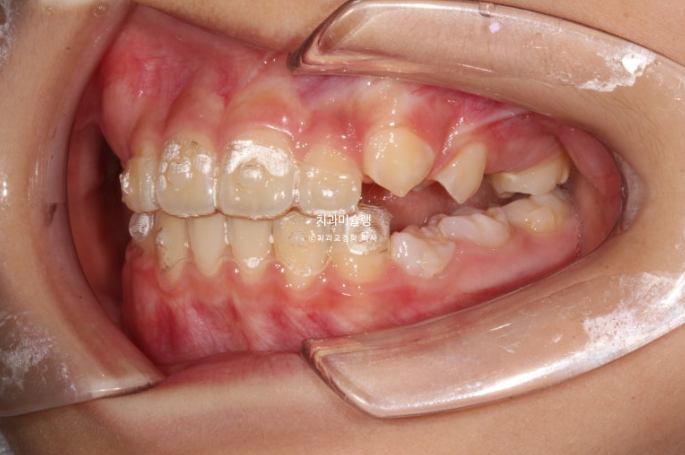
After maintaining it by wearing only the front-teeth retention appliance at night for five months until April 2025, we proceeded with remaking.
From May to November 2025, after wearing all 20 additional appliances, all treatment was completed.
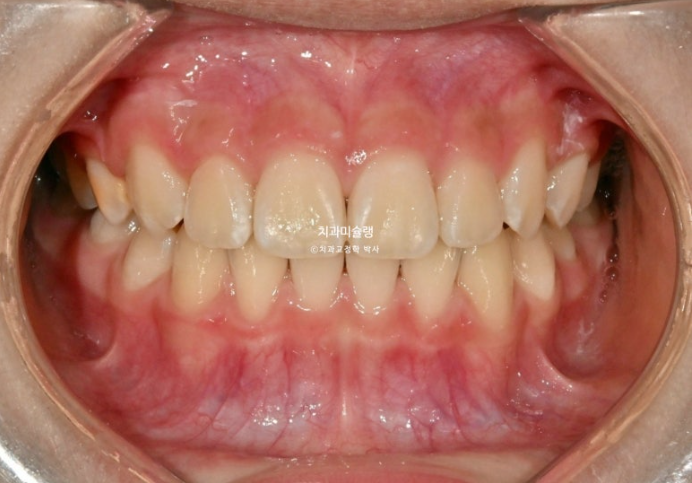
25.11
The midline is well aligned.
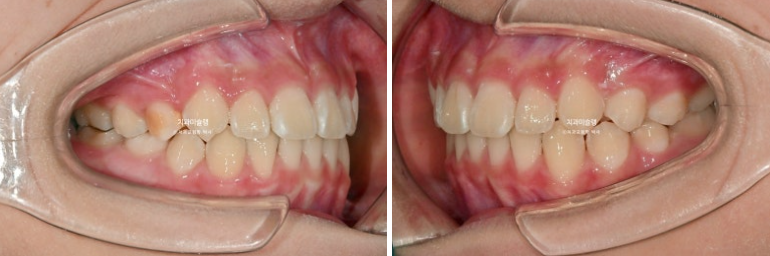
Except for one baby tooth, all the other teeth are permanent teeth, and the bite is almost complete.
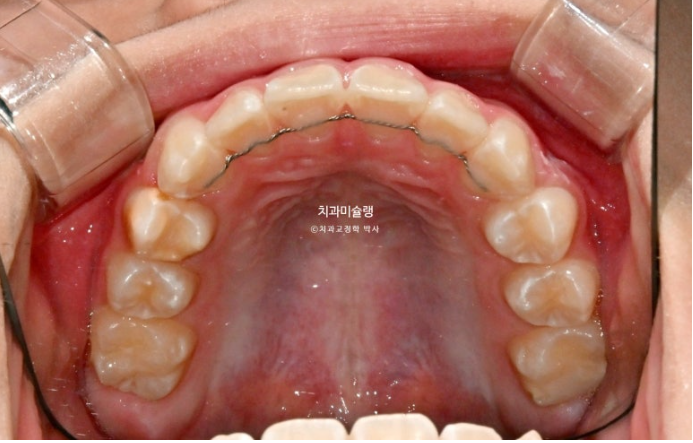
Because the result is comparable to second-time adult orthodontic treatment, the retainer is made the same way as for adults.
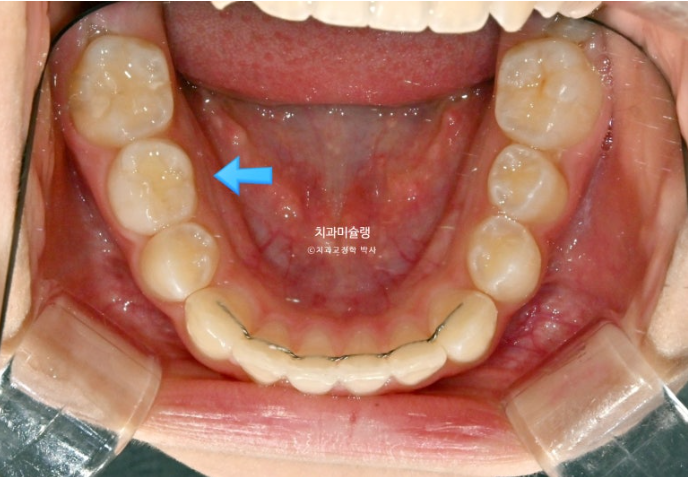
The blue arrow marks the last remaining baby tooth.
Once even this baby tooth falls out and all permanent teeth have erupted, we plan to make a Vivera retainer.
Now let’s look at the before-and-after comparison.
Excluding the five-month period during treatment when we waited for the permanent teeth to erupt, the actual period of treatment while wearing appliances was 1 year and 8 months.
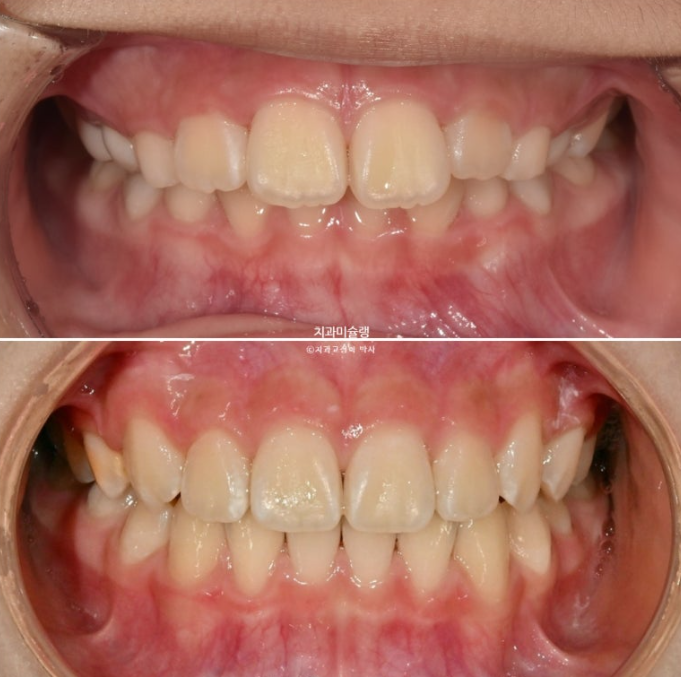
23.10~25.11
Improvement in deep overbite and midline discrepancy
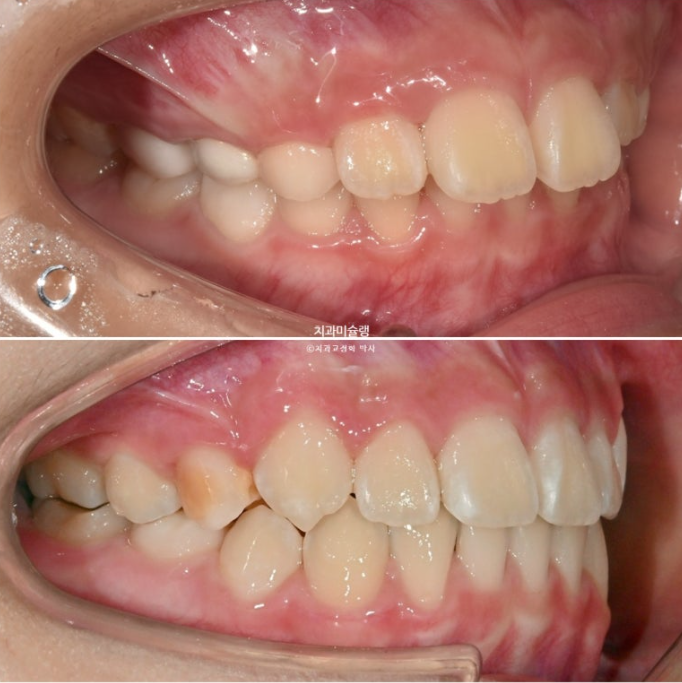
23.10~25.11
The completed bite shows a Class I occlusion relationship.
23.10~25.11
23.10~25.11
23.10~25.11
It is complete enough that there may be no need for second-time orthodontic treatment when the child becomes an adult later.
Now let’s look at the facial comparison.
23.10~25.11
As the small lower jaw grew, the facial profile improved.
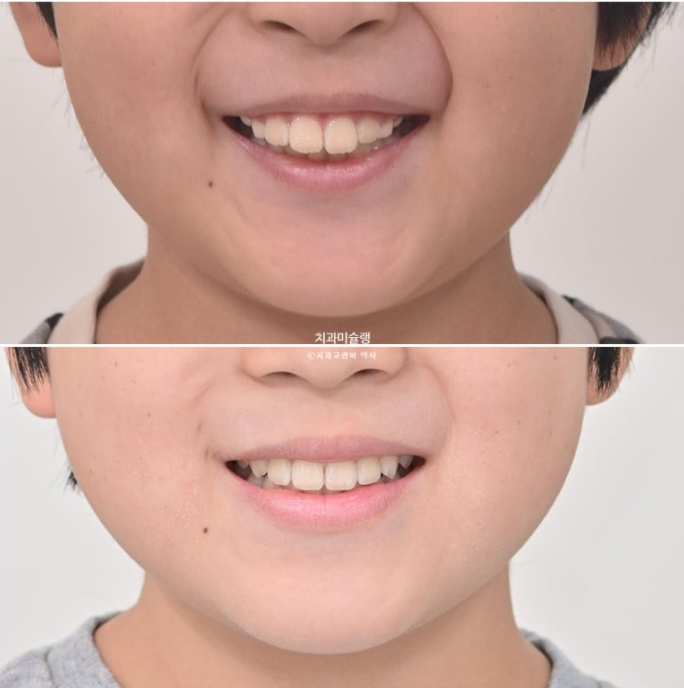
23.10~25.11
The child has grown a lot in the meantime.
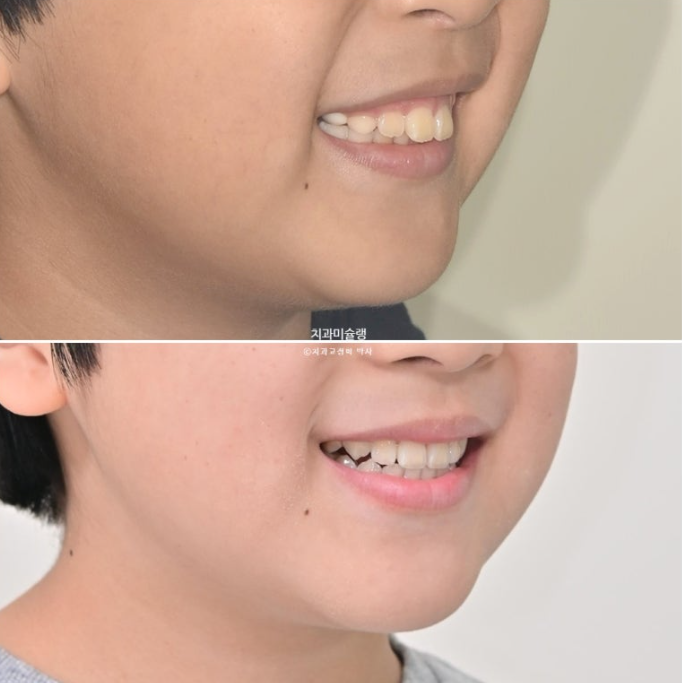
23.10~25.11
The amount of gum exposure also decreased, and the angle of the protruding front teeth improved.
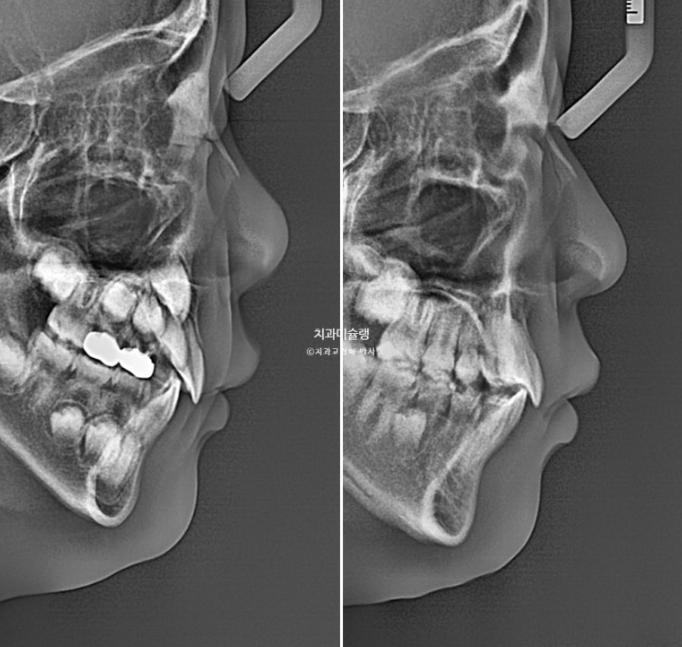
23.10~25.11
If we compare the X-rays, it looks like this.
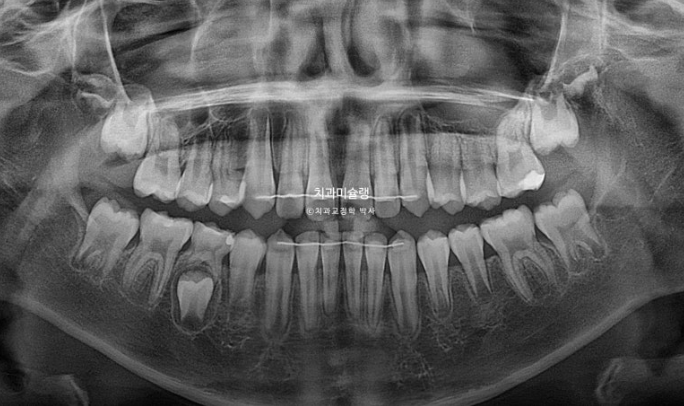
The tooth roots are growing well.
Root parallelism is good.
I hope this helps those of you who are considering clear aligners for children.