Hello,
Today I’ll share a story about short-term orthodontic treatment for gapped teeth in your 50s.
As people get older, anyone’s teeth can become crooked and start to spread apart.
Gapped teeth are a symptom that often appears with aging.
The periodontal tissues weaken, and the gums and jawbone can no longer hold the teeth firmly in place.
This is a natural aging process that can start as early as your 30s and usually in your 40s.
Although it is natural, if left untreated it can gradually worsen, and later it may become difficult to resolve with orthodontic treatment.
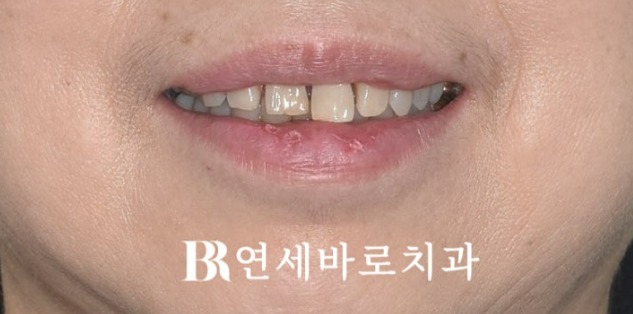
If the teeth have not shifted too much yet, quick and simple correction is possible.
Don’t miss the timing and please visit a nearby orthodontic dental clinic.
Many people feel burdened by orthodontic treatment because they think it usually takes 1 to 2 years.
But in actual practice, it often does not take as long as expected.
In particular, among the many types of malocclusion, Invisalign treatment can sometimes be completed faster than wire braces.
This is especially true for gapped teeth.
Today, I’ll introduce a case in which a patient in their 60s had their gapped teeth neatly corrected with Invisalign in just 6 months.
23.01
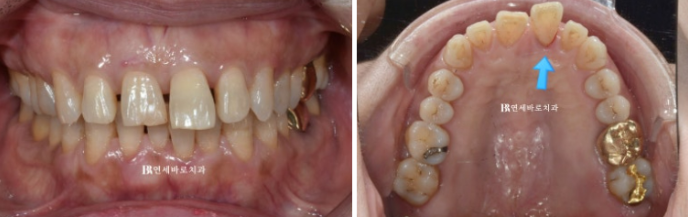
In cases where patients come in with gapped teeth and the spacing has widened rapidly over a short period, the cause is often gum inflammation rather than aging.
In particular, teeth with inflammation, as shown in the photo, not only protrude forward more and more, but also move downward.
So if the cause of the spacing is gum inflammation, the gum inflammation must be treated first before orthodontic treatment.
That way, there are fewer side effects when moving the teeth during orthodontic treatment.
The risk of recurrence, where the teeth spread apart again after treatment, can also be reduced.
After careful gum treatment, Invisalign orthodontic treatment began.
The molar bite was originally fairly good, so treatment was carried out strategically while maintaining the original bite.
Unlike younger patients, there is an inertia from having maintained the same bite for decades, so if the molar bite changes, they often feel very uncomfortable.
Because this is orthodontic treatment in middle age, it is an area that needs a slightly different approach from that used for younger patients.
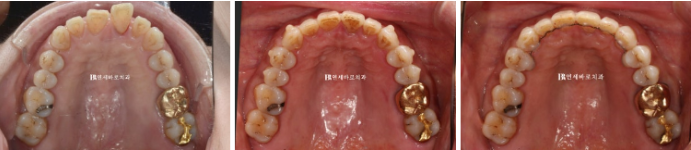
23.1~23.7
During Invisalign treatment, attachments are needed on the teeth.
The presence or absence of these attachments is what clearly distinguishes the past, when orthodontic correction with Invisalign was not very effective, from the present.
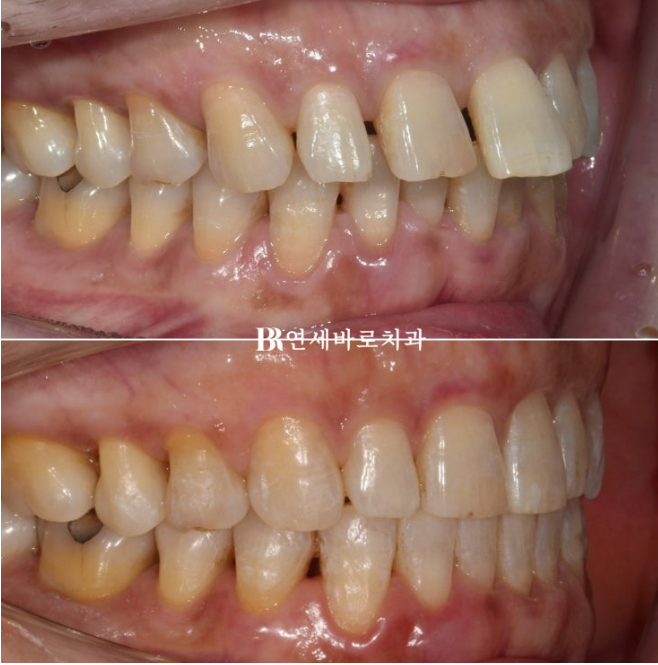
23.01~23.07
Treatment for gapped teeth in a person in their 50s was completed after 6 months.
After the first phase of Invisalign treatment is finished, it is common to make additional appliances to correct detailed areas.
This patient wore the appliances very well and the teeth moved smoothly, so treatment was completed without additional appliances.
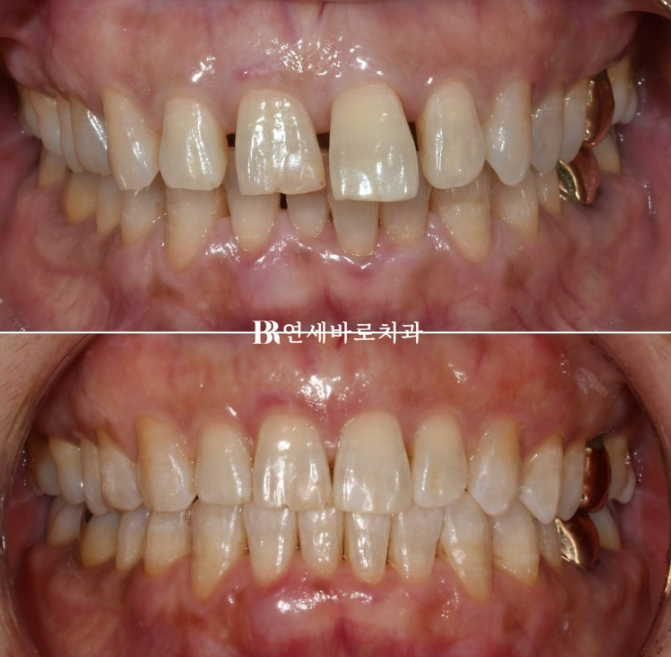
23.01~23.07
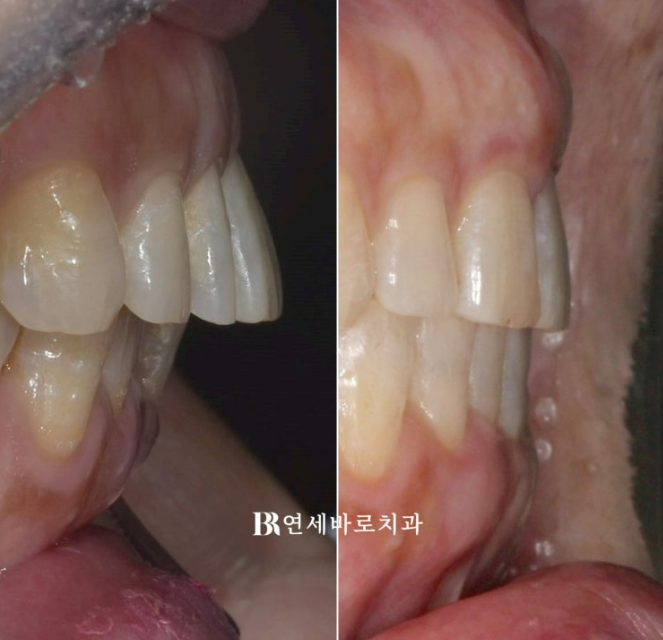
23.01~23.07
The front teeth, which had gradually protruded forward, moved back and found their proper positions again.
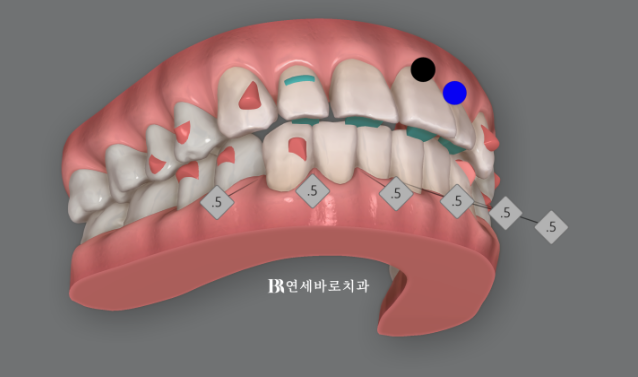
For gapped teeth in your 50s, the right treatment plan and the proper placement of an appropriate number of correct attachments
When each tooth is treated with a different strategy, the fastest and best results are achieved.