Hello,
This is Yonsei Baro Dental Clinic, an orthodontic dental clinic in Apgujeong.
Today, we will show you a case involving treatment for peg-shaped teeth, congenital tooth absence, protrusion, and non-prep laminate veneers.
A tooth that is missing from birth is called a congenitally missing tooth.
When a tooth is missing, you may wonder whether an implant is necessary. However, orthodontic treatment can create a good bite without implants.
Q. If a tooth is missing from birth, is an implant always necessary?
The conclusion is that this is not always the case.
A condition in which a specific tooth is absent from birth is called congenital tooth agenesis.
It is relatively common for the lateral incisor—the tooth next to the front tooth, also known as tooth no. 2—to be missing.
Even in these cases, orthodontic treatment can produce functional and aesthetic results without implants.
Today, I would like to introduce an actual case involving a patient who had both congenitally missing teeth and peg-shaped teeth.
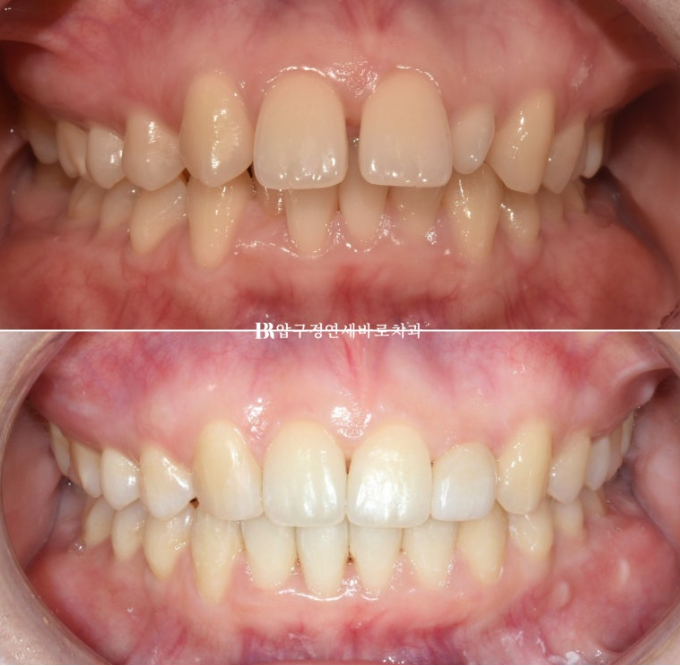
Today, I will show you how treatment proceeds when congenital tooth absence and peg-shaped teeth occur together.
As you read, please focus on the process of restoring the dental midline and tooth shapes.
The patient first visited us in April of last year for orthodontic treatment.
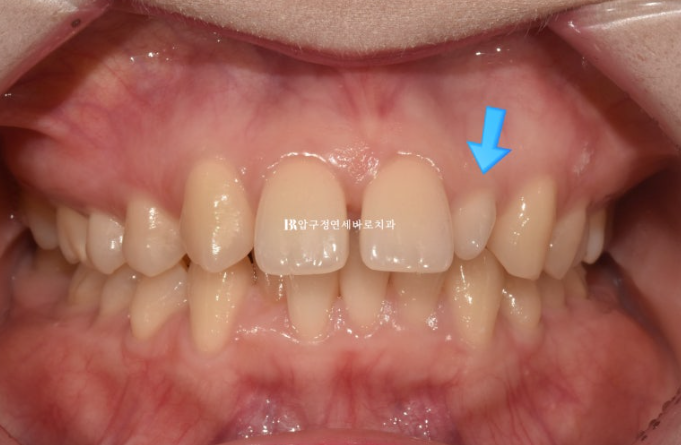
There was spacing between the front teeth.
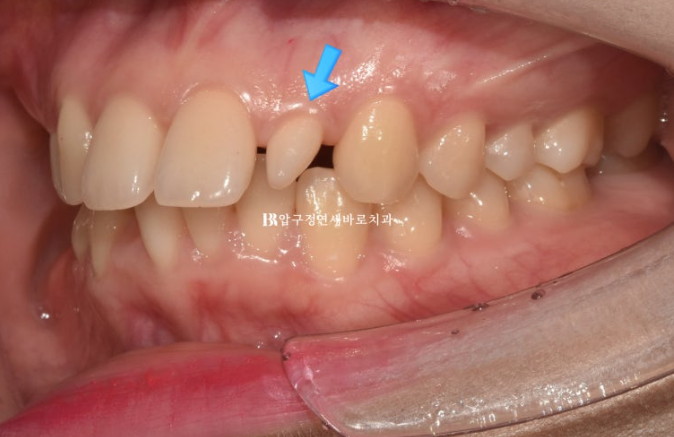
The blue arrow indicates a peg-shaped tooth.
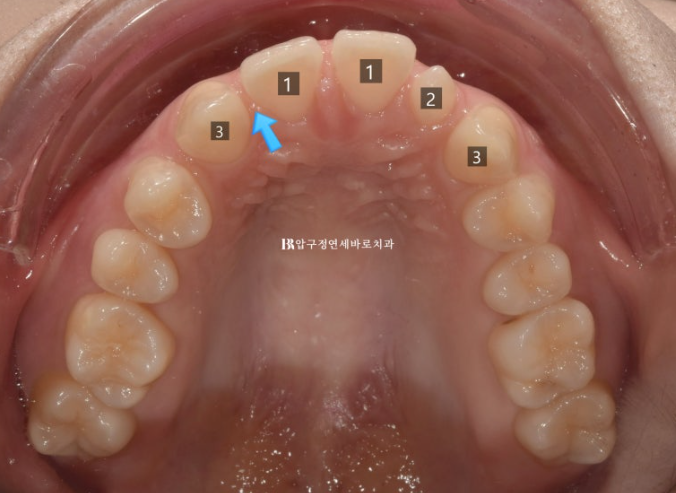
There were two reasons for the spacing between the front teeth.
Because the lateral incisor—tooth no. 2—was congenitally absent and there was also a peg-shaped tooth, space was inevitably left around the front teeth.
When a lateral incisor is missing, orthodontic treatment can move the canine into the lateral-incisor position, reshape it to resemble a front tooth, and bring the first premolar into the canine position.
We decided to restore the peg-shaped tooth to a normal size with a laminate veneer after orthodontic treatment.
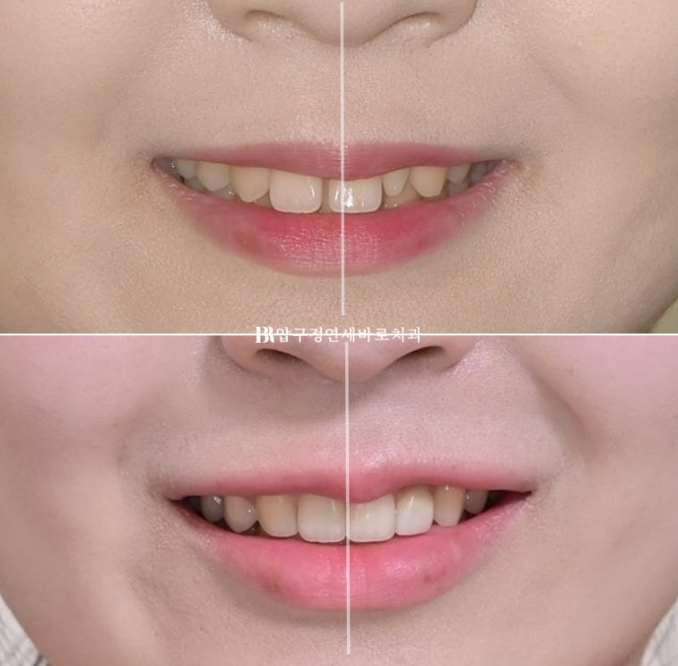
23.04–24.12
When a tooth is missing on only one side, the dental midline tends to shift toward that side.
The patient’s front teeth were also shifted toward the side with the missing tooth. Therefore, treatment involved placing a mini-screw and moving the molars toward the wisdom-tooth space to bring the midline back in the opposite direction.
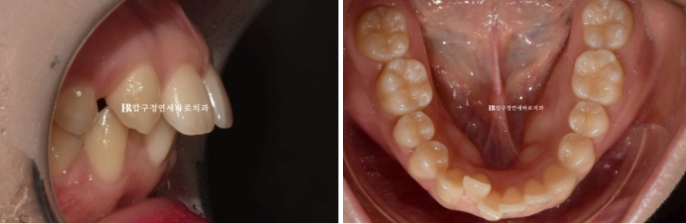
Improving the protrusion, flaring, and alignment of the front teeth was also established as a treatment goal, and treatment began.
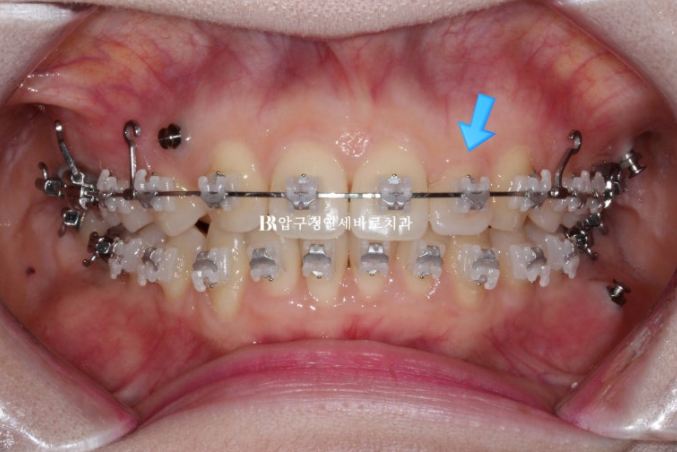
The patient chose Clippy-C braces.
This shows the progress after six months of treatment, through October 2023.
23.10
The peg-shaped tooth indicated by the blue arrow was temporarily given a normal shape using composite resin.
After orthodontic treatment is completed, the temporary resin will be removed and the tooth will receive a final laminate veneer restoration.
To rotate the overall dental midline, a mini-screw was placed toward the front on the right side and toward the back on the left side.
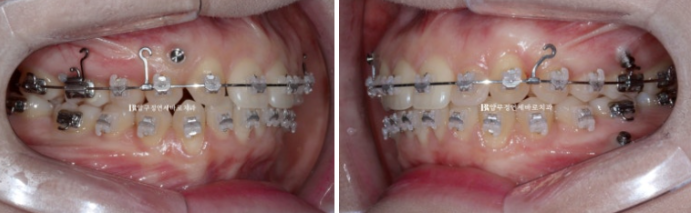
23.10
Moving all of the molars forward on one side and backward on the other to align the dental midline with the facial midline requires extensive movement of all 28 teeth, making it a major treatment process.
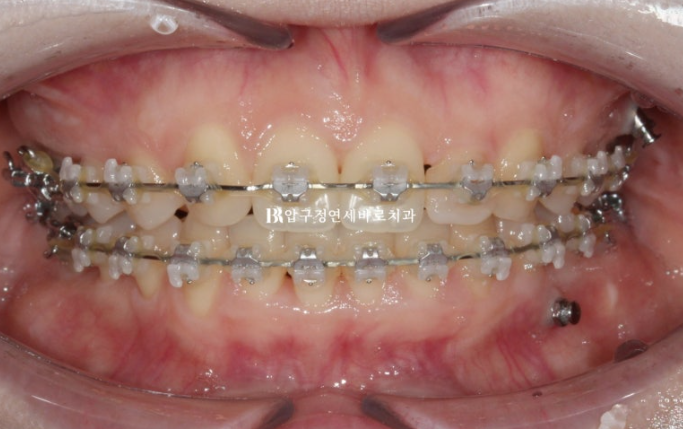
24.08
In August 2024, the process of aligning the midline was finally completed.
We then moved on to finishing orthodontic treatment and preparing for the laminate veneer.
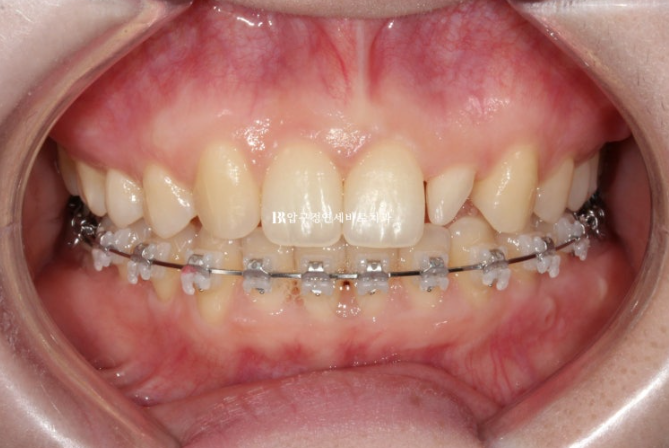
24.11
To restore the peg-shaped tooth to an appropriate size, the orthodontic appliances were removed first, and prosthetic treatment with a laminate veneer began.
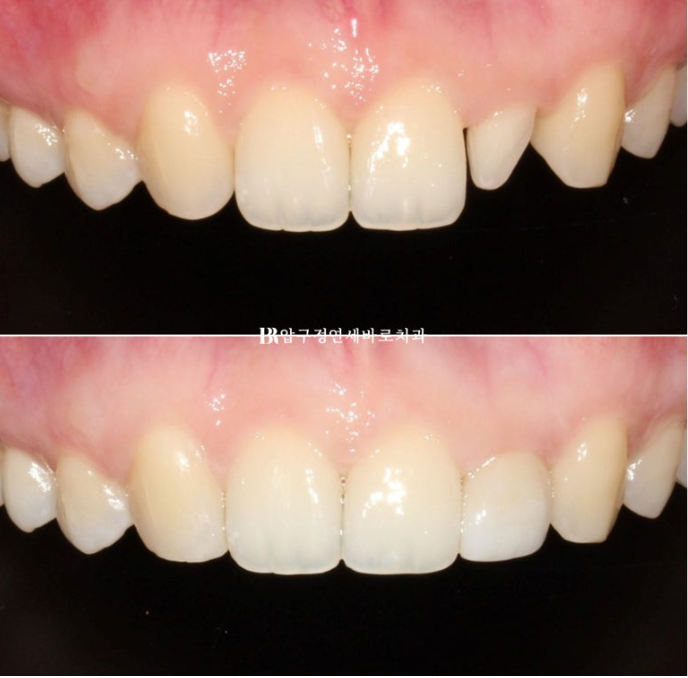
24.12
The peg-shaped tooth was restored with a laminate veneer. The canine that had been moved into the position of the missing front tooth was reshaped and built up with resin to restore symmetry with the opposite side as much as possible.
For a more complete treatment result, gum contouring around the peg-shaped tooth was also recommended before the laminate veneer treatment. However, the patient did not want this procedure, so symmetry in the gum heights could not be achieved.
Let us look at the results before and after treatment.
The total treatment period was one year and eight months, from April 2023 to December 2024.
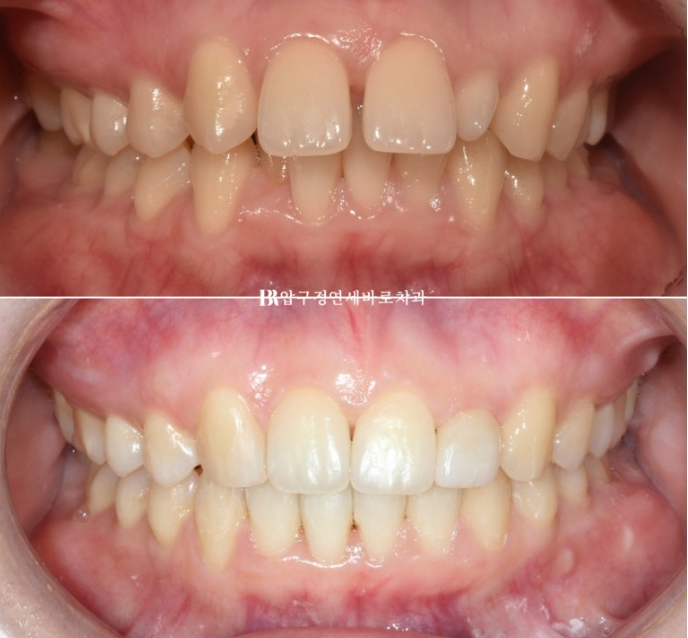
23.04–24.12
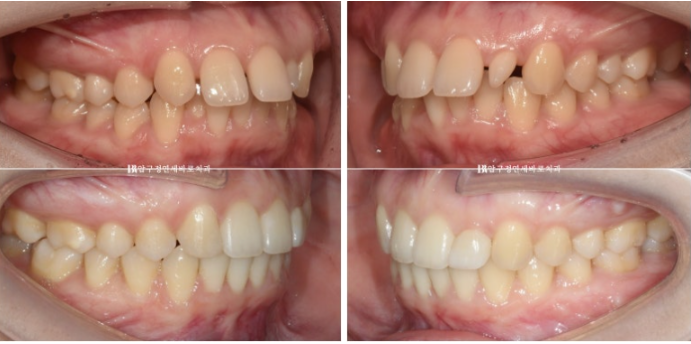
23.04–24.12
Orthodontic treatment is not considered complete if the bite is not satisfactory.
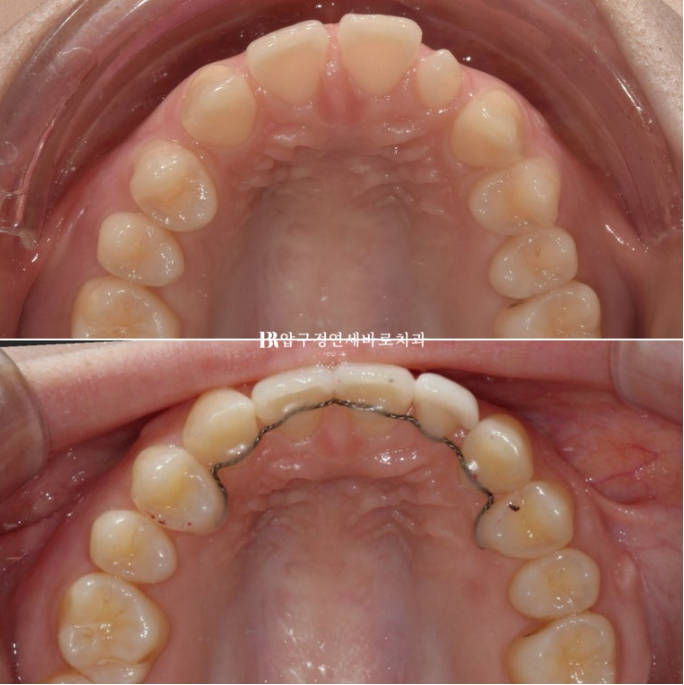
The canine replaced the missing lateral incisor, while the premolar replaced the canine.
Because the premolar looks similar in shape to a canine from the outside, the difference is not noticeable.
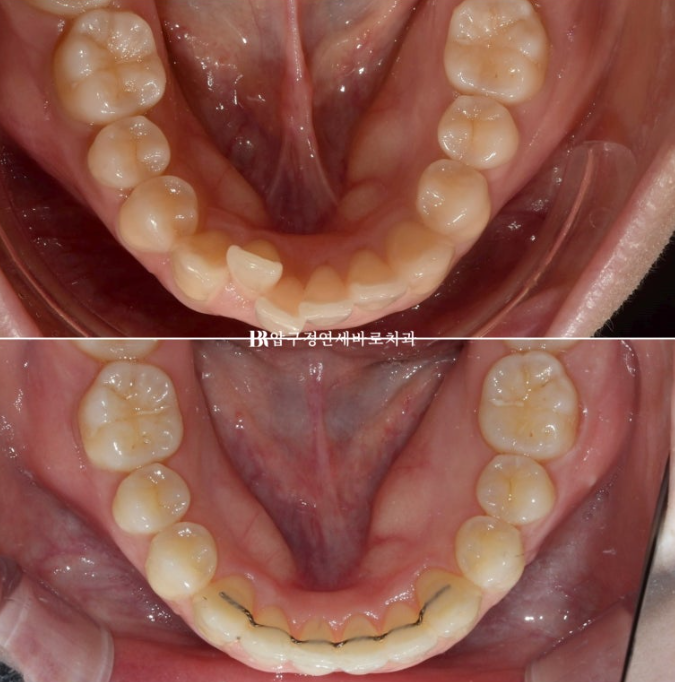
Now, let us look at the extent of improvement in the midline from the facial perspective.
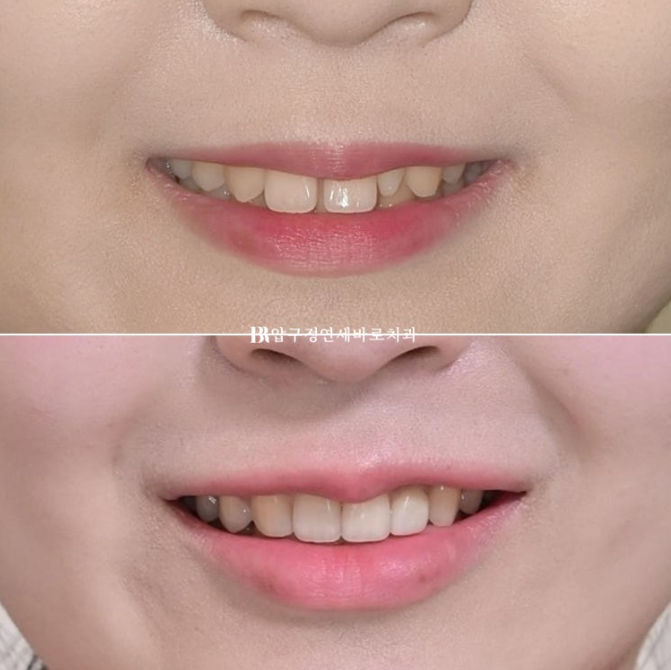
23.04–24.12
In addition to reshaping the canine to resemble a front tooth and restoring the peg-shaped tooth to a front-tooth shape,
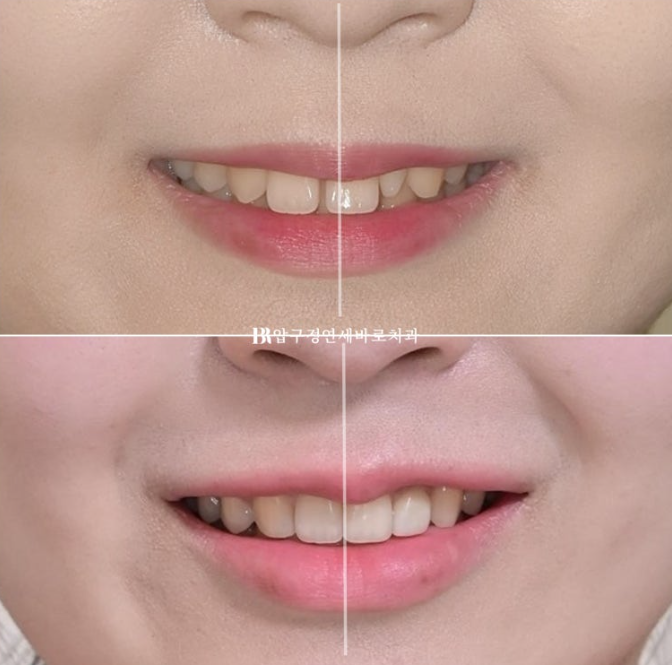
23.04–24.12
consideration of the midline is important.
The midline between the front teeth should align with the nose or the philtrum.
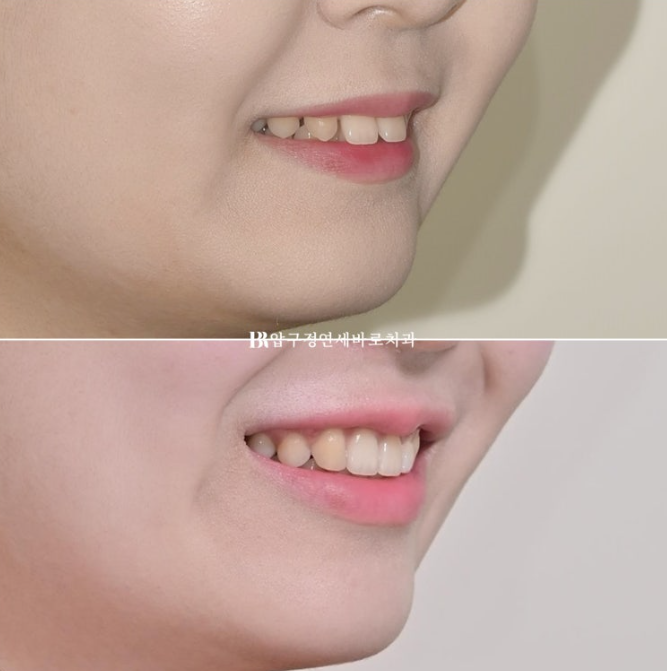
As the flaring was corrected, the smile also improved.
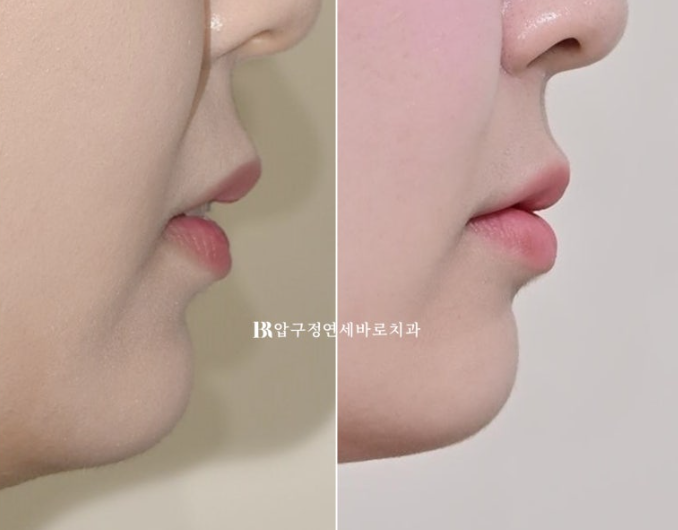
The lips, which could not close comfortably because of the protruding upper teeth, were able to close.
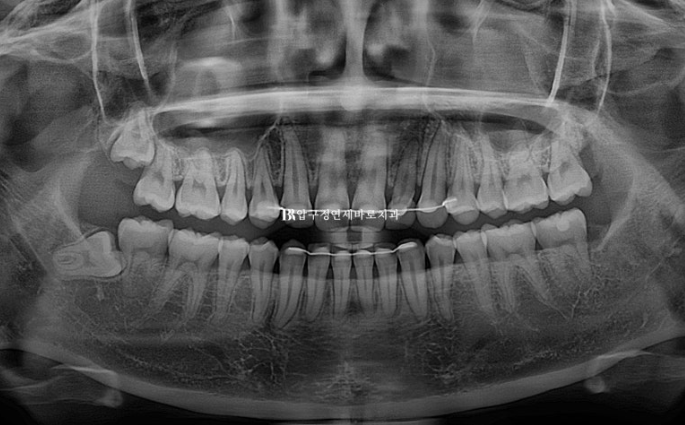
The root parallelism is satisfactory.