Hello.
Today, I would like to introduce a case in which the appearance of gaps between the front teeth was naturally improved with no-prep veneers due to microdontia and peg-shaped teeth.
This patient visited us to improve the gaps between the front teeth, but the issue was not simply the space between the teeth.
After examining the size and shape of the teeth, tooth color, and asymmetry of the gumline, we developed a treatment plan.
What if the gaps between the front teeth are not simply caused by tooth alignment?
In December 2023, the patient visited us hoping to improve the gaps between the front teeth.
The examination showed not only spaces between the front teeth but also the following characteristics.
-
The shapes of the front teeth were not uniform
-
Peg-shaped teeth that became narrower toward the bottom
-
Microdontia, making the teeth appear small
-
Aesthetic concerns about tooth color
-
Asymmetry between the left and right gumlines
-
A shape that made the front teeth appear short
Therefore, we determined that treatment was needed to improve the shape and size of the teeth as well, rather than simply closing the spaces between them with orthodontic treatment.
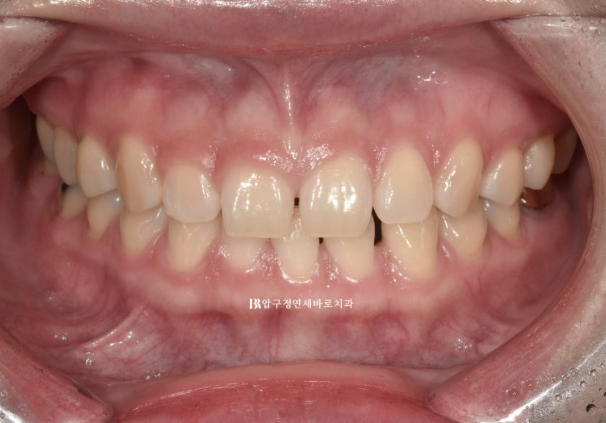
23.12
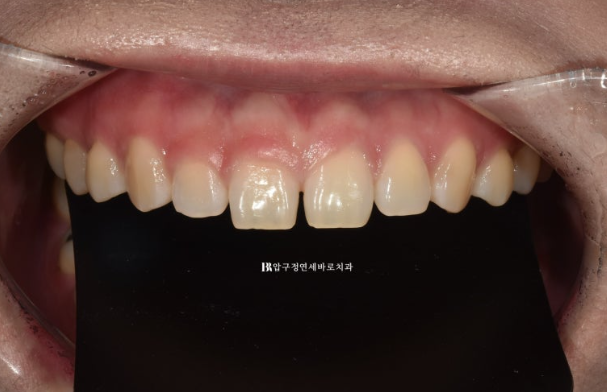
23.12
In addition to the spacing, the tooth shapes were not aesthetically pleasing and there were concerns about the color, so we decided on no-prep veneers rather than orthodontic treatment.
Because the gumlines were asymmetrical and the teeth were short, we also decided to perform gum contouring before placing the veneers.
Let us briefly discuss the shape of the teeth.
After scanning the teeth with an intraoral scanner, we simulated how they would look after closing the spaces with orthodontic treatment.
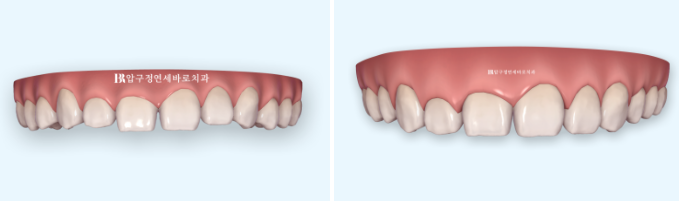
Left: Before treatment / Right: Post-treatment simulation
The orthodontic simulation appeared as follows.
Although the spaces between the teeth were eliminated with orthodontic treatment, the teeth still appeared spaced apart.
This was because they were peg-shaped, becoming narrower toward the bottom.
Can peg-shaped teeth be improved attractively with orthodontic treatment alone?
When there are gaps between the teeth, orthodontic treatment is often the first option considered.
However, not every case of spacing can be satisfactorily resolved with orthodontic treatment alone.
In this case, we first digitally scanned the teeth with an intraoral scanner and then conducted an orthodontic simulation.
When the tooth alignment after orthodontic treatment was simulated, bringing the teeth together reduced the spaces themselves.
However, the simulation still showed that the teeth appeared somewhat spaced apart.
The reason was the shape of the teeth.
The patient's front teeth were peg-shaped, becoming narrower toward the bottom.
In other words, simply aligning the teeth was not enough. The width and shape of the teeth themselves also needed to be improved to create front teeth that looked more natural and balanced.
Therefore, in this case, we chose to improve the shape and size of the teeth together with no-prep veneers rather than orthodontic treatment.
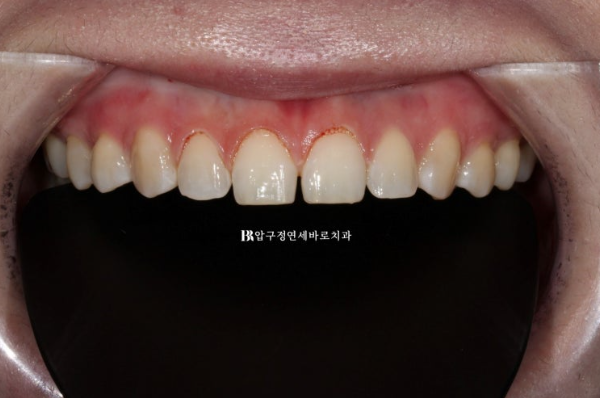
23.12
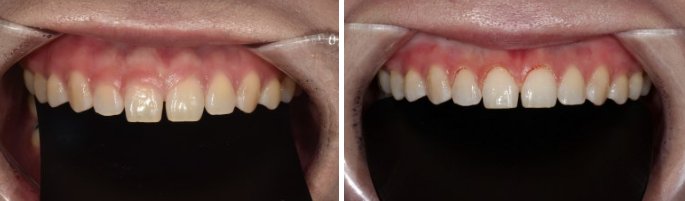
Before / after gum contouring 23.12
Afterward, while waiting for the gums to heal, we began preparations for the fitting.
Canines are naturally one shade yellower than the front teeth.
For this reason, no-prep veneers are generally recommended for at least six teeth, including the canines.
However, the patient wanted to have only the four front teeth treated, excluding the canines.
Therefore, after the fitting, we decided to determine the final number of veneers based on the appearance of the four front teeth and any color difference from the canines.
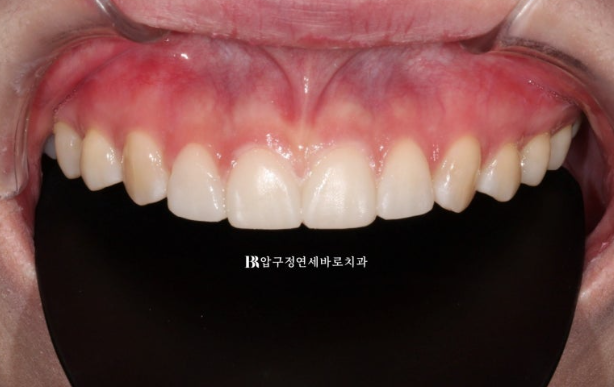
23.12
This is how the four front teeth looked at the fitting one week later.
The color difference from the canines was not as noticeable as expected, so we decided to proceed with only four veneers, as the patient wished. The patient also felt that the edges of the front teeth looked too closed off, so we modified their shape and adjusted their length to harmonize with the lip line when smiling.
Once the patient was completely satisfied with the shape, we began fabricating the no-prep veneers.
After waiting another 10 days, the veneers in the shape the patient wanted were ready.
This is why fitting is performed in advance for confirmation.
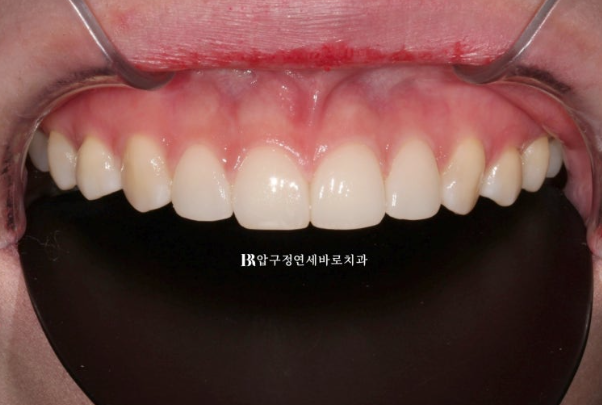
24.01
The veneers in the shape the patient wanted finally arrived. They were bonded after treating only the tooth surfaces, without removing any tooth structure.
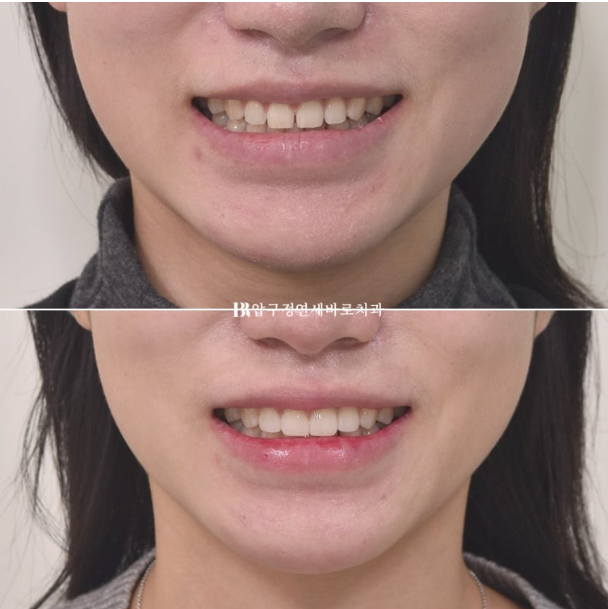
They look natural from the front as well.
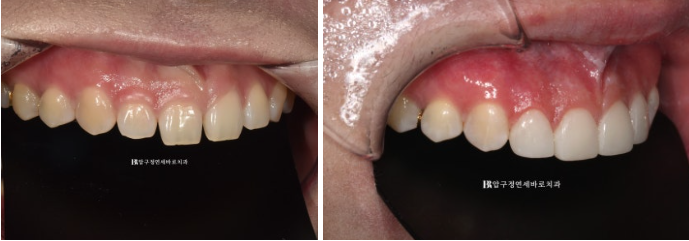
23.12–24.01
They also look natural from the side.
Although the canines were darker because they were the patient's natural teeth, we decided to address this with whitening for the time being. If desired, no-prep veneers can also be added to the canines at any time later.
23.12–24.01
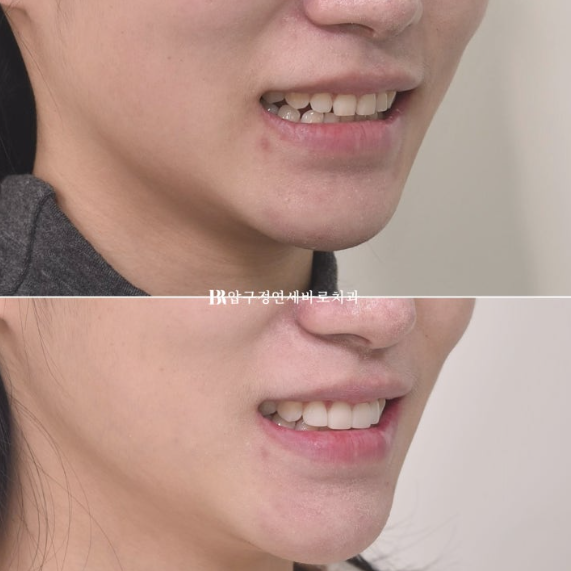
23.12–24.01
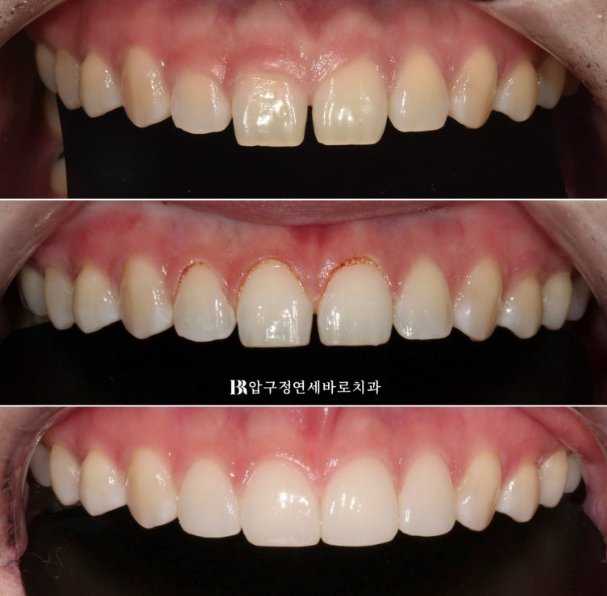
23.12–24.01
Initial visit – immediately after gum contouring – after placement of the veneers.
This was a satisfying treatment that created a naturally beautiful result without looking excessive.
For no-prep veneers on microdontia and peg-shaped teeth, the key is the “shape of the teeth”
As in this case, orthodontic treatment is not always the only answer when the front teeth appear spaced apart.
If the teeth themselves are small or narrow toward the bottom in a peg-shaped form, in addition to their position, the teeth may still appear spaced apart even after the spaces have been closed with orthodontic treatment.
Therefore, before treatment, it is important to comprehensively assess the size and shape of the teeth, tooth alignment, gumline, and harmony with the face and lips.
In particular, if you are concerned about the shape of your front teeth due to microdontia or peg-shaped teeth, it is advisable to carefully compare orthodontic treatment and no-prep veneers before deciding which treatment is more appropriate.
As in this case, the treatment focused on improving the shape and proportions of the teeth together rather than simply closing the space between the front teeth.
The goal was to create a shape that naturally complemented the patient's face and lip line, rather than front teeth that looked excessively large or artificial.
※ Results and treatment methods may vary depending on each individual's dental condition and treatment plan.