
Hello,
this is Flan Dental Clinic Seoul Gangnam Branch.
When getting dental implants, many people feel that bone grafting is burdensome because of the cost or the long treatment period.
Implant bone grafting is a treatment method in which, when there is insufficient jawbone due to various reasons, graft materials such as autogenous bone and allograft are used to build up the jawbone before placing the implant.
Bone grafting plays a very important role in implants, much like setting up pillars in civil engineering, so there are many cases where it is absolutely necessary.
So let’s take a closer look at when bone grafting is needed and why it must be done.
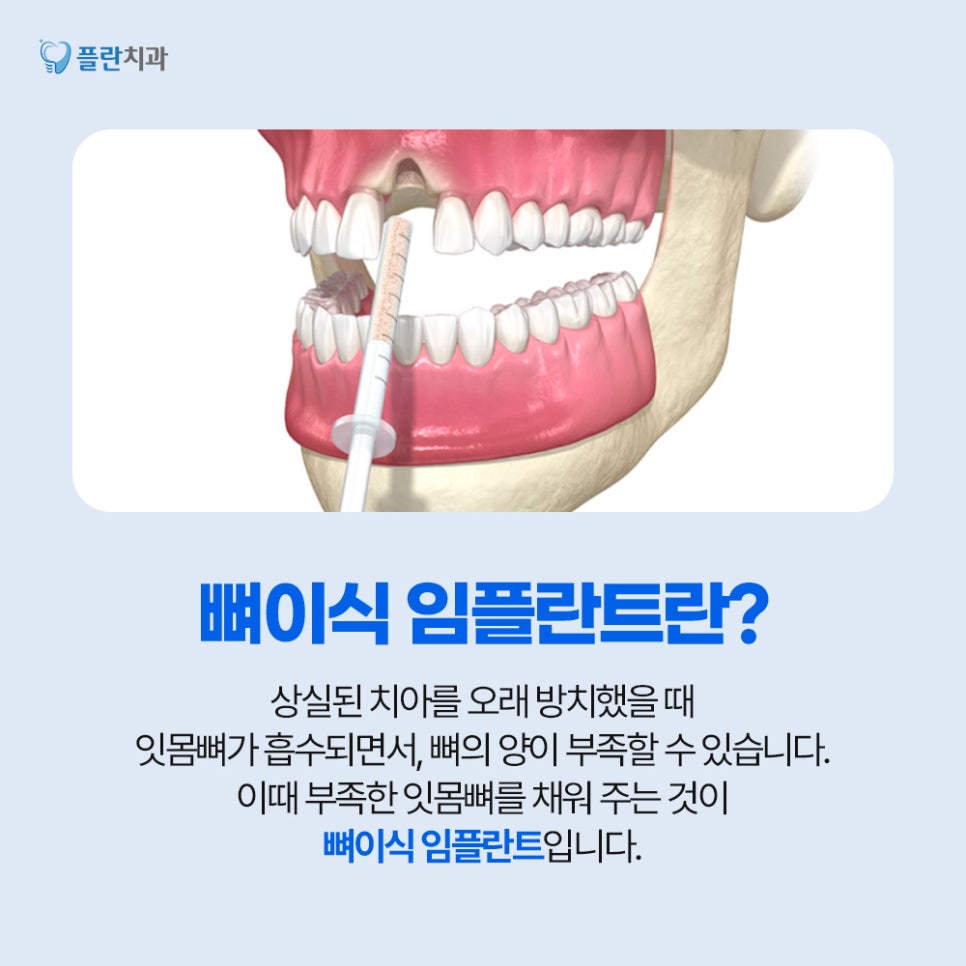
First, looking at bone-graft implants,
if a tooth is left untreated for a long time after falling out,
the jawbone is resorbed.
Even if no visible tooth remains,
there may still have been some bone left inside the gums,
but as time passes, this bone is resorbed,
leading to insufficient bone volume.
If there is not enough bone like this, even if you want to place an implant,
there is no pillar to support it, so it cannot be placed,
and that is why bone grafting becomes necessary.
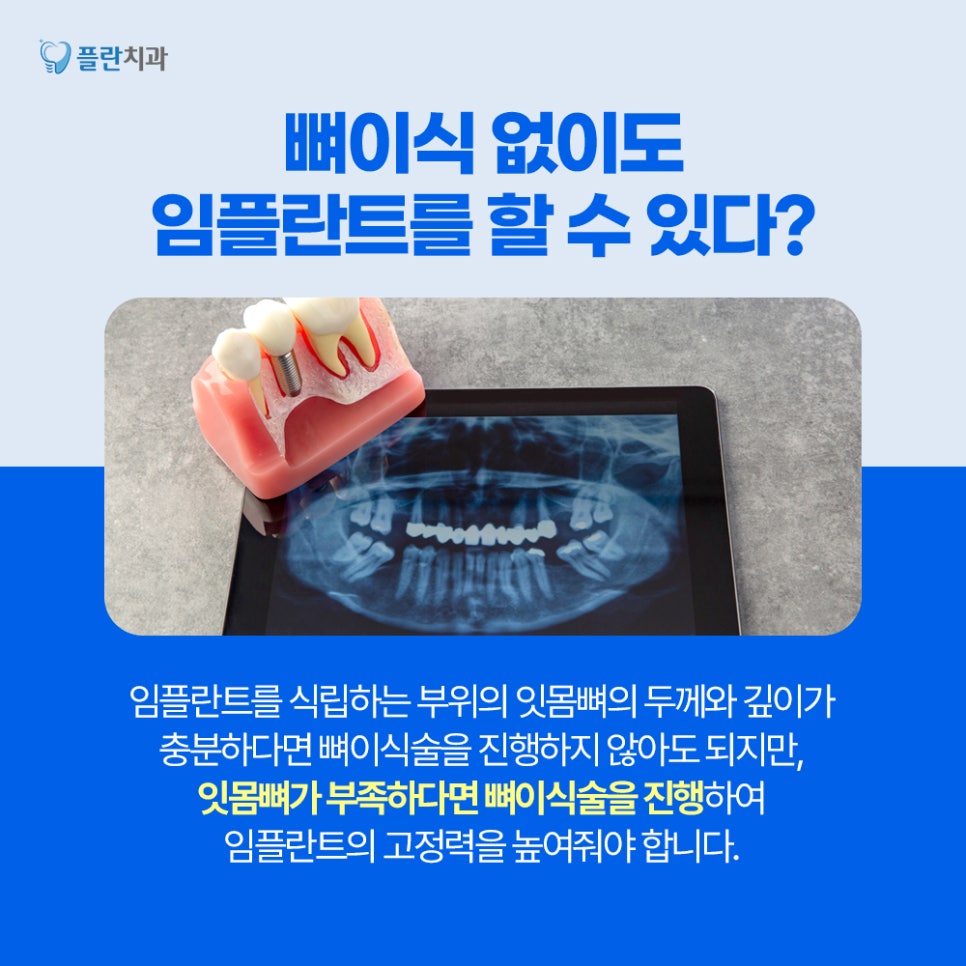
On the other hand, are there cases where bone grafting is not needed?
Of course. There are cases during implant surgery where bone grafting is not necessary.
Bone grafting is not needed when the thickness and depth of the jawbone are sufficient for implant placement.
Because the main purpose of bone grafting is to ensure that the implant is firmly fixed,
if that issue is resolved,
there is no need to perform bone grafting.
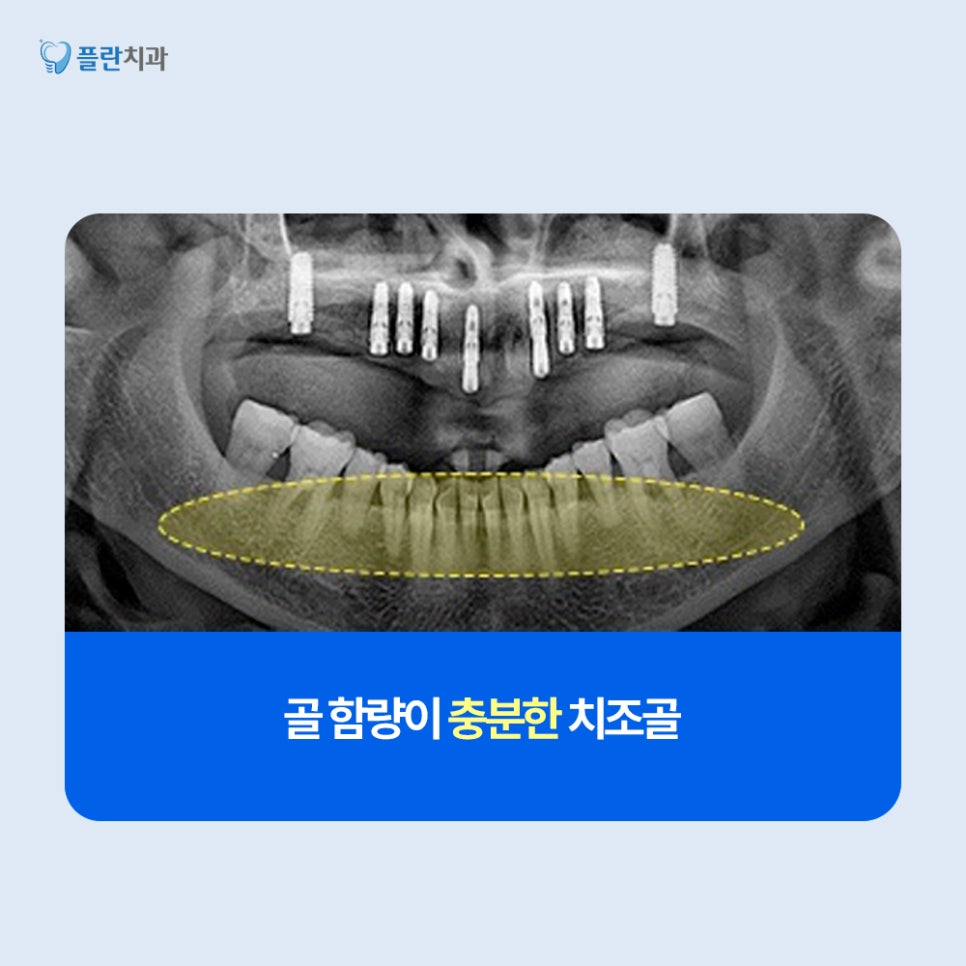 So how much alveolar bone volume is needed?
As shown in the photo above,
when there is enough bone volume, there is also enough space for placing the tooth.
So how much alveolar bone volume is needed?
As shown in the photo above,
when there is enough bone volume, there is also enough space for placing the tooth.
In particular, the implant must withstand root pressure so that the tooth does not become loose.
In the case of natural alveolar bone, regardless of height,
parts often become weak or wear away,
leaving the bone edge thin.
If the bone has become thin, it is judged that there is not enough bone volume,
and bone grafting is performed.
On the other hand, if there is enough bone volume, it firmly supports the root,
so even after implant placement, it can maintain strong stability.

After checking with CT and X-ray whether the amount of alveolar bone is sufficient
and whether the bone thickness is adequately thick,
the graft material must be selected according to the patient’s condition and budget.
Commonly selected graft materials include autogenous bone, allograft, xenograft, and synthetic bone.
In the case of autogenous bone, it is the patient’s own bone,
but the disadvantage is that it is inconvenient to harvest.
However, because it is the patient’s own bone, its bone regeneration ability is excellent.
Allograft is bone donated from another person and used in treatment,
so its bone regeneration ability is lower,
but it is characterized by a low immune rejection response.
Xenograft uses processed animal bone.
It is relatively inexpensive and easy to obtain.
However, compared with autogenous bone or allograft,
its bone regeneration ability is lower and its immune rejection response is relatively higher.
Lastly, synthetic bone uses artificially synthesized bone,
and it is used when autogenous bone or allograft is difficult to use.
Since each option has its own advantages and disadvantages,
after thorough consideration, you should consult with the medical staff
and choose which graft material is appropriate.
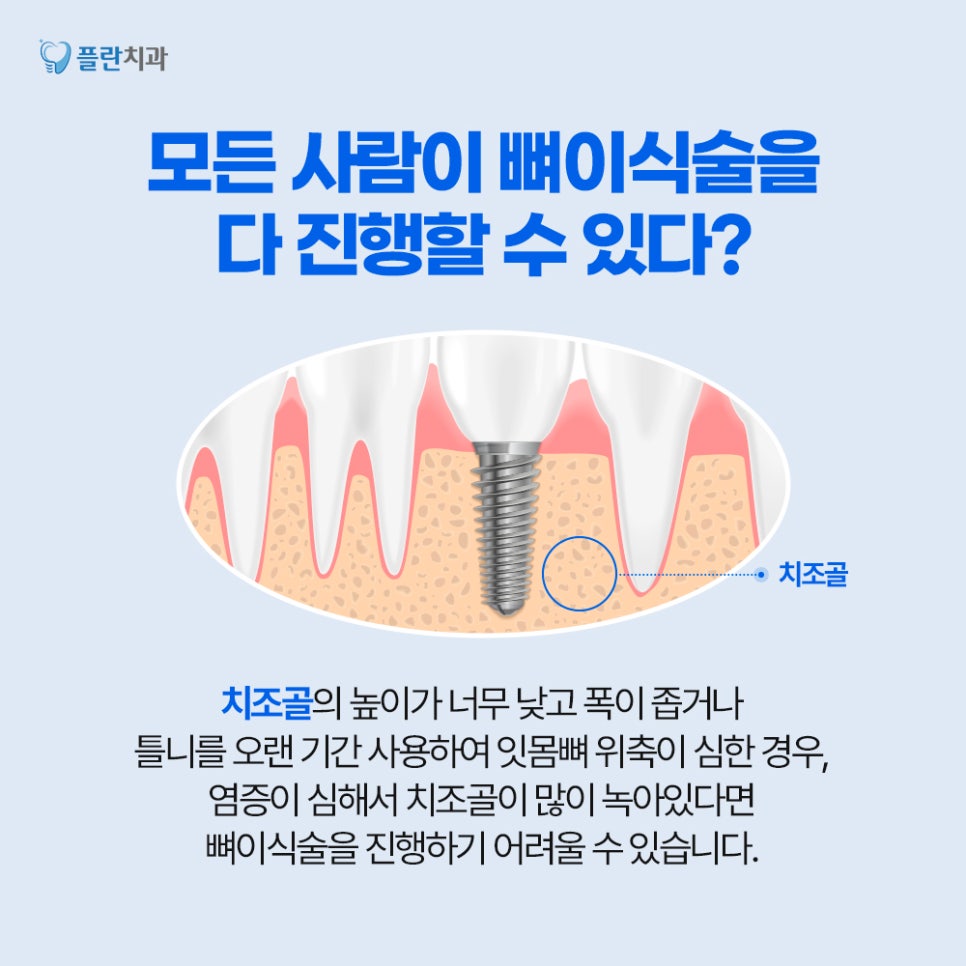
Then can everyone undergo bone grafting?
For the most part, there is no major problem with bone-graft implants,
but in some cases surgery is not possible.
This includes cases where the alveolar bone height is too low,
its width is too narrow, or severe alveolar bone atrophy has occurred due to long-term denture use,
or when inflammation is so severe that the alveolar bone has already significantly dissolved,
making bone grafting difficult.
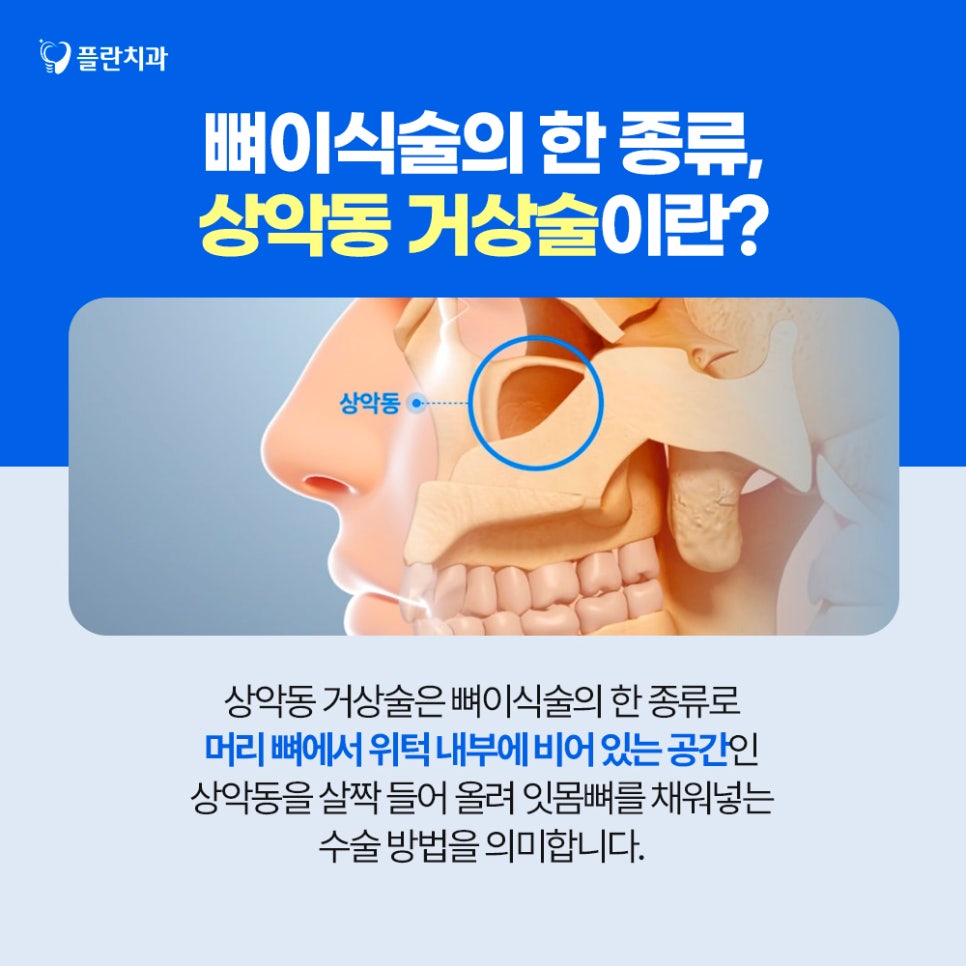
There is also a procedure called sinus lift among bone grafting procedures.
To understand a sinus lift,
you first need to know what the maxillary sinus is.
The maxillary sinus is one of the paranasal sinuses,
a cave-like empty space in the middle of the upper jawbone.
It is usually lined with the mucosa of the nose,
and air passes through it.
When performing bone grafting, the maxillary sinus area is often too narrow,
making grafting difficult.
In such cases, gently lifting the maxillary sinus and filling the jawbone
makes implant placement easier and more stable.

Lastly, let’s also go over the points to check when performing bone grafting.
First, to precisely check the condition of the bone,
not only X-rays but also detailed diagnostic equipment such as 3D CT is needed.
To check spaces such as the maxillary sinus,
the role of diagnostic equipment is especially important.
In addition, it is important to check whether the medical staff has ample experience with bone grafting,
whether genuine implant materials are used,
and whether aftercare services are available after implant placement.
Bone-graft implants are clearly among the more difficult implant procedures.
Therefore, please make sure to check the surgical experience of the medical staff,
the diagnostic equipment,
and whether the clinic has trustworthy clinical experience,
and make a careful decision.
This has been Flan Dental Clinic Seoul Branch.
Thank you :)
Directions
- Address: 15F, 119 Dosan-daero, Gangnam-gu, Seoul
- Approximately a 10-minute drive from Gangnam Station
-
Lunch break: 13:00–14:00
-
Phone number: 1666-3074