- Common Cold
- Symptoms
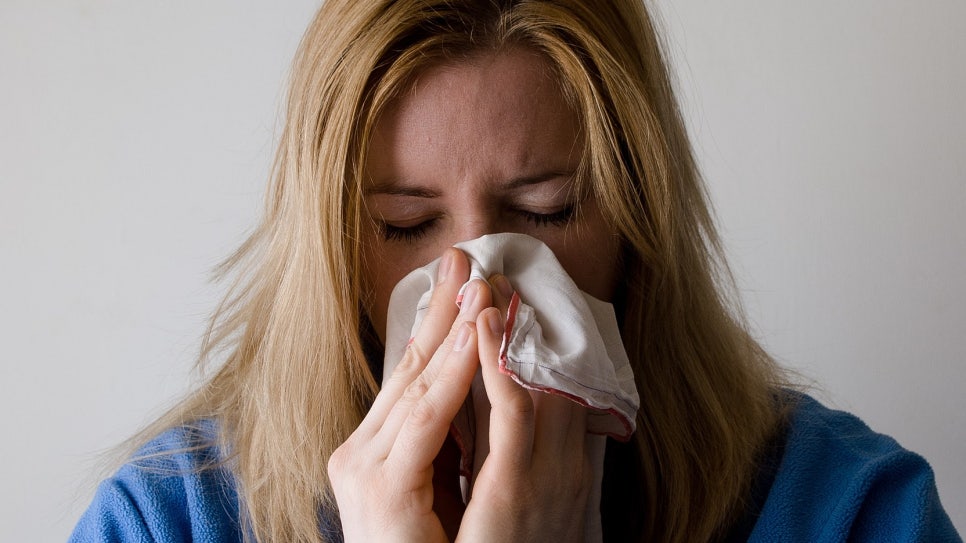
The main symptoms are runny nose, nasal congestion, sneezing, sore throat, and cough. These are mostly confined to the upper respiratory tract, such as the nose, pharynx, and throat. Fever is more common in infants and children than in adults.
Runny nose, nasal congestion, and cough occur one or two days after the onset of sore throat, malaise, and fever.
You may also feel pain, dryness, or a foreign-body sensation in the throat. If the throat is damaged by a cold and the damaged throat does not recover normally, especially during dry seasons, cough, phlegm, and a foreign-body sensation in the laryngeal area may persist for more than 3 weeks. In smokers, the cough is more severe and lasts longer. If you have rhinitis, postnasal drip syndrome may persist, and symptoms similar to sinusitis or asthma may also appear.
-
Complications
If the Eustachian tube becomes blocked, a feeling of fullness in the ear may occur, and if the sinus openings are obstructed, headaches may develop and a burning sensation in the eye area may occur. In adults, about 2% of colds lead to symptoms of otitis media (fever, pain, redness of the eardrum, exudate), and this is more common in children. Acute worsening of chronic conditions such as asthma, chronic obstructive pulmonary disease, and heart failure can worsen shortness of breath.
-
Chronic Cough
If a cough lasts for 3 weeks or 8 weeks or longer, it is called a chronic cough, and a chest X-ray should be performed to check for abnormalities in the lungs. If this happens repeatedly, tests may be needed for causes of chronic cough such as asthma, postnasal drip syndrome, and reflux esophageal disease.
① Asthma
A chronic inflammatory airway disease characterized by wheezing, shortness of breath, and cough due to repeated, reversible airflow limitation caused by airway hyperresponsiveness, and it is treated with inhaled steroids.
② Postnasal drip syndrome
One of the causes of chronic cough, with symptoms such as throat irritation causing a tickling cough, runny nose, and cough that worsens when lying down. It occurs due to rhinitis, sinusitis, after upper respiratory infections, and environmental irritants.
-
Acute Laryngitis
This appears more as a symptom of influenza than of a common cold, and patients complain of fever, throat pain, hoarseness, and difficulty swallowing food. In young children, it can also be a cause of death due to respiratory distress and upper airway obstruction, called croup.
-
Acute Pharyngitis
It is also part of a common cold, but pharyngitis may be the main symptom. Mild cases and cases with fever, malaise, headache, chills, severe sore throat making it difficult to swallow saliva or food, and referred pain to the ears can occur. Complications may include sinusitis, otitis media, laryngitis, bronchitis, and pneumonia, and systemic complications such as rash, toxic shock syndrome, meningitis, encephalitis, and myocarditis may also appear.
-
Acute Bronchitis
Unlike a common cold, in which cough is one of the symptoms, the main symptoms are cough and purulent sputum, and fever is rare in adults. It lasts for several weeks, and if the cough and phlegm continue even after the cold has improved, it may be bronchitis. With bronchitis, pain and burning in the chest occur. Influenza has a different pathogenesis, but it can cause tracheobronchitis. Smoking and air pollution can worsen symptoms, and repeated bronchitis is known to be one of the causes of bronchial damage and the development of asthma.
-
Influenza
Systemic symptoms such as high fever above 40°C, muscle pain, fatigue, loss of appetite, and headache are more common than respiratory symptoms such as cough, sputum, sore throat, runny nose, and nasal congestion. The course lasts about 5–10 days.
The risk of respiratory complications is very high, and about 10% of elderly people, pregnant women, and patients with chronic cardiopulmonary disease develop secondary bacterial pneumonia or primary viral pneumonia, some of which are fatal. In addition, it can cause croup, worsening of chronic lung disease, and acute tracheobronchitis.
So far, I have explained the symptoms of the common cold.
In the next part, we will look at the diagnosis of the common cold.
Source: National Health Information Portal, Korea Disease Control and Prevention Agency