◆ Treatment
The purpose of fracture treatment is to restore the position of the broken bone, reduce the patient’s pain, and promote union, thereby restoring physical function and preventing complications that may occur after a fracture. It can be divided into first aid and definitive treatment.
-
First aid
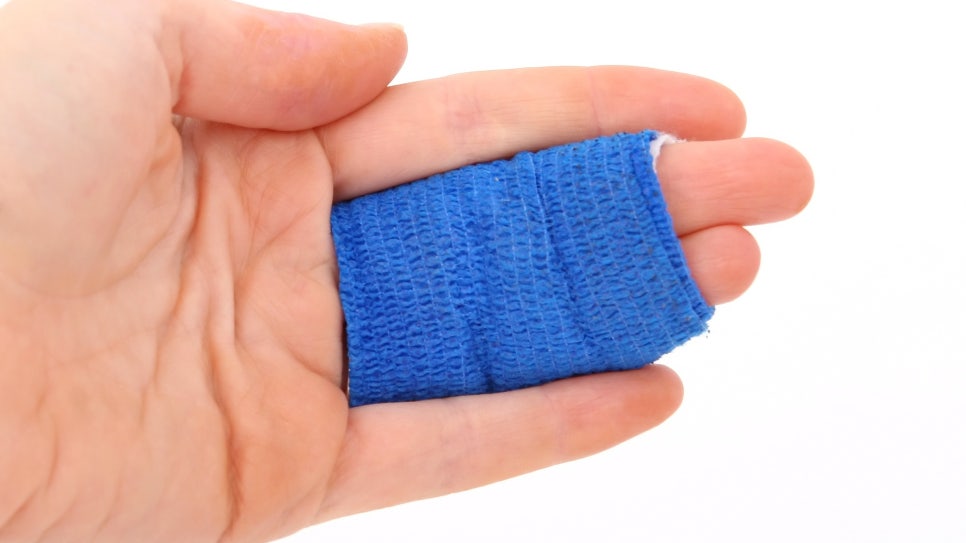
The most important and first step in first aid for a fracture is splinting the fracture site.
The reason splinting is essential is that the broken ends of a fractured bone are very sharp, and when the broken limb moves or bends, it can cause secondary injury to surrounding soft tissues such as muscles, blood vessels, and nerves. In addition, splinting reduces pain, decreases complications such as fat embolism or shock, and facilitates patient transport and radiographic imaging at the hospital.
-
Definitive treatment
Definitive treatment for fractures can be broadly divided into non-surgical and surgical methods.
- Non-surgical methods
This is a method in which the broken bone is aligned back to its original shape without surgery and then maintained in that position to achieve bone union.
① Closed reduction
Reduction is the process of putting a displaced bone back into place, and it refers to a method in which the practitioner manually pulls on the fracture site to correct it to its original position or a satisfactory position. It is best to attempt this as early as possible, and X-rays should be taken before performing reduction to accurately determine the displaced state of the bone.
② Fixation
After closed reduction has corrected the fractured bone to a satisfactory position, the reduction must be maintained well until the bone heals. Methods of fixation include casts (plaster casts, fiberglass casts), functional braces, pins, and cast immobilization.
Because children’s fractures unite faster than those of adults, non-surgical methods are mainly used, and after skin traction or skeletal traction treatment, additional fixation is performed with a cast or brace once callus (bone callus) is seen.
③ Period of immobilization
When a fracture occurs, the treatment period varies depending on the degree and location of the injury, the degree of displacement of the bone, and the patient’s age. For example, in the case of a hip fracture, the union period is known to be about 3 weeks in newborns, 8 weeks at age 8, 12 weeks at age 12, and about 20 weeks in adults.
- Surgical methods
Surgical methods include an open method, in which the fracture site is incised and exposed so that the fracture fragments can be aligned accurately under direct vision and then fixed, and a closed method, in which the fracture site is not exposed, the bone is aligned, and internal fixation is performed.
- Fractures requiring emergency surgery
· Fractures accompanied by vascular injury · When compartment syndrome occurs
· When neurological injury caused by a spinal fracture worsens
◆ Complications
-
Vascular and nerve injury
When a bone is fractured, the ends are very sharp and major blood vessels or nerves passing nearby may be injured, so this should be noted during examination. If the patient complains of numbness, paralysis, or similar symptoms, it can be very helpful for diagnosis.
-
Fat embolism
This is a complication in which microscopic fat tissue from the bone marrow moves into the bloodstream, damaging important organs such as the lungs, brain, heart, and kidneys, and causing severe symptoms including acute respiratory distress. To minimize fat embolism, the fracture site should be immobilized with a splint, and unnecessary movement should be avoided because excessive movement may worsen symptoms.
-
Compartment syndrome
If pressure within the tissue rises excessively due to a fracture, or if blood circulation within the compartment is poor because of vascular injury, there is insufficient oxygen supply to the tissue, leading to damage to muscles and nerves and leaving serious sequelae. If compartment syndrome is suspected, the fascia surrounding the muscle must be quickly incised to reduce pressure within the compartment.
-
Infection
This is seen more often in open fractures, where the bone is exposed to the outside, than in closed fractures, and infection can also occur after surgery when a fracture is treated surgically.
-
Complications of fracture union
-
Malunion
This refers to a case in which the broken bone heals in a position other than its original one, causing cosmetic problems and functional impairment. Malunion of the articular surface can cause serious disability.
-
Delayed union
This refers to a state in which union is delayed despite treatment for a sufficient period for the fracture to heal, and the healing process has not yet completely stopped.
-
Nonunion
This refers to a state in which the healing process of a fracture has stopped; union cannot be achieved naturally and orthopedic treatment such as bone grafting or reoperation is required.
- Avascular bone necrosis
This refers to a phenomenon in which the nutrient artery supplying the bone is damaged due to a fracture or dislocation, causing part of the bone to die. It can occur in the femoral head, wrist bones, ankle bones, and others.
So far, I have explained the treatment and complications of bones.
In the next part, we will look at the symptoms of influenza.
Source: Korea Centers for Disease Control and Prevention, National Health Information Portal