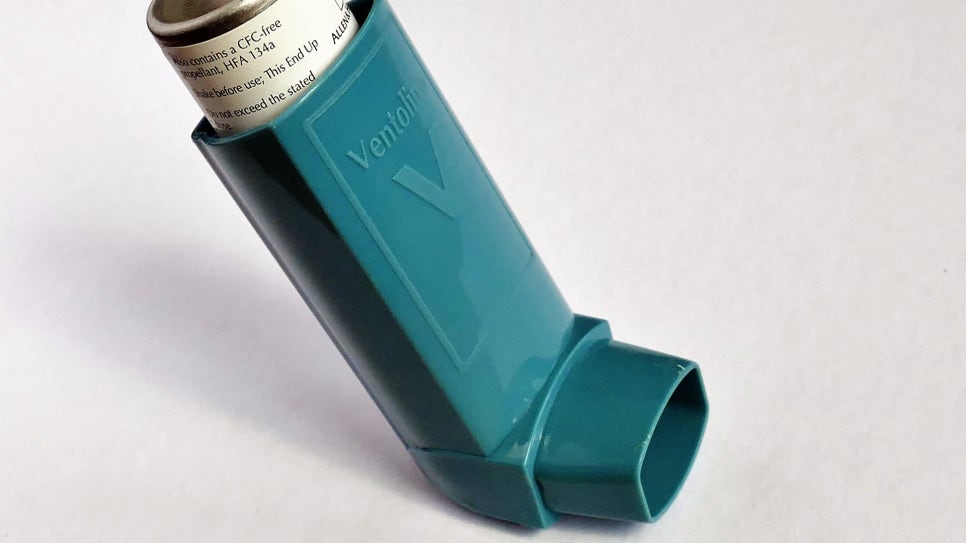
Bronchial asthma is a chronic inflammatory airway disease characterized by airway hyperresponsiveness and reversible airway obstruction.
It is a major public health issue affecting about 300 million people worldwide. Asthma is a chronic allergic inflammatory disease of the airways, in which the bronchi in the lungs sometimes become narrowed, causing repeated and sudden attacks of respiratory symptoms such as shortness of breath, coughing, and wheezing. Its prevalence is increasing in many countries around the world, and in Korea as well, it is increasing among children and adolescents and in adults over the age of 40.
Asthma is a disease that places a heavy socioeconomic burden, not only through direct medical costs such as treatment expenses, but also through reduced productivity due to absenteeism, missed work, and limitations in daily life.
The word asthma comes from the Greek word meaning "sharp breathing." It was first used by Hippocrates in 450 BCE, who thought it occurred commonly among sailors, fishermen, and metalworkers. Six centuries later, Galen mentioned that asthma was caused by complete or partial bronchial obstruction. The use of bronchodilators began in 1901, but it was not until 1960 that inflammation-related factors associated with asthma were recognized, and anti-inflammatory treatment began to become the main form of therapy.
Causes
Triggering factors that cause asthma or worsen its symptoms include "causal factors," which are the causes of asthma, and "exacerbating factors," which worsen asthma symptoms. Asthma patients differ from person to person, and discovering what their asthma triggers are, then eliminating or avoiding those irritants, is an important way to prevent asthma.
- Causal factors
① House dust mites
The most common causative substance in asthma is house dust mites. House dust mites reproduce best in damp, warm, and dusty places with a temperature of 25°C and humidity of 80%. They feed on the dead skin flakes shed by humans and are found in large numbers in bed mattresses, carpets, fabric sofas, clothing, and bedding.
② Pollen
A characteristic of asthma caused by pollen is that symptoms appear or worsen only during the season when the causative pollen is airborne.
③ Mold
Mold is commonly found both indoors and outdoors and triggers symptoms at a similar level throughout the year.
④ Pets
The problem lies in dander and hair shed from the skin of dogs and cats, which are kept as pets, as well as their urine and saliva.
⑤ Cockroaches
Asthma can occur when powder from cockroach bodies and their droppings mix with dust and enter the bronchi while breathing.
⑥ Food
Unless you have experienced worsening symptoms after eating certain foods, there is no need to avoid them. However, in some patients, asthma, rhinitis, or systemic shock may occur after eating certain foods, so if symptoms repeatedly appear after eating a specific food, it should be checked whether the asthma is food-induced. In Korea, buckwheat, eggs, crab, milk, shrimp, peaches, flour, tomatoes, chocolate, peanuts, and apples are known to be foods that can cause or worsen asthma.
⑦ Occupation
More than 300 substances have been reported as causes of occupational asthma, and the causes vary widely, including highly reactive molecules such as isocyanates used as paint ingredients, wood dust, zinc, and seafood.
⑧ Exercise
If asthma symptoms such as shortness of breath are triggered by aerobic exercise such as running, exercise-induced asthma is suspected. Exercise-induced asthma also has clinical features similar to other types of asthma and responds to typical asthma medications such as short-acting inhaled beta β2 agonists.
⑨ Obesity
Obesity is also known to be a risk factor for asthma. Mediators such as leptin may increase the onset of asthma by affecting airway hyperresponsiveness and lung function.
- Exacerbating factors
① Climate change
② Air pollution
③ Cigarette smoke / chemicals / strong odors
④ Upper respiratory infection (cold)
⑤ Physical activity / exercise
⑥ Medications
⑦ Food additives
⑧ Stress
So far, I have explained the causes of asthma.
In the next part, we will look at the symptoms of asthma.
Source: Korea Centers for Disease Control and Prevention, National Health Information Portal