When symptoms occur due to an injury, the representative first-aid methods are four: Rest, Ice,
Compression, and Elevation. Together, they are called the 4 Rs of first aid, or the RICE method,
after the first letters of the English terms.
- RICE Method
- Rest
Reduce the amount of daily activity, and if necessary, use crutches or a cane to distribute body weight while walking.
If the pain is severe and until the diagnosis is confirmed, immobilizing the injured area with a plaster splint can also be a good way to provide local rest.
- Ice
Apply an ice pack or cold wet compress to the injured area for about 20 minutes, 4 to 8 times a day. If using an ice pack, it should be wrapped in a towel before use. Be careful, because applying it for too long at one time or allowing the ice to touch the skin directly can cause frostbite.
Properly applied ice treatment lowers the temperature inside the skin, subcutaneous tissue, and muscles, reducing swelling and bleeding caused by acute trauma and relieving pain. However, after 48 hours, it can instead delay wound recovery, so ice treatment and warm treatment should be chosen depending on the condition.
- Compression
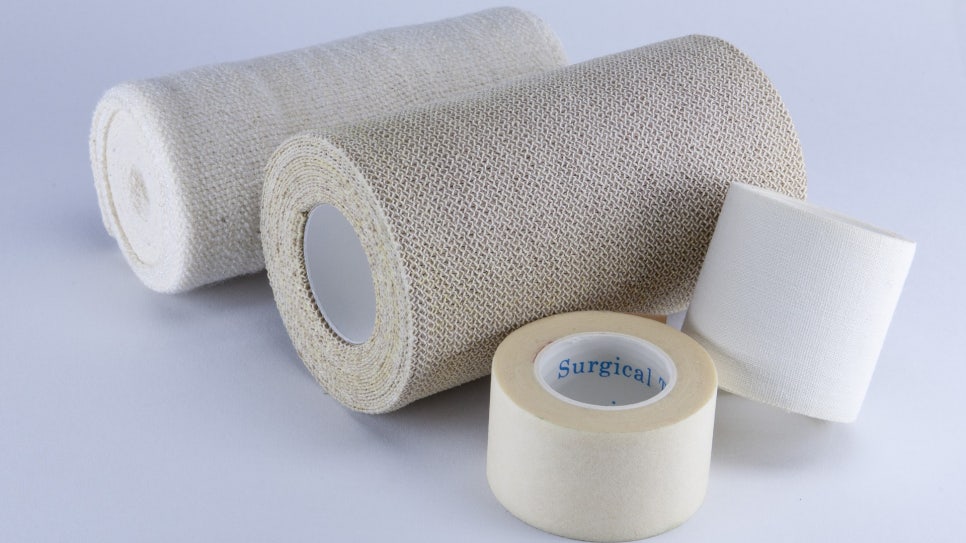
Compression of the injured area helps reduce local swelling and supports local stability, but when wrapping a compression bandage, care should be taken to avoid wrinkles on the skin-contact surface so that blisters do not form on the skin. In particular, be careful not to cause circulatory problems due to excessive compression.
- Elevation
Raising the injured area above heart level helps reduce swelling through a physical effect.
- Non-surgical Treatment
This is the method chosen when the symptoms caused by an acute sprain are not severe or the patient is not very uncomfortable.
- Drug Therapy
Nonsteroidal anti-inflammatory drugs can usually be used. By taking medication, pain can be reduced and swelling can also be decreased, which may allow a faster return to previous activities.
Nonsteroidal anti-inflammatory drugs work by inhibiting cyclooxygenase in the body, and COX-1 and COX-2 are present.
COX-1 is closely related to maintaining organ function in the body, and inhibition may cause gastrointestinal toxicity, kidney dysfunction in at-risk groups, and reduced platelet aggregation. COX-2 appears at sites of inflammation, so recently drugs that selectively inhibit only COX-2 are being used, but they should be selected after considering the patient's risk factors.
- Physical Therapy
Physical therapy is one of the oldest fields of medicine and refers to treatment using various physical factors such as heat, light, electricity, ultrasound, and exercise. It is very helpful when medication may cause various side effects or when surgical treatment is not needed.
(1) Heat Therapy (Hot Compress Treatment)
Hot compresses are thought to relieve ischemic pain by causing vasodilation and increased blood flow, and to ease pain by flushing out pain-mediating substances. Heat therapy is not recommended for acute inflammation, hemorrhagic disorders, areas with reduced sensation, malignant tumors, and so on. Depending on the depth of penetration, it can be divided into superficial heat therapy and deep heat therapy.
A representative superficial heat therapy method, hot pack treatment, involves wrapping it in a towel and applying it to the painful area for 20 to 30 minutes. The spread of warmth is mainly limited to the skin, and the conduction of heat into deeper tissues is inhibited by increased subcutaneous fat and epidermal blood flow. Deep heat therapy uses ultrasound, shortwave, and microwave, and is known to be very helpful for tendinitis, periarticular inflammation, and inflamed tissue trauma. Hot compress therapy is effective in reducing muscle tension, but it should not be used in the acute phase because it may increase internal bleeding and swelling.
(2) Transcutaneous Electrical Nerve Stimulation
Transcutaneous electrical nerve stimulation is effective for both acute and chronic pain in the nerves and musculoskeletal system, but it is known to be ineffective for pain caused by brain and spinal cord injury and for pain caused by nerve damage. However, areas without sensation, and the heart and carotid artery areas, should be avoided. It is also not suitable over the uterus or fetus during pregnancy, in people with artificial pacemakers, and in areas with protruding bones or body hair, so caution is needed.
- Exercise Therapy
Exercise therapy can be broadly divided into exercise therapy for joint range of motion, exercise therapy for strengthening muscle strength, and functional exercise therapy for coordination and control. Among these, exercise therapy for acute ligament injury can be divided into four stages.
Initial treatment involves reducing bleeding, swelling, and inflammation through RICE therapy, followed by a 1 to 3 week healing period during which support is needed. After 3 weeks, the healed ligament enters the maturation stage, during which controlled stretching exercises of the injured joint and surrounding muscles help ligament maturation and reduce complications caused by joint immobilization.
After 6 to 8 weeks, the newly formed ligament can withstand nearly normal levels of stress, so strengthening exercises are performed to return to the pre-injury state. It takes 6 to 12 months for the ligament to be completely remodeled.
- Other Treatments
Prolotherapy, also called regenerative injection therapy, is known as a treatment that strengthens weakened ligament and tendon attachment sites by injecting various stimulants into ligaments, tendons, and joints to stimulate the formation of new bone and fibrous tissue. In other words, it is an injection treatment method designed to promote healing of damaged tissue.
- Surgical Treatment
If persistent pain and instability continue despite non-surgical methods, or if complications occur due to the sprain, surgical treatment is performed.
So far, I have explained sprain treatment.
In the next part, we will look at sprains by body area.
Source: Korea Disease Control and Prevention Agency National Health Information Portal