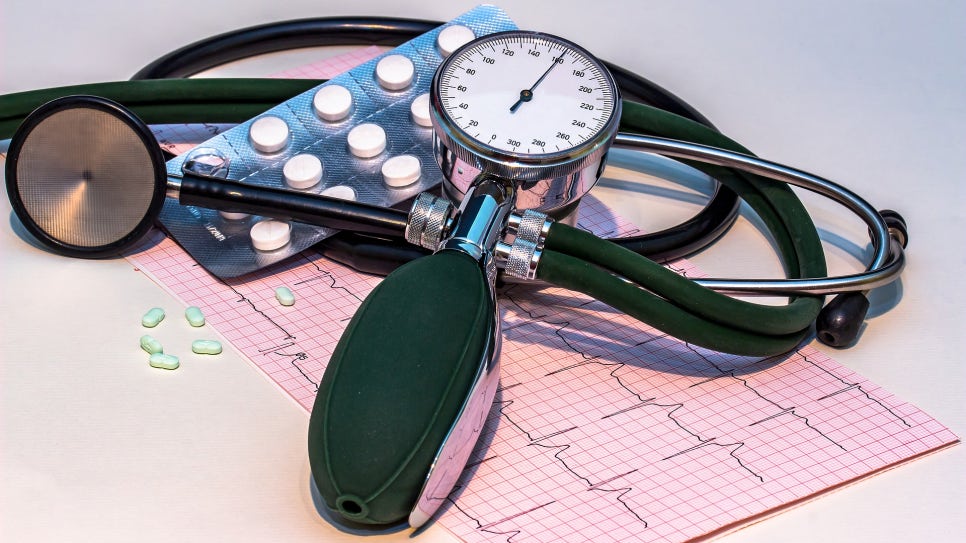
- Drug Treatment of Hypertension
Ongoing lifestyle therapy is the most important factor in blood pressure control. However, in most people, as age increases, the elasticity of the arteries declines and arteriosclerosis with calcification develops. For these reasons, patients with hypertension often cannot lower their blood pressure enough with lifestyle therapy alone, and medication is needed to reach the target blood pressure. The effects and side effects of medications vary from patient to patient, so several attempts may be necessary to find the best prescription. The following content provides basic information about antihypertensive medications used to treat hypertension.
- Angiotensin-converting enzyme inhibitors
These are widely used blood pressure medications that help blood vessels relax by blocking the formation of substances with vasoconstrictive effects, and they also suppress left ventricular hypertrophy and arteriosclerosis. Low blood pressure may occur at the beginning of treatment, so they should be used carefully in patients with dehydration or in older adults. Relatively common side effects include dry cough, skin flushing, and loss of taste.
- Angiotensin II receptor blockers
These drugs have effects similar to angiotensin-converting enzyme inhibitors, with a lower incidence of the side effect of dry cough.
They are preferred in patients with hypertension and diabetes because they reduce proteinuria and help prevent kidney complications.
A common side effect is dizziness.
- Beta blockers
Beta blockers suppress renin secretion and slow the heartbeat, reducing the heart’s workload.
They are often used in patients with arrhythmias accompanied by a rapid pulse or in patients with heart failure after myocardial infarction.
- Calcium channel blockers
These drugs relax the smooth muscle of the blood vessel wall and also slow the heart rate in some cases. If grapefruit juice is consumed with some calcium channel blockers, it can increase the blood concentration of the medication and raise the risk of side effects, so grapefruit juice should not be taken together with calcium channel blockers. Common side effects may include palpitations, edema, constipation, and headache.
- Diuretics
These drugs act on the kidneys to lower blood pressure by excreting sodium and water from food through the urine, and they lower blood pressure by dilating blood vessels. Thiazide diuretics play an important role not only in treating hypertension but also in preventing heart failure associated with hypertension. As side effects, blood sugar may increase in patients with diabetes, and a small number of patients may complain of erectile dysfunction. Leg cramps and fatigue may occur, and in such cases, consuming foods containing potassium can help. When blood pressure control is insufficient, diuretic treatment is very helpful.
- Other antihypertensive drugs
If blood pressure does not fall to the target level even with combinations of the medications described above, the following drugs may also be prescribed.
(1) Alpha blockers
Alpha blockers reduce nerve stimulation acting on blood vessels, thereby lowering the action of vasoconstrictive substances.
(2) Alpha-beta blockers
In addition to reducing nerve stimulation to blood vessels, they also reduce heart rate, lowering the amount of blood that must pass through the vessels during contraction.
(3) Vasodilators
Vasodilators act directly on the muscles of the arterial wall to prevent vessel constriction.
All medications have side effects, but for antihypertensive drugs, their effectiveness and safety have been proven over a long period of time, and the benefits of using these medications far outweigh the risk of side effects. In fact, among many patients, side effects from taking medication are very rare. Therefore, if side effects are suspected, it is advisable to first consult and be evaluated by the attending physician.
- Stepwise Treatment of Hypertension
- Prehypertension (120/80~139/89 mmHg)
This stage can progress to hypertension. Therefore, it is advisable to reduce the likelihood of developing hypertension through appropriate lifestyle modifications such as the following.
· Quit smoking. · Maintain an appropriate body weight. · Limit alcohol to an appropriate amount, to less than twice a week.
· Maintain healthy eating habits. In other words, a diet rich in vegetables and low-fat dairy products, and low in salt, is recommended.
· Exercise for about 30 minutes every day at moderate intensity.
If you are a healthy adult with no particular illness, medication is not necessary for prehypertension. However, if blood pressure is 130/85 mmHg or higher, the likelihood of hypertensive complications is nearly doubled, so lifestyle measures to lower blood pressure should be started. Also, if blood pressure is 130/85 mmHg or higher, masked hypertension is likely, and because masked hypertension requires drug treatment, it is better to measure blood pressure more accurately using home blood pressure or ambulatory blood pressure monitoring.
- Stage 1 Hypertension (140/90~159/99 mmHg)
If systolic blood pressure (the upper number) is 140 mmHg or higher, or diastolic blood pressure (the lower number) is 90 mmHg or higher, the diagnosis is stage 1 hypertension. Of course, even if both systolic and diastolic blood pressure fall within this range, it is still stage 1 hypertension. From this stage onward, medication is needed, and lifestyle measures should be carried out as well.
- Stage 2 Hypertension (160/100 mmHg or higher)
If systolic blood pressure is 160 mmHg or higher, or diastolic blood pressure is 100 mmHg or higher (even if both numbers exceed this range), the diagnosis is stage 2 hypertension. At this stage, it is important to prevent or delay the occurrence of hypertension-related complications as quickly as possible, so immediate drug treatment is necessary to lower blood pressure to the target level.
- Isolated systolic hypertension
Sometimes only systolic blood pressure, that is, the upper blood pressure, is elevated. This is called isolated systolic hypertension, and it is especially common in older adults over 60. Drug treatment is very important.
- Hypertension accompanied by other health problems
Hypertension often occurs together with other conditions such as the following. In such cases, stricter blood pressure control is needed.
· Heart failure · Coronary artery disease · Left ventricular hypertrophy · Diabetes · Chronic kidney disease · Stroke
Hypertension itself is also a risk factor for the diseases listed above, and if a person has one or more of those diseases and also has high blood pressure, the risk of fatal complications is even higher. Therefore, strict and thorough blood pressure treatment is necessary.
So far, I have explained Treatment of Hypertension Ⅱ.
In the next part, we will learn about pneumothorax.
Source: Korea Disease Control and Prevention Agency, National Health Information Portal