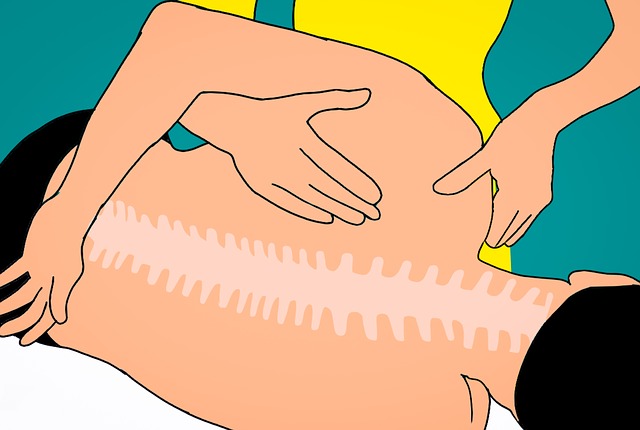
*What is spinal stenosis?
-
It refers to a condition in which the spinal canal, the passage through which the spinal nerves travel, becomes narrowed. Recently, many scholars have defined lumbar spinal stenosis as a disease that causes various neurological symptoms, including intermittent claudication, by compressing the cauda equina or nerve roots due to narrowing of the spinal canal or intervertebral foramina.
-
On radiographic examination, compression of the cauda equina (the bundle of nerve roots at the lower end of the spinal cord, shaped like a horse’s tail) can be seen in about 20% of asymptomatic elderly people over 60, and degenerative spondylolisthesis can be observed in about 10% of men and 25% of women over 75.
*What causes spinal stenosis?
-
Because the definition of spinal stenosis may be too broad and arbitrary, classification according to the characteristics of the disease was needed as a supplement. Accordingly, Arnoldi and others distinguished between congenital or developmental spinal stenosis and acquired spinal stenosis, and classified it according to the anatomical location and the pathological findings that cause the narrowing. With various modifications and additions by many authors, this classification is still the most widely used today.
-
The most common degenerative spinal stenosis begins in the 50s and 60s. In addition to central stenosis, lateral recess and intervertebral foraminal stenosis are common findings. It occurs most often between the fourth and fifth lumbar vertebrae, and also frequently between the third and fourth lumbar vertebrae and between the fifth lumbar and first sacral vertebrae.
-
In the past, it was reported to occur more often in men, but recent reports show a tendency for it to occur more often in women, and the same pattern is seen overall in Korea as well. In particular, degenerative spondylolisthesis occurs 4 to 6 times more often in women, which is explained as being due to ligament laxity caused by hormonal effects.
Although many diseases or syndromes may be involved in the development of spinal stenosis, most rarely act as a direct cause. In spinal stenosis caused by such conditions, symptoms appear with degenerative changes at a younger age than in typical stenosis.
*What are the main symptoms of spinal stenosis?
-
Because spinal stenosis is mostly caused by degeneration, the initial symptoms are similar to those of degenerative spondylitis and begin gradually. A vague dull pain and stiffness appear in the lower back, worsening in damp and cold weather and easing when kept warm. In addition, symptoms tend to worsen with increased activity and improve with rest, which is the typical pattern.
-
Because the size of the spinal canal changes depending on posture, symptoms generally worsen when the lower back is extended and improve when it is bent forward. In patients whose symptoms appear when standing or keeping the lower back straight, 80% experience relief simply by bending forward while sitting, and more than 75% experience symptom relief.
Most patients cannot clearly describe their symptoms, but they know that bending forward and sitting, or leaning forward while holding onto a chair, a utility pole, or a wall, relieves the symptoms. Most patients experience a gradual decrease over several months in the distance they can walk without stopping. Even if they cannot walk far, riding a bicycle, which involves bending the lower back forward, is not affected. A stooped, ape-like posture is commonly seen in older patients with stenosis.
Source: Korea Disease Control and Prevention Agency, National Health Information Portal