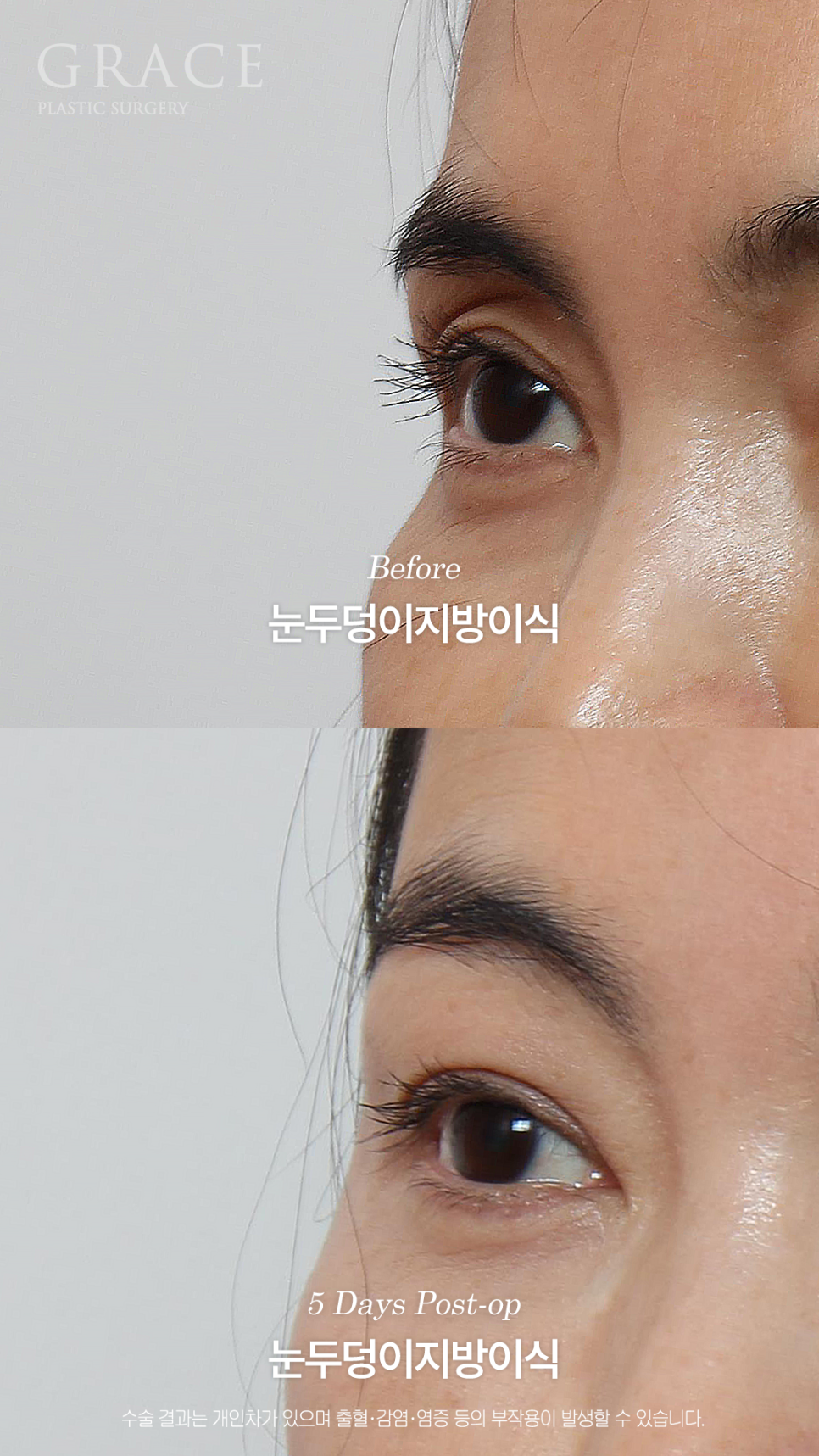
Fat grafting to the upper eyelids is an unexpectedly important procedure. A sunken upper eyelid is not an area that can be addressed simply by adding volume when the eyes are open. Because the eyelid skin is particularly thin, surface irregularities may become visible when the eyes are closed if fat collects in one area or is injected too superficially. Therefore, in upper-eyelid fat grafting, it is more important to determine the layer and the uniformity of fat placement than simply to add as much fat as the amount of hollowing suggests.
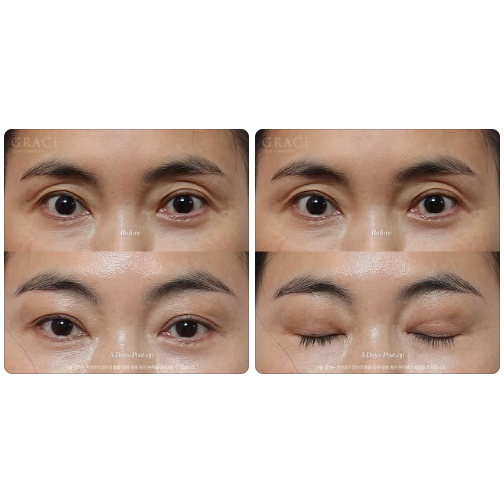
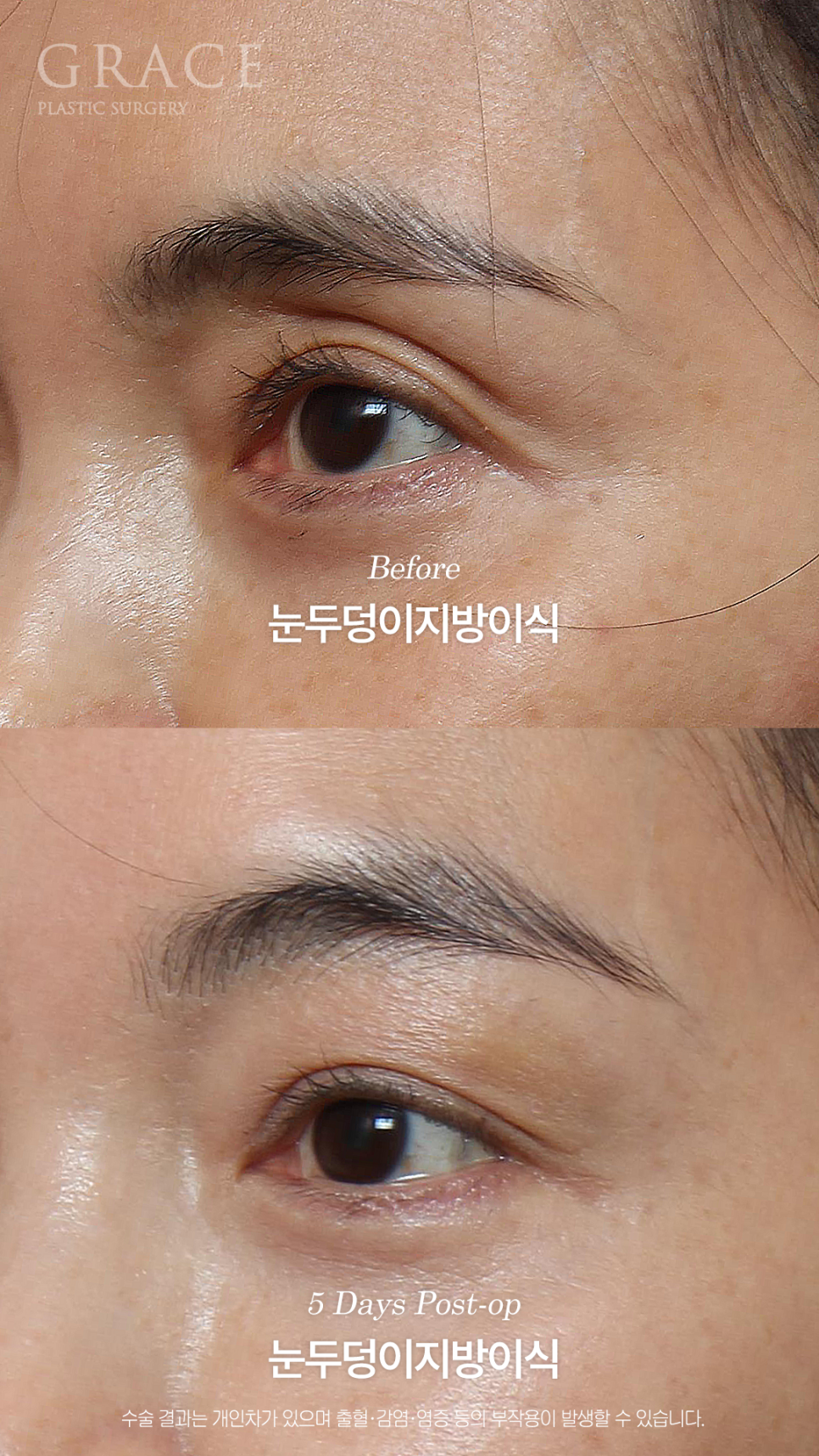
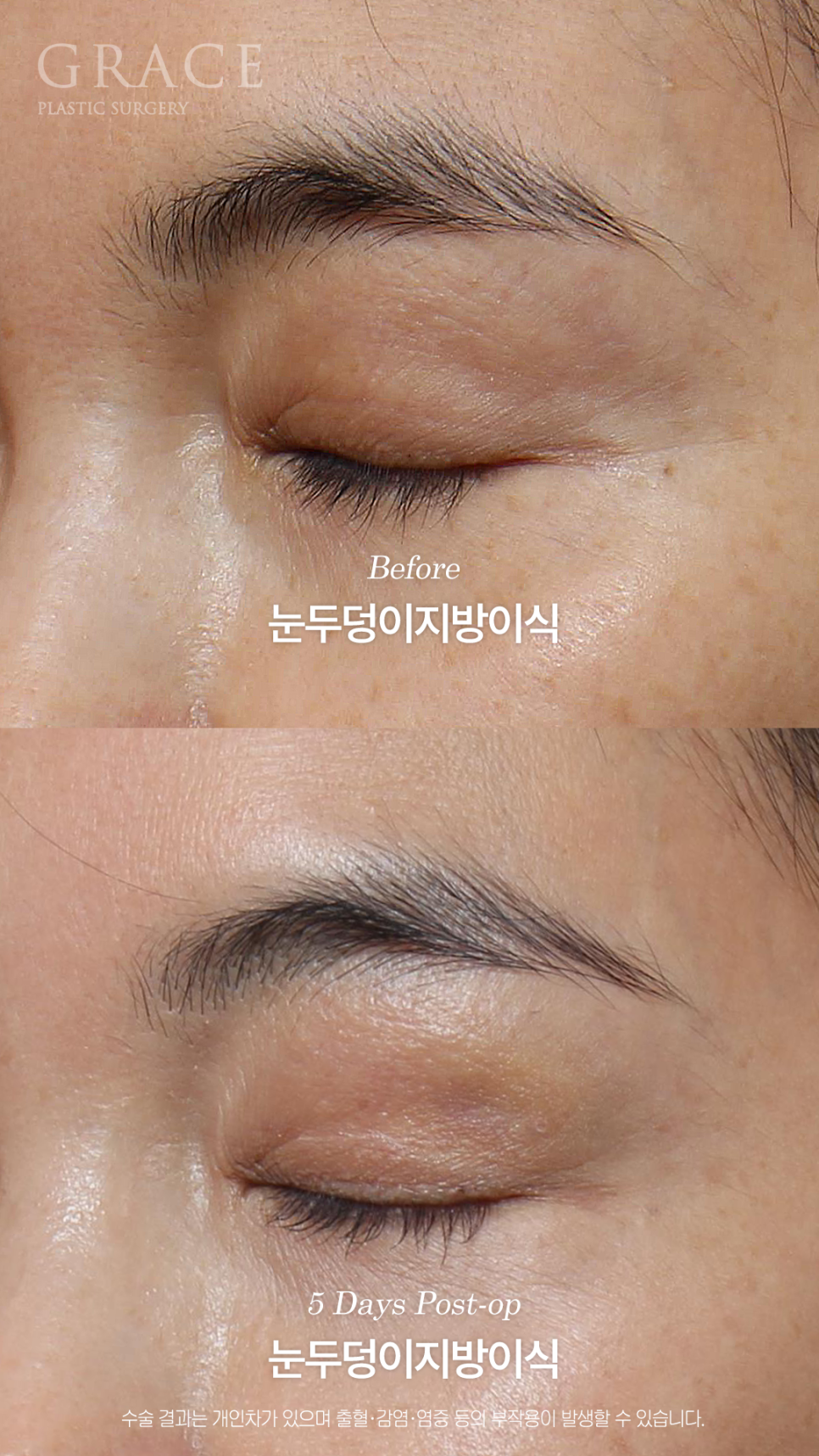
Why can it become bumpy? The upper eyelid has thin skin and soft tissue, so even small differences in volume can easily show on the surface. If too much fat is injected into one spot or is not distributed evenly, small nodules or indentations may appear. In addition, if part of the grafted fat does not receive sufficient blood flow, fat necrosis may occur and, rarely, may lead to calcification. In other words, adding more fat does not necessarily result in better graft survival. Rather, in thin areas such as the eyelids, the appropriate injection volume and even distribution are especially important.
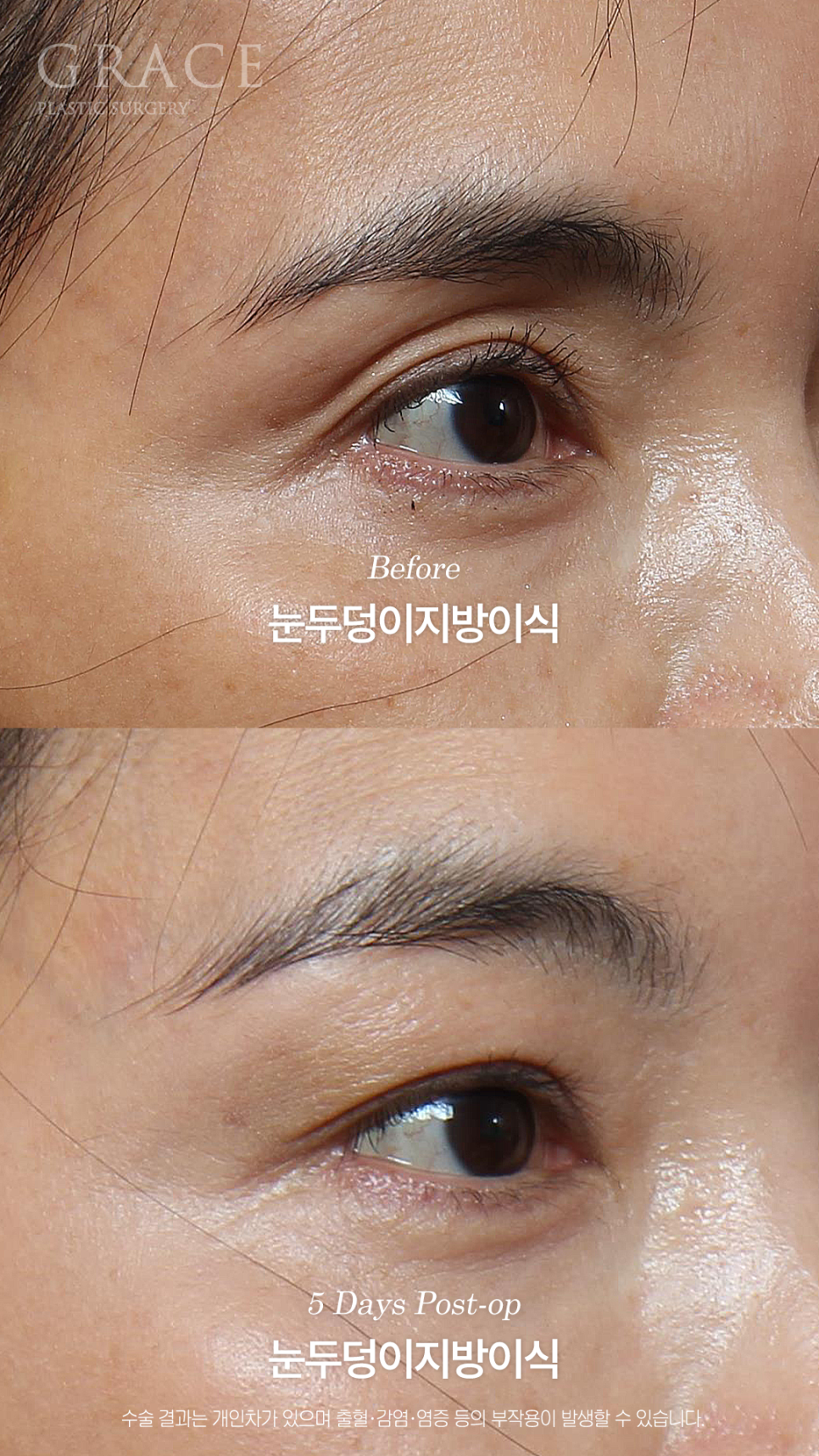
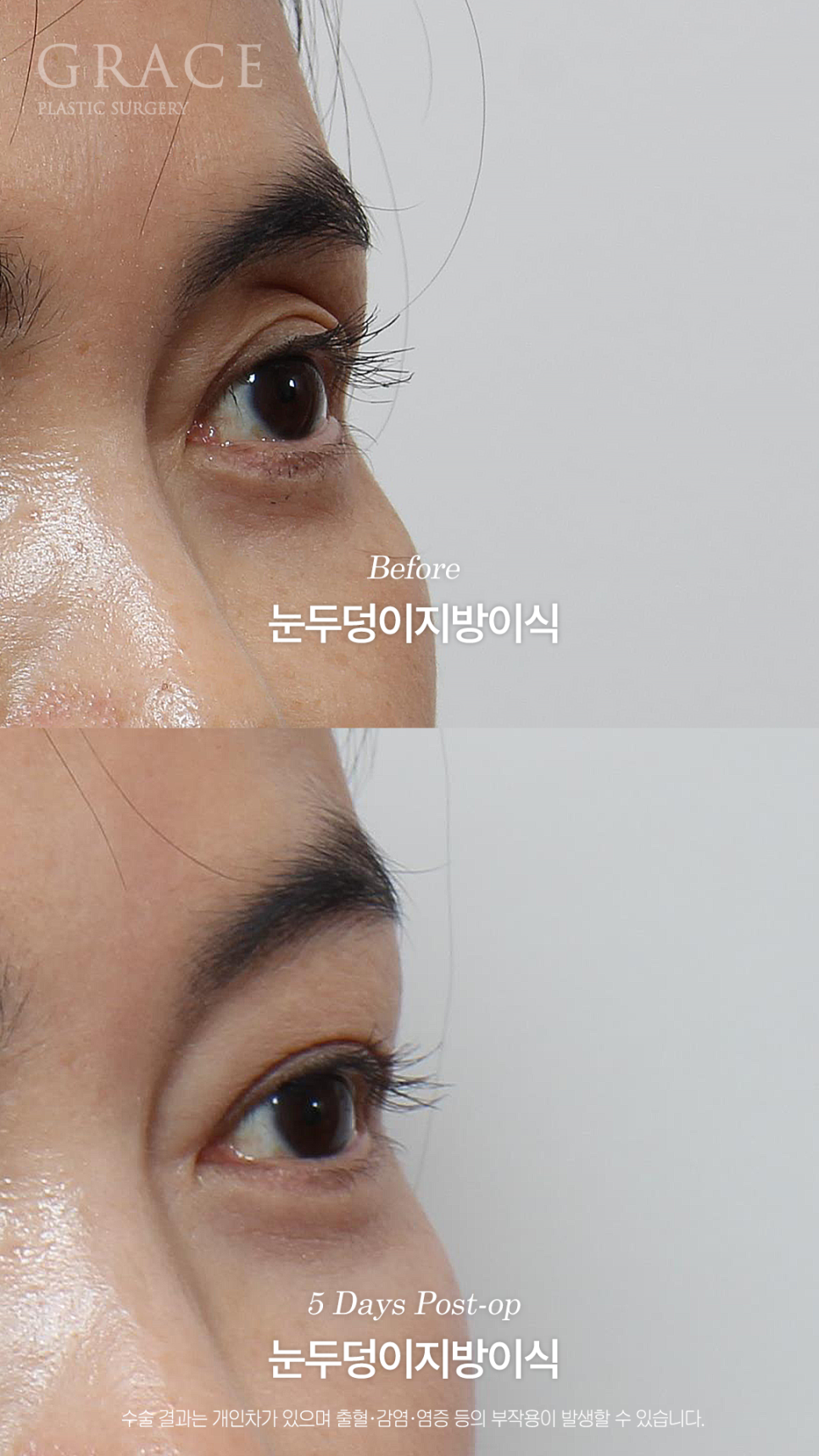
Previous image
Next image
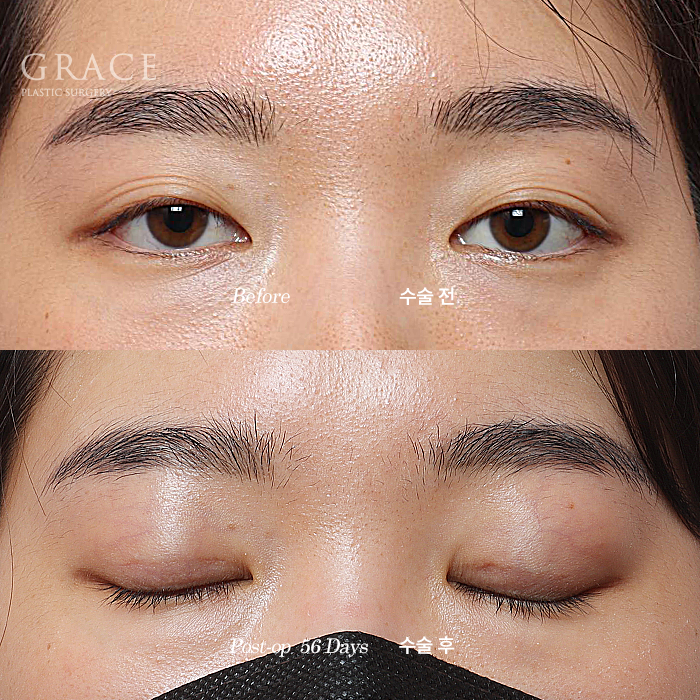
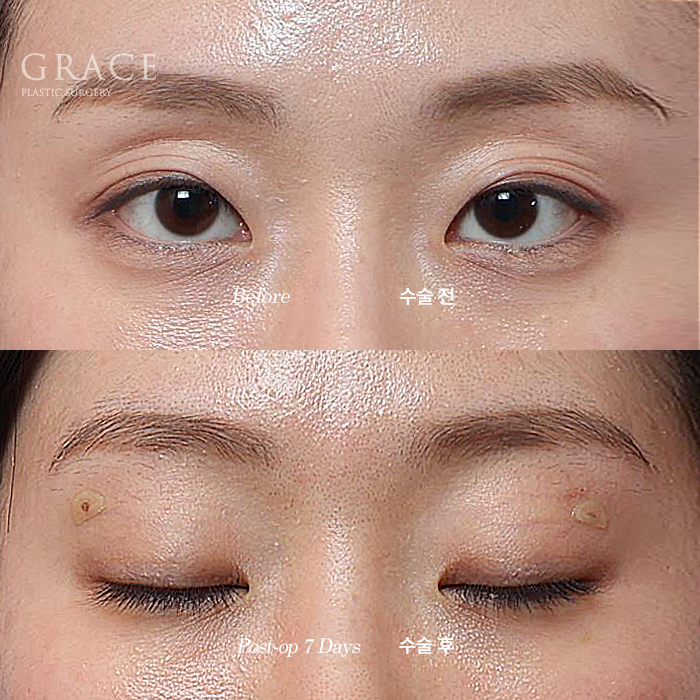
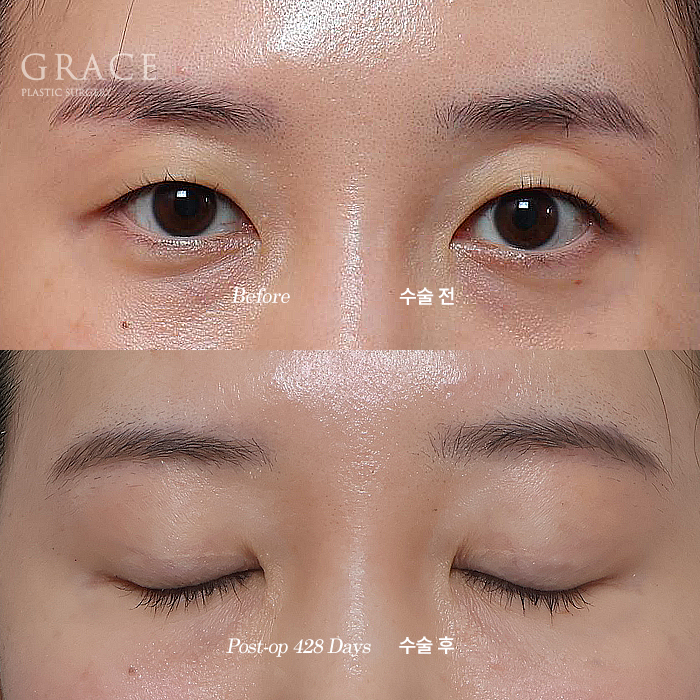
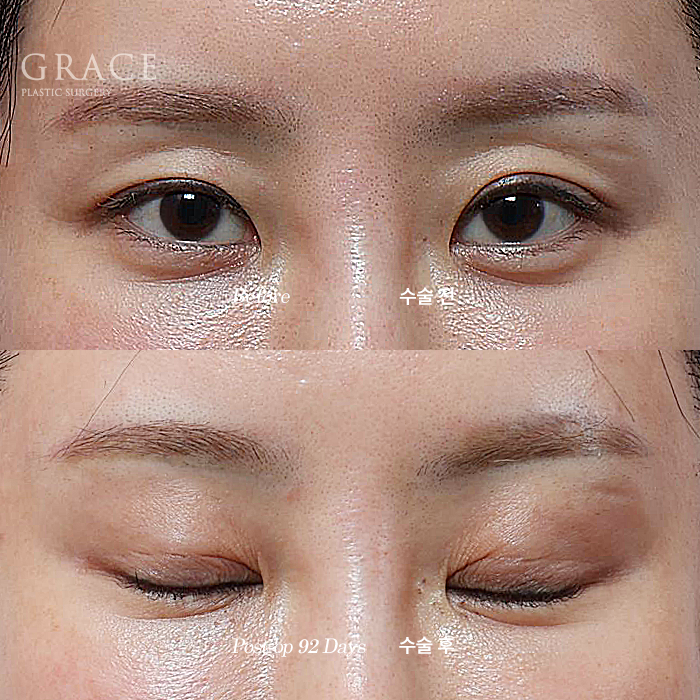
So, is the cannula important? Grace Plastic Surgery uses a cannula specifically designed for upper-eyelid fat grafting. Rather than creating a large volume at once, as in typical facial fat grafting, this technique takes the anatomical structure of the eyelid and the orbit into account and injects small amounts of fat into the necessary areas in separate applications. The key is less about simply “filling” and more about “placing evenly.” It is especially important to carefully adjust the injection volume and location so that no particular area protrudes when the eyes are closed and the borders of the fat graft are not visible.
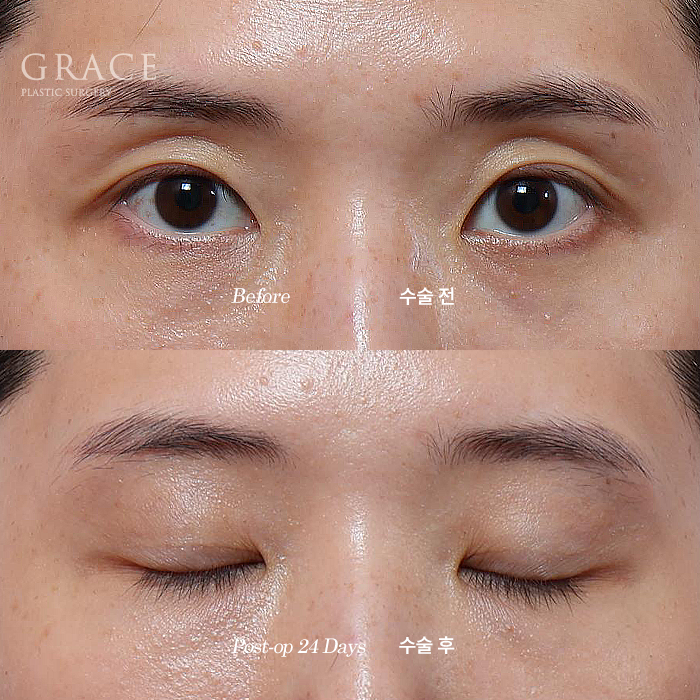
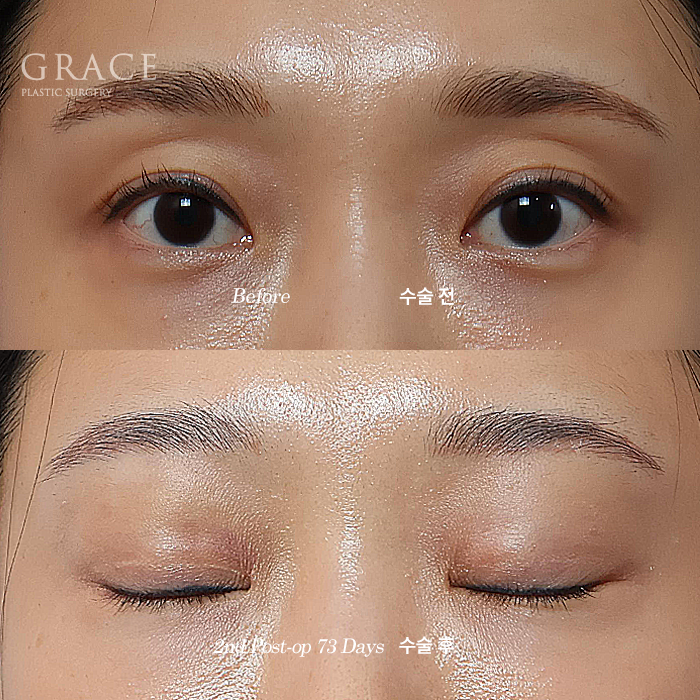
Previous image
Next image
Why is it only noticeable when you close your eyes? When the eyes are open, subtle contours may be relatively difficult to see because of the double eyelid and eyelid movement. Conversely, when the eyes are closed, the eyelid surface becomes stretched out, making small differences in the volume beneath the skin easier to detect. If the fat has settled relatively evenly, the eyelid surface will also appear smooth. However, if fat is concentrated in a particular area, indentations or protrusions may become noticeable. For this reason, upper-eyelid fat grafting should take into consideration not only the appearance of the sunken upper eyelid when the eyes are open, but also the eyelid contour when the eyes are closed.
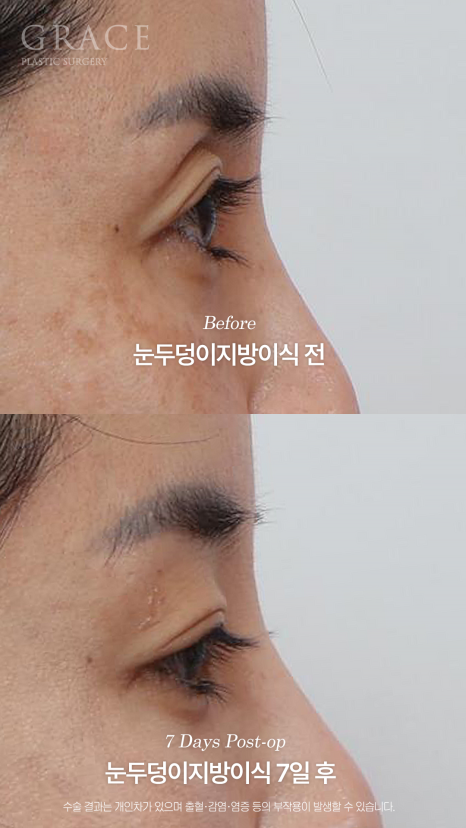
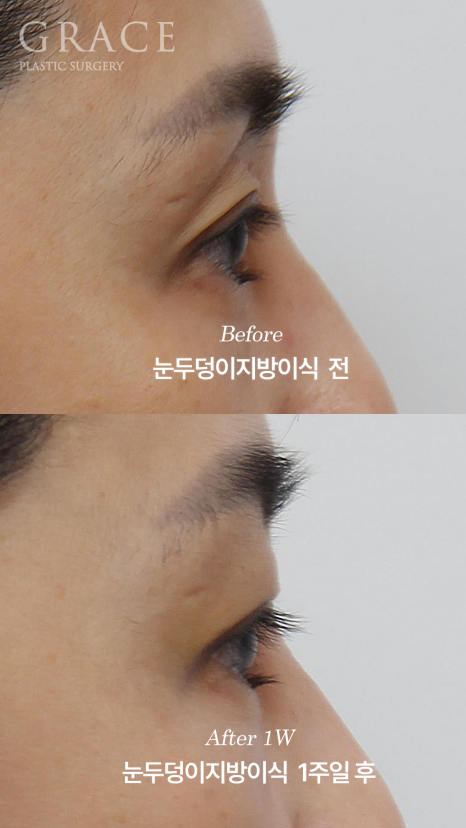
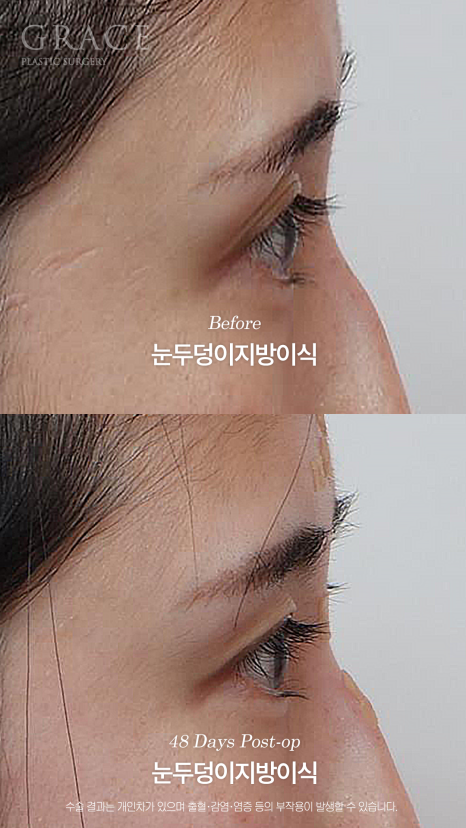
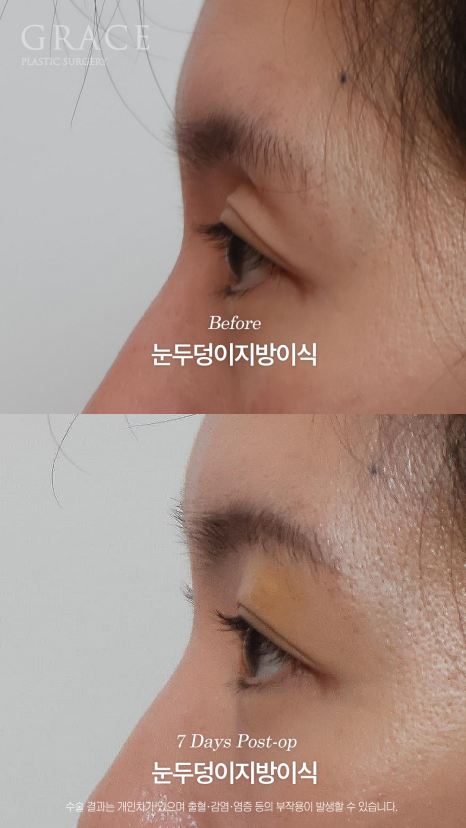
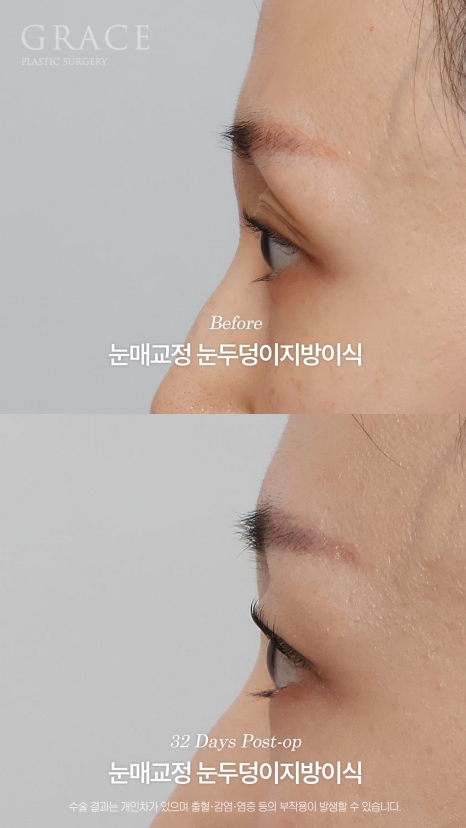
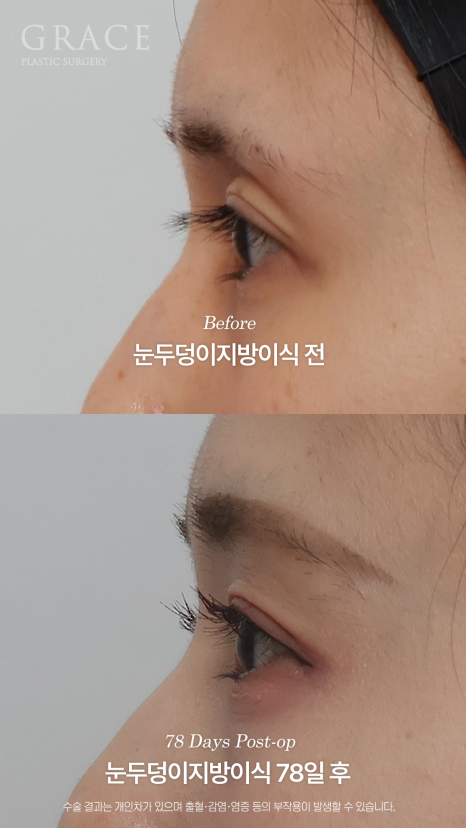
Understanding the orbital anatomy and precisely placing the necessary amount of fat in the necessary locations—naturally filling the sunken upper eyelid while keeping it smooth even when the eyes are closed—is an important point to consider in upper-eyelid fat grafting. ※ The degree of fat graft survival and the recovery process vary from person to person, and the possibility of side effects such as irregularities, nodules, fat necrosis, and calcification cannot be completely ruled out.
𝙒𝙚𝙗 https://graceps.kr/breast.php
𝙆𝙖𝙠𝙖𝙤 http://pf.kakao.com/_xjAgxoxh/chat