Hello.
This is Goodday,
sharing stories about dentistry with sincerity.
Although it may be somewhat unfamiliar to the general public,
we would like to explain in depth the concept of CO-CR Discrepancy,
which is carefully checked in actual clinical practice,
especially in orthodontics and oral surgery.
A person’s jaw may have different positions
where the teeth come together and
where the temporomandibular joints are most stable.
The difference between these two positions
is called CO-CR Discrepancy.
What is CO-CR Discrepancy?
It is easier to understand after first learning about the two concepts.
CR (Centric Relation) refers to
the state in which the temporomandibular joints (condyles)
are positioned most stably,
regardless of the position of the teeth.
You can think of it as a reference point
where the temporomandibular joints are positioned comfortably
without unnecessary tension.
By contrast, CO (Centric Occlusion)
refers to the position where the teeth come together
when the patient naturally bites down firmly.
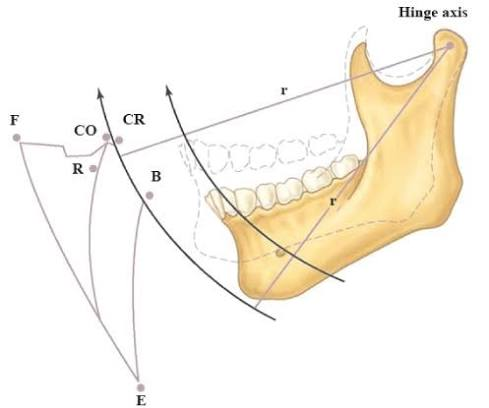
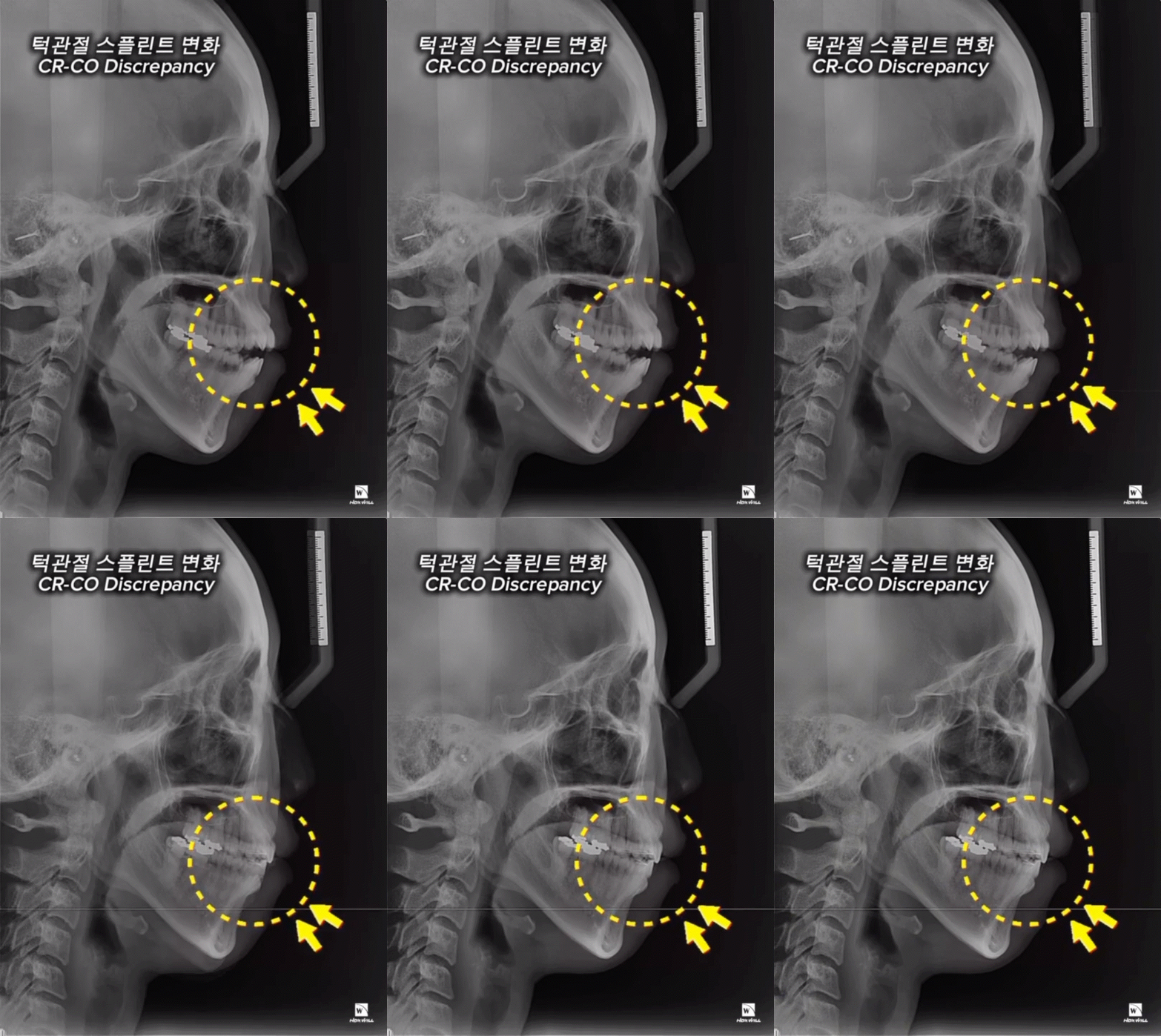
Movement of the mandible from CR to CO
Ideally, these two positions are the same,
but in some patients, tooth interference causes the jaw
to move forward or be pushed to the side
before finally coming together.
In other words, the temporomandibular joints may seek one position,
while the teeth cause occlusion to occur in another position.
This difference is called CO-CR Discrepancy.
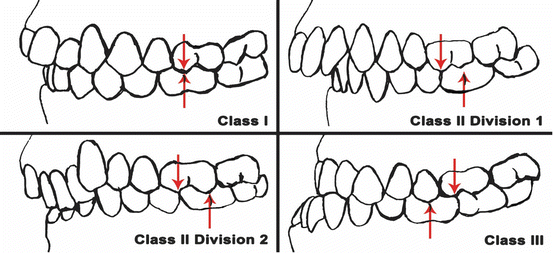
Causes of CO-CR Discrepancy
Having CO-CR Discrepancy does not necessarily mean
that a temporomandibular joint disorder will develop.
However, when this difference is significant,
it may be an important factor that must be considered
when planning orthodontic treatment.
Yonsei Goodday Dental Clinic always checks
for CO-CR Discrepancy when treating patients with temporomandibular joint conditions
and provides splint or traction appliance treatment
according to each patient’s condition.
A splint helps reduce the load on the temporomandibular joints and masticatory muscles
and find a stable jaw position.
It can also help protect the temporomandibular joints
when symptoms such as teeth grinding or clenching worsen
due to stress, fatigue, or changes in sleep patterns.
Traction appliances are custom-made after consultation and detailed examinations.
The position and strength of the elastics are adjusted
while monitoring progress at intervals of approximately two to three months.
Therefore, when appropriately managed,
it is very rare for them to place excessive strain on the temporomandibular joints.
Both splints and traction appliances
can be made on the day of consultation and examination,
and treatment can begin after receiving the appliance
approximately one week later.
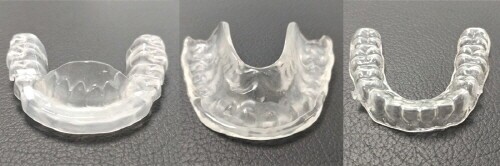
Traction appliance
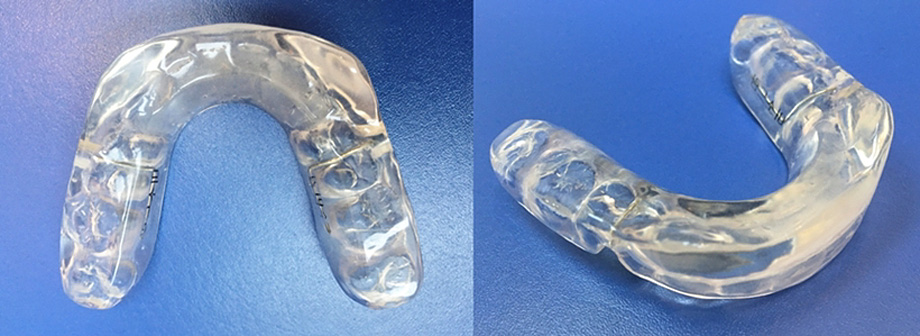
Splint appliance
In the early stages of splint treatment,
some awkwardness, discomfort, or pain may occur
while adapting to the appliance.
However, most patients gradually adjust
with consistent use,
and symptoms other than discomfort when chewing food
often improve over approximately two to three months.
If orthodontic treatment is started
before the temporomandibular joints have become sufficiently stable,
symptoms involving the joints or changes in occlusion
may potentially worsen.
Therefore, Yonsei Goodday Dental Clinic proceeds with orthodontic treatment
after confirming that the temporomandibular joints and occlusion
have recovered stably.
We carefully monitor the progress
and determine the appropriate time to begin treatment.
To achieve stable long-term results,
before beginning orthodontic treatment,
it is essential to make a diagnosis that considers the balance of
the teeth, temporomandibular joints, and masticatory muscles together.
Yonsei Goodday Dental Clinic does not focus solely
on aligning the teeth.
To help patients chew comfortably even after orthodontic treatment
and maintain a functionally stable occlusion,
we carefully evaluate CO-CR Discrepancy as well
and aim to stabilize both the teeth and the temporomandibular joints through treatment.
We will continue striving to provide high-quality treatment
by carefully evaluating and diagnosing each individual’s condition,
rather than providing standardized care. ^^