�
Hello, I am Shin Seung-hwan,
Director of Yonsei U-Line Dental Clinic, Garak Branch,
located in Garak-dong, Songpa-gu.
Today, I have prepared a discussion about dental care methods
for adults and people in middle age and beyond.
�

�
Once you become an adult in your twenties,
dental care from adulthood through middle age has some similarities.
During this period, managing gum disease or periodontal disease
can be considered more important than suddenly developing cavities.
�


�
Therefore, it is a good idea to have regular professional cleanings
and always pay attention to whether there are any signs that your gums are becoming unhealthy.
�


�
Also, there are quite a few foods and eating habits common in Korea
that can cause cracks in the teeth.
Many people especially enjoy foods such as squid, don't they?
�

�
That is why cracked teeth are relatively common among people in Korea.
It is a good idea to check whether you have any cracks in your teeth
and whether you have symptoms such as grinding your teeth at night.
�


�
Once you get older and enter your sixties or later,
issues such as cavities are not actually a major concern.
Usually, after people pass their forties and fifties and reach their sixties,
cavities do not often cause serious problems.
�

�
However, for those whose previously untreated gum disease has worsened,
this may be the time when they gradually begin to lose teeth
and start considering treatments such as dental implants or dentures.
�



�
However, if you have consistently cared for your teeth since you were young,
you do not necessarily have to get implants or dentures simply because you are older.
Of course, bodily changes naturally occur with age.
Even with excellent care, the gums gradually recede compared with the past,
which can create larger spaces between the teeth.
�

�
For this reason, you need to brush your teeth more carefully than when you were young.
In particular, when the gums recede, the tooth roots gradually become exposed.
These exposed roots are much more vulnerable to dental caries, or cavities, than you might expect.
�

�
Therefore, as people get older, it is uncommon for the upper parts of the teeth to decay,
but decay between the teeth or in areas around the roots that are difficult to see is quite common.
It is important to clean these areas thoroughly when brushing as well.
�
�


�
In fact, we use our teeth throughout our entire lives.
Permanent teeth begin replacing primary teeth at around age six or seven,
so by the time someone is over sixty, they have been using them for nearly fifty years.
No matter how healthily you have cared for them,
wear is bound to occur through years of use.
�


�
If you continue to enjoy hard foods such as squid, raw meat, and seeds
when your teeth have already become worn, it can put excessive strain on them.
�



�
When you are young, a substantial amount of the teeth's hard enamel remains,
so they can withstand such tough foods. However, as you age,
the teeth and even their roots become weaker.
�


�
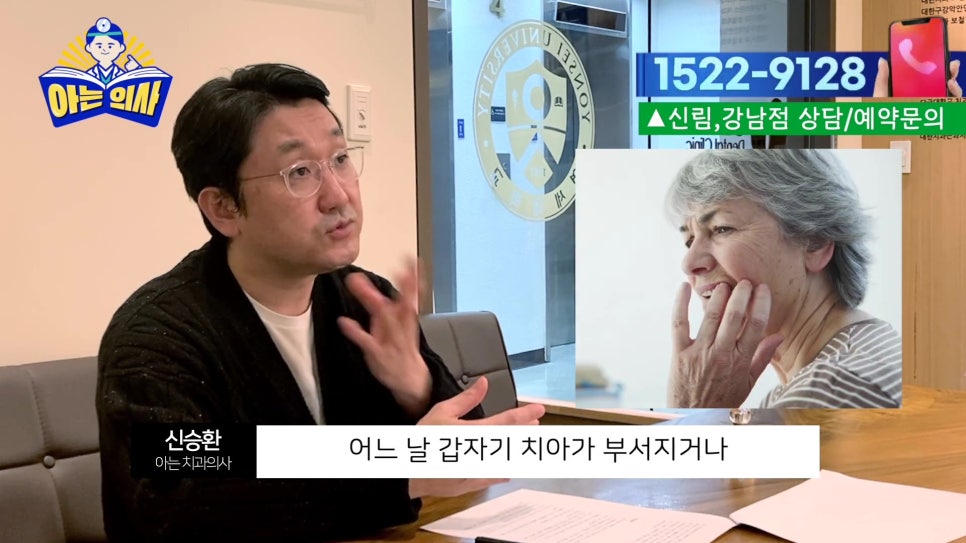
In other words, if you continue eating foods that are too tough and hard,
your teeth may suddenly break or become loose one day.
Therefore, just as you avoid strenuous exercise as you get older,
it is a good idea to be more careful with your diet as well.
�


�
Changing your eating habits to avoid hard and tough foods
can help you maintain healthy teeth even as you age.
�