Hello. This is Yonsei Uline Dental Clinic, Gangnam Station Branch, located in Yeoksam-dong, Gangnam-gu.
Today, we’ll talk about the importance of flossing and the truth behind the claim that not flossing causes cavities.


We brush our teeth every day.
We try to remove food debris and plaque left on the tooth surfaces by brushing up and down and from side to side with a toothbrush.
However, teeth are not simply flat surfaces; they have a three-dimensional structure.


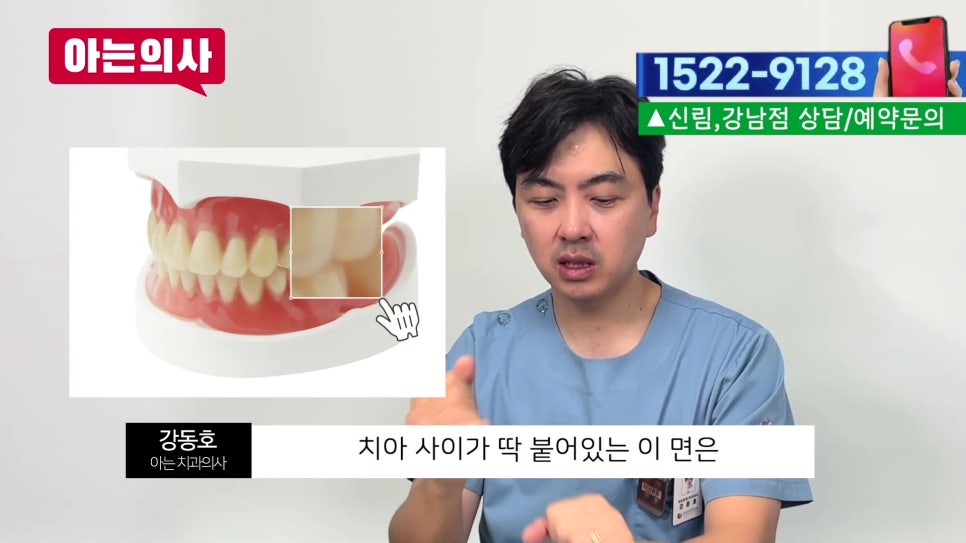

The areas we can clean with a toothbrush are generally the outer surfaces, inner surfaces, and chewing surfaces of the teeth.
The problem is the area between the teeth.
Younger people often have healthy gums and narrow spaces between their teeth, so food may not become stuck very often.
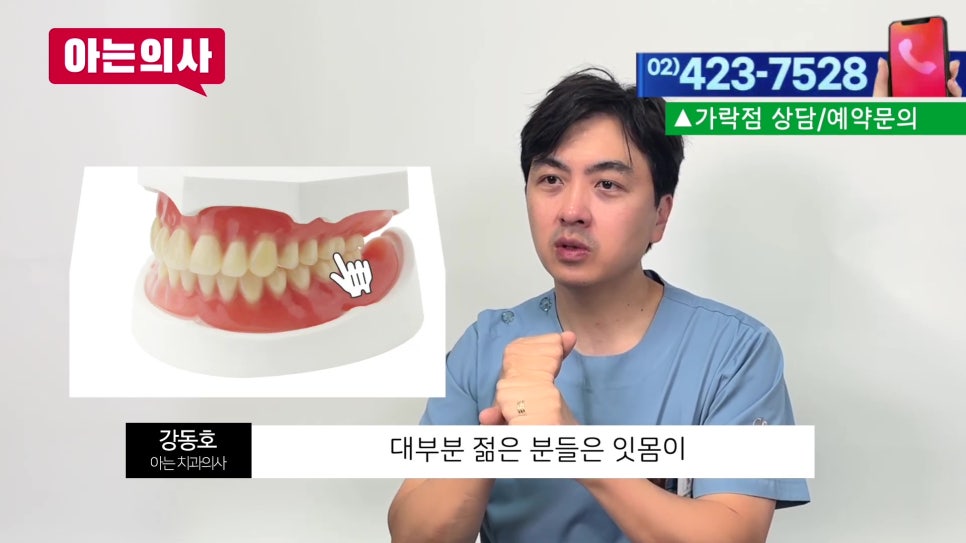


As a result, it is easy to overlook the need to clean between the teeth as well.
However, tooth shape differs from person to person.

Rounded teeth can create tiny gaps when they come together, making it easy for food to become trapped. Angular teeth are relatively less likely to trap food, but they still have areas that are difficult to clean.



Because tooth shapes vary in this way, care should be tailored to the condition of your own teeth.
Children and young adults in their 20s often develop cavities on the adjacent surfaces—the surfaces between the teeth.




When permanent teeth have only recently erupted, they are weaker. If plaque builds up between the teeth, cavities can progress much more quickly than they do in typical adults.
That is why pediatric dentists emphasize using floss from an early age.



So when should you floss?
We usually floss when we feel that something is stuck between our teeth, but it is actually best to floss every night before going to bed.



At night, saliva production decreases, reducing the mouth’s natural cleansing function. As the teeth are exposed to an acidic environment, they become more susceptible to cavities.



Saliva helps prevent cavities by regulating acidity in the mouth. Because saliva production decreases at night, it is important to go to sleep with the spaces between your teeth as clean as possible.



The areas where cavities commonly develop also change with age.
When we are young, cavities between the teeth are common, but from our 50s and 60s onward, the gums recede and cavities are more likely to develop around the tooth roots.

Floss can also be used at this stage to effectively clean between the teeth and around the tooth roots.
When flossing, it is important not simply to move the floss up and down, but to clean by gently rubbing it along the tooth surfaces.

When there is a large space between the teeth, an interdental brush may be more effective than floss.
Floss is used to clean the surfaces between the teeth, while an interdental brush is useful when those spaces are wider.


In conclusion, flossing can help prevent not only cavities but also gum disease and bad breath.
Making flossing a habit from a young age can greatly reduce the need for dental treatment later on.
With that in mind, why not start keeping floss handy from today?