Hello. We are the Sillim Branch of Yonsei U-Line Dental Clinic, located near Exit 7 of Sillim Station in Sillim-dong, Gwanak-gu.
Today, we would like to talk about whether a loose tooth necessarily needs to be extracted.
There are usually two or three reasons why a tooth becomes loose.
We will also explain what treatment may be needed for each cause.
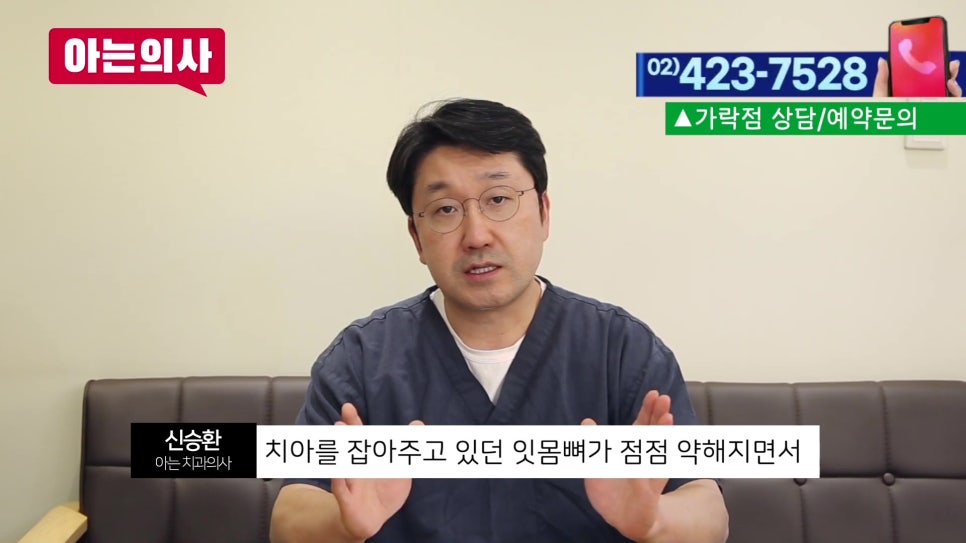
The most common cause is gum disease, also known as periodontal disease.
As the bone supporting the gums becomes weaker and can no longer support the tooth properly, the tooth begins to loosen.
Normally, a tooth’s root is longer than its visible crown, but as the supporting bone recedes, the effective root length gradually becomes shorter.
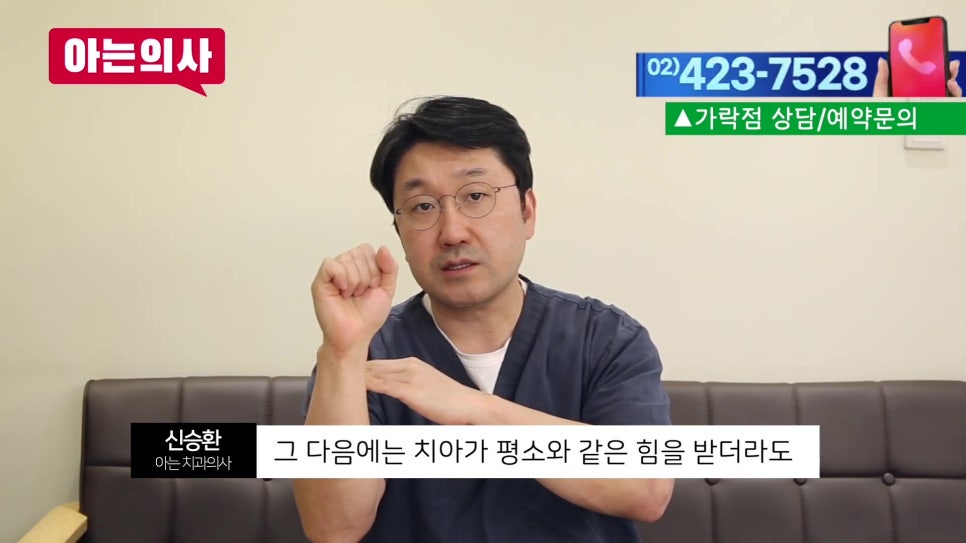
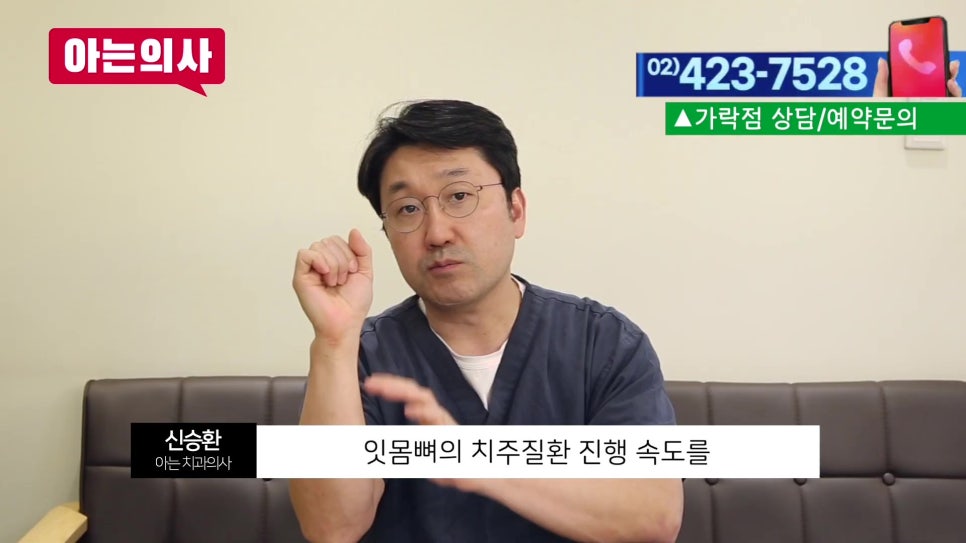
When this happens, the tooth moves more even when subjected to the same amount of force, and the movement can cause the disease to progress more quickly.
It can often be noticed through bleeding while brushing or swollen gums.
To prevent this, you should have regular professional cleanings and get dental checkups.
At home, it is also important to brush your teeth thoroughly.
When people are young, they often focus only on preventing cavities and brush the outer surfaces of their teeth diligently.
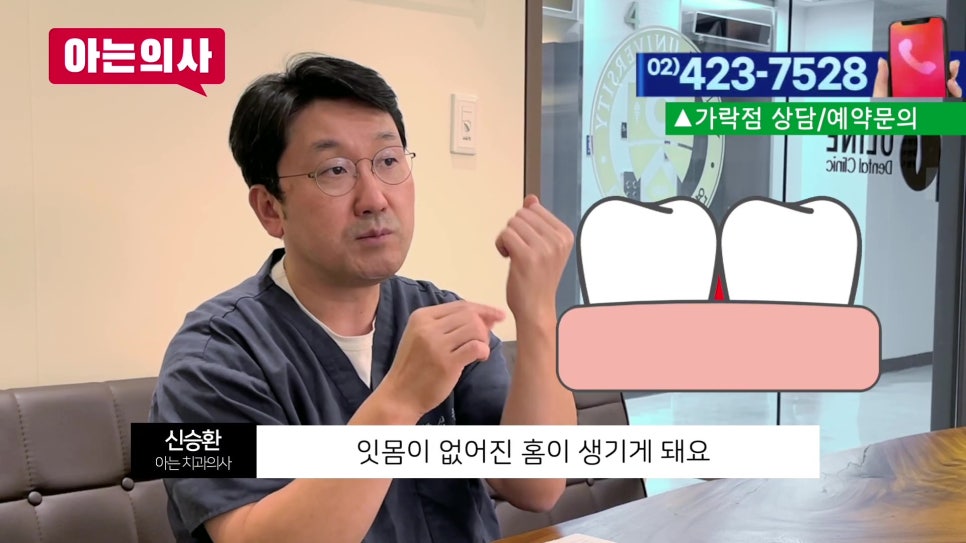
As they get older, however, the gums recede and spaces develop between the teeth.
These spaces were originally covered by gum tissue and were not easily visible, but they can later become exposed and look like holes.
In these cases, simply brushing the outer surfaces of the teeth is not enough.
You should also use dental floss or an interdental brush.
An interdental brush is a small brush designed to clean between the teeth, and you should use it to clean those spaces.
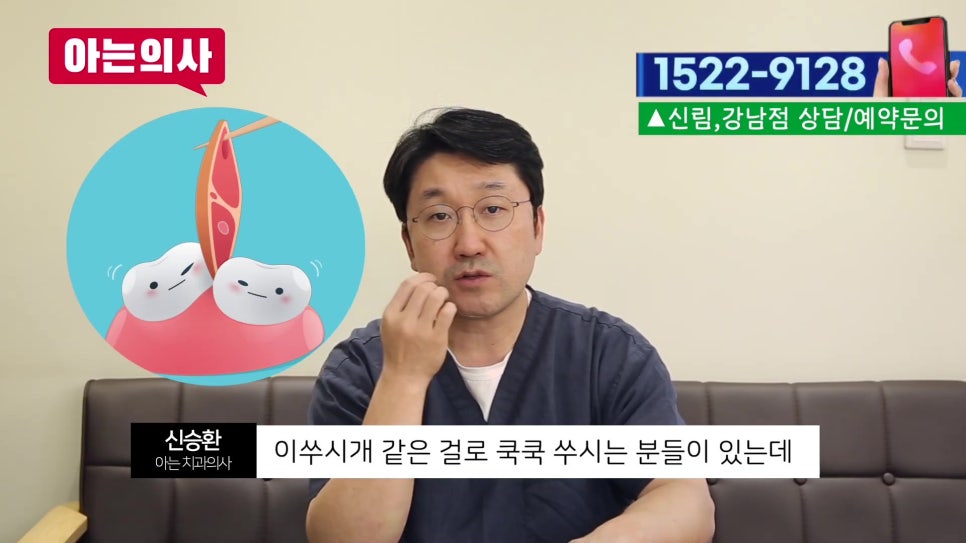
Some people poke between their teeth with toothpicks, but this can actually injure the gums without cleaning properly.
There is also a device called a water flosser, which looks like a water gun.
Using one can also be very helpful.
In particular, for people with prosthetic restorations connecting multiple teeth, such as implants or bridges, it is almost impossible to clean between them without a water flosser.
The second situation in which a tooth may become loose is when the gums are generally in good condition, but one or two specific teeth suddenly become painful and feel as though they have risen upward.
This is usually caused by inflammation around the tooth root.
This can happen when a cavity becomes deep, or when a tooth that underwent root canal treatment in the past develops a new problem over time.
In these cases, retreatment of the root canal may be performed, but when a tooth that has already undergone root canal treatment develops another problem, it often cannot be kept in use for a long time even after retreatment.
Depending on the situation, extraction may be necessary.
The important thing is that looseness or pain like this rarely improves on its own.
It will worsen if left untreated, so do not be afraid—visit a dentist when you notice the early symptoms.
For example, if you experience pain when eating something hot or notice an unusual sensation while eating, it is best to get an examination right away.
Although rare, another possible cause is a lesion such as a cyst that has developed inside the jawbone.
These are not easily noticeable from the outside and can only be identified through regular X-ray examinations.
Finally, a tooth may also become loose due to trauma. This is especially common with the front teeth after falling off a bicycle or bumping into something.
If the tooth is not moving significantly, we may simply adjust its height and observe it for one to two weeks.
However, if the tooth is visibly loose or has shifted position, it is essential to reposition it and stabilize it by securing it to the neighboring teeth.
A traumatized tooth may change color or develop inflammation at the tip of the root if left untreated.
If that happens, root canal treatment may be needed later.
In conclusion, a loose tooth does not necessarily need to be extracted. However, it is important to identify the cause accurately and begin the appropriate treatment promptly.