Hello, I’m Kang Dong-ho, the director of Yonsei U-Line Dental Clinic, Sillim Branch, located in Sillim-dong, Gwanak-gu, right in front of Exit 7 of Sillim Station.
Many people wonder when it is okay to drink alcohol or smoke after implant treatment.
You are also told to be careful with alcohol and smoking after having a wisdom tooth removed, so naturally, you need to be even more cautious after a major procedure such as dental implant surgery.
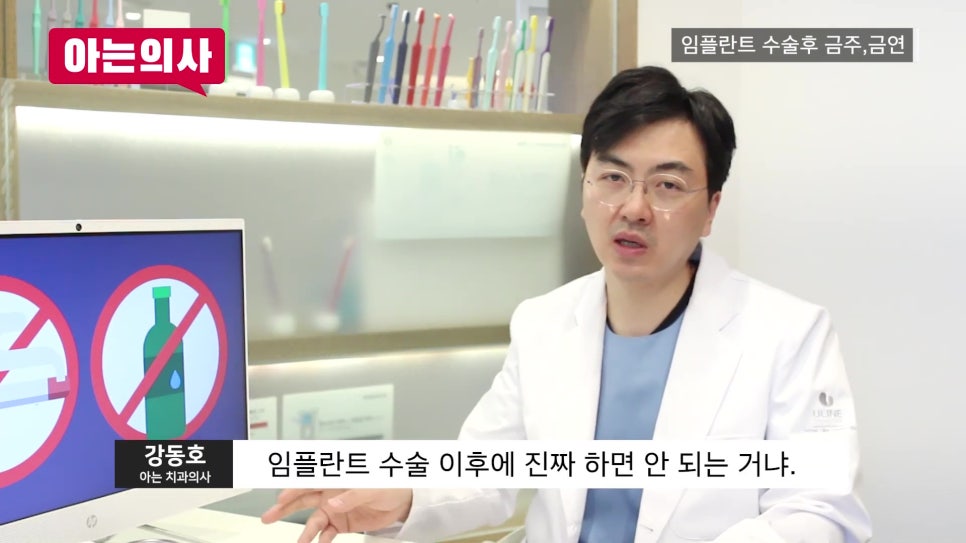
That said, it is not as if alcohol and smoking are “completely prohibited for life!”
It really depends on the individual case.
What matters is when you do it, how much you do it, and what condition your gums are in.
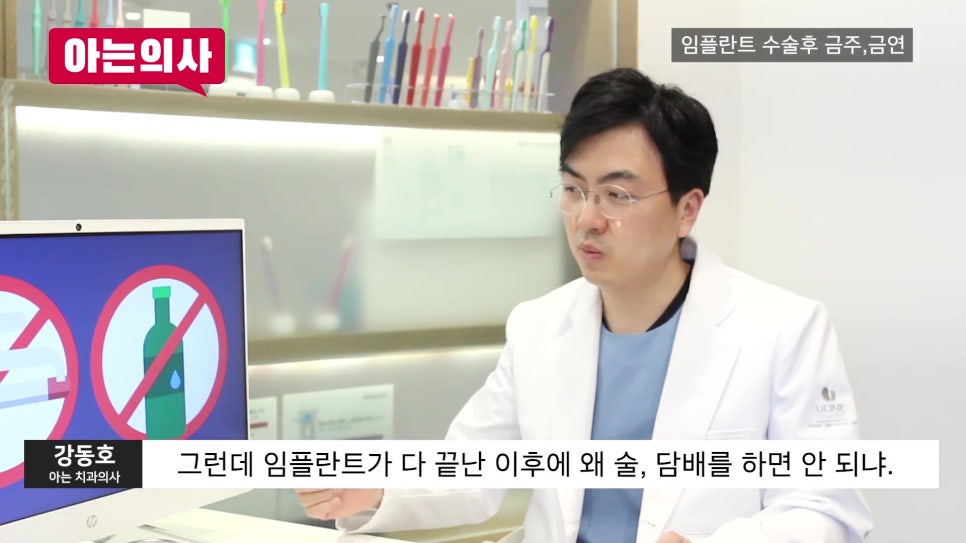
First of all, immediately after surgery, both alcohol and smoking are strictly prohibited.
Alcohol lowers the body’s immune response.
Recovery is important after surgery, and drinking alcohol at this time can significantly increase the risk of infection.
It can also lead to heavier bleeding.
Smoking is an even greater concern. Nicotine in cigarettes constricts blood vessels, reducing blood flow to the gums.
As a result, the gums may not heal well, and the wound may not close properly.
So, once the implant treatment is completely finished, is it okay to drink and smoke as much as you want?
Not necessarily. Unlike natural teeth, implants are much more sensitive to inflammation.
If the gums around the implant are weak or prone to inflammation, a bacterial infection can progress more quickly.
In particular, smokers may experience bleeding more easily or notice bleeding from the gums even when they neglect brushing only slightly.
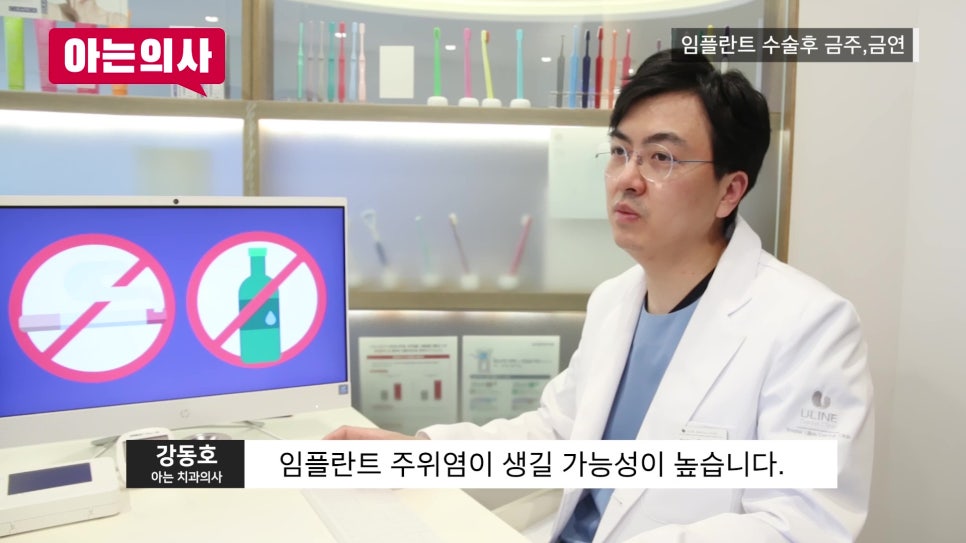
The more a person smokes, the greater the likelihood of inflammation developing around the implant and, ultimately, the greater the possibility that the implant’s lifespan will be shortened.
The same applies to alcohol. Drinking heavily can temporarily lower the immune response.
Especially the morning after drinking too much, some people notice that their gums are swollen or bleed when they brush their teeth.
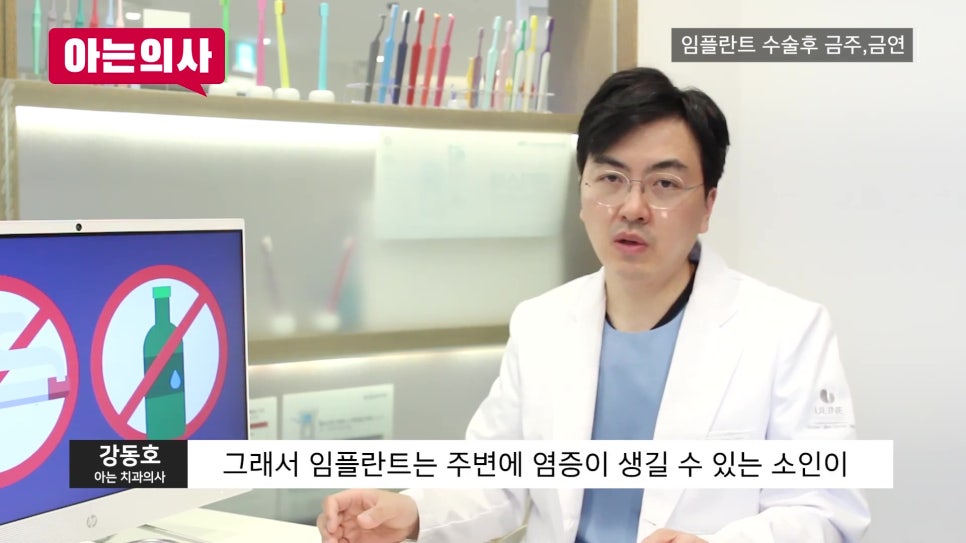
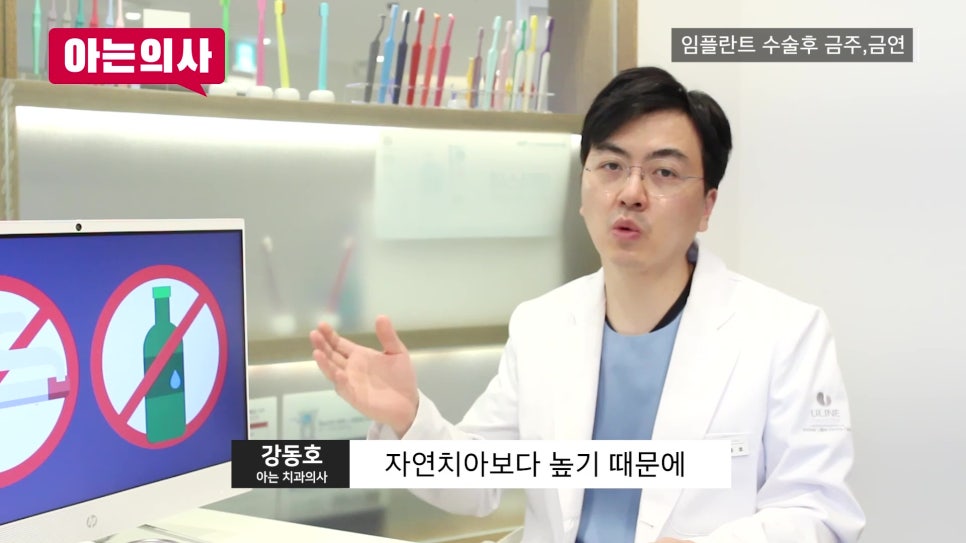
If the area is not properly cared for in this condition, inflammation can develop around the implant.
After drinking all night, going to bed, waking up tired, and brushing your teeth hastily, your gums may become swollen and painful. If you have an implant, this can lead to a more serious problem.
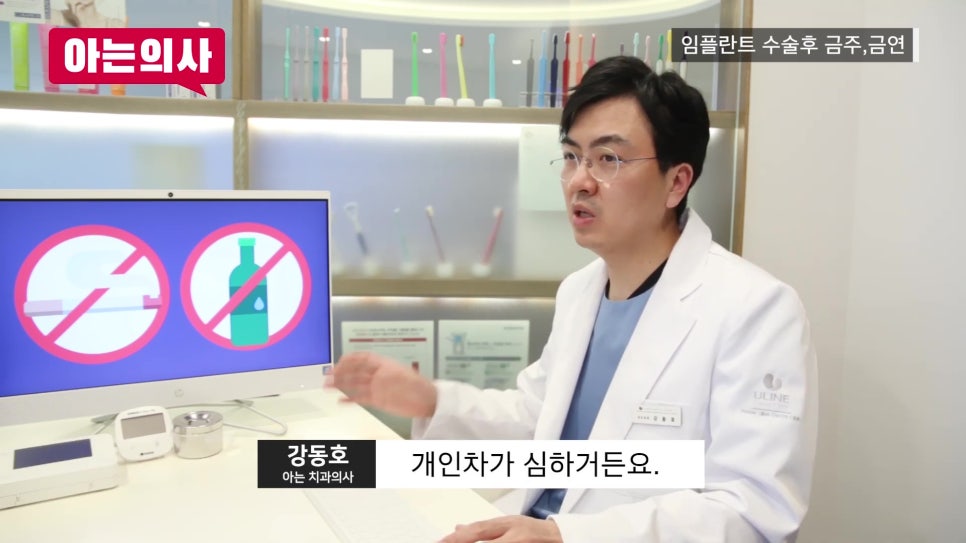
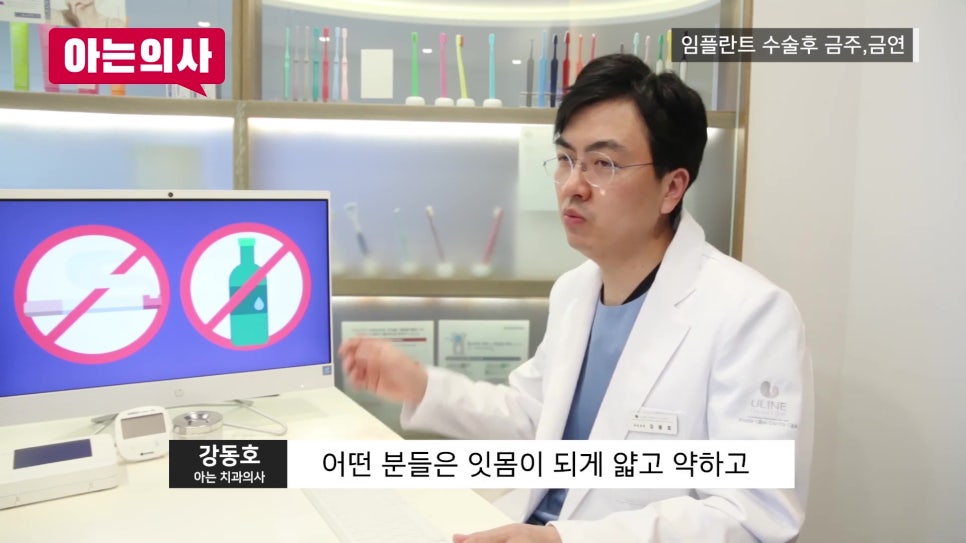
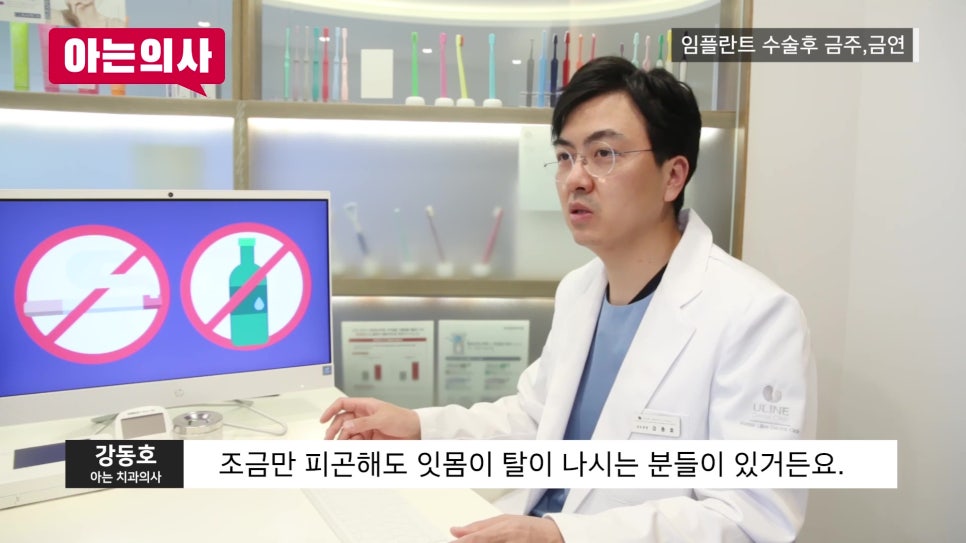
Of course, individual differences exist.
Some people have thick, strong gums and remain fine even when they are somewhat tired.
By contrast, people with thin, weak gums may experience an immediate response in their gums even when their condition declines only slightly.
Therefore, it is most important to understand what type of gums you have and take appropriate precautions.
To sum up, it is best to avoid alcohol and smoking after getting an implant whenever possible. If you must drink or smoke, avoid them completely immediately after surgery, and even after your gums have stabilized, reduce them as much as possible and pay closer attention to your oral care.
That is the best way to use your implant for a long time.